
Add ₹999 more to unlock FREE SHIPPING!
Your sacred cart is currently empty.
Shop Photo FramesIn Maharashtra, the literature and thoughts of Sant Eknath Maharaj laid the spiritual and intellectual foundation for the minds of the people, which later enabled Chhatrapati Shivaji Maharaj to establish Swarajya. The Samadhi Temple and the ancestral residence of Sant Kavi Eknath Maharaj—a revered devotee of the Lord and a savior of the nation—are located in the historic town of Paithan in Chhatrapati Sambhajinagar district. Present-day Paithan, anciently known as ‘Pratishthan’, was a prominent ancient urban center in Maharashtra and is glorified as ‘Dakshin Kashi’ (Kashi of the South). Extensive research and excavations by historians have unveiled the glorious history of this sacred town.
According to the renowned international historian and scholar Dr. R. S. Morwanchikar, there was a ‘Pratishthan’ in the Yamuna valley, which finds mention in the Rigveda. It is likely that a migrating Aryan tribe from that Pratishthan settled along the banks of the Godavari River and established this town. Following its urbanization, the region became known as the Mulaka Janapada, with Pratishthan as its capital. This ancient city was the birthplace of the Satavahanas and naturally became their capital. In ancient times, this city carried out trade as far as Greece and was also a celebrated center of learning and art. Serving as the realm of duty (Karmabhoomi) for eminent scholars, virtuous souls, and saints such as the mathematician Bhaskaracharya, Gagabhatta, Kamalakara Bhatta (author of Nirnayasindhu), Sant Bhanudas, and Mukteshwar, Pratishthan is also the divine birthplace and Karmabhoomi of Sant Eknath Maharaj.
During the time of Eknath Maharaj, the city of Paithan was under the Nizamshahi rule, with Burhan Nizam Shah in power. Around 1532 CE, Eknath Maharaj was born here into the lineage of Sant Bhanudas in a Deshastha Rigvedi Ashvalayana Brahmin family. In his sacred writings, Eknath Maharaj humbly offers salutations while sharing details about three generations of his ancestry. Having lost his parents at a young age, he was raised under the loving shelter of his grandparents, and his childhood passed in comfort and well-being. From an early age, spiritual thoughts left a deep impression on his mind, inspiring his search for a true Guru. At that time, Janardanswami, a realized sage and devout follower of Lord Dattatreya, resided in nearby Devagiri. He also served as the fort commander (Killedar) of Devagiri. At the age of 12, Eknath sought refuge under Janardanswami and served his Guru with utmost devotion. It is recounted that once, while auditing account books, Eknath stayed awake late into the night just to trace an error of a single *adka* (a coin), reflecting his incredible alertness and diligence. According to another tradition, when enemies raided Devagiri, Janardanswami was absorbed in deep meditation (Samadhi). Seeing this, Eknath clad himself in his Guru’s armor and attire, fought the enemy valiantly, and repelled the raid. This incident reveals that Sant Eknath Maharaj, revered as ‘Shantibrahma’ (the embodiment of supreme peace), was also a skilled warrior adept in weaponry. He attained divine spiritual wisdom (Brahmavidya) under his Guru’s guidance. Pleased with his devoted service, Janardanswami bestowed upon him his first divine vision (*Darshan*) of Lord Dattatreya on the Sulibhanjan mountain. Later, Eknath Maharaj undertook a pilgrimage across holy lands and returned to Paithan.
At Paithan, obeying his Guru’s command, he entered the householder’s life (*Grihasthashram*). His wife was Girijabai, and they were blessed with three children: Goda, Haripandit, and Ganga. During this period, with the noble intention of making sacred knowledge available in Sanskrit accessible to the common populace, he began imparting it in Marathi. He composed numerous spiritual treatises and folk hymns (*Bharuds*). ‘Bhavartha Ramayana’, authored by Eknath Maharaj, remains a part of daily recitation for devotees to this day. ‘Shri Eknathi Bhagavata’ is revered as one of the three main foundational texts of the Varkari tradition. Likewise, he composed the narrative poem ‘Rukmini Swayamvar’. His famous compositions include ‘Chatuhshloki Bhagavata’, ‘Shukashtaka’, ‘Hastamalaka’, ‘Svatmasukha’, ‘Ananda Lahari’, ‘Haripatha’, and ‘Bridavali’. The spiritual teachings that Eknath Maharaj preached were devoutly practiced by him throughout his life. Inspiring stories of his boundless compassion are celebrated, such as offering sacred Ganges water to a dying, parched donkey in the scorching heat, and tenderly carrying a lost underprivileged child on his hip to safely guide him home.
Regarding his departure from the earthly realm, it is recounted that one day, at the age of 67, he passed away like an ordinary elderly householder. Upon this, people began saying, “If Nath Maharaj passed away just like an ordinary person, then what is the difference between him and us?” Hearing this, Eknath Maharaj sat up on his funeral bier and said, “I shall depart at a later time.” A few days later, he resolved to take *Jalasamadhi* (voluntary immersion into holy water) and fixed the auspicious date of Phalguna Vadya Shashthi. The Aurangabad Gazetteer records the year of his Jalasamadhi as 1598 or 1599 CE. On that sacred day, in the presence of thousands of devotees, he performed his final Kirtan at Lakshmitirtha, stepped into the holy Godavari River up to his navel, and merged his soul into the Supreme Consciousness. His son Haripandit performed the last rites and lit the funeral pyre. Legend holds that when people returned the next day, they discovered sacred Tulsi and Peepal saplings sprouting from the ashes. On this very consecrated spot, Haripandit established Sant Eknath Maharaj’s holy Charan Padukas (sacred footprints). Today, the divine Samadhi Temple of Nath Maharaj stands majestically at this location.
Along the pathway leading to the temple, two-story buildings line both sides, housing shops selling worship materials and spiritual books on the ground floor, while the upper floor serves as the Bhakta Niwas (pilgrim accommodation). Moving further ahead, one encounters the stone fortification walls and a two-story entrance gateway. Above the gateway sits the Nagarkhana (drum house). Sculpted figures of guardians (Dwarpalas) adorn both sides of the entrance, and an image of Lord Ganesha is enshrined on the lintel (Lalatabimba) above the doorway. The main fortification wall of the temple complex was constructed by Punyashlok Ahilyabai Holkar.
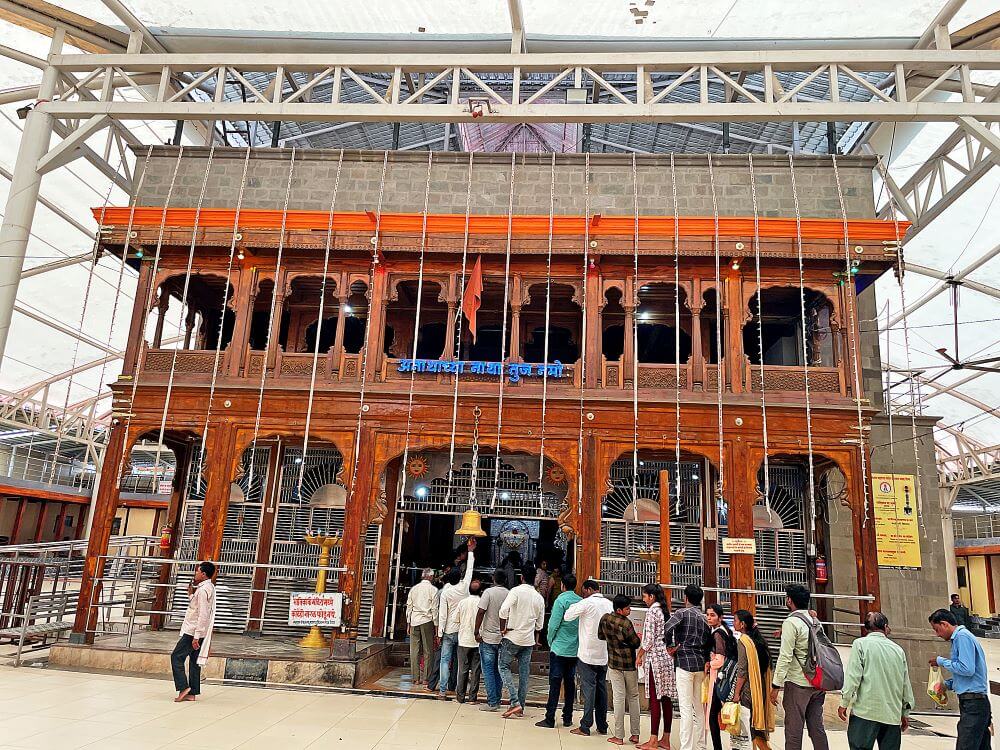
Upon entering, one beholds the wooden shrine (*Kashtamandir*) housing Nath Maharaj’s Samadhi. The shrine is intricately built with an extensive use of wood. The present wooden sanctum sanctorum (*Garbhagriha*) was constructed by Shri Bhanudas Maharaj Gosavi, the 11th descendant of Sant Eknath Maharaj. To the right of Nath Maharaj’s Samadhi lie the samadhis of his ancestors, and to the left are those of his descendants. The samadhis of his close disciples, Uddhava and Gavoba, are also located here; Uddhava’s samadhi lies along the circumambulation path (*Pradakshina Marga*), while Gavoba’s samadhi is situated near the northern gate.
Apart from the main entrance, the Samadhi Temple has two other gateways, known as the Godavari Mahadwar and the Dattatreya Mahadwar. Behind the Samadhi Temple lies the vast bed of the Godavari River flowing from north to south, where a holy bathing ghat has been constructed. Exiting through the Dattatreya Mahadwar leads directly to a temple dedicated to Lord Dattatreya. The Prasadalaya (hall for sacred food distribution) building is also located in this complex.
At the Samadhi Temple of Eknath Maharaj, the Kakad Aarti is performed early in the morning at 5:30 AM. This is followed by an Aarti at 6:45 AM. At 12:00 noon, Naivedya is offered to the Samadhi. Thereafter, at sunset, Ganga and Samadhi Puja along with Aarti are performed. Shej Aarti takes place at 9:30 PM. In addition, Mahapuja is performed here on every Dwadashi. The festival of Eknath Shasthi is celebrated here on a grand scale, drawing a massive fair on that day. According to information provided by the Shantibrahma Shri Eknath Maharaj Mission, after the Ashadhi Wari of Pandharpur, the second largest Wari of the Varkari Sampradaya gathers here. Around 500 Dindis arrive here for this pilgrimage. This three-day festival, celebrated from Phalguna Vadya Shasthi to Ashtami, features Bhajans, Kirtans, and Bharuds. The festival concludes with Kalya Kirtan and Mahaprasad. Devotees can visit the temple daily from 5:30 AM to 9:30 PM to take Darshan of Nathaji’s Samadhi.
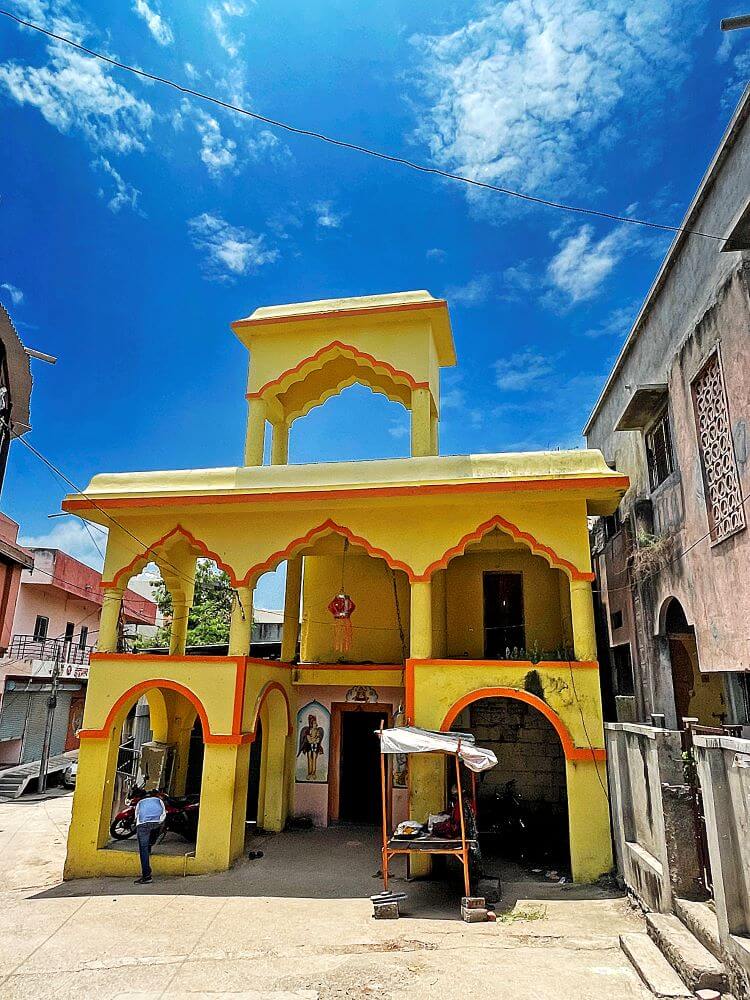
A place in Paithan deeply intertwined with the life of Sant Eknath Maharaj is his residence. Although known as Nath Mandir in the town, the local residents refer to it as Nath Maharaj’s Wada. Eknath Maharaj resided in this Wada for many years. The main entrance of the Wada is modest, like that of an ordinary house. On one side of the entrance wall are images of Lord Garuda in a bow posture and Shri Datta.
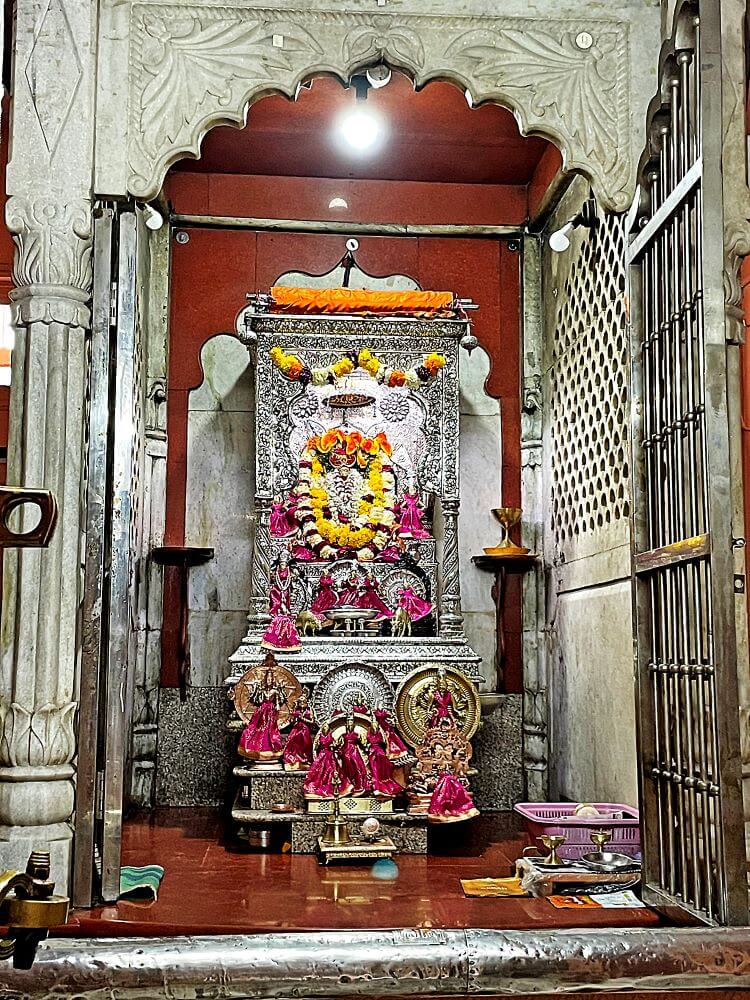
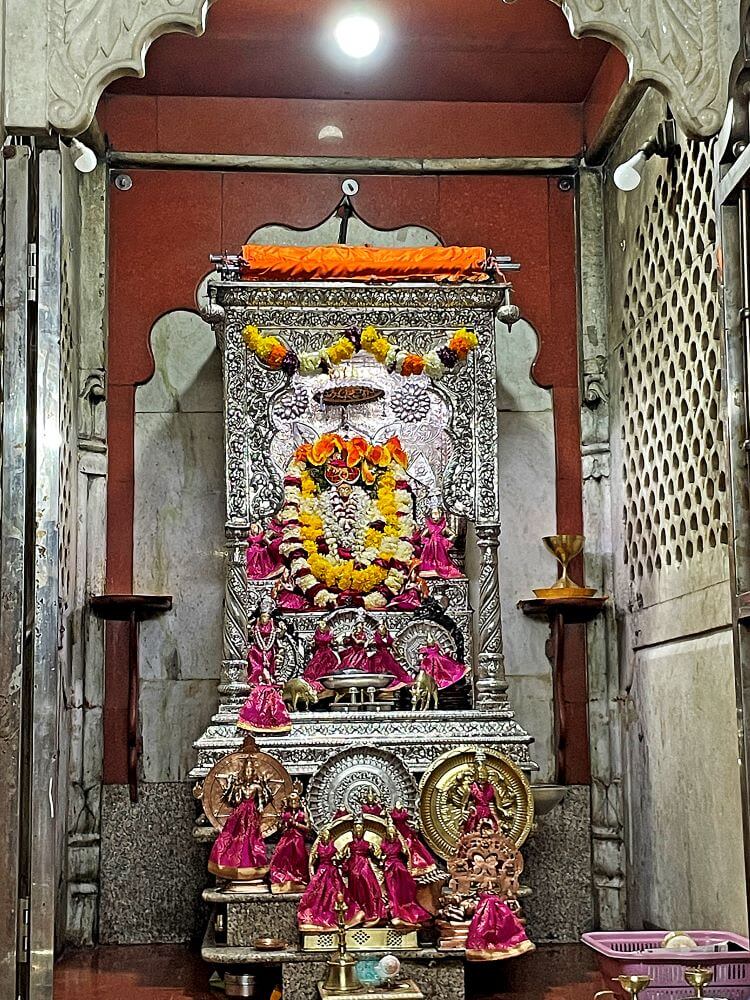
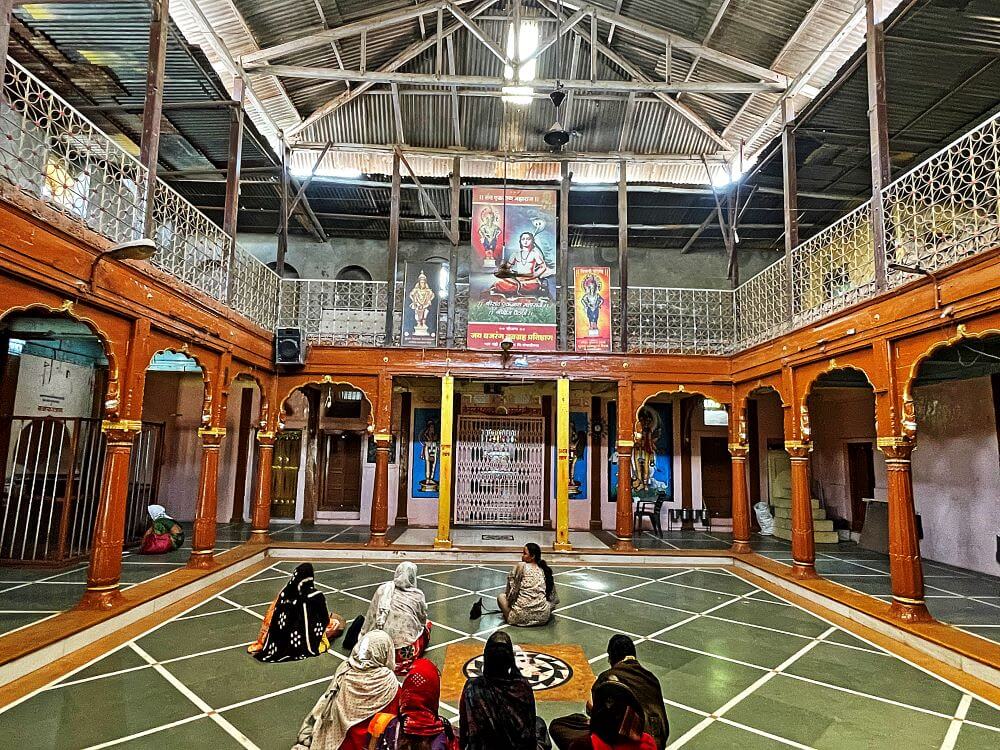
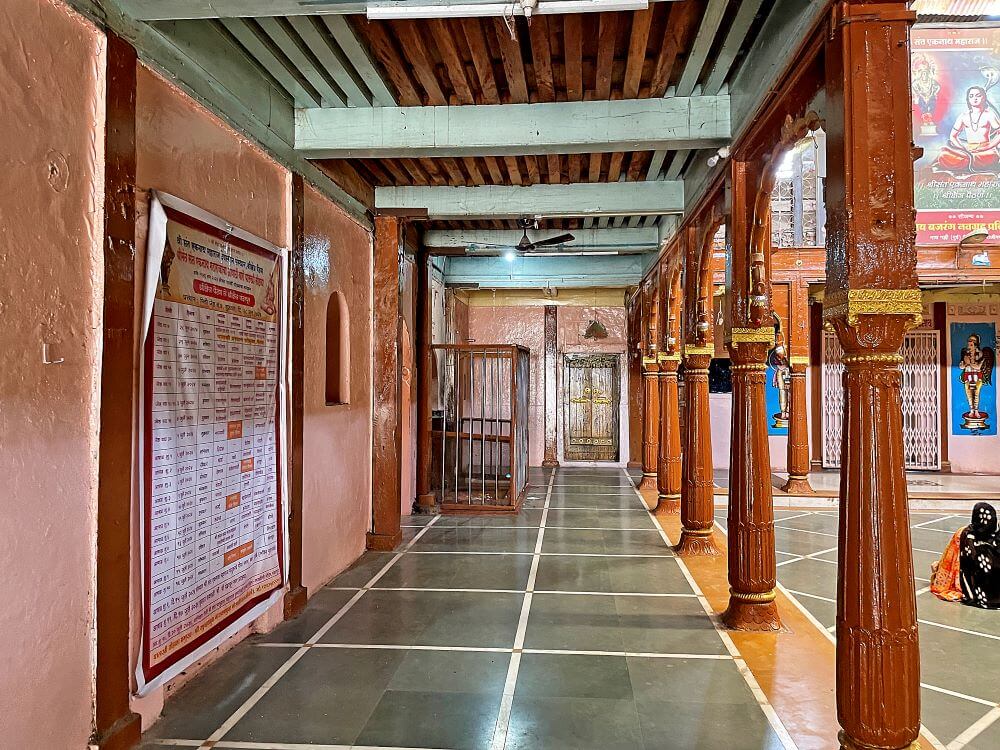
Upon entering through the doorway, one sees the verandah (Ovari) of the Wada, its ancient pillars, and directly ahead, Nathaji’s Devghar. In this Devghar, originally made of wood with intricate silverwork, reside all the deities worshipped daily by Nathaji. Among them is a crown-adorned Panchadhatu (five-metal) idol of Vijayi Panduranga, standing 1.5 feet tall and weighing 2.5 kilograms. The unique feature of this idol is that, like Pandharpur’s Panduranga, both hands rest on the waist; however, its open right palm faces forward. Hence, this idol is called Vijayi Panduranga. It is said that this idol was presented as a gift to Nath Maharaj by a money lender.
There is a legend associated with this idol that a money lender from Karnataka had commissioned its creation. Just as he was about to perform the Prana Pratishtha (consecration ceremony), Lord Panduranga appeared in his vision and said, “Even if you consecrate the idol here, I shall not remain. If you insist on performing the consecration, your lineage will come to an end. Take this idol and give it to Nath Maharaj of Paithan.” Accordingly, he presented the idol to Nath Maharaj. Upon receiving it, Nath Maharaj humbly remarked to Lord Panduranga that He would not get the grand delicacies here that He received at the money lender’s house. To this, words appeared on the brick beneath the idol’s feet: “Das Jevu Ghal Va Na” (Whether the servant feeds Me or not). It is said that these words are still visible on that brick. At that time, Nathaji offered butter in a silver bowl to the idol as a gesture of hospitality. Lord Vitthala then moved His right hand from His waist to take the butter. Since the hand was thus partaken of food, He rested His wrist back on His waist, leaving the palm open facing outwards.
In front of this Devghar, two ancient pillars from the era of Eknath Maharaj are preserved. It is said that Eknath Maharaj used to lean against one of these pillars while delivering discourses, while Lord Vitthala Himself disappeared into the other pillar in the form of Uddhava. Hence, it is known as the Uddhava Khamb.
Another sacred story associated with this place states that Lord Vitthala assumed the guise of Shrikhandya and fetched water at this Nath Wada for twelve years. The stone water cistern (Ranjan) in which He filled water is preserved in an enclosed form within the temple to this day. This stone cistern is unique, measuring 21 feet deep and 1.5 feet wide. It is set into the ground and features a Gomukh (cow-face spout) at its base. The water from this cistern flows through the Gomukh to meet the River Godavari. In the eastern wall of the cistern, there is a niche housing idols of Lord Vitthala and Goddess Rukmini. Here, the festival of Nath Shasthi commences from Phalguna Vadya Dwitiya. At that time, the cistern is first dried, consecrated with incense, and worshipped. Sometime during this festival period, the cistern fills up naturally. The person by whose hands it gets filled is worshipped as Shrikhandya.
Nath Shasthi, which marks the Punyatithi of Sant Eknath Maharaj, is the grandest celebration at Nath Wada. Since five significant events related to Nathaji occurred on this day, Nath Shasthi is considered a Panchaparva. These events are: 1. The birth of Nathaji’s Guru, Janardana Swami, occurred on Nath Shasthi, 2. Sant Janardana Swami had his first divine vision of Lord Dattatreya, 3. Swami Janardana gave his first divine vision to Nathaji, 4. The Punyatithi of Sant Janardana Swami, and 5. The Jal Samadhi of Eknath Maharaj. The celebration concludes on Ashtami with Gopal Kala. On this occasion, lakhs of devotees assemble here. Nathaji’s Palkhi (palanquin) is taken from Paithan to Pandharpur. On Jyeshtha Vadya Saptami, the Dindi departs from the Nath Mandir in the town amidst chanting of ‘Bhanudas Eknath’, and the Palkhi reaches Pandharpur on Ashadha Shuddha Dashami. The procession holds the third position of honor during the journey to Pandharpur.
This sacred temple stands as a testament to deep spiritual devotion, ancient architectural grandeur, and rich local cultural traditions.
The sanctum sanctorum houses the divine idol consecrated according to ancient Vedic traditions, surrounded by serene courtyards and traditional temple architecture.
Navratri, Maha Shivratri, Annual Temple Jatra & Deepotsav
Compare and book flights, secure top-rated local hotels near the temple, hire reliable guides, and rent cars instantly.
Extend your pilgrimage by visiting other highly sacred temples located nearby.

Add ₹999 more to unlock FREE SHIPPING!
Your sacred cart is currently empty.
Shop Photo FramesFill in your delivery details below to place your order.
Add comment