
Add ₹999 more to unlock FREE SHIPPING!
Your sacred cart is currently empty.
Shop Photo FramesThe name ‘Jogeshwari’ is a derivative of the name ‘Yogeshwari’. It is said that Jogeshwari is a form of Goddess Parvati, the consort of Lord Mahadeva. There are many temples of Goddess Jogeshwari across India. In some places, the Goddess is given various names such as Tambadi (Red) Jogeshwari, Kali (Black) Jogeshwari, and Pivli (Yellow) Jogeshwari, based on the color of the idol or the karmic attributes of the deity. This deity, especially in the paths of Yoga and Tantra, is considered to be highly ‘Jagrut’ (spiritually awakened). One such ancient and awakened shrine of Goddess Jogeshwari is located in the village of Manikwadi in Sangli district.
The legend of Goddess Yogeshwari (Jogeshwari) is narrated in the second volume of the book ‘Devikosh’ by Pralhad Krishna Prabhudesai. It states that after the devotee Pralhad, a mighty demon named Andhakasura was born in his lineage. Driven by the ambition to conquer the three worlds, he waged war against Brahma, Vishnu, and Mahesh. In that battle, Lord Shankara wounded Andhakasura with his arrow and then pierced his stomach with his trident. Lord Vishnu used his Sudarshana Chakra to deal with the rest of the demon army. However, from every drop of blood that fell from Andhakasura’s wounds, a new demon was born. Seeing this, Shankara and the other gods manifested a divine power (Shakti) from their radiance. She stopped the blood from touching the ground, thereby ending the proliferation of demons. As this power emerged from the radiance of Shiva (Shiv-Teja), she came to be known as Yogeshwari.
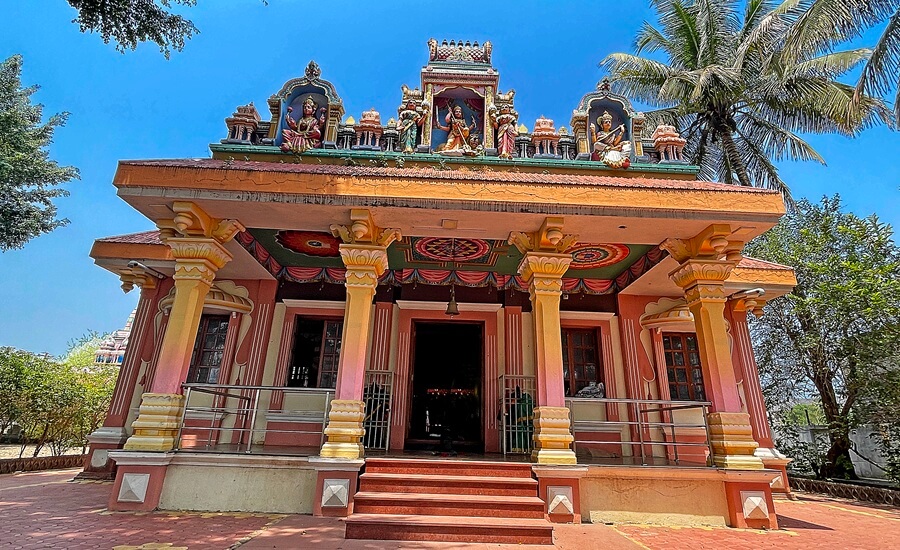
There are two major seats (Peeths) of Yogeshwari or Jogeshwari in Maharashtra; one is at Ambejogai in Marathwada and the other is at Jogeshwari in Mumbai. An important and ancient temple of this same Goddess is situated in Manikwadi. This temple is said to date back to approximately the 12th century. In recent times, these temples have been renovated using modern methods. The temple, located along the roadside, is enclosed by a perimeter wall. There is an idol of the Goddess in a niche near the entrance. The entrance features a Gopuram in the Dravidian style. On both sides of the entrance, there are platforms (chautaras) adorned with sculptures of four-armed female door-guardians (Dwarapalas). These guardians are depicted standing with one foot resting on a lion. In their three hands, they hold a damaru, a trident, and a mace, while the fourth hand is in the Abhaya Mudra (gesture of fearlessness). The door frames of the entrance are decorated with vertical fluted carvings, and an idol of Lord Ganesha is placed on the lintel (Lalat-bimba). There are guard rooms on both sides inside the entrance. The roof of the entrance features a three-tiered Dravidian-style Shikhara. Each tier of the Shikhara contains miniature temple replicas on the four corners and horizontal temple replicas in the central sections. Additionally, the Shikhara is adorned with replicas of ornate pillars and sculptures of various deities. The top is crowned with a horizontal, barrel-vaulted (Gajaprishtha) roof.
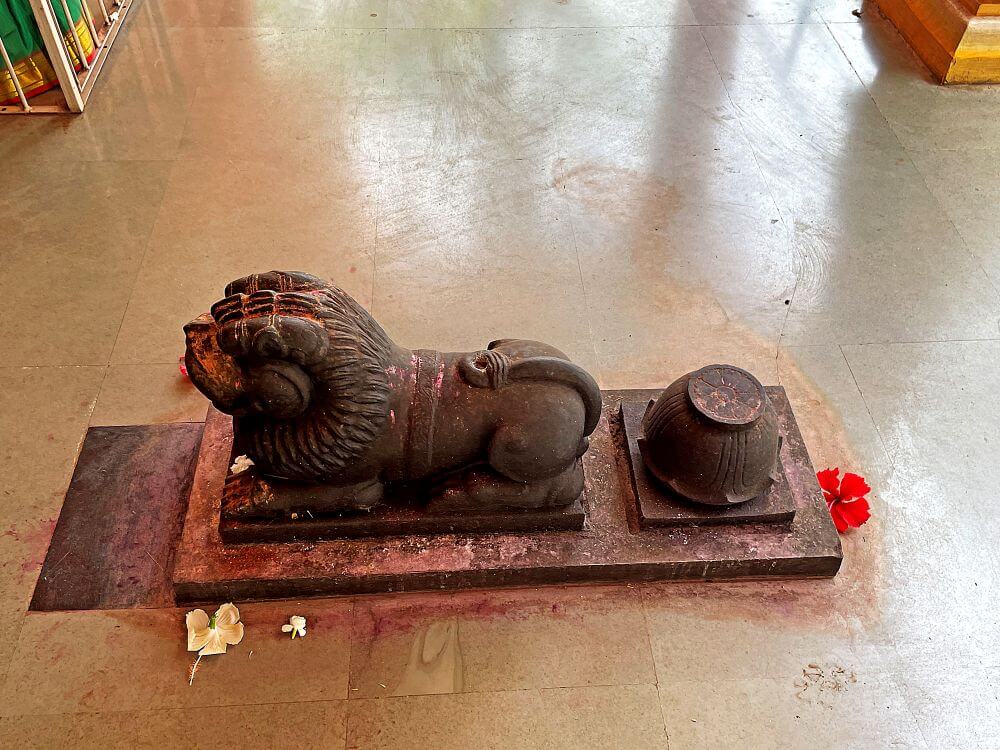
Through this entrance, one enters the temple courtyard. In the courtyard, in front of the temple, stands an ornate Tulsi Vrindavan and a three-tiered stone lamp pillar (Deepmal) on a platform. The base of the lamp pillar features a lotus flower motif, and the top is crowned with a lotus-shaped finial. The lamp pillar has separate arms for lighting lamps. The Jogeshwari temple is built on a platform (Jagati) about three feet high. The structure of the temple consists of a Mukhamandapa (entrance hall), Sabhamandapa (main hall), Antarala (vestibule), and Garbhagriha (sanctum sanctorum). In the Mukhamandapa, four ornate square pillars stand on somewhat wide square bases. In front of the entrance to the Sabhamandapa, there is a lion sculpture on a platform. On both sides of the entrance, there are sculptures of female door-guardians, which are draped in fine garments. On the ceiling of the Mukhamandapa, facing the front, there are three niches. The central niche houses an idol of Goddess Durga, flanked by sculptures of attendants waving fly-whisks (chawris). The niches on both sides contain idols of Goddess Lakshmi and Goddess Saraswati.
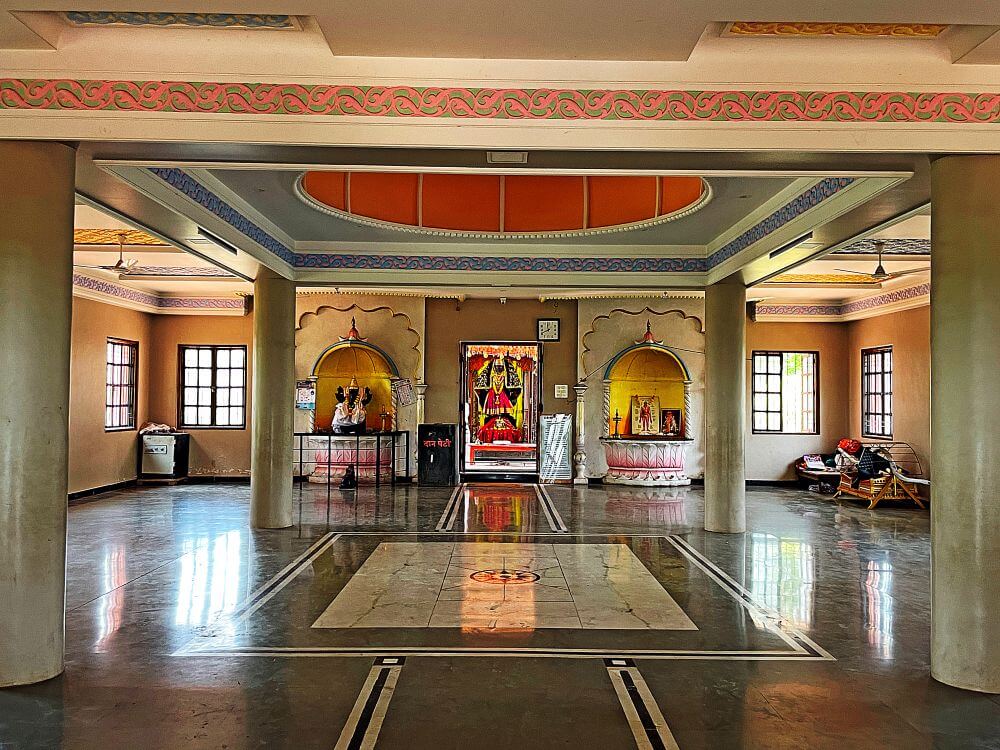
The enclosed Sabhamandapa (Gudhamandapa) has ventilators for air and light. In the center of the Sabhamandapa, there is a brass tortoise sculpture on the floor, and near the wall is a palanquin used during festivals. On the front wall of the Antarala, there are niches on both sides of the entrance. The semi-open Antarala has doors on the left and right sides for exit.
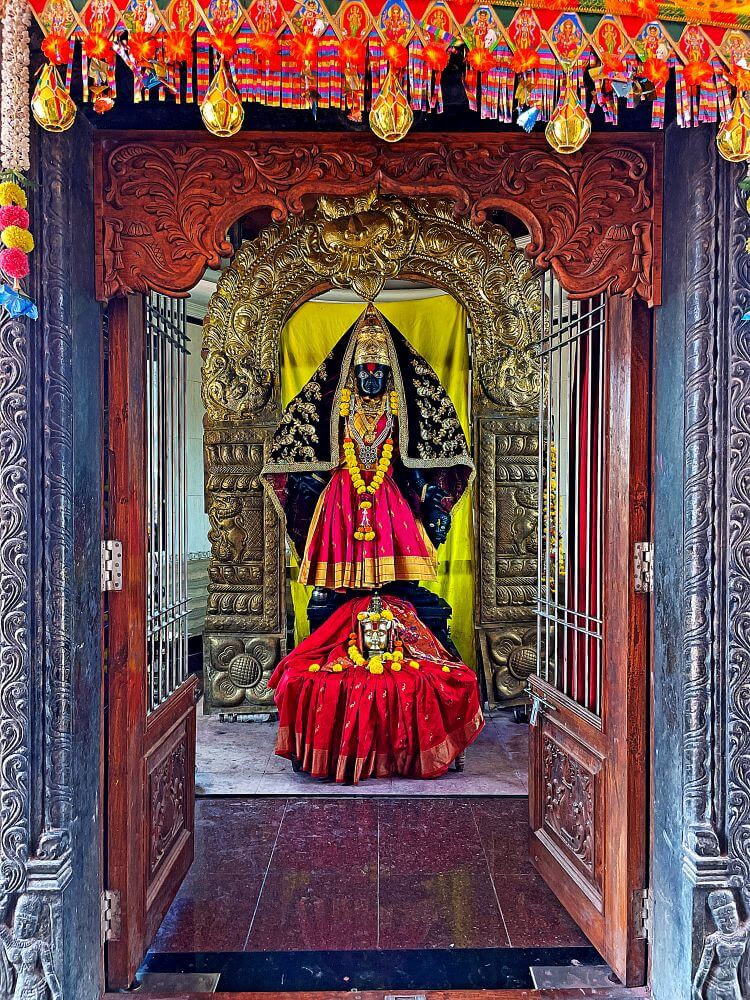
Further ahead is the arched entrance to the Garbhagriha. The door frames feature sculptures of female door-guardians at the bottom, followed by intricate carvings. An idol of Lord Ganesha is placed on the lintel. Inside the Garbhagriha, on a Vajrapitha (pedestal), stands the black stone idol of Goddess Jogeshwari. The Goddess is adorned with a crown, fine garments, and jewelry. Behind the idol is a golden Prabhavali (halo) with ornate pillars on both sides; the arch above features a Makara-torana (crocodile arch) with a Kirtimukha at the center. The Garbhagriha has ventilators for light and air. There is a circumambulation path (Pradakshina Path) around the exterior of the Garbhagriha. The parapet on the ceiling of the main hall contains niches with sculptures of various deities. The roof of the Garbhagriha features a square Shikhara, adorned with niches on all four sides containing divine idols. The walls of the Shikhara have vertical fluted carvings, topped with an Amalaka and a Kalash.
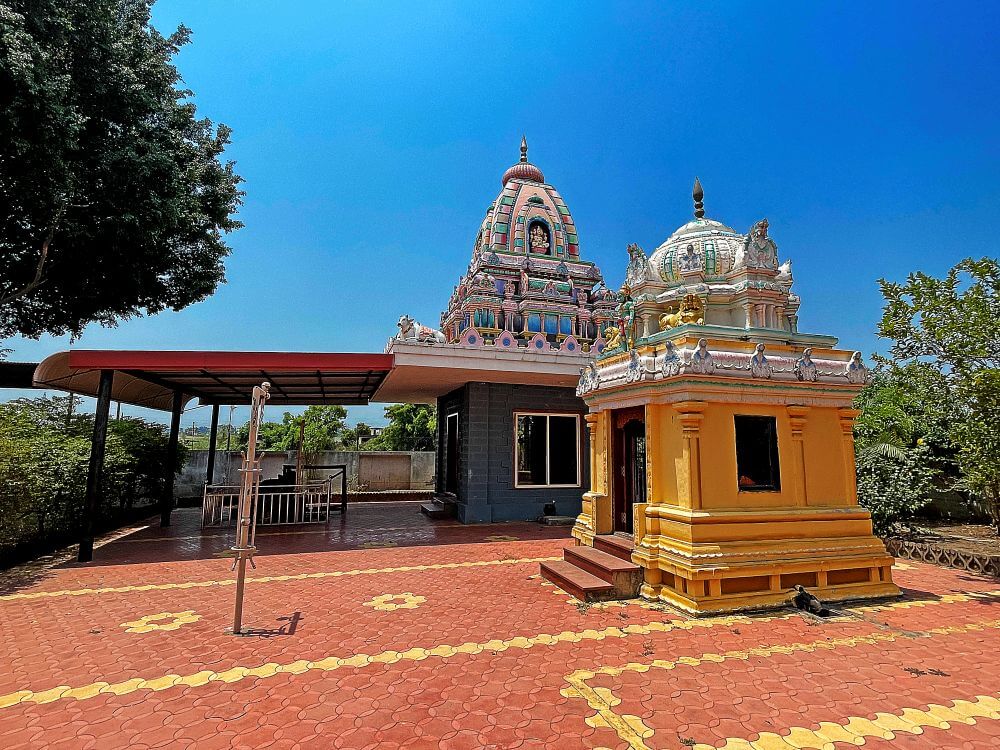
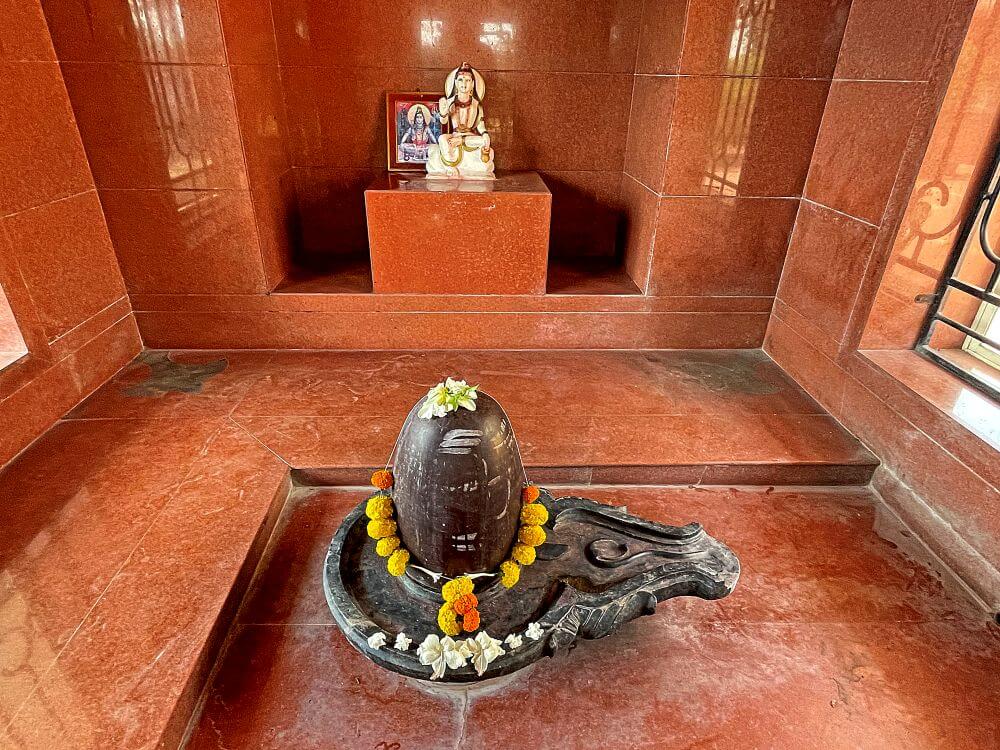
Beside this temple is a Maruti (Hanuman) temple. Inside, there is a black stone idol of Maruti on a pedestal. Maruti holds a mace in one hand, while the other hand is in the Abhaya Mudra. The square, ornate Shikhara of the temple features an idol of Maruti on the front and lion sculptures on both sides. The Shikhara is crowned with an Amalaka and a Kalash. Next to the Maruti temple is a temple dedicated to Lord Mahadeva.
Mahashivratri is the main seven-day annual festival celebrated here with great enthusiasm. Additionally, festivals are celebrated during Chaitra Padwa, Navratri, Sharadiya Navratri, Dussehra, Diwali, and the month of Shravan.
This sacred temple stands as a testament to deep spiritual devotion, ancient architectural grandeur, and rich local cultural traditions.
The sanctum sanctorum houses the divine idol consecrated according to ancient Vedic traditions, surrounded by serene courtyards and traditional temple architecture.
Navratri, Maha Shivratri, Annual Temple Jatra & Deepotsav
Compare and book flights, secure top-rated local hotels near the temple, hire reliable guides, and rent cars instantly.
Extend your pilgrimage by visiting other highly sacred temples located nearby.

Add ₹999 more to unlock FREE SHIPPING!
Your sacred cart is currently empty.
Shop Photo FramesFill in your delivery details below to place your order.
Add comment