
Add ₹999 more to unlock FREE SHIPPING!
Your sacred cart is currently empty.
Shop Photo FramesThe village of Medad in Malshiras Taluka is considered significant from a religious and cultural perspective. The Kalbhairav Temple situated in this village is an excellent example of ancient architecture. Kalbhairav is considered a fierce manifestation of Lord Shiva. He is the symbol of the concept where ‘Kaal’ means ‘Time’ and ‘Bhairav’ means the ‘Fearsome Protector’. Thousands of devotees visit this temple of Kalbhairav, the guardian deity of the village, every year for his blessings. A grand fair (Yatra) of Kalbhairav is held here in the month of Chaitra. Devotees from across Maharashtra, as well as from Andhra Pradesh, Telangana, and Karnataka, attend this fair in large numbers.
Kalbhairav is also known as the ‘Kotwal of Kashi’. Papabhakshan, Amardak, and Kaalraj are his other names. According to mythology, Kalbhairav originated from the anger of Lord Shiva on Margashirsha Krishna Ashtami. Once, Lord Brahma insulted Shiva, which enraged him. From that fire of anger, the dark-complexioned Bhairav was born, and he severed the head of Brahma that had insulted Shiva. Consequently, he incurred the sin of Brahmahatya (killing a creator). Despite visiting all the holy pilgrimage sites, he could not be absolved of this sin. Finally, he attained liberation from the sin in Kashi and placed Brahma’s head there. The place where Kalbhairav placed the head is known as Kapalmochan Tirtha. According to the Kalika Purana, Mahakal, a Gana of Shiva, was born as Bhairav due to a curse from Parvati.
There are many Kalbhairav temples in Maharashtra and North India. It is said that the Kalbhairav Temple at Medad was built 300 to 400 years ago. This temple is located in the heart of Medad village. Being the village deity, this temple is also famous as the Nath Temple. There are many unique hero stones (Virgal) in the temple premises. Of the four parts of a Virgal sculpture, the first part depicts the martyrdom of the hero and the hero worshipping Lord Mahadev. The second part shows Apsaras (celestial nymphs) arriving to take the martyred hero to heaven. The third part depicts the type of battle in which the hero attained martyrdom. Generally, the fourth and final part shows the body of the fallen hero. However, the unique feature here is that all the hero stones in this area have animal sculptures carved in the lower sections. There are many such hero stones on the platform in front of the temple entrance.
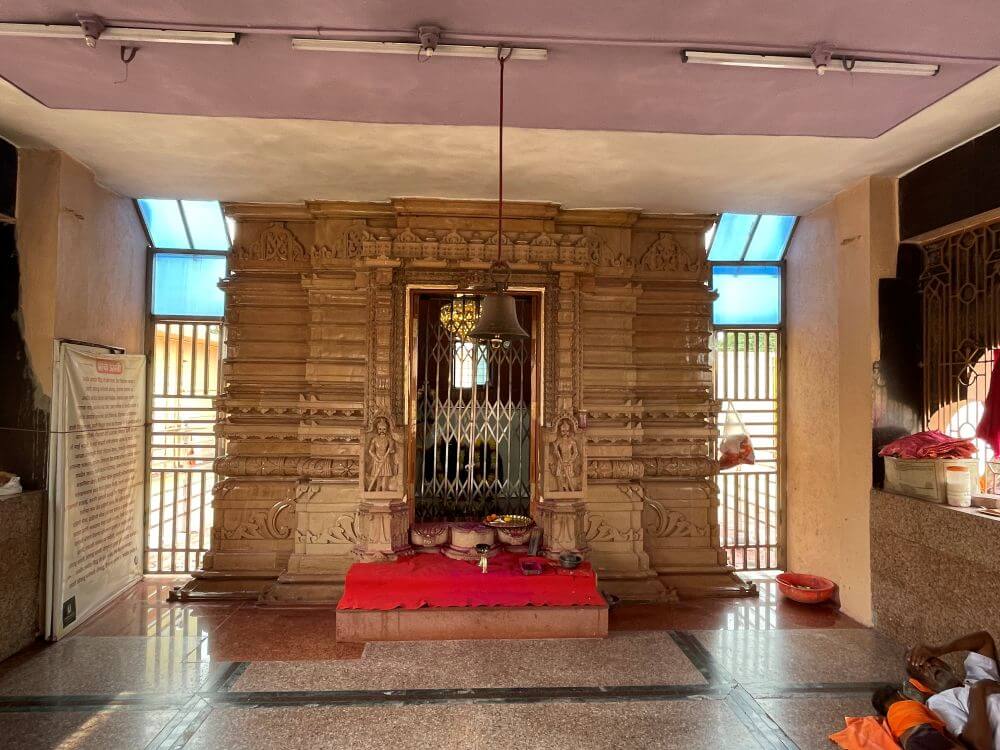
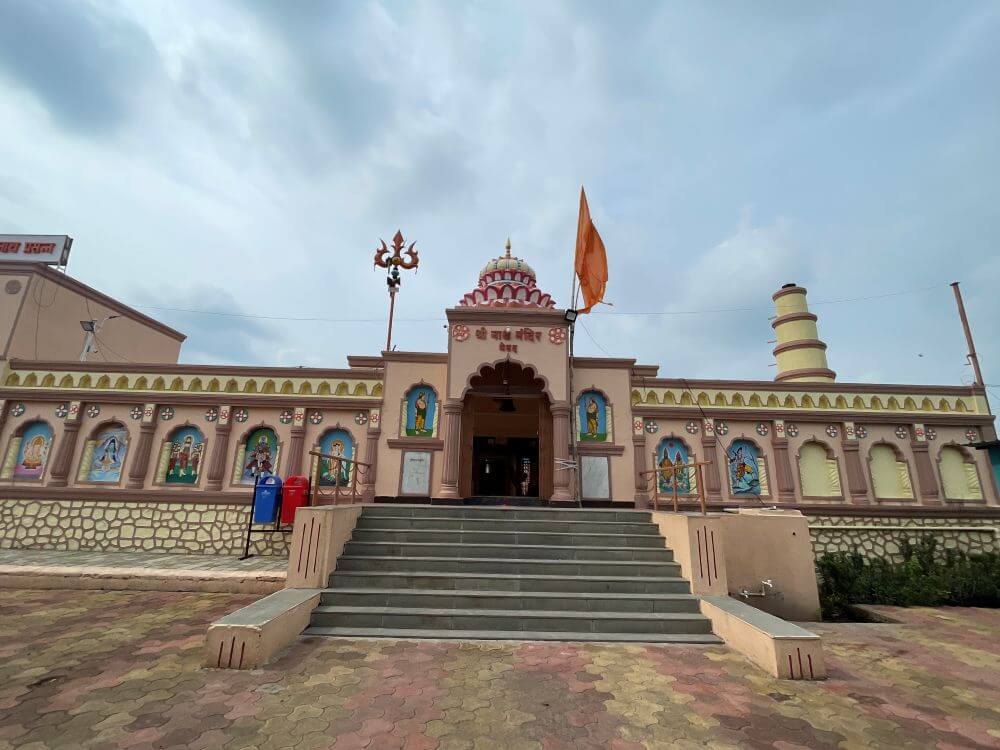
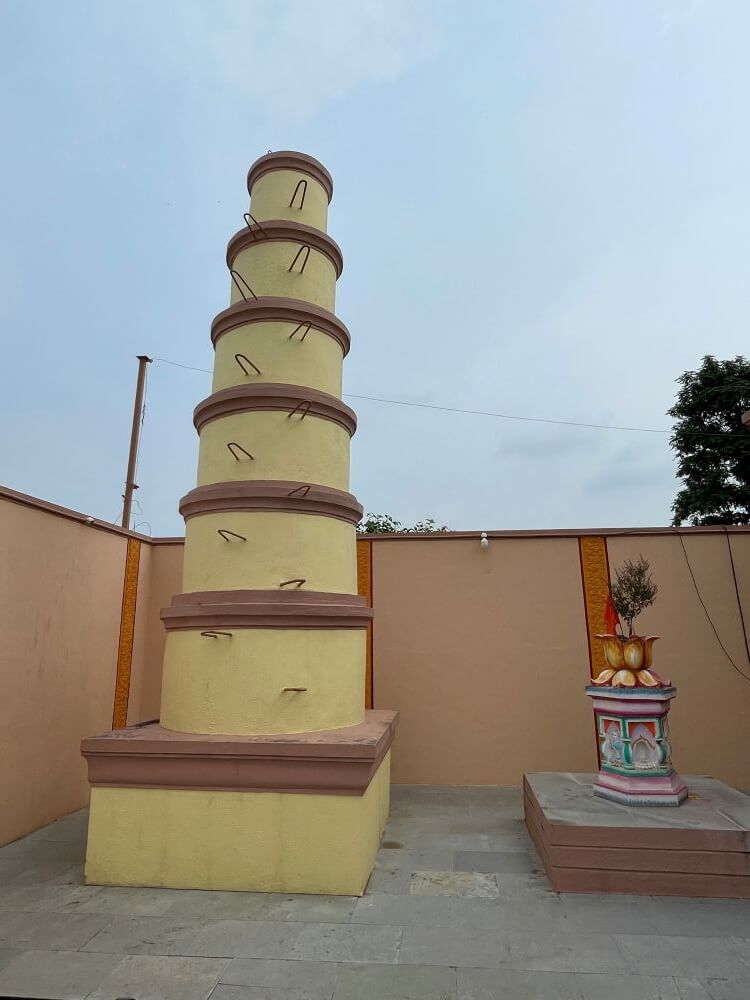
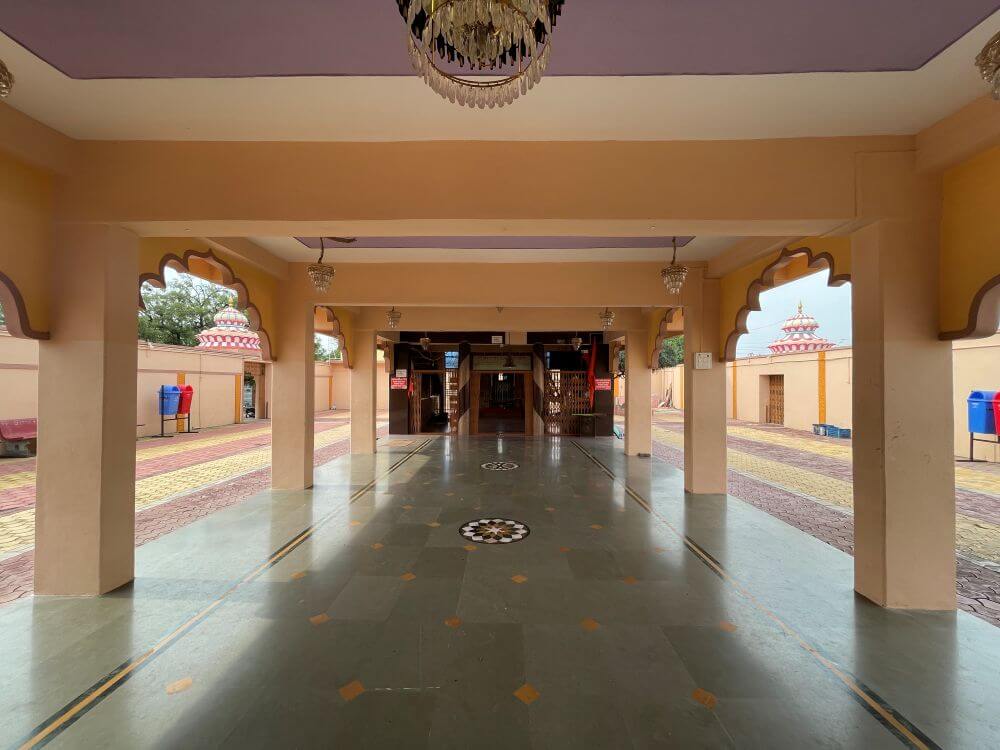
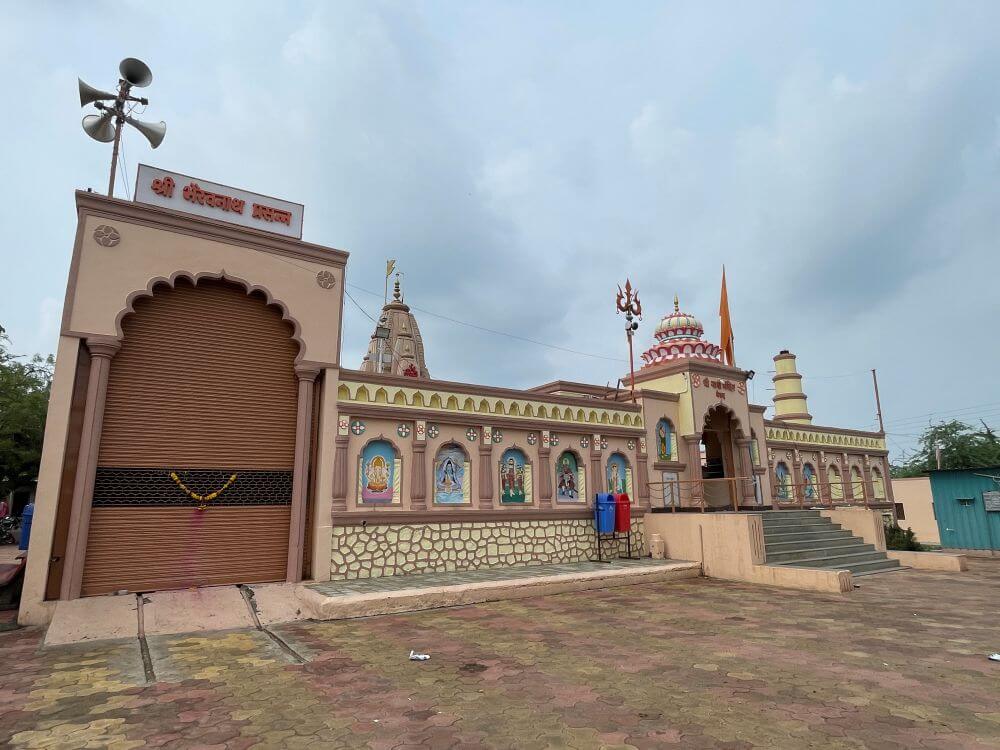
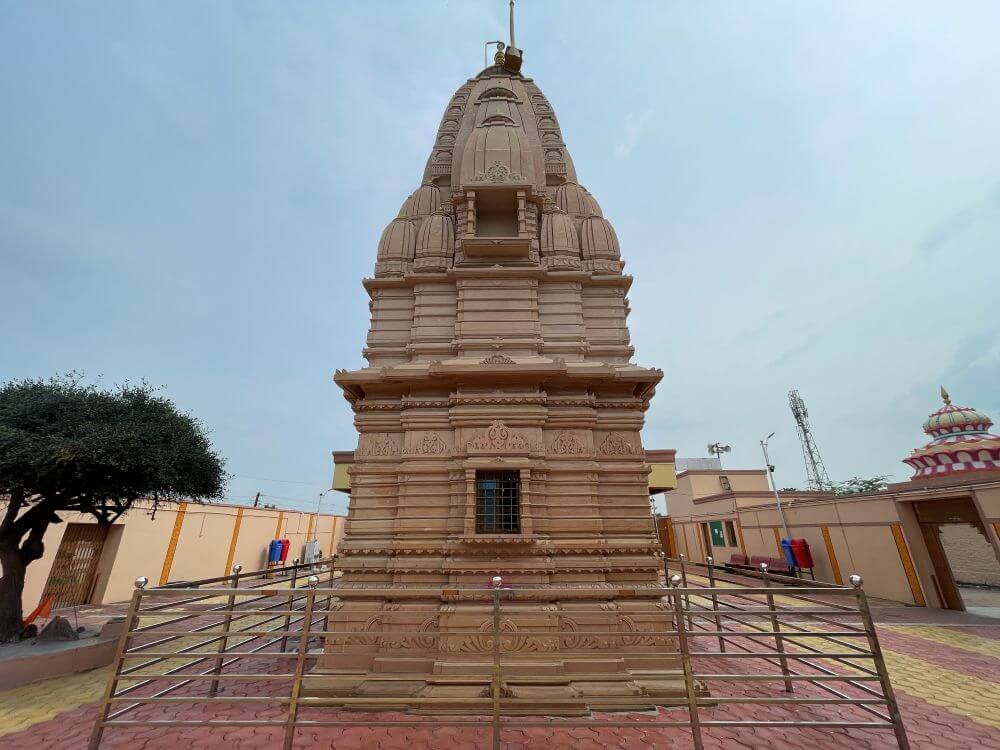
The temple is situated on a high platform. One enters the paved courtyard of the temple after climbing six to seven steps. From the courtyard, one climbs another ten steps to reach the entrance gate located in the temple’s fortification wall. In the arched niches of the fortification on both sides of the entrance, paintings of various deities are depicted. There are pillars on both sides of the entrance with an arched gateway above them. Paintings of Dwarpals (gatekeepers) are depicted next to the pillars. To the right of the entrance is a large Trishul (trident), and above it is a dome-shaped Shikhara with lotus carvings. Inside the entrance, near the fortification, there are lamp pillars (Deepstambh), a Tulsi Vrindavan, and some ancient stone idols. From this entrance, one enters the Sabhamandap (assembly hall) of the temple. The temple structure consists of a Sabhamandap, Antarala (vestibule), and Garbhagriha (sanctum sanctorum). The open-style Sabhamandap has square pillars on the sides connected by arched gateways. Beyond the Sabhamandap is the Antarala, and after leaving space for the circumambulation path (Pradakshina), the Garbhagriha is designed. There are Dwarpala sculptures at the base of the pillars at the entrance of the Garbhagriha. The outer walls of the Garbhagriha are adorned with intricate carvings and craftsmanship. Inside the Garbhagriha, there are black stone idols of Kalbhairavnath and Jogeshwari Devi on a Vajrapitha. Various ornaments and garments are carved onto these idols. Below the Vajrapitha are the Swayambhu (self-manifested) stones of Kalbhairav and Jogeshwari Devi. The Garbhagriha is topped by a main Shikhara featuring replicas of several smaller Shikharas. At the apex of the Shikhara are the Amalaka and the Kalash.
Every year, a grand two-day fair is held here in the month of Chaitra. During this fair, the Gajidhol dance is performed. There is a tradition of performing Gajidhol for family rituals and the fulfillment of vows. Gajidhol and Gajinritya are organized to prevent calamities from befalling the village, to ensure good rainfall and harvests, and to appease the deity. In this dance, large drums (Dhols) are played, and the participants dance in a circle. The dancer is called ‘Gaji’ and the drummer is called ‘Dholya’, which is why this dance is famous as Gajidhol. During the fair, Bhajans, Kirtans, a Palkhi procession, and Mahaprasad are organized. The Palkhi procession takes place on the evening of the fair. Wrestling competitions, Tamasha, and Bharud programs are also organized during this time. Every Sunday at 9 PM, Dhuparati (incense ritual) is performed in the temple. Hundreds of villagers and devotees from the surrounding areas attend this ritual. After the Dhuparati, the villagers practice the Gajidhol dance.
This sacred temple stands as a testament to deep spiritual devotion, ancient architectural grandeur, and rich local cultural traditions.
The sanctum sanctorum houses the divine idol consecrated according to ancient Vedic traditions, surrounded by serene courtyards and traditional temple architecture.
Navratri, Maha Shivratri, Annual Temple Jatra & Deepotsav
Compare and book flights, secure top-rated local hotels near the temple, hire reliable guides, and rent cars instantly.
Add ₹999 more to unlock FREE SHIPPING!
Your sacred cart is currently empty.
Shop Photo FramesFill in your delivery details below to place your order.
Add comment