
Add ₹999 more to unlock FREE SHIPPING!
Your sacred cart is currently empty.
Shop Photo Frames
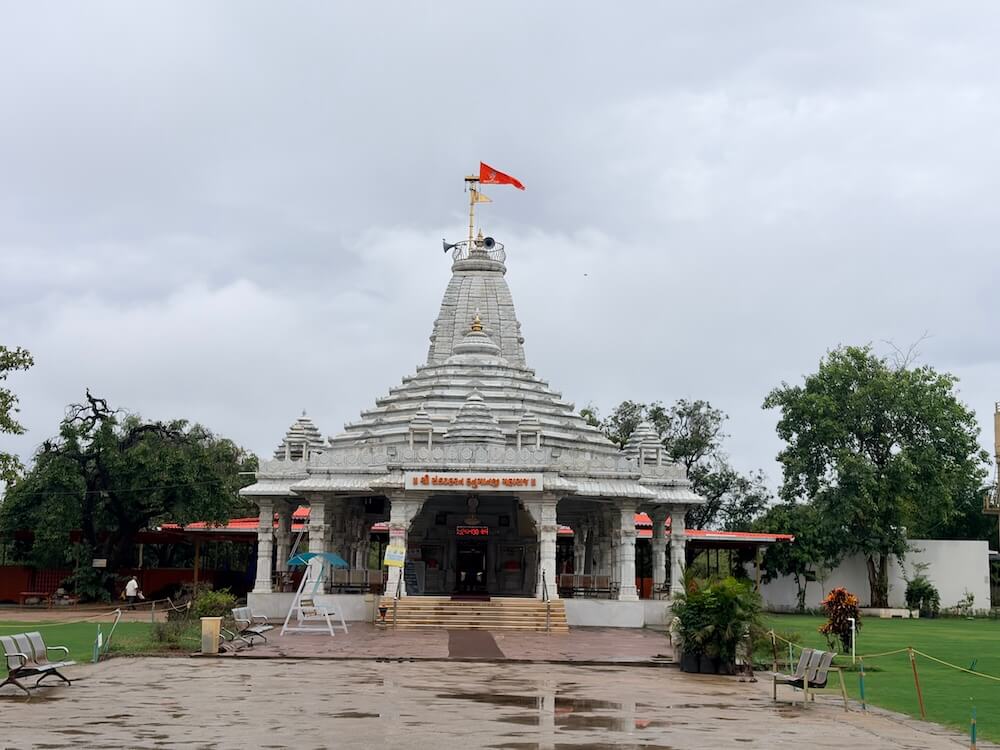
Marutidham, also known as the Sankat Haran Hanuman Temple, situated at Pardi Parnera in Valsad Taluka, is revered as a paramount seat of faith in the district. According to religious tradition, Lord Hanuman is considered to be the eleventh Rudra avatar of Lord Shiva. He is venerated as the embodiment of strength, intellect and devotion. In this temple, Hanuman is worshipped in his ‘Sankat Haran’ form, signifying the remover of all types of distress and adversities. It is the firm belief of the devotees that worshipping Maruti at this sacred place alleviates financial, physical and mental tribulations in a person’s life. Devotees arrive at this temple in immense numbers, particularly to seek deliverance from the afflictions of the planet Saturn or other astrological flaws.
Various Puranas, ancient scriptures and epics contain numerous references explaining why Maruti earned the epithets ‘Sankat Haran’ or ‘Sankat Mochan’. Hanuman is regarded as the deity who dispels the distress of both devotees and gods alike. In the epic ‘Valmiki Ramayana’, there are explicit references to Hanuman removing the crises that befell Lord Ramachandra and Lakshmana. When Lakshmana fell unconscious on the battlefield due to an arrow shot by Ravana’s son, Indrajit, Hanuman lifted the entire Dronagiri mountain and brought the Sanjeevani herb to save his life. This act averted the grave peril looming over the Vanara army and Lord Shri Ram. In the subterranean realm of Patalaloka, when Ahiravana abducted Shri Ram and Lakshmana and prepared to sacrifice them, Hanuman ventured into Patalaloka, slew Ahiravana and rescued Shri Ram and Lakshmana. Whilst searching for Mother Sita, he struck a blow to Ravana’s arrogance by burning Lanka.
In the hymn ‘Sankat Mochan Hanumanashtak’ composed by Goswami Tulsidas, one finds descriptions of episodes from Hanuman’s childhood onwards. It primarily refers to incidents such as his childhood attempt to swallow the sun, liberating the sun from Rahu’s clutches, relieving Sugriva of his distress and granting asylum to Vibhishana. According to the ‘Shiva Purana’ and ‘Skanda Purana’, testimonies reveal that Hanuman’s incarnation was meant to destroy earthly calamities and demonic forces. The scripture ‘Hanuman Chalisa’ also contains lines such as ‘Sankat te Hanuman chhudavai’ and ‘Sankat katai mitai sab peera’. These lines clearly illustrate that Maruti is the deity who eliminates afflictions from human life. Due to these references in ancient scriptures, Maruti is known as ‘Sankat Haran’.
Numerous local legends prevail regarding the establishment of the Marutidham temple at Parnera. According to these legends, in ancient times this region was dominated by hills and forests. Citizens, merchants and travellers traversing this route used to fear wild beasts as well as sudden natural calamities. During that era, a Hanuman-devotee ascetic arrived here. He began his meditation whilst residing under a tree. One night, the ascetic received a divine vision of Hanuman in his dream. Hanuman commanded that his presence exist upon this land and that a shrine should be created here. He also revealed to the ascetic that if devotion was offered at this spot, every person travelling through the area would be protected from dangers and fear. The following morning, upon waking, the ascetic gathered the local people and narrated the account of this dream.
Believing the words of the ascetic, the villagers commenced clearing the spot. Whilst clearing the ground, they discovered an idol of Hanuman there. The ascetic and the villagers collectively consecrated the idol at that very spot in accordance with scriptural rituals. Following this consecration, the calamities, natural disasters and the menace of wild beasts afflicting the travellers vanished. Owing to this experience of removing the distress of wayfarers, people named this temple the ‘Sankat Haran Hanuman Temple’.
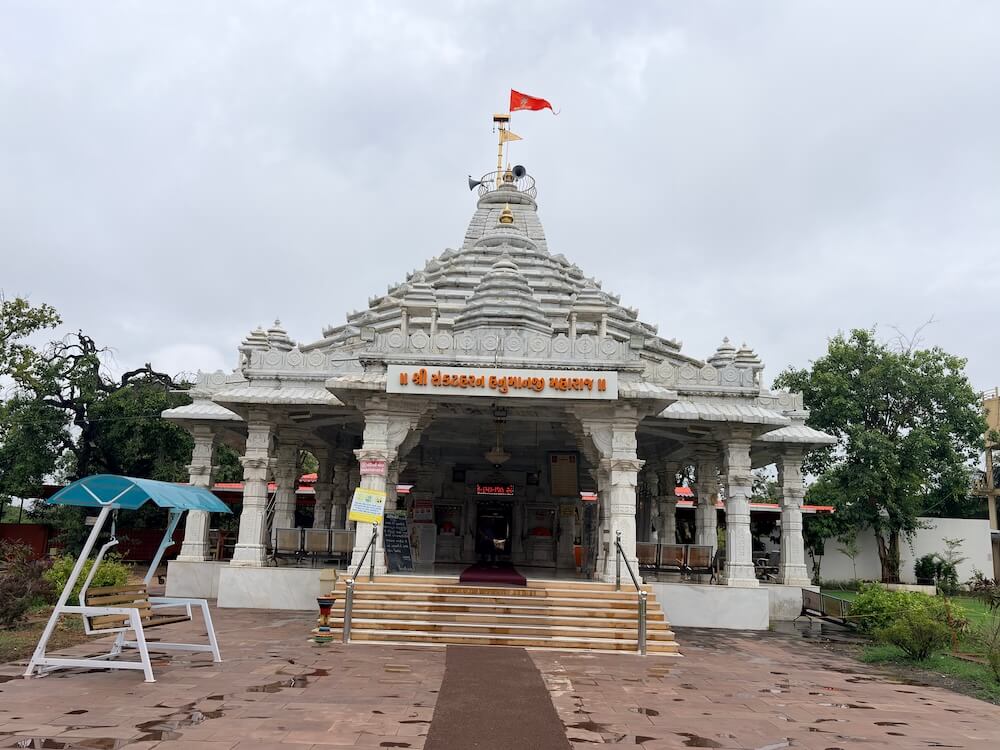
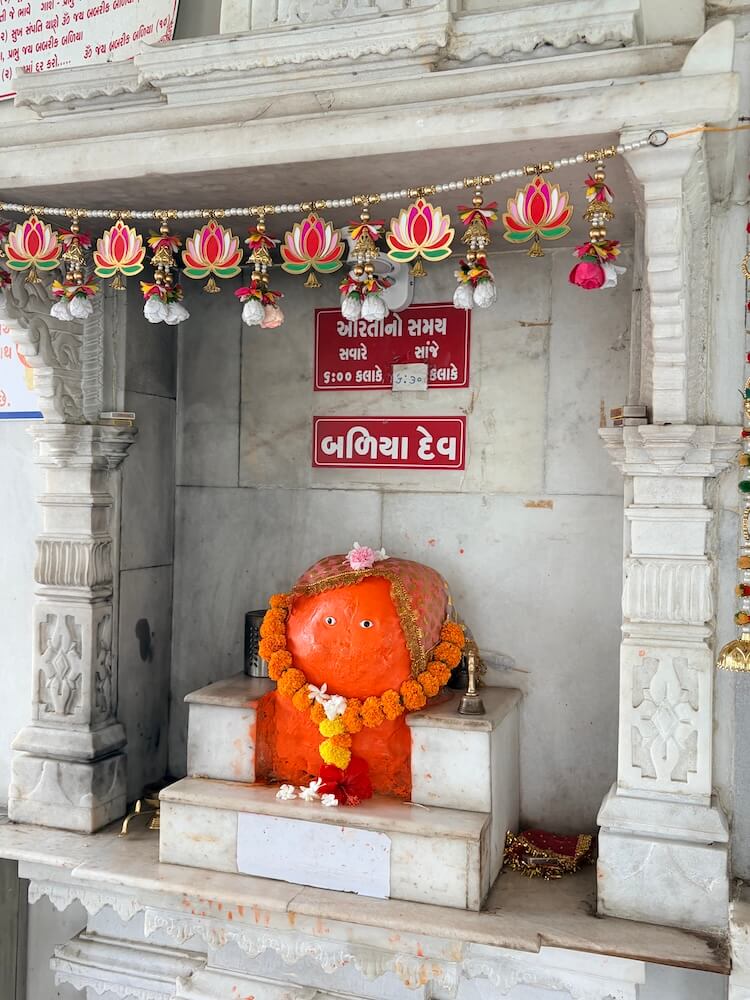
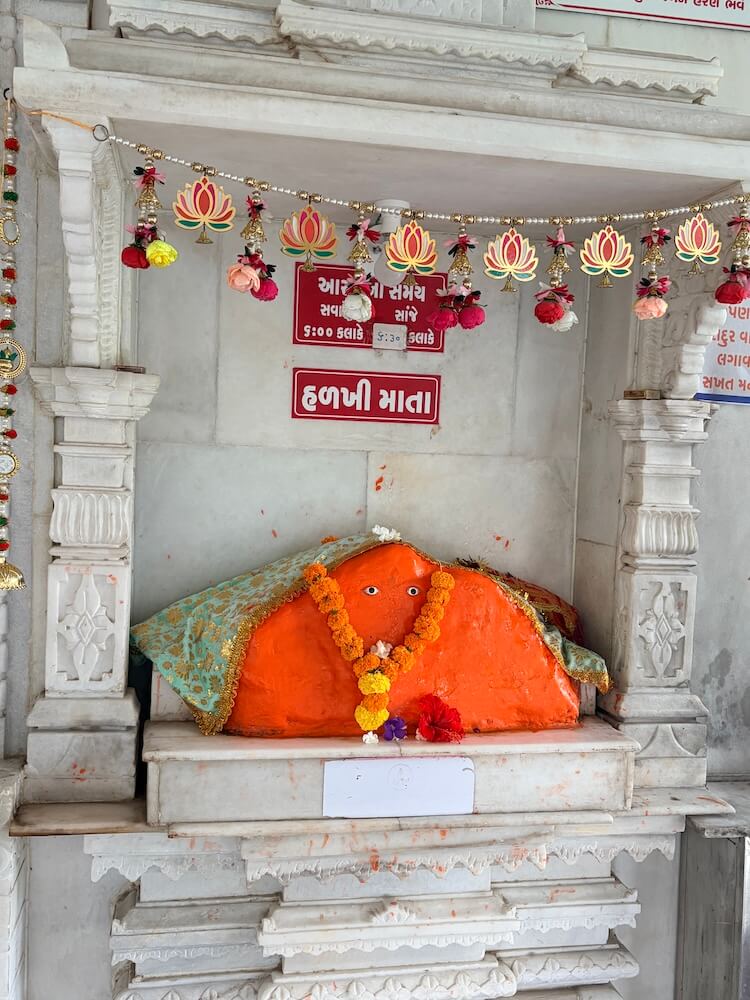
This temple at Parnera is situated adjacent to the main road. The grand gateway of the temple is set within the ramparts surrounding the precinct. Built using reinforced concrete, this grand gateway features intricate carvings. Above the central portion of the grand gateway, an idol of Maruti is enshrined within a niche designed like a spire. One enters the temple courtyard through this gateway. A paved path extends from the entrance to the temple. Lawns have been laid out on both sides of this path. Ascending eight steps from the courtyard leads to the front porch (Mukhamandapa) of the temple, which rests upon an elevated plinth. This temple is constructed in the Maru-Gurjara architectural style and is made of marble. The temple design comprises three front porches, a congregational hall (Sabhamandapa), a vestibule (Antarala) and a sanctum sanctorum (Garbhagriha). All the front porches and the congregational hall here feature a semi-open design. Every pillar here is adorned with carvings. In the congregational hall, leaving a circumambulatory path ahead, the vestibule and the sanctum sanctorum are laid out. On the front wall of the vestibule, within the niches on either side of the entrance, stand the vermilion-coated idols of Baliya Dev and Halkhi Mata. The door frames at the vestibule entrance are adorned with detailed carvings. On the lintel of the entrance, a sculpture depicting the Vanara army alongside the five-faced Hanuman is carved.
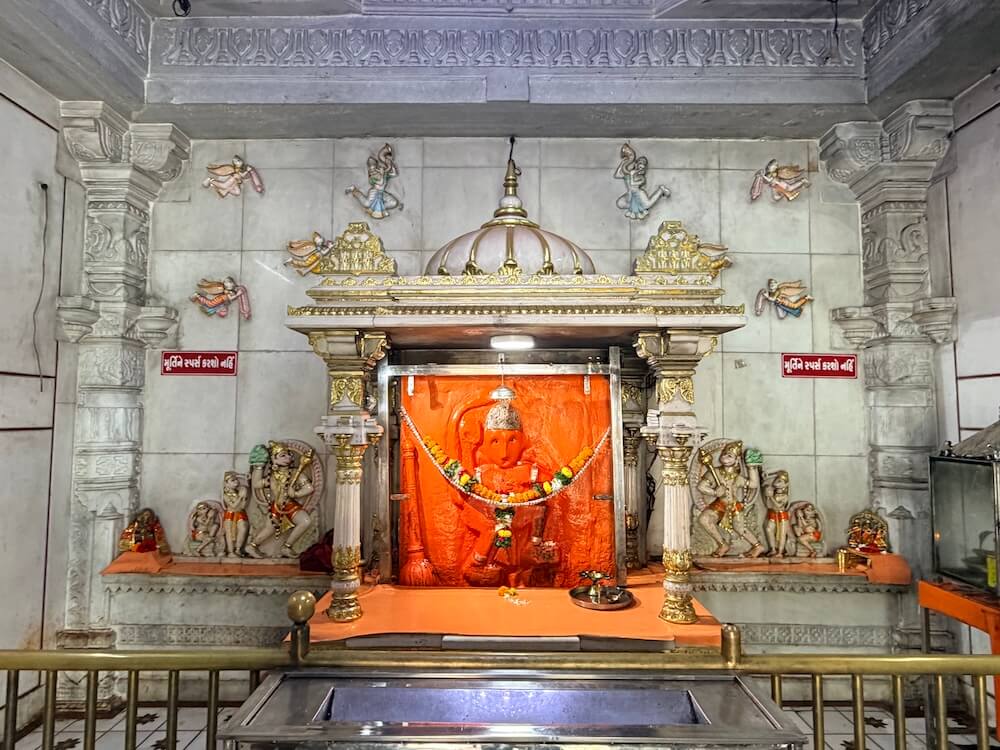
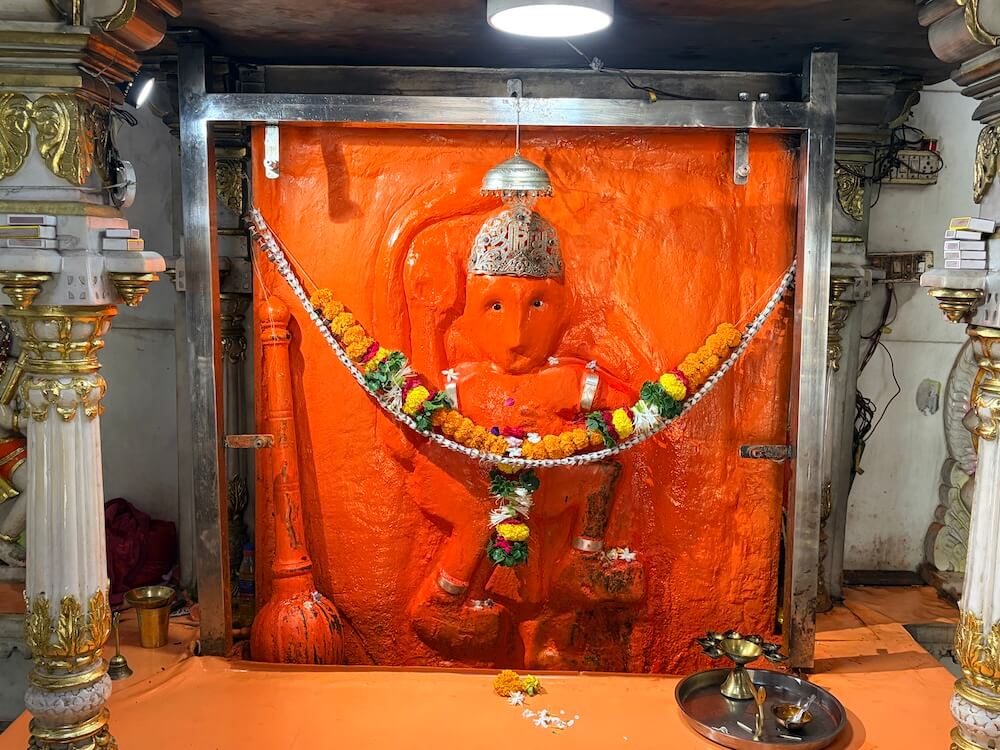
Inside the sanctum sanctorum, a vermilion-coated idol of Hanuman rests within a marble pavilion on a dais (Vajrapitha). This idol is adorned with a silver crown. On the walls flanking both sides of the idol, various expressive postures of Hanuman are carved. The ceiling and spire of this temple are systematically structured. The spire over the congregational hall is stepped like a pyramid, tapering towards the top. In architectural terms, this type of structure is called the ‘Samavarana style’. In addition to this, there are three spires over each viewing porch and the main spire rises over the sanctum sanctorum.
Numerous festivals and celebrations are observed throughout the year at the Sankat Haran Hanuman Temple. Hanuman Jayanti, celebrated on Chaitra Purnima, is regarded as the primary festival here. On the day of the festival, the entire temple structure is adorned with floral decorations and electrical illuminations. During the dawn prayers on Hanuman Jayanti, the idol is anointed and new vestments and ornaments are donned. Following these rituals, the first grand arati is performed, attended by hundreds of devotees. On the festival day, continuous recitations of the ‘Hanuman Chalisa’ and ‘Sundarkand’ are organised within the temple precincts. Groups of devotees perform devotional songs accompanied by small drums (dholak) and cymbals. During the afternoon session, sanctified food (Mahaprasad) is distributed to the devotees visiting the temple for prayers.
Apart from Hanuman Jayanti, the festival of Ram Navami is also celebrated with great enthusiasm in this temple. To celebrate the birth anniversary of Lord Shri Ram, a cradle ceremony is performed at 12 noon in the main sanctum. Cradle songs are sung on this occasion. On every Saturday of the holy month of Shravan, queues of devotees are formed from the early hours of dawn. On this day, it is customary to apply a coat of vermilion and oil to the idol of Hanuman. Devotees bring oil and vermilion to offer to the deity. It is believed that paying obeisance here on Saturdays in the month of Shravan dispels mental anxieties and fears. Visitors from Valsad, as well as neighbouring districts, arrive here to seek this audience and benefit from this ritual. During the festivals of Dussehra and Diwali, the festival of lights (Deepotsav) and religious rituals are also organised in the temple. Since Tuesdays and Saturdays are considered significant for the worship of Hanuman, religious rituals are organised in the temple on both these days. Devotees can seek the audience of Sankat Haran Hanuman in this temple daily from 6 am to 8 pm.
Navratri, Maha Shivratri, Annual Temple Jatra & Deepotsav
Compare and book flights, secure top-rated local hotels near the temple, hire reliable guides, and rent cars instantly.
Extend your pilgrimage by visiting other highly sacred temples located nearby.


Add ₹999 more to unlock FREE SHIPPING!
Your sacred cart is currently empty.
Shop Photo FramesFill in your delivery details below to place your order.
Add comment