
Add ₹999 more to unlock FREE SHIPPING!
Your sacred cart is currently empty.
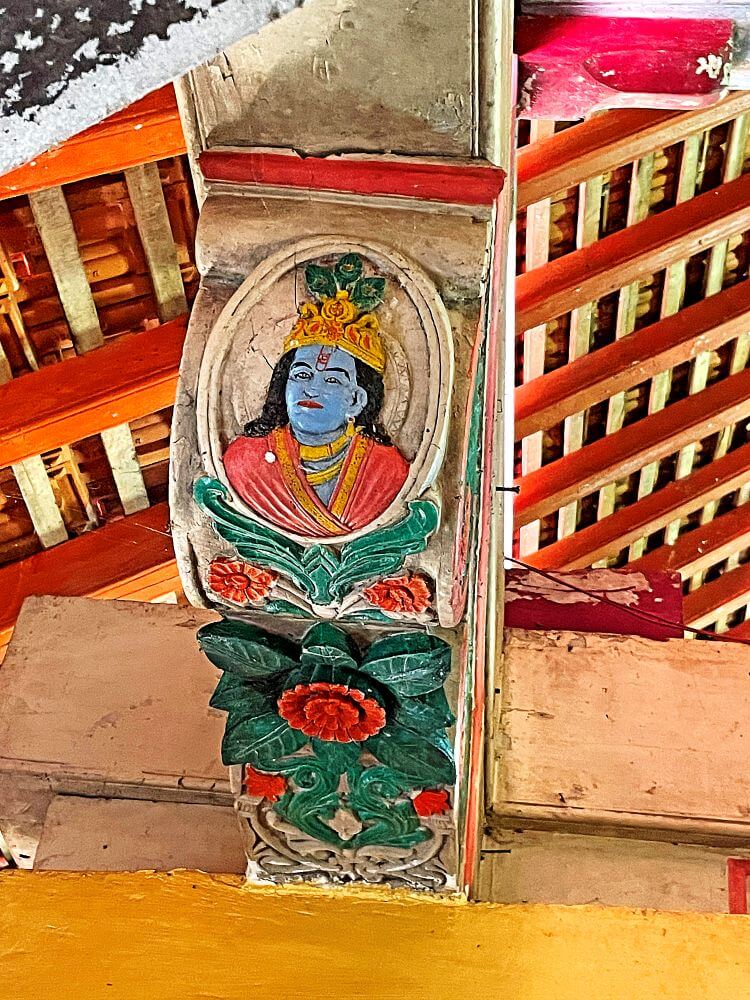
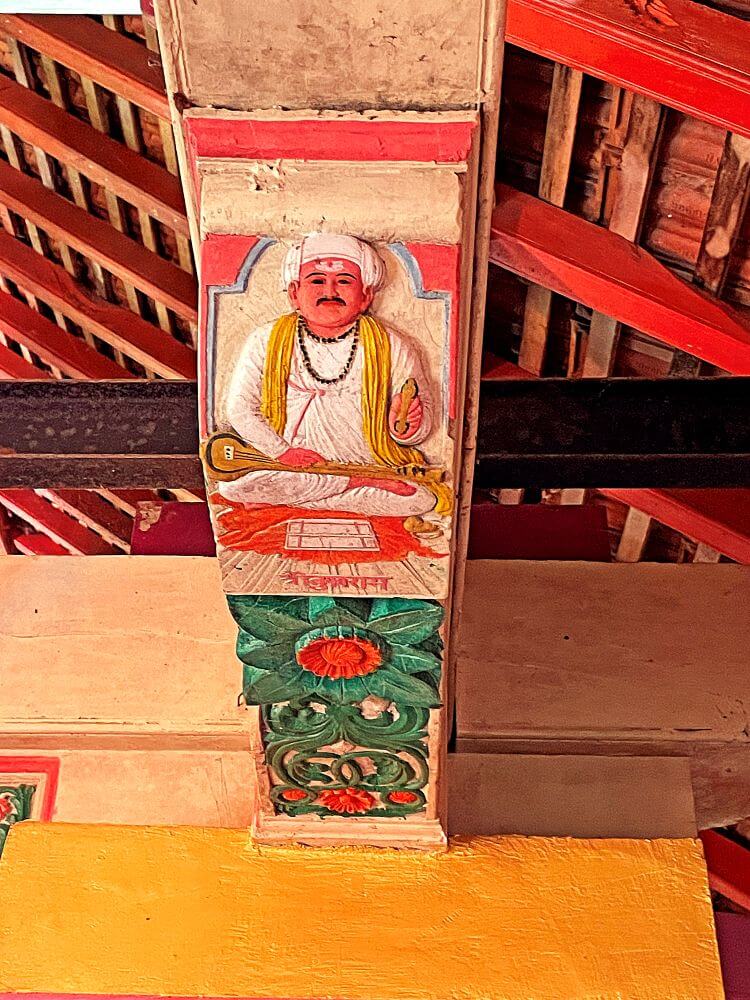
Shop Photo FramesThe village of Rateshwar, located near Gadhitamhane in Devgad Taluka, is nestled in a region rich in natural beauty. Situated along the banks of the Tamhane creek, this village is surrounded by coconut groves and the world-famous Devgad Alphonso mango orchards. The ancient and spiritually vibrant Rateshwar Temple in this village is a place of faith for countless devotees. This tiled-roof temple, built in the Konkani architectural style, is famous not only among devotees but also among scholars for its distinctive wood carvings. The sculptures of Ganapati, Vishnu, Hanuman, Tukaram Maharaj, and Shivaji Maharaj carved on the brackets near the beams in this temple are considered a rare treasure of the Konkan region.
It is believed that the five deities—Rateshwar of Devgad, Kunkeshwar, Dhopeshwar of Rajapur, Mahalaxmi of Vanivade, and Chaundeshwari of Pendhari—are siblings. The legend of this temple states that in the past, all these deities used to go to the sea at Kunkeshwar for a holy bath. Once, when Rateshwar went to Kunkeshwar, the front door of the Kunkeshwar temple was closed. Consequently, Kunkeshwar told him to come through the back door; however, as Rateshwar was the elder brother, he felt insulted. He kicked the front door with great force, broke it, and went to meet Kunkeshwar. Feeling insulted, Rateshwar declared that he would no longer come to Kunkeshwar for his bath. Upon this, Kunkeshwar promised that from then on, the first two waves arriving at the sea would belong to Rateshwar, and the subsequent ones would be his. Since then, devotees here take their first holy bath at Rateshwar before proceeding to Kunkeshwar for darshan.
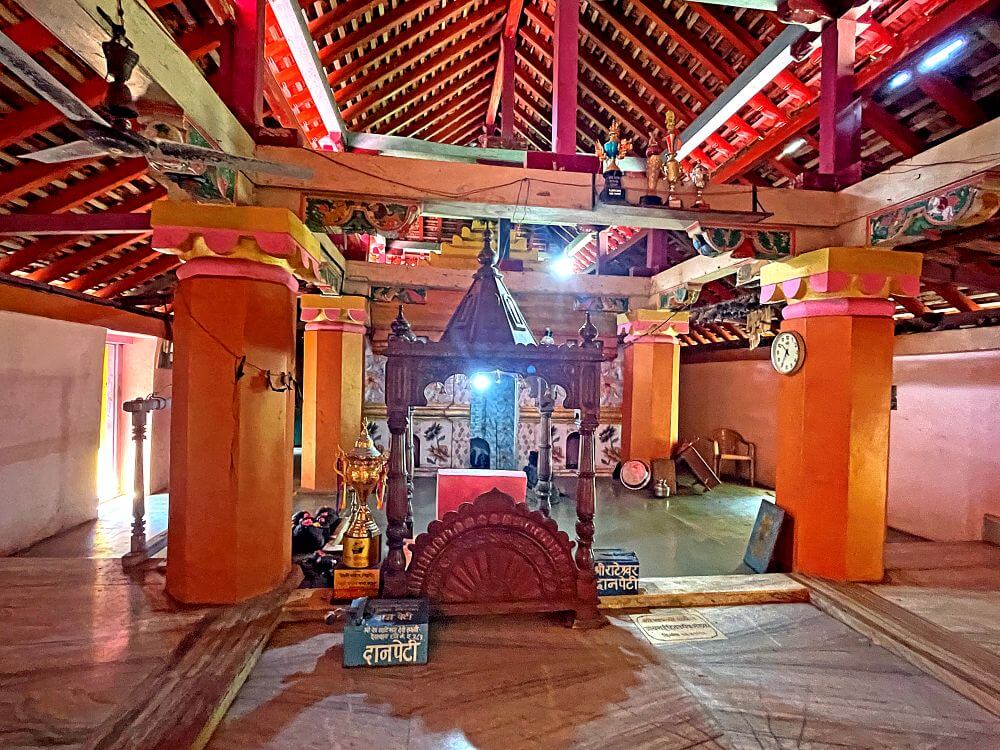
While there is no definitive information on how ancient the Rateshwar Mahadev Temple is, villagers believe it to be over ۳۵۰ to ۴۰۰ years old. It is said that the Kadam family, the original custodians of this deity who hailed from Tuljapur, settled in this village more than ۳۵۰ years ago. Upon entering Rateshwar village, a large arch of the temple is visible right along the main road. This arch leads into the temple courtyard, which is surrounded by a boundary wall. In the center of the spacious courtyard stands the two-story, tiled-roof Rateshwar Temple in the Konkani architectural style. There is an ancient well near the temple. It is customary to wash one’s hands and feet with the water from this well before entering the temple for darshan. The temple is structured with a Sabha Mandap (assembly hall), Antaral (vestibule), and Garbhagriha (sanctum sanctorum). Near the entrance of the Sabha Mandap stands a five-tiered square lamp pillar (Deepstambh). There is a pinnacle (Kalash) at the top of this pillar, and the entire structure is intricately carved. Beside this pillar lies an ancient mortar-shaped cannon.
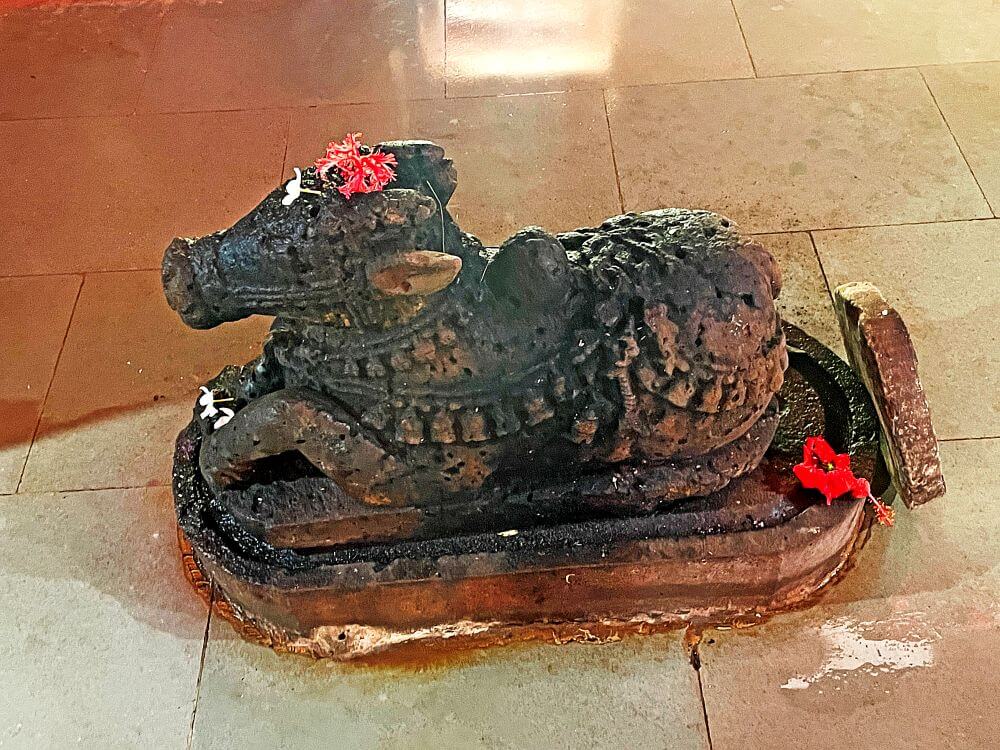
The Sabha Mandap of the temple is newly constructed and semi-open in nature, featuring stone benches along the sides. On the front wall of the Antaral, there are two niches containing the idols of the goddesses Pithai and Mithai. It is said that devotees make vows to these two goddesses for the cure of scabies and other skin ailments. Upon the fulfillment of the vow, the devotees offer flour (pith) to Goddess Pithai and salt (mith) to Goddess Mithai. Entering the Antaral from here, one can see hundreds of brass bells placed by devotees after the fulfillment of their vows. In the center of the Antaral is a turtle idol (Kurma). Further ahead, in a shrine, is a four-armed idol of Mahalaxmi carved in black stone. In the upper right hand, the Goddess holds a sword, and in the lower right hand, a staff; in the upper left hand, she holds a discus (Chakra), and in the lower left hand, a severed head. Near her feet is a tiger, the vehicle of the Goddess. Beside this idol are the twelve Purvas. Additionally, there are six brackets (the extra cross-shaped structures used to support the beams on the pillars). Near the entrance of the Garbhagriha is a stone idol of Nandi. The garland of bells carved on this idol is unique.
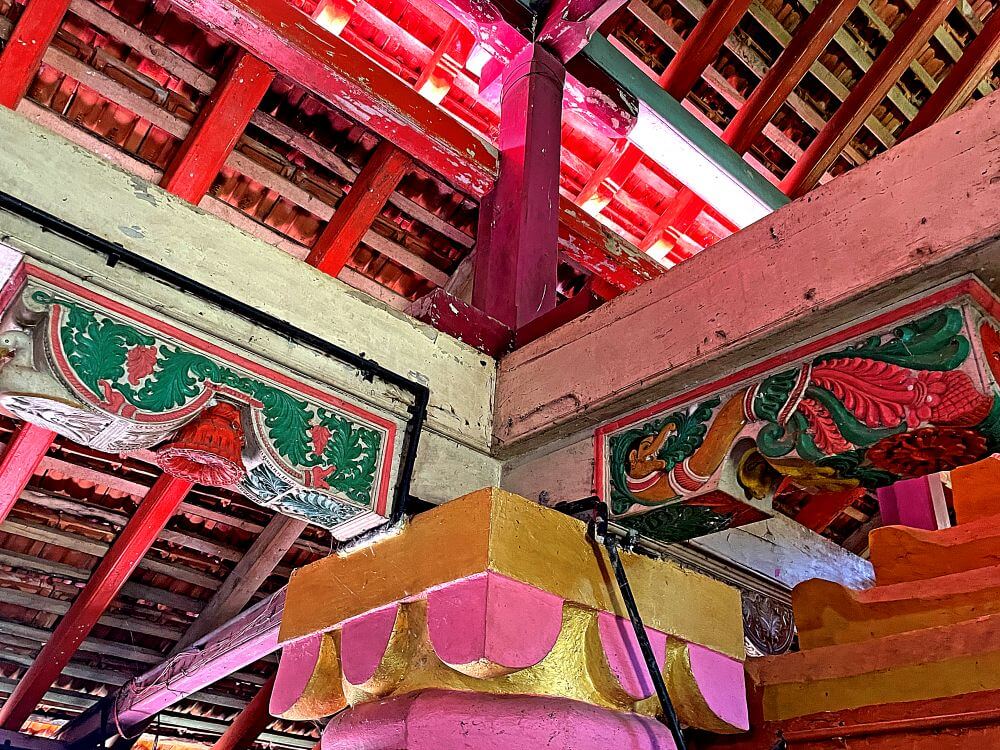
The greatest feature of this temple is its wood carvings. These sculptures and floral patterns are carved on the wooden brackets above the large hexagonal pillars in the Antaral. These carvings include images of Shri Krishna, Ganesh, Hanuman, Ram and Lakshman walking through the forest, Shesha, a tiger-faced figure, and a lion. Furthermore, there is a relief sculpture of Chhatrapati Shivaji Maharaj on horseback. Similarly, the image of Saint Tukaram Maharaj is particularly noteworthy. All these sculptures are in a distinct Marathi style. They have been highlighted with paint, and it is evident that the villagers have preserved them well.
The Garbhagriha is located slightly deeper, past the circumambulation path in the Antaral. In the center of this sanctum lies the Shivalinga of Rateshwar Mahadev, carved from a single piece of black stone. In a niche on the wall behind the Shivalinga, there is a replica of a serpent-hooded Shivalinga, which is carried in a palanquin during festivals. In the temple courtyard, under a tree, is the shrine of Gaval Dev. The Dev-Diwali festival is celebrated here every year. Additionally, in the courtyard in front of the temple, there is the Holi pillar, which is the site of the Dev-Holi. Under a tall tree, there is also a shrine dedicated to the Mahapurush.
Mahashivratri is celebrated here on a grand scale. Only on the day of Mahashivratri can devotees enter the Garbhagriha to have darshan of Rateshwar. A three-day fair (Yatra) is held on this occasion. During this festival, bhajans, kirtans, Gondhal, Jagran, Dashavatar plays, and Mahaprasad are organized. Thousands of devotees from the taluka come to visit Rateshwar at this time. Women who were married into other villages (Maherwashini) make it a point to come during this period to offer a sari and coconut (Oti) to Goddess Mahalaxmi. Legend has it that during the Mahashivratri festival, Rateshwar sends two waves from the Kunkeshwar sea for his bath. The worship of these waves marks the conclusion of the Mahashivratri festival of Rateshwar. The elderly villagers say that this tradition has been continuing for ۳۵۰ to ۴۰۰ years. There is also a large crowd of devotees for the darshan of Rateshwar during the month of Shravan.
This sacred temple stands as a testament to deep spiritual devotion, ancient architectural grandeur, and rich local cultural traditions.
The sanctum sanctorum houses the divine idol consecrated according to ancient Vedic traditions, surrounded by serene courtyards and traditional temple architecture.
Navratri, Maha Shivratri, Annual Temple Jatra & Deepotsav
Compare and book flights, secure top-rated local hotels near the temple, hire reliable guides, and rent cars instantly.
Extend your pilgrimage by visiting other highly sacred temples located nearby.


Add ₹999 more to unlock FREE SHIPPING!
Your sacred cart is currently empty.
Shop Photo FramesFill in your delivery details below to place your order.
Add comment