
Add ₹999 more to unlock FREE SHIPPING!
Your sacred cart is currently empty.
Shop Photo FramesThe Shashwat Maruti Dham Ashram, established for the selfless service of Narmada parikramavasis (pilgrims undertaking the circumambulation of the Narmada River), is situated in Krishnapuri within the Bharuch district. Nestled amidst the verdant embrace of nature upon the banks of the River Narmada, this expansive ashram houses a magnificent temple featuring a seven-and-a-half-foot-tall idol of Hanuman in a dhyanasta (meditative) posture. Continuous recitations of the ‘Sundarkand’ are held at this ashram by the ‘Jai Shri Ram Sundarkand Parivar’, an organisation founded to propagate the teachings of the ‘Sundarkand’ section of the Ramayana. Located in proximity to the ancient Maninageshwar Temple, the ashram precinct also features a hillock graced by a shivalinga of Rudreshwar Mahadev.
The ‘Valmiki Ramayana’, comprising 24,000 verses, is divided into seven kandas or chapters : ‘Balkand’, ‘Ayodhyakand’, ‘Aranyakand’, ‘Kishkindhakand’, ‘Sundarkand’, ‘Yuddhakand’ and ‘Uttarkand’. The stirring narrative of Hanuman who soared across the sky to Lanka, discovered Sita and after the burning of Lanka returned to Shri Ram, is contained in the 68 sargas (cantos) of the ‘Sundarkand’. Drawing upon the ‘Valmiki Ramayana’ as his foundation, the great poet Tulsidas composed the poetic scripture ‘Ramcharitmanas’ around the year 1574 CE. This work was composed in the Avadhi dialect, primarily employing the chaupai (quatrain) and doha (couplet) metres. According to the legend shared on the Sundarkand Parivar’s website, after completing the verses of the ‘Kishkindhakand’, Tulsidas felt that the subsequent portion of ‘Sundarkand’ ought to be written in the direct presence of Hanuman. He then commenced his devotion to Hanuman, who accepted his prayers and manifested before him.
Tulsidas composed the Sundarkand in the very presence of Hanuman, which bestows a profound significance upon this chapter of the ‘Ramcharitmanas’. The renowned Gujarati kathavachak (narrator of sacred stories), Ashwinkumar Pathak, has for many years been reciting the Sundarkand across the world. He founded the organisation ‘Jai Shri Ram Sundarkand Parivar’ and it is he who established Shashwat Maruti Dham.
His life story unfolds thus : a fervent devotee of Hanuman, Pathak was born on 1 June 1952 at Ratanpur (Kantadi) in Godhra taluka. His father was a scholar of Sanskrit. Having lost his mother when he was only three, he was lovingly raised by his grandmother. After completing his education up to the B.A. level, he served for some time as a teacher and also devoted many years to the theatre. He acted in numerous television serials and films as well. In 1995 he founded the ‘Jai Shri Ram Sundarkand Parivar’ and began reciting the Sundarkand at his residence. Later, the ‘Pavitra Gadi’ (sacred seat) was ceremonially installed at the residence of his elder brother, former Union Minister of State Harin Pathak, where recitations commenced every Thursday. At the request of a student, he travelled to America in 1999 for one and a half months. Upon returning to India, from 1st June 2000 onwards he began public recitations of the Sundarkand under the auspices of the Jai Shri Ram Sundarkand Parivar. He has also conducted recitations in the United States, Britain, Canada, Australia, Zambia and other countries.
Once, during a recitation visit to Krushnapuri, the surroundings left a profound impression upon him. Finding that the locality did not possess a single temple dedicated to Hanuman, he resolved to establish here a grand Maruti Dham and create an Ashram to serve parikramavasi pilgrims. At that time the region was heavily forested. After devotees of the Jai Shri Ram Sundarkand Parivar devoted their labour in clearing and preparing the land, the Ashram and temple were built in 2012. About eight kilometres from Rajpardi, amidst dense greenery on the banks of the River Narmada, Shashwat Maruti Dham now stands in quiet splendour.
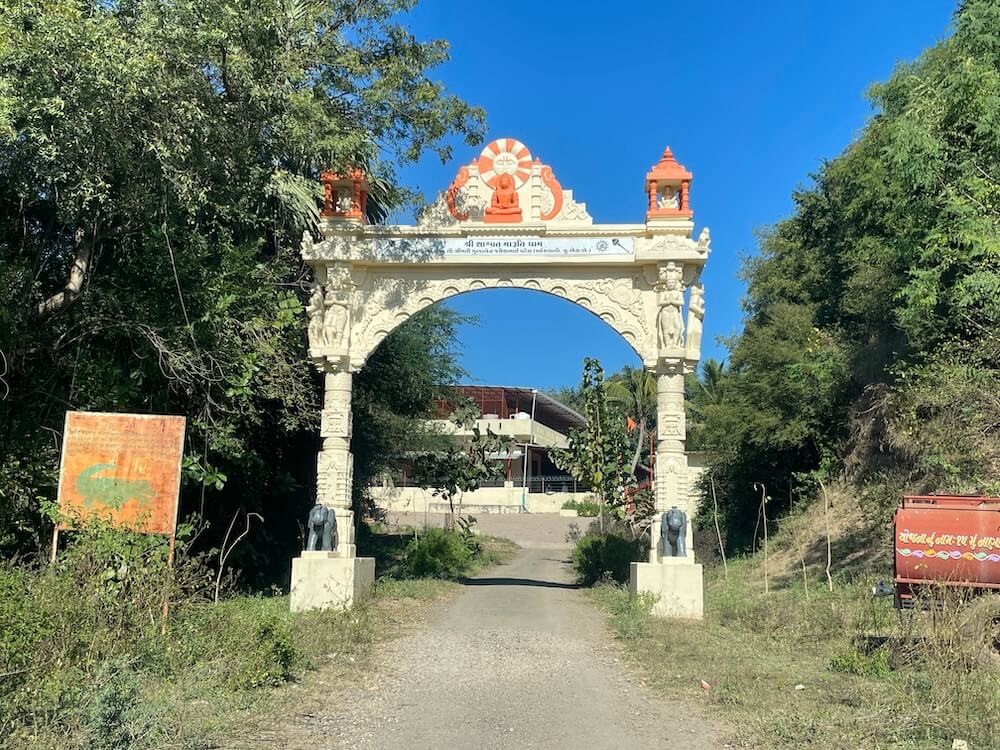
On the unpaved approach road to the Ashram rises a lofty entrance arch, with sculpted figures of dwarasevika (gate attendants) upon its pillars and at the centre of the roof a meditative image of Hanuman. Beyond this stands the iron gate in the compound wall. To the left lies a large, dignified rest hall built for Narmada parikramavasi, where free lodging and meals are arranged for pilgrims. A few steps ahead stands a semi-open shed. Within it, upon a platform, Hanuman presides in a beautifully adorned makhar (decorative shrine structure). To the right from here lies the temple of Shashwat Maruti.
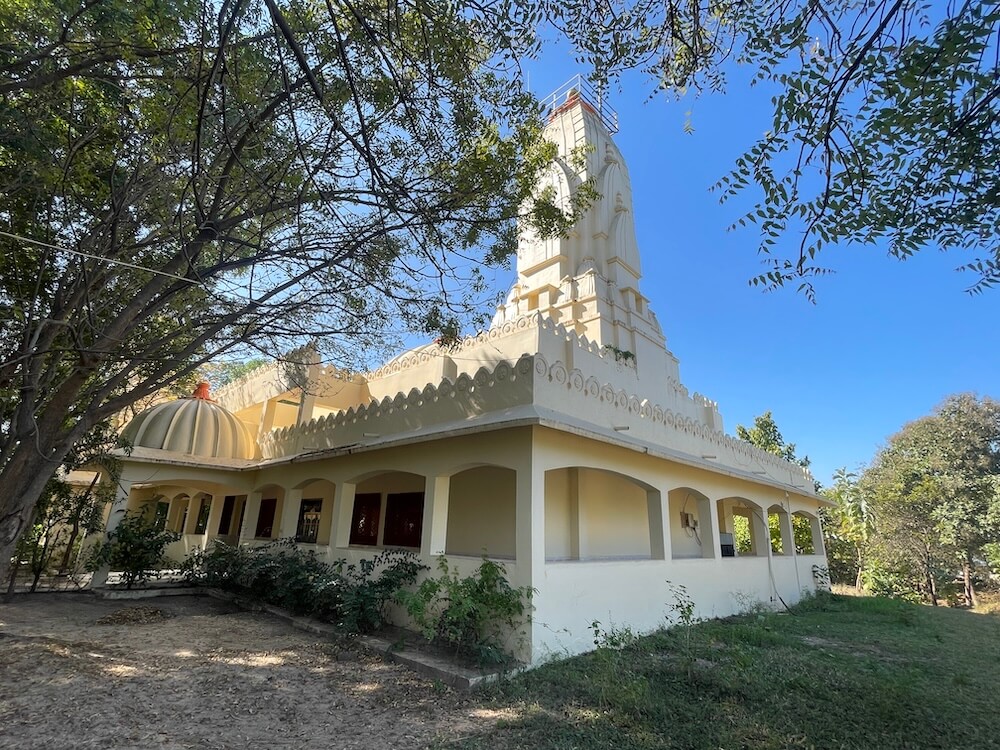
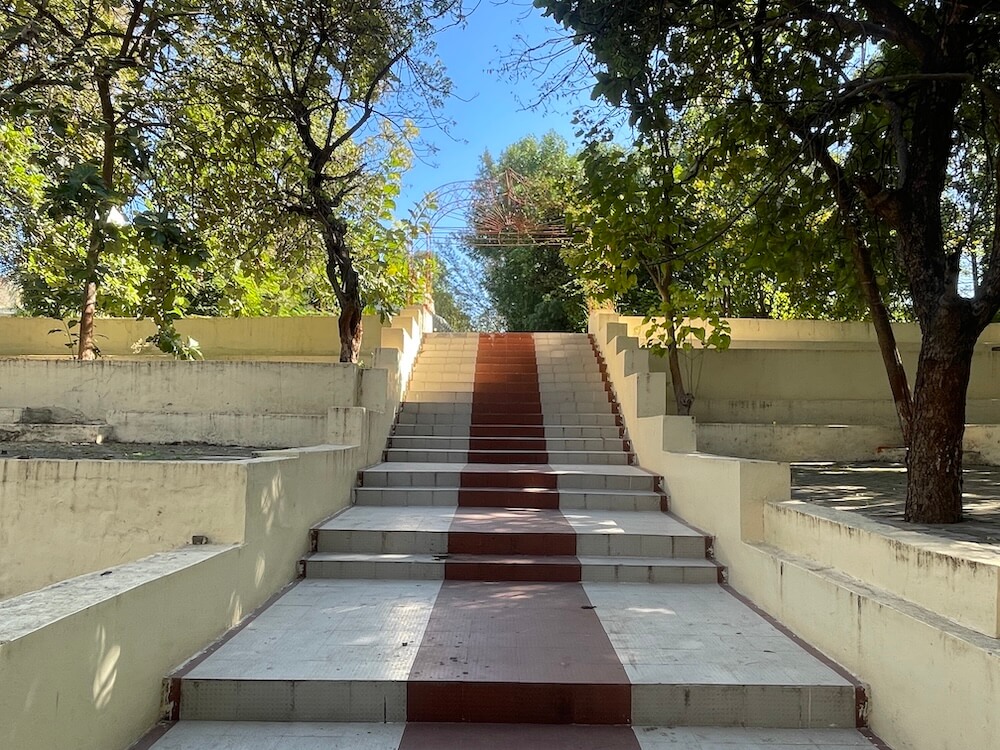
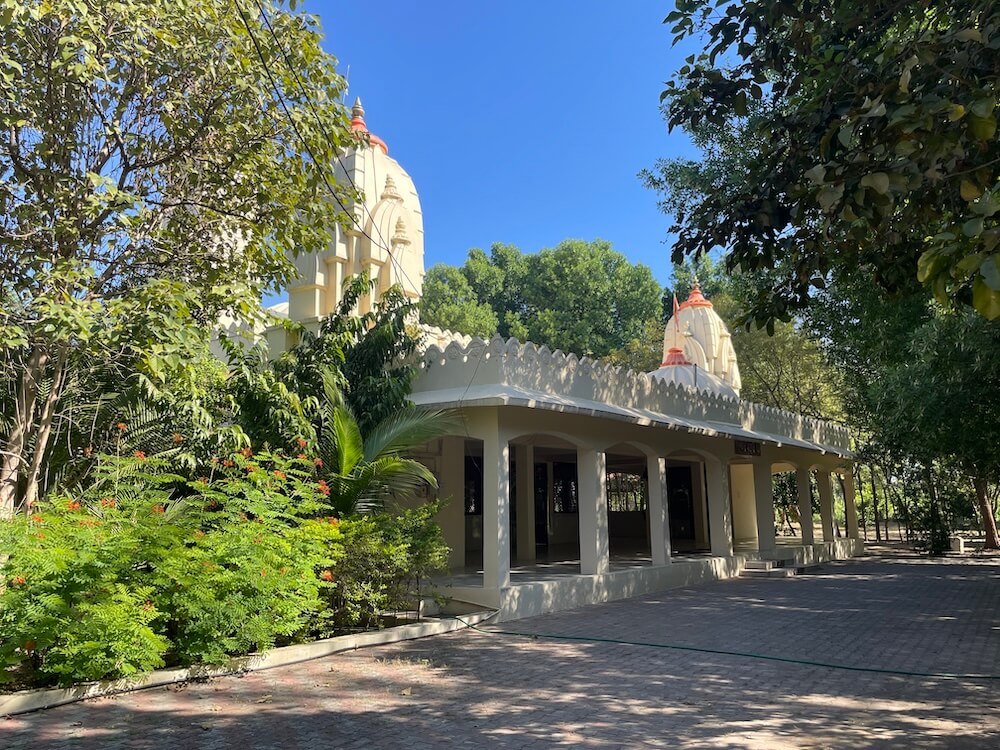
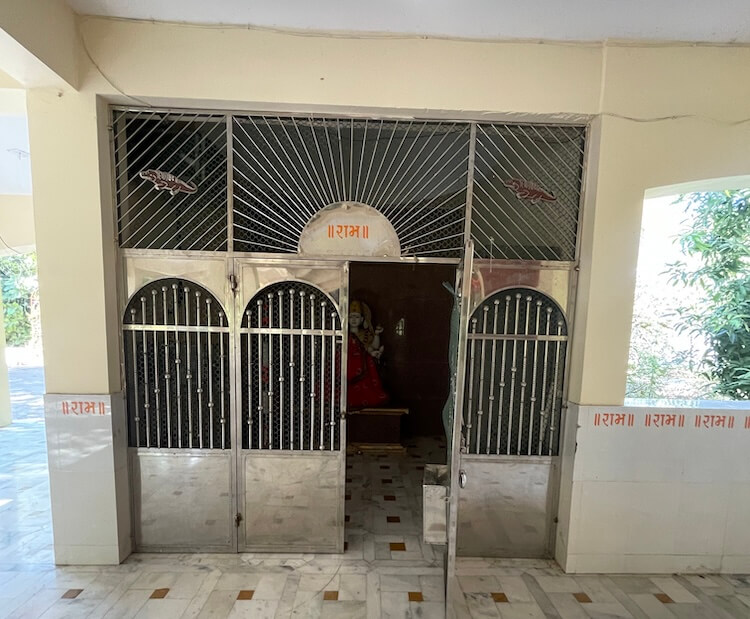
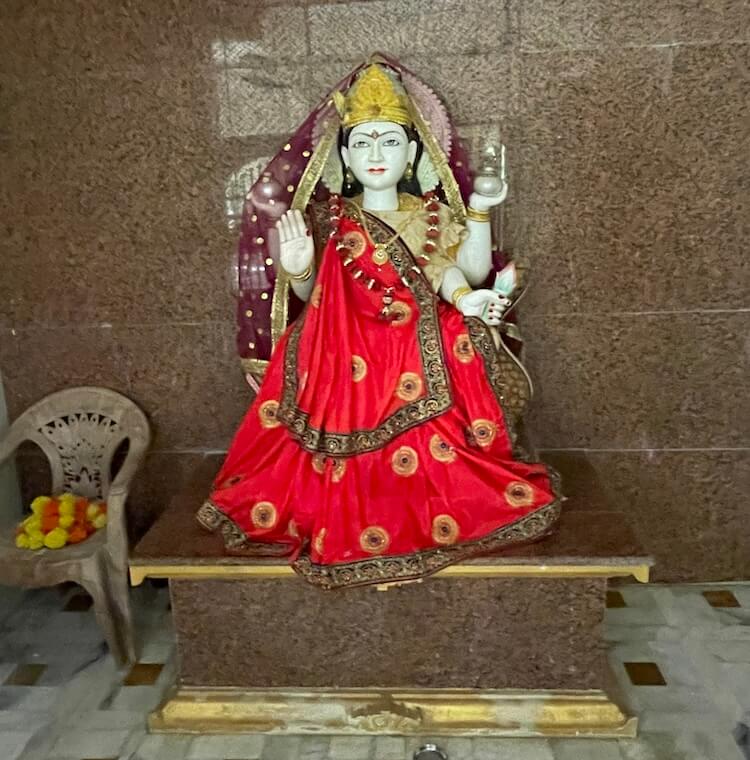
On the path leading to the temple stands a large circular Tulsi Vrindavan (sacred basil shrine). This entire section is situated on a hillside. After climbing about twenty-five steps, one enters the temple courtyard. Amidst thick groves and gardens stands this splendid shrine of Maruti. Built upon an elevated jagati (plinth), the temple has a spacious open ovari (veranda). In this veranda, to the left is the shrine of Narmada Mata and to the right the shrine of Ganesh. At the centre lies the grand Sabhamandap (assembly hall) of the Maruti Temple, whose latticed windows allow abundant daylight to pour in. The ceiling at the centre of the hall rises in a dome, beneath which many parikramavasi sit chanting the sacred names of Shri Ram and Hanuman. In front, within an exquisite marble makhar, is installed the seven-and-a-half-foot-tall idol of Shashwat Maruti. The idol depicts Hanuman in a meditative state, adorned with a golden crown upon his head and an prabhavali (aureole) behind his face. A golden chhatra (umbrella) hangs above. It is said that artisans from Jaipur carved this idol from a single block of marble. A large wooden gada (mace) is placed before the deity. In the makhar to the right of the main idol, is the ‘Ram Darbar’, where the marble idols of Shri Ram, Sita, Lakshman and Hanuman are installed. These serene idols are elegantly adorned with garments and ornaments. In the makhar to the left, within a silver shrine, rests a portrait of Lakshmandas Maharaj. The three garbhagrihas (sanctum sanctorums) of this expansive temple structure are topped with three spires in the urushringa style, while a domed spire crowns the assembly hall. A large yagnamandap (hall for fire rituals) is located to the right of the temple.
On the side of the Ashram, facing the Narmada riverbank, stands the temple of Rudreshwar Mahadev. One ascends twenty-seven steps to this small shrine. The assembly hall houses idols of Nandi and the tortoise. The niches in the antarala (vestibule) provide space for Ganesha and Hanuman. The sanctum sanctorum contains an oblong shivalinga fashioned from shaligram (a sacred stone), sheltered by the hood of a serpent. In the niche of the rear wall of the sanctum stands the image of Parvati. Within the Ashram precincts there is also a small gaushala (cowshed). The Ashram houses many parikramavasi even during the Chaturmas (four sacred monsoon months of spiritual observance). On the Ashram’s anniversary, recitations of the Sundarkand and several other religious programmes are held with devotion. For the past fifteen years, on the first Thursday of every month, the Ashram has been distributing tea, sugar and food grains free of cost to needy families.
This sacred temple stands as a testament to deep spiritual devotion, ancient architectural grandeur, and rich local cultural traditions.
The sanctum sanctorum houses the divine idol consecrated according to ancient Vedic traditions, surrounded by serene courtyards and traditional temple architecture.
Navratri, Maha Shivratri, Annual Temple Jatra & Deepotsav
Compare and book flights, secure top-rated local hotels near the temple, hire reliable guides, and rent cars instantly.
Extend your pilgrimage by visiting other highly sacred temples located nearby.


Add ₹999 more to unlock FREE SHIPPING!
Your sacred cart is currently empty.
Shop Photo FramesFill in your delivery details below to place your order.
Add comment