
Add ₹999 more to unlock FREE SHIPPING!
Your sacred cart is currently empty.
Shop Photo FramesIt is a cherished belief that Prabhu Shri Ramchandra was a devout worshipper of Shiva. During the years of his exile, he consecrated Shivalingas at several sacred places, just as he did at Rameshwar in Tamil Nadu. Legend dictates that the Shivalinga of Jivaneshwar, situated adjacent to the Suryakunda in Hansot, was likewise installed by Shri Rama. It is recounted that after performing Shivpuja(worship of Shiva) here, Lord Ramachandra conducted a Yajna (sacred fire ritual) whilst engaged in Suryopasana (sun worship). References to his veneration of the Sun God at this holy Teertha (pilgrimage site) are found throughout mythological chronicles. This location holds immense significance within the Narmada Parikrama (circumambulation of the Narmada River), where bathing in the kunda and offering prayers are considered mandatory rites for pilgrims.
In ancient times Hansot was known as Hansnagari. According to local legend, the swan (hansa) was once the celestial vehicle of Brahmadev. For certain circumstances, Brahmadev deprived it of this divine honour. In order to regain its celestial status, the swan performed intense penance at this place near the banks of the Narmada, whereby the village came to be known as Hanspur, which in the course of time evolved into Hansot. During the Mughal era, Bharuch served as a premier port in West India. Owing to the heavy maritime traffic, many vessels had to wait for a berth at Bharuch port. So numerous ships were diverted towards the open coastline of Hansot. The village was later held by the Peshwas and subsequently the British. The surrounding dense forests once teemed with deer and other wildlife, leading to the area being reserved as a royal hunting ground in the latter half of the sixteenth century.
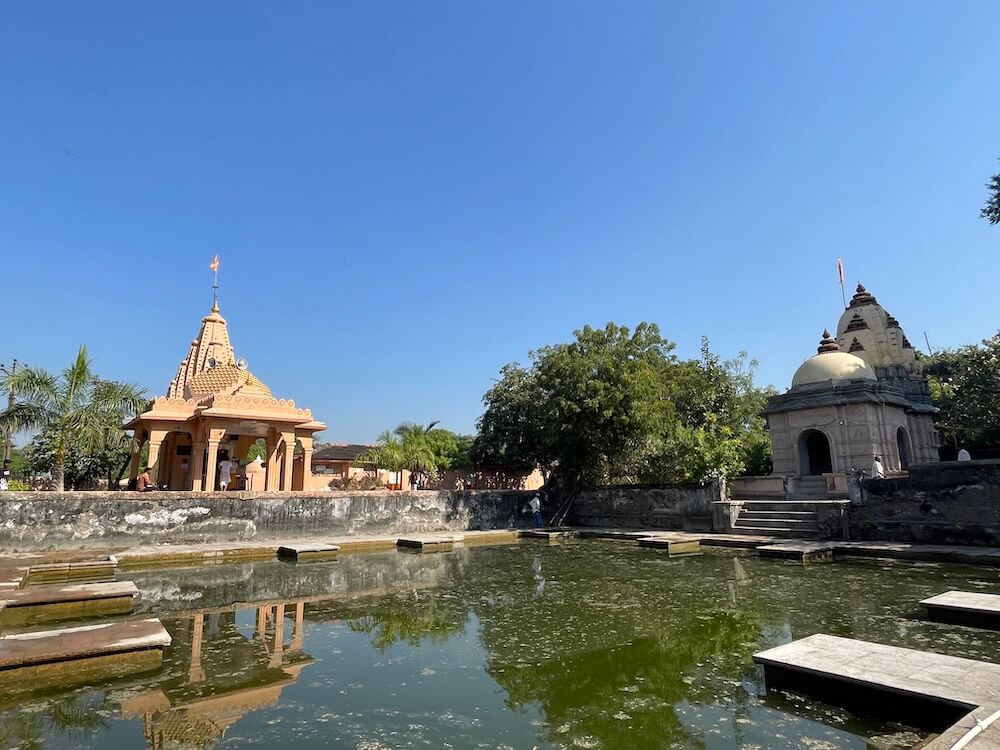
Regarding the sacred site of Jivneshwar Mahadev in this historically resonant village, local tradition relates that during their fourteen-year exile, Prabhu Ramchandra, along with Sita and Lakshman, came here. A steadfast devotee of Shivshankar, Shri Ram would not commence his daily routine without worshipping Him. Here he consecrated a Shivalinga and performed worship. Around this Shivalinga established by Shri Ram, a temple was later constructed. This shrine came to be known as Jivneshwar Mahadev Temple. It is also said that Shri Ram performed a yajna here to please the Sun God hence the sacred water tank at this site became known as Suryakund.
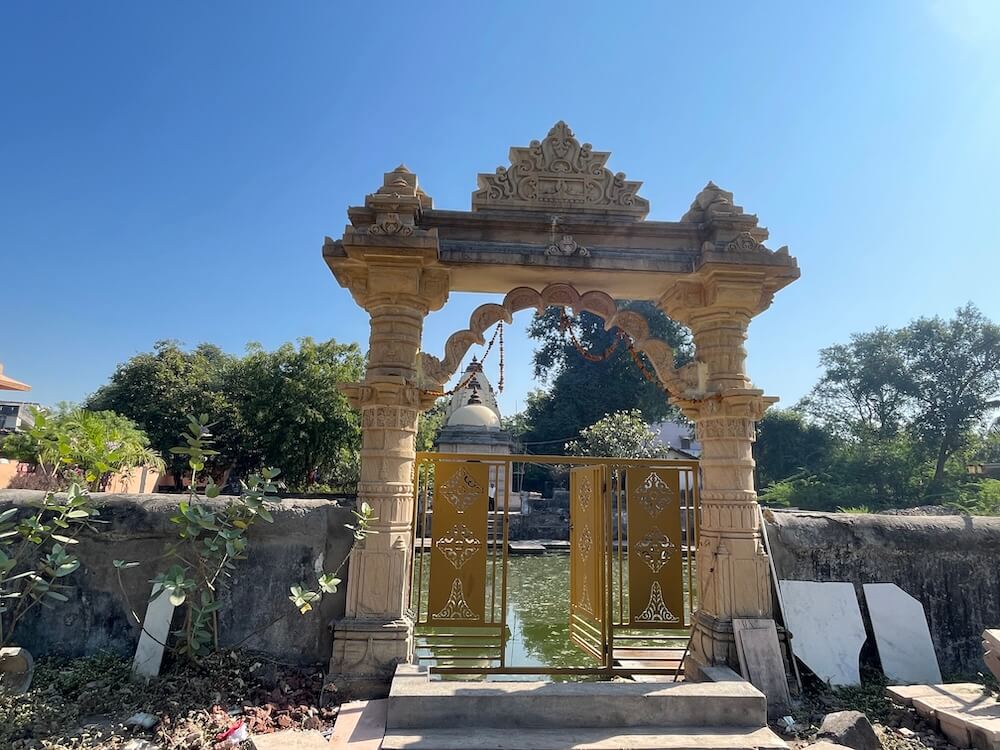
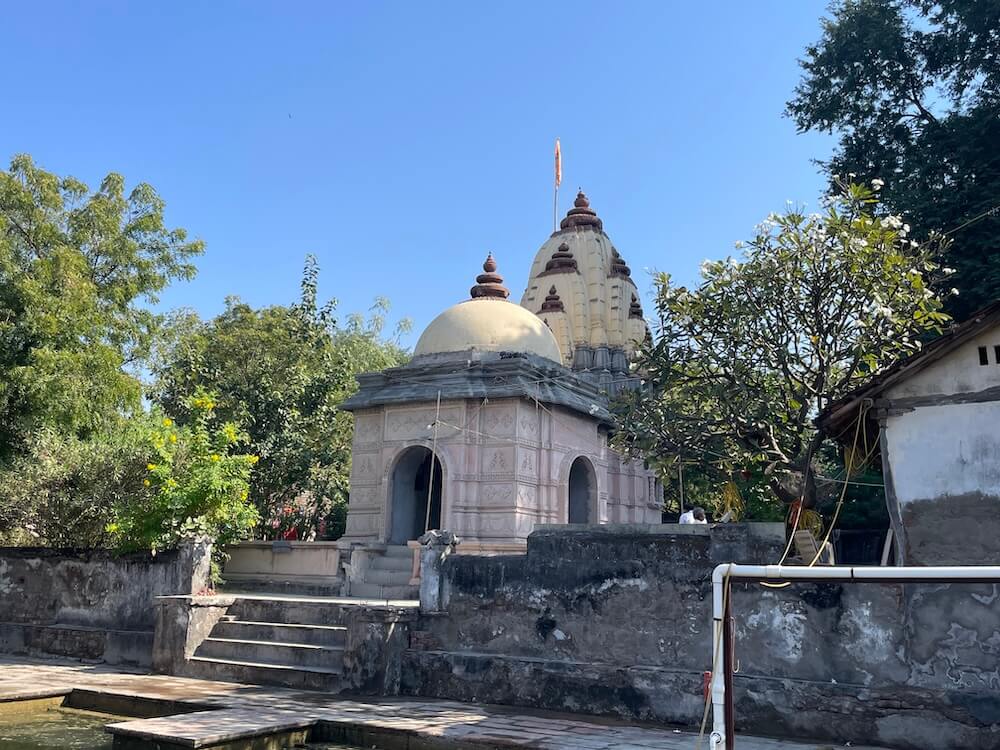
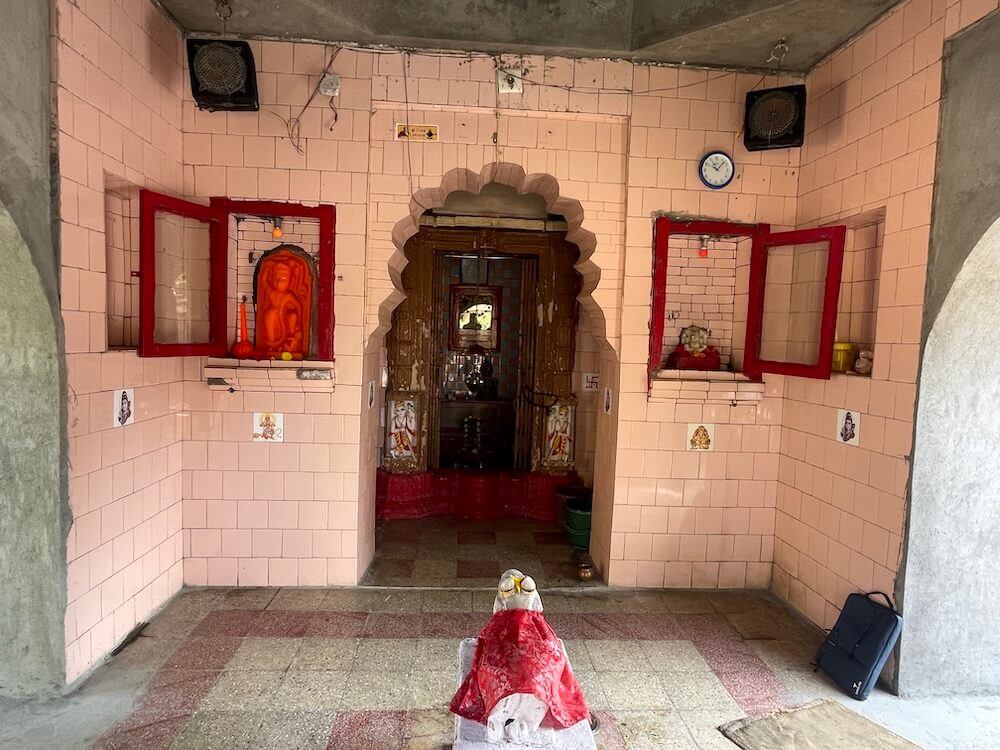
The kund is enclosed on all four sides by stone perimeter walls. In recent times a grand entrance gateway has been constructed. Square in shape, with strong masonry work all around, the kund remains filled with water throughout the year. A pathway beside it leads towards the Jivneshwar Mahadev Temple. One ascends about eight steps to enter the temple. While preserving its ancient form, the shrine has been recently renovated. Its architecture bears the distinctive imprint of the Nagar style. The temple comprises the Sabha mandapa (assembly hall), Antarala (vestibule) and Garbhagriha (sanctum). The assembly hall has entrances on three sides. Above rises a domed spire crowned with a two-tiered amalaka and kalasha. Within the hall, upon a lofty platform, is enshrined an ancient stone idol of Nandi. The entrance to the vestibule is arched in the mahirapi style. To the left is a shrine niche housing the idol of Hanuman, while on the right is a small idol of Ganesh.
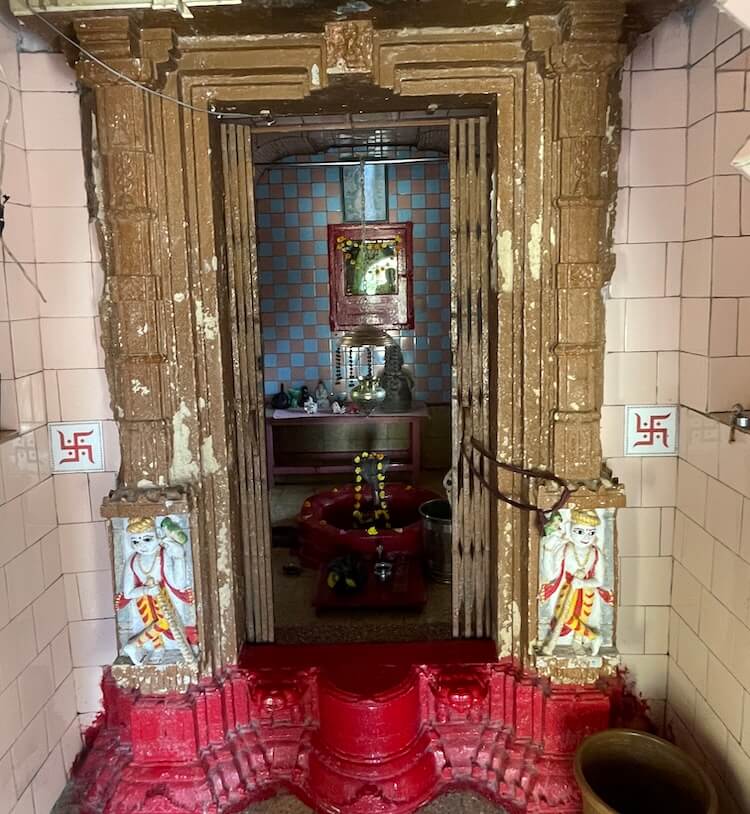
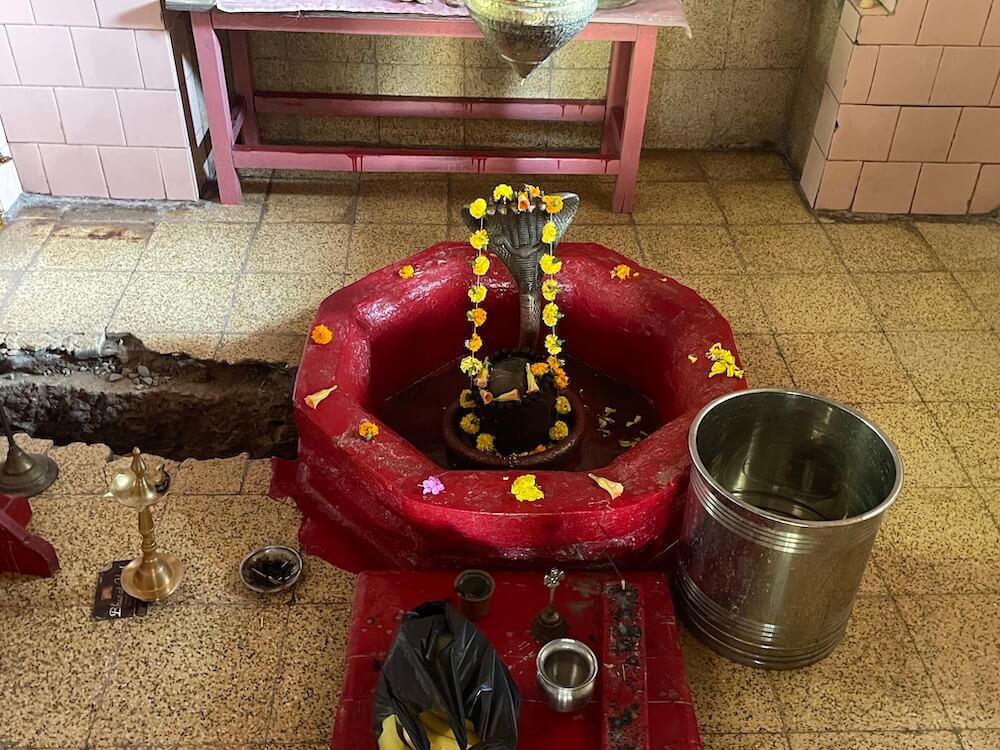
The three-tiered (tri-shakha) entrance to the sanctum stands as a testament to the temple’s antiquity. The carved door-pillars feature distinctive figures of Dwarapalas (door guardians) at the base, holding a staff in one hand and a bird upon the other. An image of Ganesha is carved upon the Lalatabimba (centre of the lintel). On the Mandaraka (threshold) lies a Ardhachandrashila (moonstone), flanked on both sides by carvings of Kirtimukha(the face of glory). Within the sanctum, adorned with marble tiles, the stone Linga of Jivaneshwar Mahadev resides within a small octagonal kunda. A metallic Nagaraja (serpent king) provides a canopy over the deity. In a niche on the rear wall of the sanctum, a marble idol of Parvati is placed. A brass casing for the Shivalinga is also kept here, featuring carved faces of Shiva on four sides and a crowning facial image of Shankara at the top. The sanctum is surmounted by a soaring Urushringa shikhara in the Nagara style, finished with a two-tiered Amalaka and a Kalasha.
To the right of Suryakund stands a newly constructed temple of Hanuman, also built in the Nagar architectural style. It consists of a mukh mandapa, an open Sabha mandapa and a sanctum. The sanctum bears an urushringa-style spire, while the porch and hall have step-tiered spires adorned with many small kalashas. In 2021, the consecration (pran-pratishtha) of the vermilion-anointed idol of Hanuman holding the gada was performed here.
To the right of the Jivaneshwar Mahadev Mandir lies a small Bhojanshala (dining hall) and nearby a well. Within the temple precincts is also a shrine of Narmada Mata. On the road opposite Suryakund, a dharmashala provides accommodation and meals for parikramavasis.
With unwavering faith, devotees revere Mahadev here as jagrut—an ever-awakened presence who answers the heartfelt wishes of the faithful. As a vital stop on the Narmada Parikrama, pilgrims first bathe in the sacred waters of Suryakund before offering their devotion to Jivneśhwar Mahadev. While locals flock here year-round, the temple truly comes alive during the auspicious month of Shravan and on Mahashivaratri. On these holy days, the temple is filled to capacity as devotees gather for special prayers and religious festivities.
This sacred temple stands as a testament to deep spiritual devotion, ancient architectural grandeur, and rich local cultural traditions.
The sanctum sanctorum houses the divine idol consecrated according to ancient Vedic traditions, surrounded by serene courtyards and traditional temple architecture.
Navratri, Maha Shivratri, Annual Temple Jatra & Deepotsav
Compare and book flights, secure top-rated local hotels near the temple, hire reliable guides, and rent cars instantly.
Extend your pilgrimage by visiting other highly sacred temples located nearby.


Add ₹999 more to unlock FREE SHIPPING!
Your sacred cart is currently empty.
Shop Photo FramesFill in your delivery details below to place your order.
Add comment