
Add ₹999 more to unlock FREE SHIPPING!
Your sacred cart is currently empty.
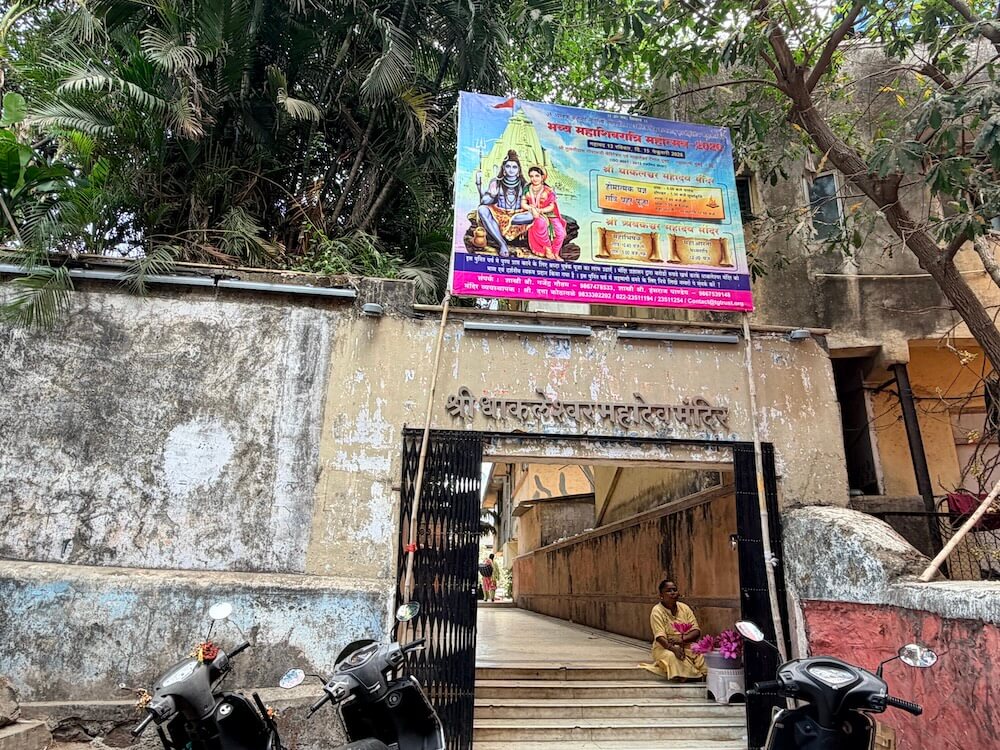
Shop Photo FramesSituated on a small hill a short distance from the Mahalaxmi Temple in Mumbai, stands the Dhakleshwar Mahadev Temple, which boasts a history of nearly two hundred years. Along with Lord Dhakleshwar Mahadev, this temple is dedicated to Lord Mayureshwar Ganapati, Goddess Rameshwari, Lord Harinarayan, and Lord Vinayakaditya. As this temple was established by the renowned Mumbai merchant Dhakji Dadaji Prabhu, it came to be known as Dhakleshwar. A grand annual festival is celebrated at the temple on Vaishakha Purnima. Owing to its preservation efforts and commitment to modern standards, the temple has been awarded certification by the International Organization for Standardization (ISO).
The history of the establishment of this temple is linked to Dady Nusserwanjee, a wealthy 18th-century merchant of Mumbai. Around 14 years after the Mahalaxmi Temple was built in circa 1785 CE, he purchased a large plot of land in this area for charitable purposes. His son’s name was Ardeshir Dady. He passed away on June 29, 1810. Later, Ardeshir’s son Cursetjee executed a ‘Deed Poll’ (a unilateral conveyance document) regarding this land on April 19, 1845. Through this deed, he appointed Dhakji Dadaji as the manager of this property acquired by his grandfather for charitable works. Permission to construct Hindu charitable buildings, dharamshalas, or temples on this land was granted to Dhakji Dadaji through this Deed Poll.
Accordingly, in the year 1830, Dhakji Dadaji commenced the construction of the temple here. The temple structure was completed in 1832. It is said that approximately 80 thousand rupees were spent at that time for its construction. An English inscription regarding the temple’s establishment is present inside the temple. The text reads as follows: “The Prana Pratishtha (consecration ceremony) of the deities took place in May 1832. The construction commenced in February 1830. This temple was dedicated to five Hindu deities: Shri Mayureshwar, Shri Rameshwari, Shri Dhakleshwar, Shri Harinarayan, and Shri Vinayakaditya. During that period, the Earl of Clare served as Governor. Sir Herbert Compton, Kt., was the Chief Justice of the Supreme Court of Judicature at Bombay Island. The founder, Dhakji Dadaji Prabhu, ensured the erection of the temple for charitable purposes. Its management and protection shall permanently remain with his heirs.” The Mahadev in the temple was named Dhakleshwar, signifying the Lord of Dhakji Dadaji Prabhu. Furthermore, the Goddess here was named Rameshwari after his wife Ramabai; Ganesha was named Mayureshwar after his eldest son Moreshwar; Lord Vishnu was named Harinarayan after his second son Narayan; and the joint idol of Narayan and Aditi came to be called Vinayakaditya after his youngest son Vinayak.
Dhakji Dadaji passed away in 1846. He had set aside ten thousand rupees in his will for the temple’s expenses. After him, the responsibility of the temple fell upon Krishnanath Narayan. Subsequently, the temple management passed to Kashinath Dhakji, the adopted son of Dhakji Dadaji. Kashinath Dhakji passed away on December 21, 1881. Following him, the temple property came into the hands of his son, Bapuji. During this period, land prices in Mumbai increased significantly. Govind Narayan Madgaonkar wrote in his 1863 book ‘Mumbaiche Varnan’ (Description of Mumbai): “Thirty years ago, a gentleman owned a parcel of land on Walkeshwar Hill. He sought a buyer to sell it off for four to five hundred rupees, but could find no one willing to purchase that piece of land at that price. However, today, even if thirty thousand rupees are offered for that same land, it cannot be obtained.” Due to these prevailing circumstances, Bapuji Kashinath Prabhu covertly sold off a portion of the temple land. Against this corrupt practice, the Advocate General of the Government and two other Hindu gentlemen filed a civil suit (Suit No. 731/1901) in the Bombay High Court in 1901. Consequently, the High Court removed Bapuji from the trusteeship in 1902 and appointed new trustees via an order dated December 2, 1905. Currently, the temple is managed by the trust named ‘The Tulsidas Gopalji Charitable and Dhakleshwar Temple Trust’. On October 20, 2008, the sacred restoration (Jirnoddhara) of this ancient temple was performed at the revered hands of Shankaracharya Vasudevanand Saraswati of Jyotirmath Badrikashram.
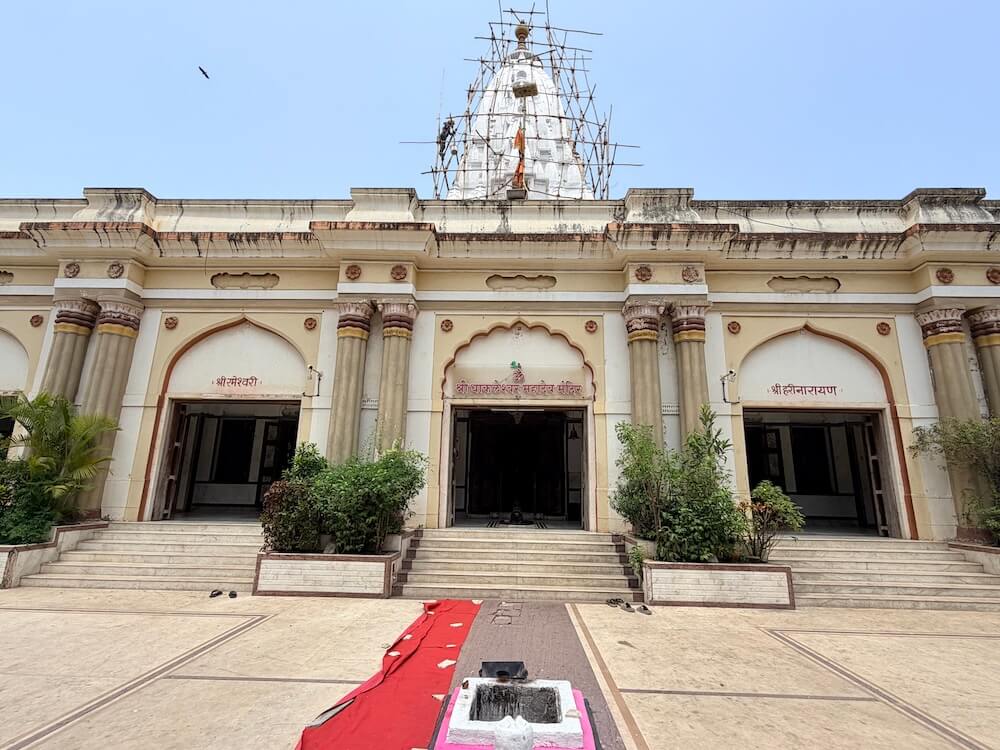
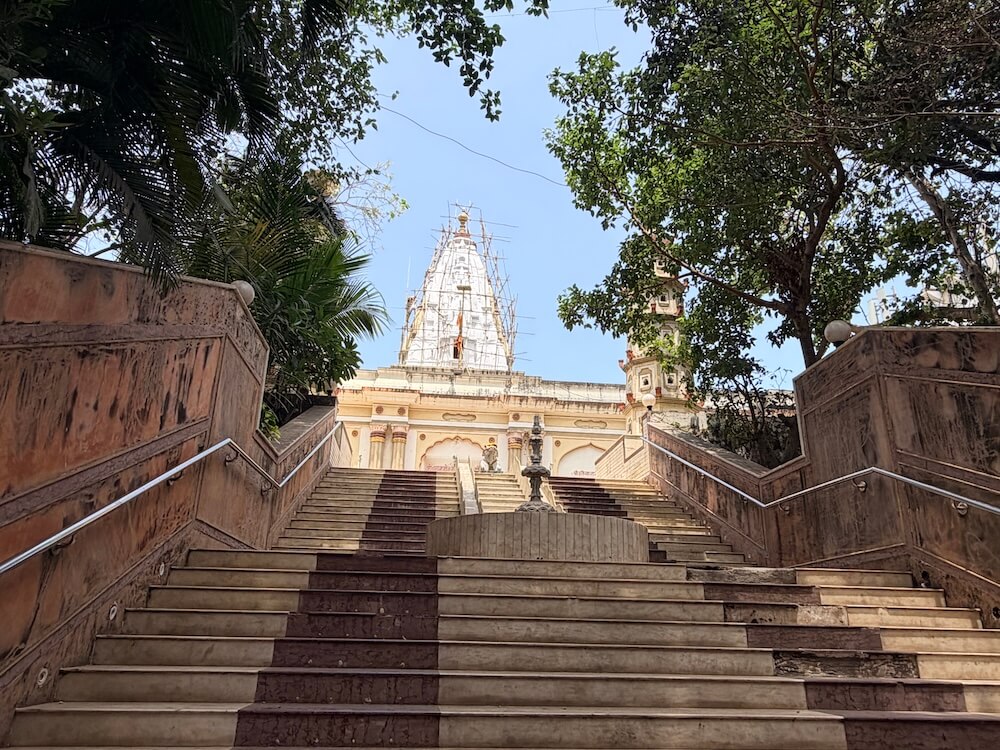
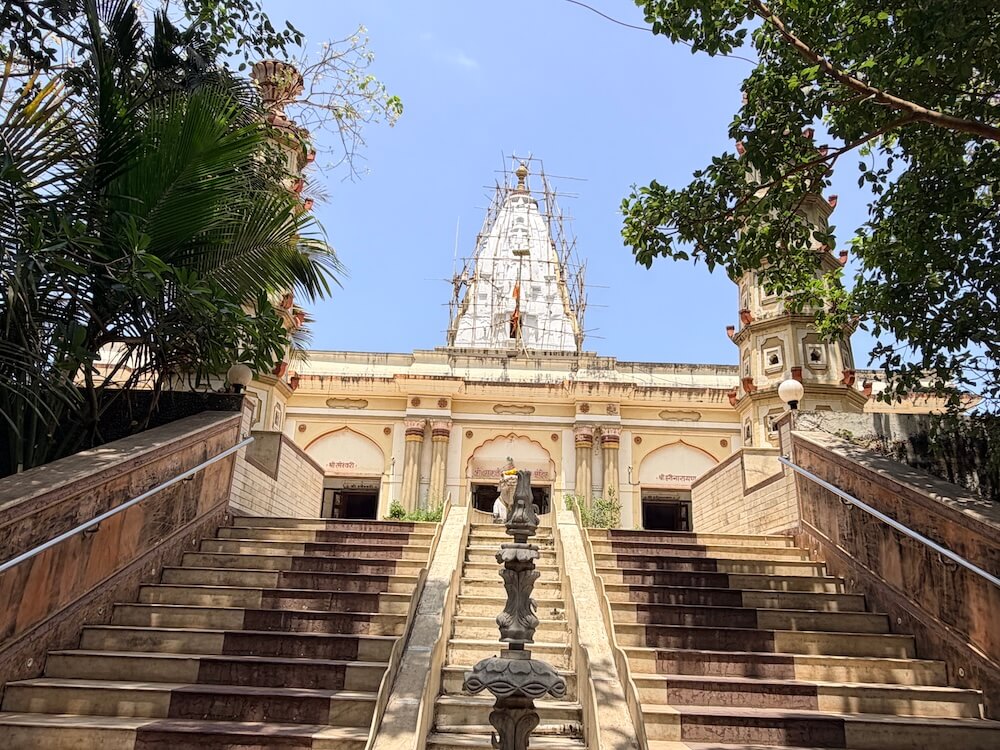
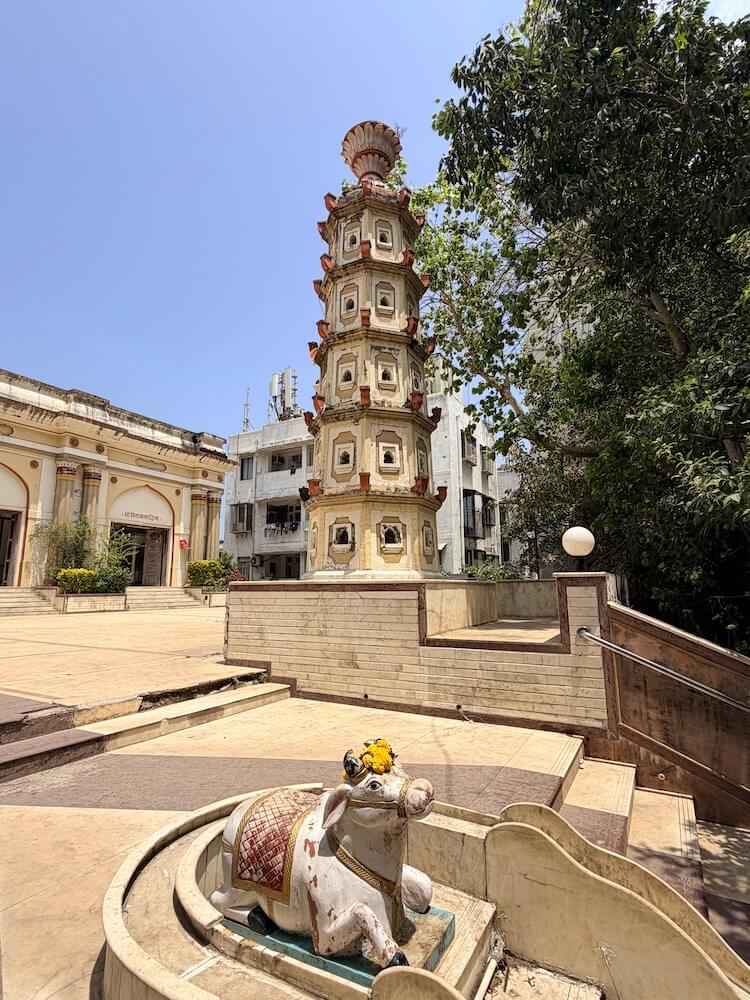
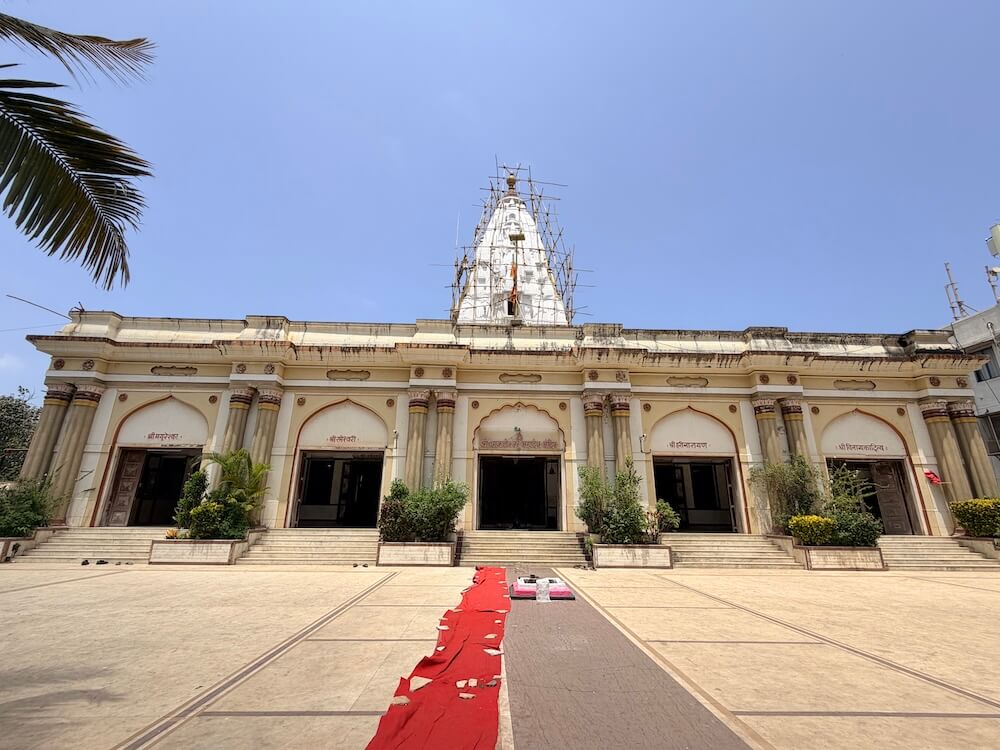
The temple is situated on a small hill. There are 32 steps built to ascend to the temple. In the center of this staircase pathway, paved with marble tiles and fitted with side railings, stands a fountain. Viewed from above, this fountain resembles the *shalunka* (sacred pedestal) of a Shivling, having been crafted in that distinct shape. The steps lead into the vast courtyard of the temple. Here stand two *deepamalas* (lamp towers) that reflect the traditional architectural style of Konkan. The temple complex is rectangular and built on an elevated plinth (*jotya*). The temple structure comprises a long outer porch (*owari*) and sanctums (*garbhagrihas*). This porch features arches built in the Islamic architectural style. The pillars of the porch reflect the Greek Revival architectural style that was prevalent in Mumbai at that time. Atop the temple rests a majestic *shikhara* (spire) of the *Urushringa* sub-style within the Nagara Gujarati architectural tradition. Above it stands a circular *Amalaka* and a tall *Kalash*. The temple houses five sanctums (*Garbhagrihas*) beautifully painted and adorned with elegant chandeliers. This pillared porch (*ovari*) features an entrance archway in front of each sanctum. One enters this porch by climbing six steps. Here, in the sanctum on the extreme left, the sacred idol of Lord Mayureshwar resides on a raised altar. This idol of Lord Ganesha is beautifully carved in stone. In front of the idol, a stone idol of His divine vehicle, the *Mushaka* (mouse), rests upon a pedestal. In the adjoining sanctum, a marble idol of Goddess Rameshwari, standing approximately one and three-quarter feet high, is consecrated. The central sanctum is dedicated to Dhakleshwar Mahadev. In front of this sanctum stands a finely crafted stone idol of Nandi. Inside, the sacred *Pinda* (*Shivlinga*) of Lord Mahadev is enshrined upon the floor. This *Pinda* is sculpted from black marble. A niche (*Devakoshtaka*) on the rear wall of the sanctum houses an idol of Goddess Parvati. Devotees hold a firm belief that if one whispers their wish into one of Nandi’s ears while covering his other ear with a hand, the prayer directly reaches Lord Shiva. The sanctum to the right of this central chamber is dedicated to Lord Harinarayan. An idol of Lord Harinarayan is enshrined here, while in the final sanctum, a joint idol of Lord Narayan and Goddess Aditi, seated on a chariot drawn by four horses, is consecrated. Flanking this deity are smaller idols of Jaya and Vijaya on either side. Goddess Aditi is revered as the mother of Devraj Indra, Lord Varuna, and Surya Dev. An idol of Surya Dev is also enshrined within this sanctum. On the extreme right of the outer porch, an idol of Sai Baba is also consecrated.
At this Dhakleshwar Temple, *darshan* is open to devotees from 6:00 AM to 8:00 PM. Here, *Mangal Bhog* (*Naivedya*) is offered to the Deity every day before worship at 7:15 AM. This is followed by the *Prabhat Aarti* at 7:30 AM. Later, *Raj Bhog* is offered at 11:30 AM and the evening *Bhog* at 6:30 PM. The *Sandhya Aarti* takes place at 7:00 PM. Mahashivratri is one of the most sacred and significant festivals celebrated here. It is observed with immense enthusiasm and fervor. During this festival, *Maha-abhisheka* of the deities is performed. On Vaishakh Purnima, the annual festival of the Deity is celebrated with deep devotion and festive joy. On this occasion, the sacred idols are adorned with new garments and crowns.
This sacred temple stands as a testament to deep spiritual devotion, ancient architectural grandeur, and rich local cultural traditions.
The sanctum sanctorum houses the divine idol consecrated according to ancient Vedic traditions, surrounded by serene courtyards and traditional temple architecture.
Navratri, Maha Shivratri, Annual Temple Jatra & Deepotsav
Compare and book flights, secure top-rated local hotels near the temple, hire reliable guides, and rent cars instantly.
Add ₹999 more to unlock FREE SHIPPING!
Your sacred cart is currently empty.
Shop Photo FramesFill in your delivery details below to place your order.
Add comment