
Add ₹999 more to unlock FREE SHIPPING!
Your sacred cart is currently empty.
Shop Photo Frames“Divine is your devotion to Rama, magnificent is your form, in your childhood, you leapt to catch the Sun…” This hymn, dedicated to the praise of Lord Hanuman, is well-known across Maharashtra. It is said that the place from where the child Hanuman took a leap to catch the Sun, mistaking it for a red fruit, is the village of ‘Anjaneri’ in the Trimbakeshwar taluka of Nashik district. Anjaneri, considered the birthplace of Lord Hanuman, is home to a total of 16 temples. Among these, the grand Hanuman Temple in the village and the Anjanimata Temple situated on the Anjaneri mountain are the most famous.
It is said that the name ‘Anjaneri’ is derived from the name of Hanuman’s mother, Anjanimata. On the Nashik-Trimbakeshwar road, there is a path leading to Anjaneri village at the foothills of the Anjaneri mountain. Here stands the Shri Siddha Hanuman Temple, which houses an 11-foot-tall seated idol of child Hanuman. A grand festival is held at this temple on Chaitra Purnima, the day of Hanuman Jayanti, and thousands of devotees gather to participate. A unique feature of this festival is that the local Muslim community is given the honor of showering flowers on the procession that takes place on the day before the Hanuman birth anniversary. Furthermore, at the time of the birth celebration, the first salute to Lord Hanuman is offered by the Muslim community through a traditional drum troupe (Dhol Pathak), after which the ceremony commences. Throughout the day, Homa-Havan and Yagnas are performed, and devotees offer oblations. The entire area resonates with the chants of ‘Jai Hanuman’. On this day, the entire region takes on the atmosphere of a fair.
Behind the Siddha Hanuman Temple lies the path leading to the Anjaneri mountain. On this route, there is a newly constructed Anjanimata Temple. The height of this mountain is 4265 feet above sea level. It takes at least 4 to 5 hours to complete the trek up and down the Anjaneri mountain. The journey involves three stages. Private vehicles can travel up to the forest department checkpoint. There, the forest department registers every devotee or tourist, collects a fee, and then allows them to proceed.
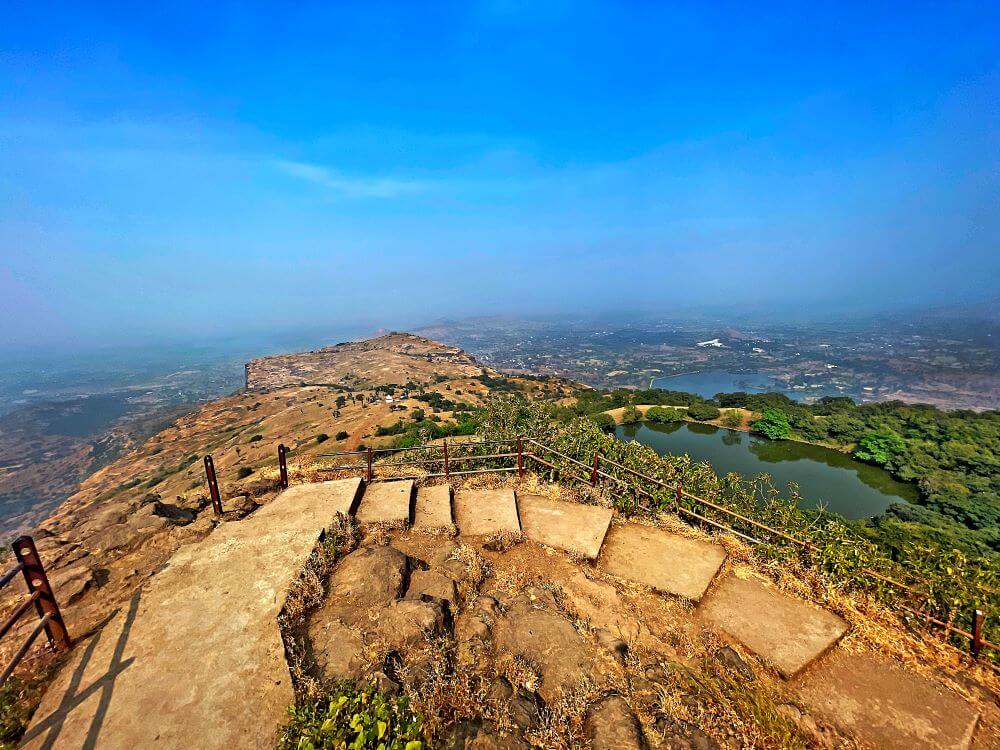
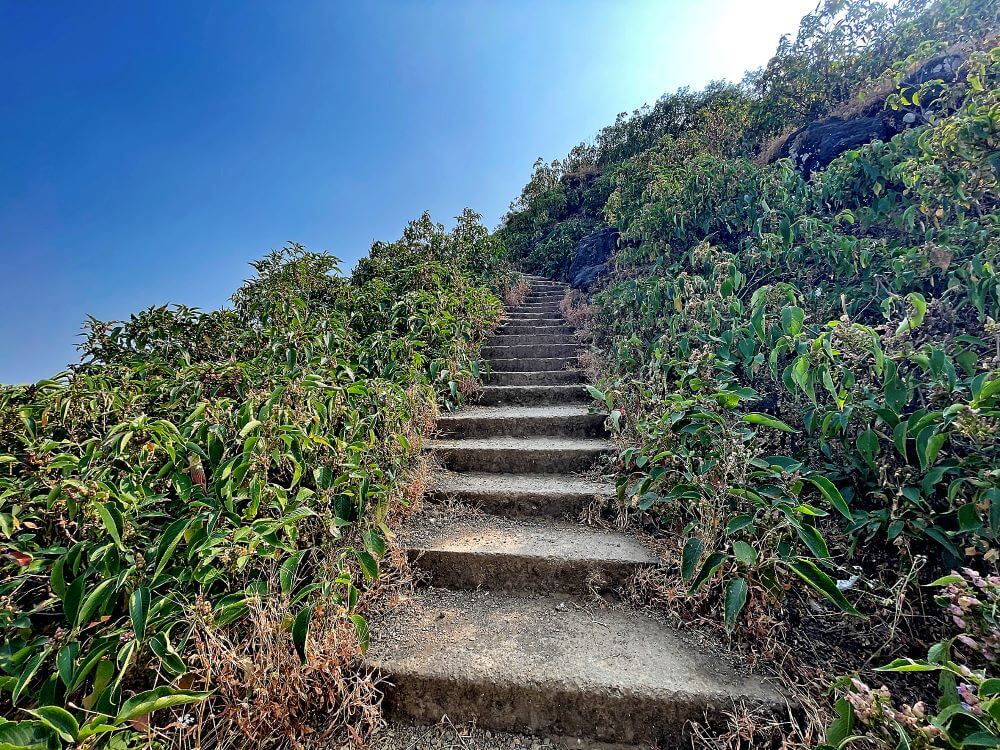
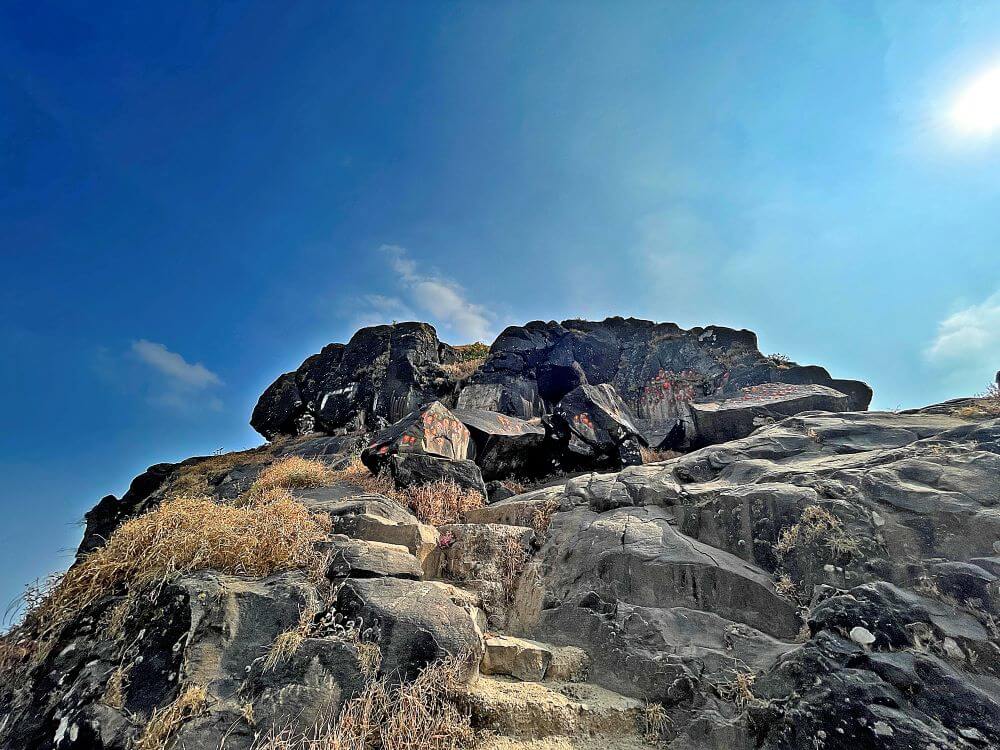
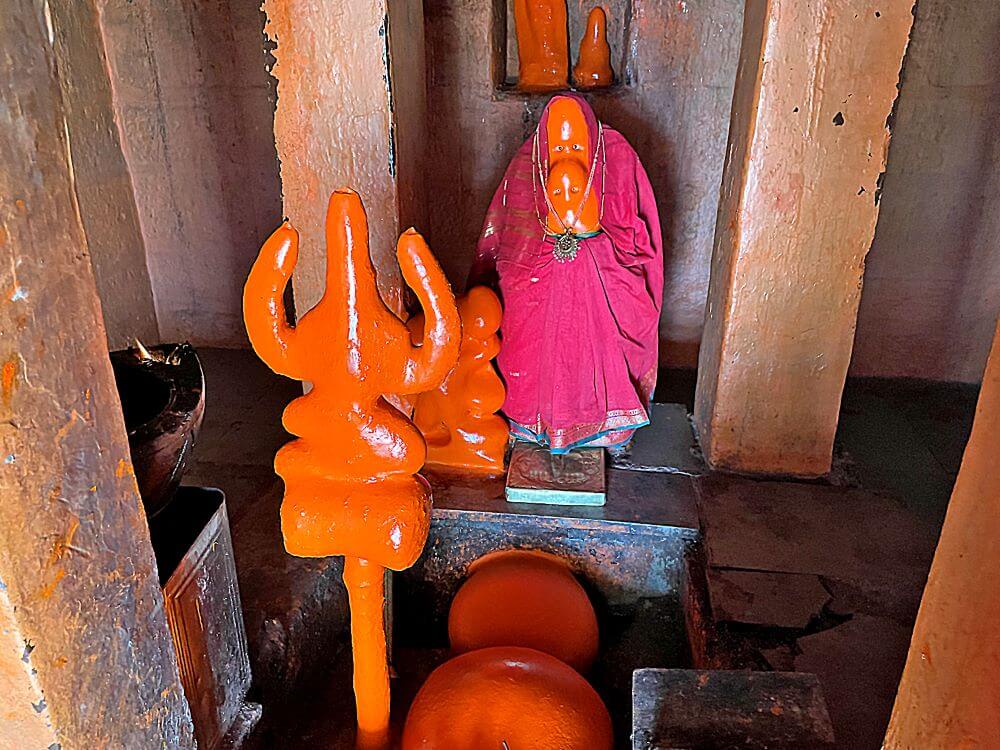
To ascend the mountain, there is an initial stone staircase. After covering some distance, one encounters a staircase carved into the rock between two mountains. As one proceeds through the narrow stone path flanked by towering cliffs, caves can be seen carved into the left side. These are famous as the Parshvanath Caves. These caves, carved parallel into the rock, consist of two chambers; one houses an idol of Bhairava, and the other contains a sculpture of Hanuman. On the ceiling here, a lotus flower with a diameter of about 2 feet is carved into the stone. The entrance to the sanctum sanctorum features intricate carvings of Naga sculptures, Kirtimukha, and other unique craftsmanship. Beyond these caves, the somewhat challenging rocky path ends, and after about an hour’s journey from the foothills, one reaches a plateau. In the center of this plateau stands a small, ancient Anjanimata Temple. This temple, which is hundreds of years old, remains in excellent condition today. Inside the temple are idols of Anjanimata and child Hanuman bowing before her. Next to this temple is a water tank. Additionally, the villagers have provided some facilities for devotees to rest.
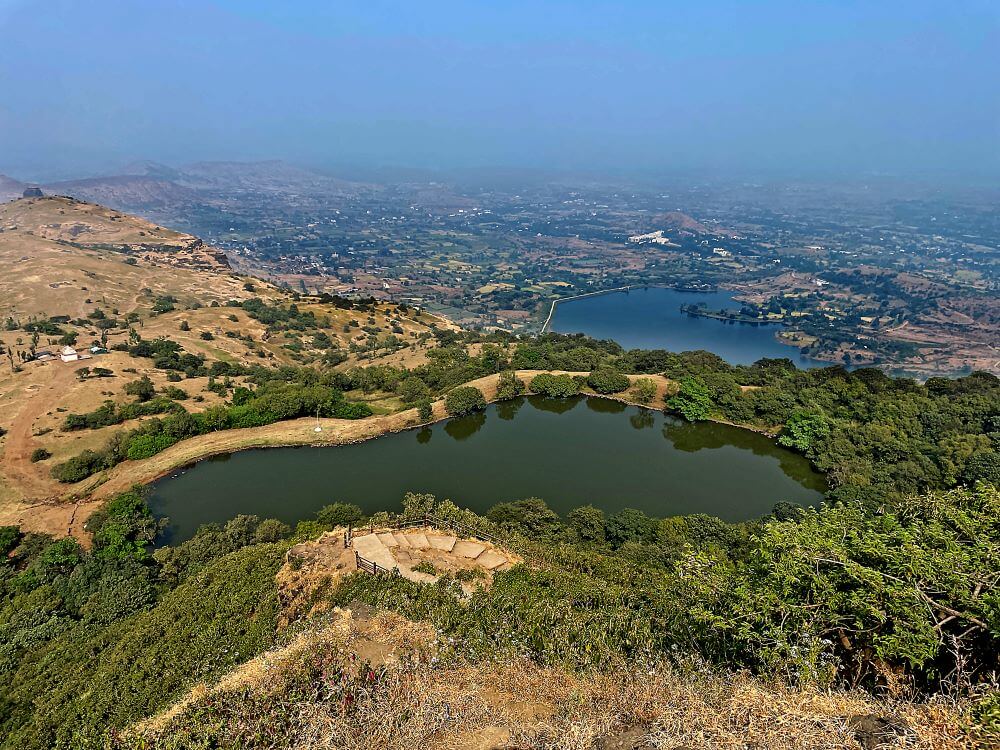
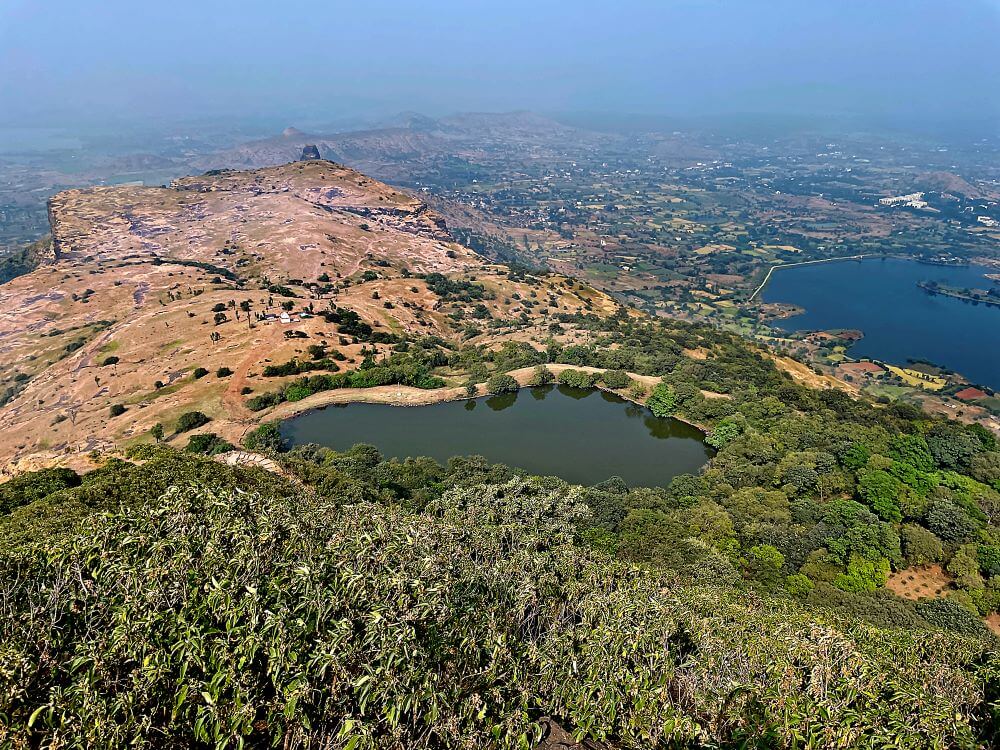
The first stage of the journey ends at the Anjanimata Temple, and the second stage begins. Further ahead lies a large lake shaped like a footprint. Legend has it that Hanuman was born on this Anjaneri mountain. He leapt from this mountain to catch the Sun, mistaking it for a fruit. Where Hanuman took the leap, his footprint was imprinted, and the Ganga manifested within it. This lake holds water throughout the twelve months of the year. Devotees believe that by touching the water of this lake, one receives the merit of touching the feet of Lord Hanuman.
A short distance from the Hanuman Lake is a cave, famous as the Anjanimata Cave. According to mentions in texts like the Brahma Purana, Padma Purana, Trimbak Mahatmya, and Devi Mahatmya, Anjani performed penance in this cave for several years to be blessed with a son. Lord Mahadeva was pleased with Anjani’s rigorous penance and asked her to seek a boon. Anjani then requested Mahadeva to be born as her son. It is believed that Anjanimata gave birth to Hanuman in this cave. It is also said that Mother Anjani and Goddess Sita met in this very cave. This cave is a rock-cut structure. At the entrance, there are two gatekeepers (Dwarapalas), and inside is an idol of Anjanimata performing penance. Additionally, sculptures of Shri Rama, Lakshmana, Hanuman, Bhairava, and Mahishasuramardini are carved here.
The second stage of the journey concludes at the Anjanimata Cave. For the third stage, the staircase path begins again. While walking along this path, one gets a panoramic view of the Anjanimata Temple and the Hanuman Lake. Seen from above, the shape of the lake clearly resembles a left footprint, with its toes pointing towards the Sun, i.e., the East. After walking some distance along this path, one reaches the highest peak of the Anjaneri mountain. From here, one can see the Ranjangiri, Bhandardurg, Harihar, Ghargad or Gadgada fort, the Brahmagiri mountain to the west with the Trimbakeshwar village below it, the Godavari basin to the north, and Anjaneri village to the east—all within one’s field of vision.
About 1.5 km further from this plateau is another ancient Anjanimata Temple. In this small temple, there is an idol of child Hanuman sitting on Anjanimata’s lap. It is said that this is the only idol of its kind in the state. In front of this idol is a Trishul (trident) of Lord Mahadeva. There are some water cisterns in the temple premises, and it is said that the area next to them is where Anjanimata performed her worship rituals.
This sacred temple stands as a testament to deep spiritual devotion, ancient architectural grandeur, and rich local cultural traditions.
The sanctum sanctorum houses the divine idol consecrated according to ancient Vedic traditions, surrounded by serene courtyards and traditional temple architecture.
Navratri, Maha Shivratri, Annual Temple Jatra & Deepotsav
Compare and book flights, secure top-rated local hotels near the temple, hire reliable guides, and rent cars instantly.
Extend your pilgrimage by visiting other highly sacred temples located nearby.


Add ₹999 more to unlock FREE SHIPPING!
Your sacred cart is currently empty.
Shop Photo FramesFill in your delivery details below to place your order.
Add comment