
Add ₹999 more to unlock FREE SHIPPING!
Your sacred cart is currently empty.
Shop Photo FramesBhagwangad in Pathardi Taluka is recognized as one of the prominent pilgrimage sites in the state. This location is situated in a nature-rich area near Kharwandi village on the border of Beed and Ahilyanagar districts. Established by Saint Bhagwanbaba of the Warkari tradition, this site is considered a place of deep faith for the sugarcane laborers of the state.
According to Puranic records, the Saptarishis performed penance in this area for many years. Sage Dhaumya, the priest of the Pandavas, resided in this region, and his padukas (footprints) were present here. Consequently, this place was long known as ‘Dhaumyagad’ or ‘Dhumyagad’. The temple of Sage Dhaumya here has existed for several thousand years. Additionally, Sage Ranga, Sage Bharadwaja, Sage Shringa, Sage Parashara, and Rashtrasant Janardan Swami (Maungiri) also resided here.
Bhagwanbaba was born on 29 July 1896 at Savargaon Ghat in Beed district. He was the fifth child of Tubajirao Sanap and Kautikabai of the Vanjari community. His parents named him Abaji. From childhood, Abaji had a strong inclination toward divinity and spirituality. At the age of six, he performed his first pilgrimage to Pandharpur on foot. Upon returning from Pandharpur, instead of going home, Abaji stayed at the village Hanuman temple. He set a condition that he would return home only if everyone in the family became a devotee (Malkari). Yielding to their son’s insistence, the family promised to wear Tulsi beads and abstain from non-vegetarian food, only after which Abaji returned home. He began the work of social reform from his own home, initiating his path of devotion and knowledge.
Abaji’s ancestors were devotees of Narayan-gad in Shirur Taluka of Beed district, which led to his frequent visits there. Later, Abaji went to Narayan-gad for traditional education. After receiving initiation (Anugraha) from the Mahant Manikbaba, his name was changed to ‘Bhagwan’. Subsequently, Bhagwanbaba enrolled in the Warkari Shikshan Sanstha at Alandi. Influenced by the thoughts of Bankat Swami there, Bhagwanbaba embraced the life of a Sannyasi. Later, Bhagwanbaba served as the Mahant of Narayan-gad for 35 years. During that period, in 1918, he started a foot pilgrimage (Dindi) from Narayan-gad to Pandharpur. This is considered the first Dindi to travel from Marathwada to Pandharpur. Thereafter, he started a Dindi from Narayan-gad to Paithan. While all this was happening, some anti-social elements cast doubts on his character. Unable to bear this and to prove the accusations false, Bhagwanbaba severed his own linga with his own hands. Even after this, as various accusations continued, Bhagwanbaba eventually left Narayan-gad and settled at Dhaumyagad, immersing himself in penance.
Bhagwanbaba spent a major part of his life at Dhaumyagad. He used to travel to villages in Western Maharashtra and Marathwada for Kirtans. During this time, his following of disciples grew significantly. He started Palkhi processions from Dhaumyagad to Pandharpur, Alandi, and Paithan. He would accompany the devotees to Pandharpur every year for the Ashadhi Wari. When Bhagwanbaba was at the Gad, the Palkhi procession would depart with a grand entourage including elephants and horses.
Participating in an education conference at Manmad in Nashik district, Bhagwanbaba heard Dr. Babasaheb Ambedkar’s core mantra, “Educate yourselves,” and told the citizens of his area, “Sell your land, but educate your children.” For this purpose, he started the first school in Kharwandi village. On 1 May 1958, the then Chief Minister of the Bombay State, Yashwantrao Chavan, visited Dhaumyagad to learn about Bhagwanbaba’s work. At this time, Chief Minister Yashwantrao Chavan said, “For the protection of Dharma, Bhagwanbaba has united devotees and built a fortress of devotion based on scriptures. From today, Dhaumyagad shall be known as Bhagwangad.” Since then, Dhaumyagad came to be known as ‘Bhagwangad’.
While working for Dharma and the acquisition of knowledge in various villages, Bhagwanbaba’s health deteriorated in early 1965. He was admitted to Ruby Hospital in Pune for treatment. Despite the doctors’ best efforts, they did not succeed. Finally, on 1 January 1965, at the age of 69, he departed from this world. As per Baba’s wishes, his mortal remains were brought to Bhagwangad, where his last rites were performed.
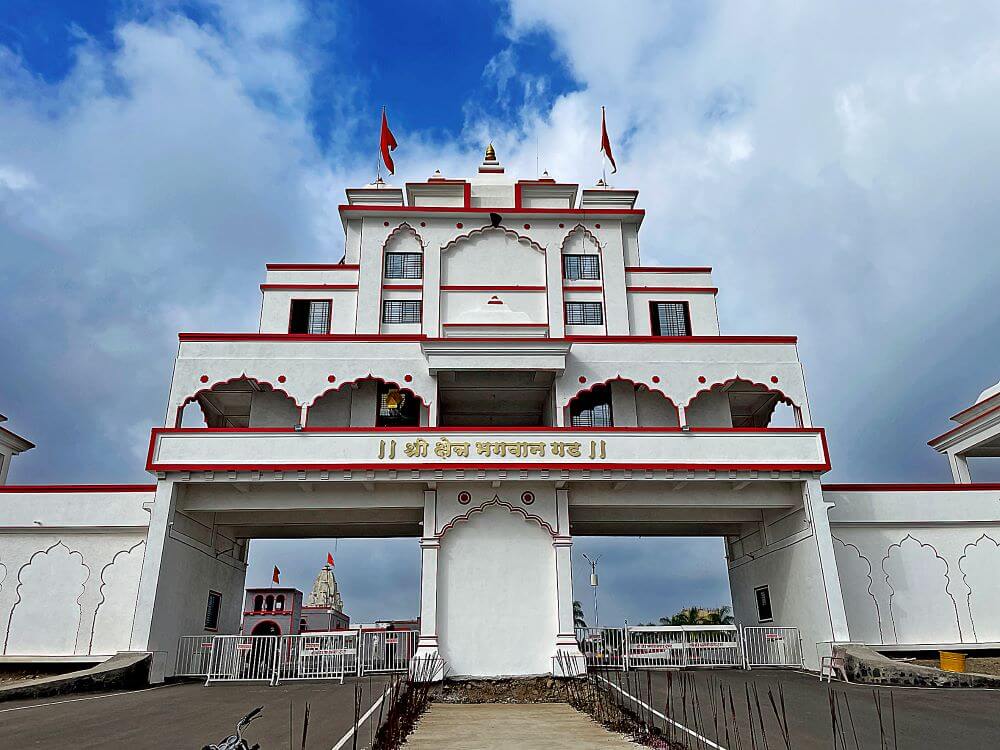
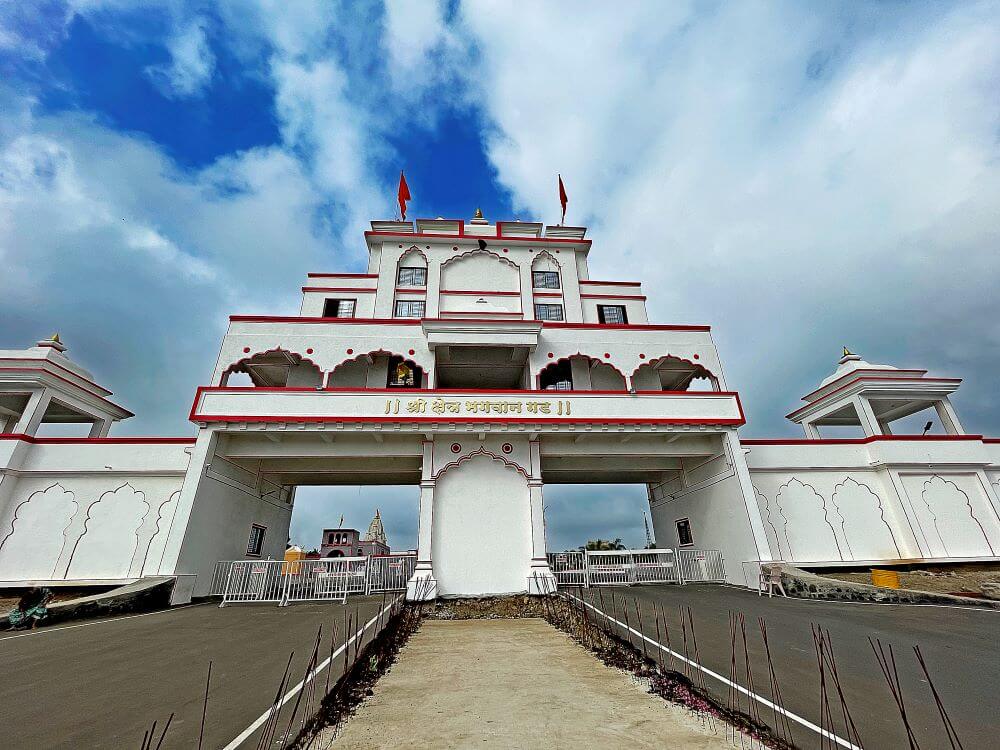
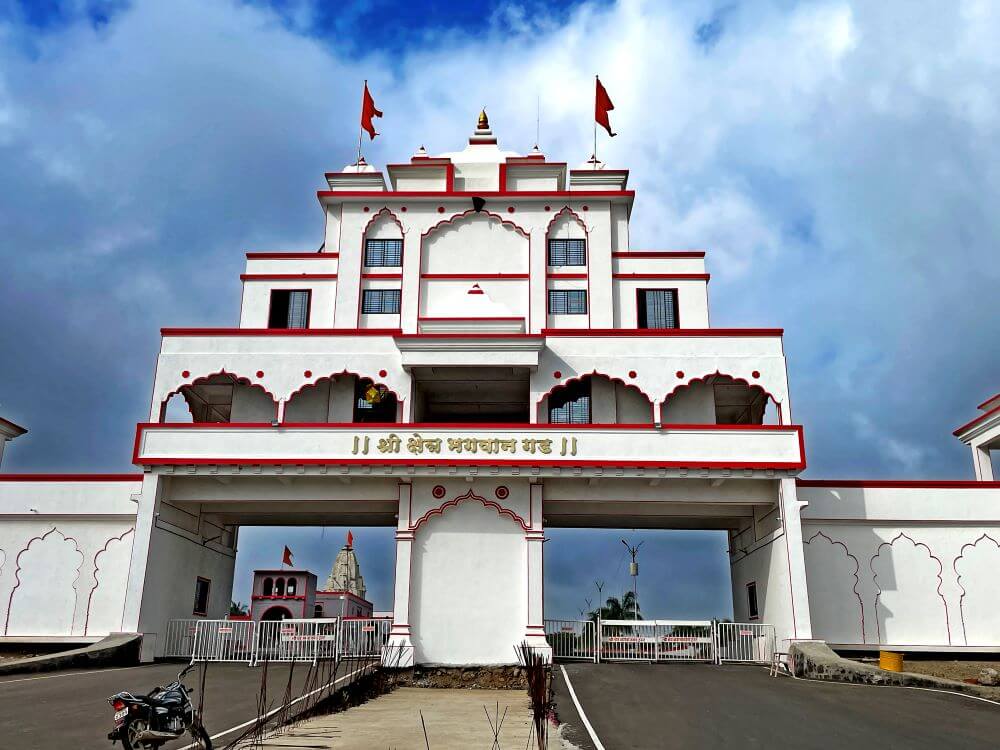
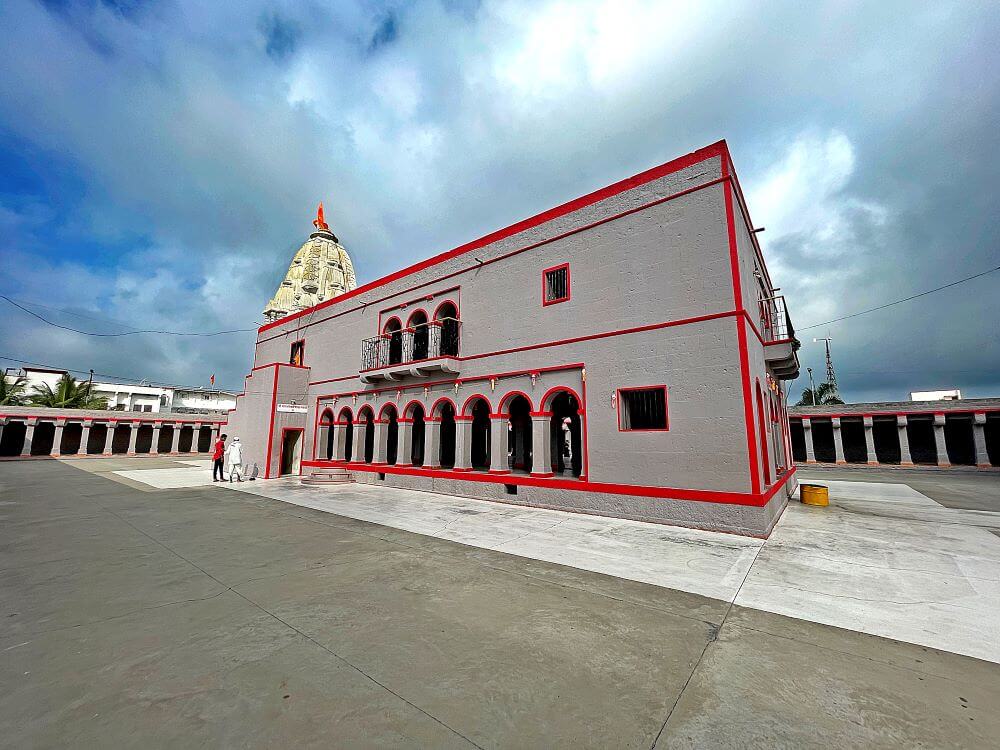
Shri Kshetra Bhagwangad is a place of faith for millions of devotees in Marathwada and the state. Located on the hilltop near Kharwandi village, this fort has fortifications and a 60-foot-high main gate. Entering through this gate leads to the spacious premises of Bhagwangad. There is a cluster of four temples on this fort: Vitthal, Bhagwanbaba, Sage Dhaumya, and Hanuman. The main temple of Vitthal is in the center, surrounded by the temples of Sage Dhaumya and Maruti.
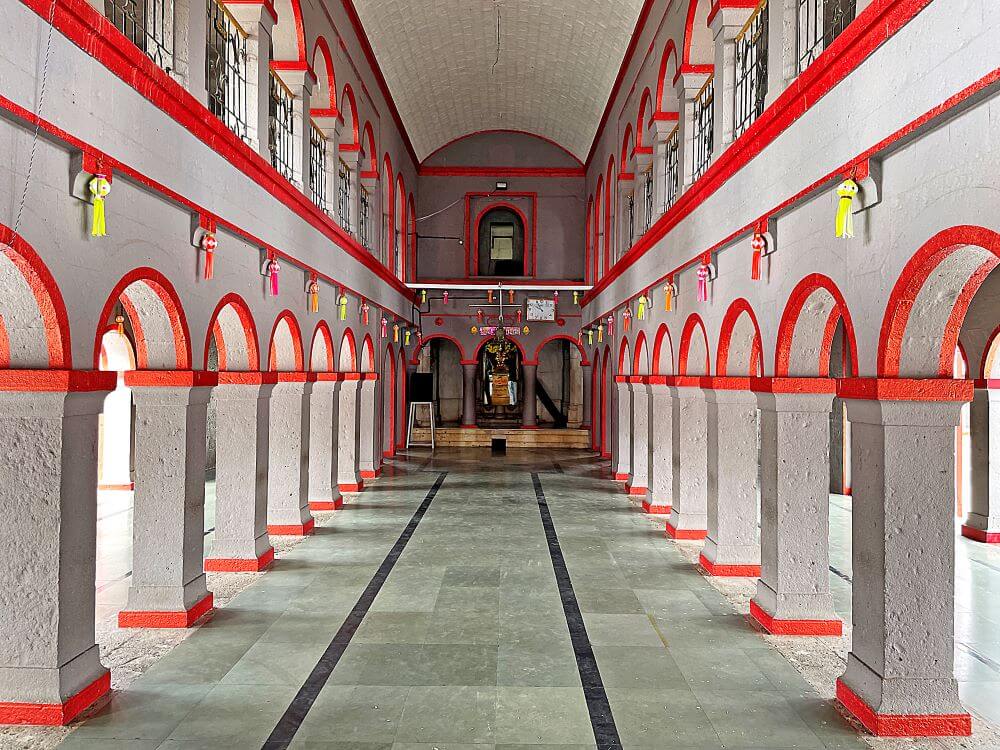
The Vitthal temple faces west and features exquisite carvings. After entering through the main building’s entrance, one enters the assembly hall (Sabhamandap). Seeing the sculpted pillars here gives the impression of being in a fort. The sanctum sanctorum houses a unique idol of Vitthal. After taking the darshan of the Vitthal idol, there are stairs leading downwards to the side of the sanctum to reach the Samadhi site of Bhagwanbaba. On the ground floor are the black marble Samadhis of Saint Bhagwanbaba and Bhimsingh Maharaj. The circumambulation path around the Samadhis is narrow. Due to the unique architecture of this place, at sunrise, the sun’s rays fall directly onto the Samadhi in the sanctum.
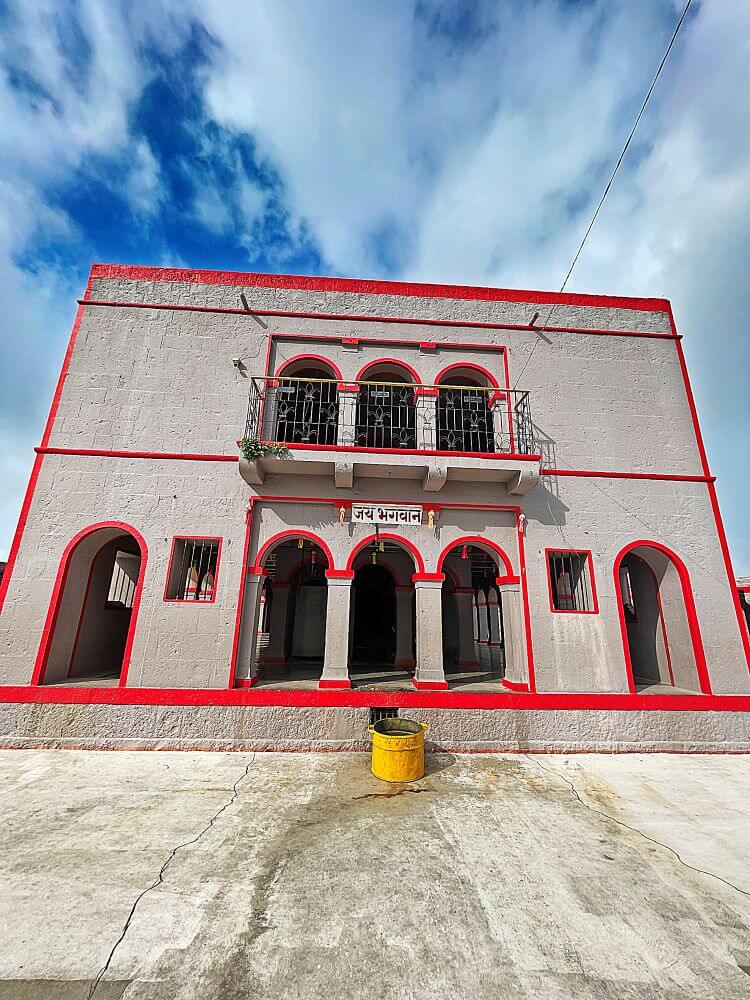
Next to the Vitthal temple is the temple of Sage Dhaumya, which contains idols of the 5 Pandavas, Draupadi, and Sage Dhaumya. Beside the Dhaumya Rishi temple is the temple of Janardan Swami. Opposite the entrance of the Vitthal temple is the Hanuman temple. Additionally, behind the Vitthal temple is the place where Bhagwanbaba resided and a museum of items used by him during his lifetime.
The main festival on the fort is Vijayadashami. This festival, started by Bhagwanbaba, has a 75-year-old tradition. At this time, devotees from every corner of the state come to the fort to receive the Guru’s teachings. Furthermore, a grand Harinam Saptah is organized at Bhagwangad on the occasion of Bhagwanbaba’s death anniversary (18 January). During these 8 days, about 2,00,000 (two lakh) devotees visit the fort to take darshan of Bhagwanbaba’s Samadhi.
This sacred temple stands as a testament to deep spiritual devotion, ancient architectural grandeur, and rich local cultural traditions.
The sanctum sanctorum houses the divine idol consecrated according to ancient Vedic traditions, surrounded by serene courtyards and traditional temple architecture.
Navratri, Maha Shivratri, Annual Temple Jatra & Deepotsav
Compare and book flights, secure top-rated local hotels near the temple, hire reliable guides, and rent cars instantly.
Extend your pilgrimage by visiting other highly sacred temples located nearby.


Add ₹999 more to unlock FREE SHIPPING!
Your sacred cart is currently empty.
Shop Photo FramesFill in your delivery details below to place your order.
Add comment