
Add ₹999 more to unlock FREE SHIPPING!
Your sacred cart is currently empty.
Shop Photo FramesThe Nimbadevi Sansthan at Nimbola in Nandura Taluka is renowned as ‘Prati Prayag’ due to the Triveni Sangam (confluence) of the Saraswati, Vishwaganga, and Kamalja rivers. This ancient site, mentioned in the Skanda Purana, has been sanctified by the touch of the feet of Lord Shri Rama. Here, the three Adi Shaktis—Maha Saraswati, Maha Lakshmi, and Maha Kali—are enshrined in the form of arrows (Baan). The mortal remains of Rashtrasant Tukdoji Maharaj were also immersed at this very confluence. Devotees hold a deep faith that performing Asthi Visarjan (immersion of ashes) at this sacred confluence grants salvation to the departed soul, making this place a major center of faith in Vidarbha.
It is believed that Nimbadevi is an avatar of Goddess Durga, manifested to destroy evil. She received the name Nimbadevi either due to her residence under a Neem tree or because of her health-bestowing qualities. The heritage of this temple is extremely ancient. According to mythological legends, Shri Rama, Sita, and Lakshmana resided in this region during their exile and worshipped the Adi Shakti. In the historical period, this area was under the rule of the Nizam and the Mughals during the 13th and 14th centuries, while Malkapur gained independence from the Bahmani Sultanate in 1399. It is said that Chhatrapati Shivaji Maharaj used to seek blessings at Nimbadevi during his expeditions and while visiting his maternal grandparents at Sindkhed Raja.
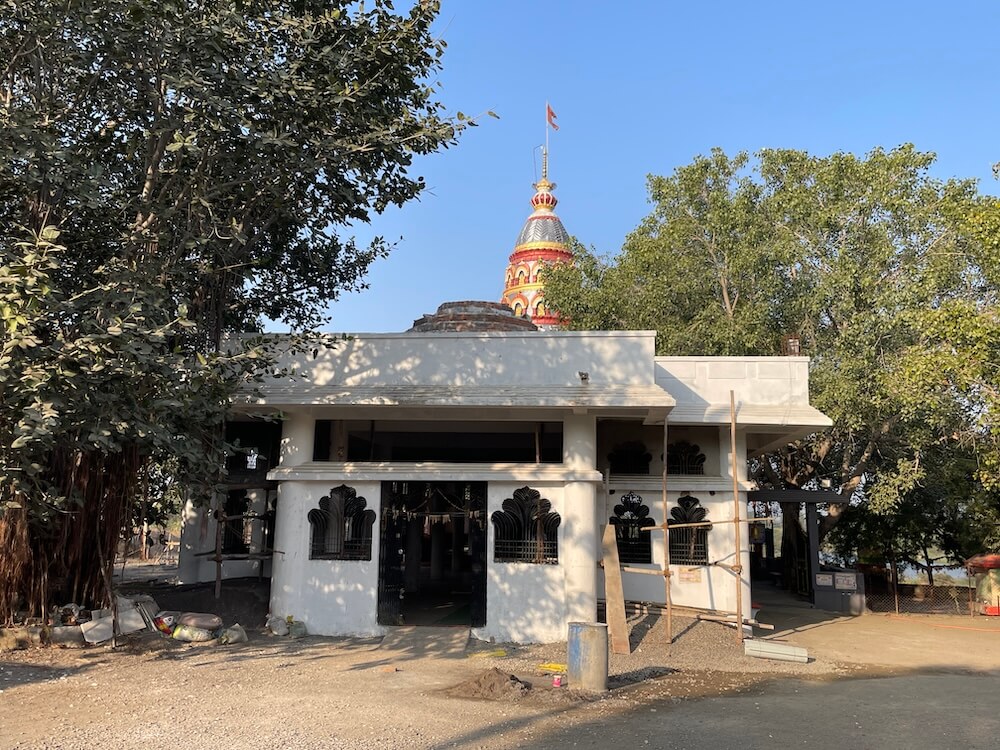
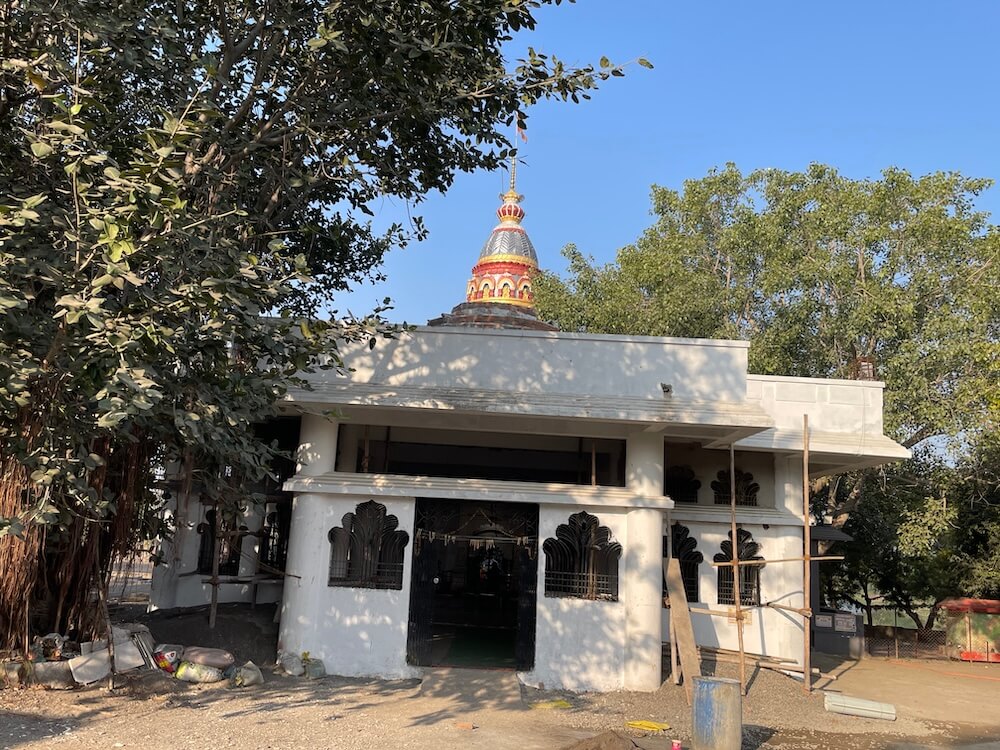
Regarding the temple’s architecture, the rare sculptures of the 64 Yoginis carved on the Shikhara are a unique feature. Temples of the 64 Yoginis are considered extremely rare in the country. According to Tantric tradition, these Yoginis are symbols of the various arts of the Adi Shakti. It is believed that they prevented the rebirth of the demons Raktabija and Andhakasura by drinking every drop of their blood. In the sanctum sanctorum of the temple, one can behold the three Shaktis—Maha Lakshmi, Maha Saraswati, and Maha Kali—in the form of arrows. Previously, this temple was in the Hemadpanti style; however, it has been renovated over time. The picturesque surroundings of the temple include the Samadhi of Nagnath, a vibrant shrine of Hanuman on a high hill, and the Ashram of Balakdasji Maharaj. There is a mysterious tunnel to the east of the Gomukh. It is believed that Saint Kamalnath resides there. It is said that this tunnel was used to protect the idols during foreign invasions.
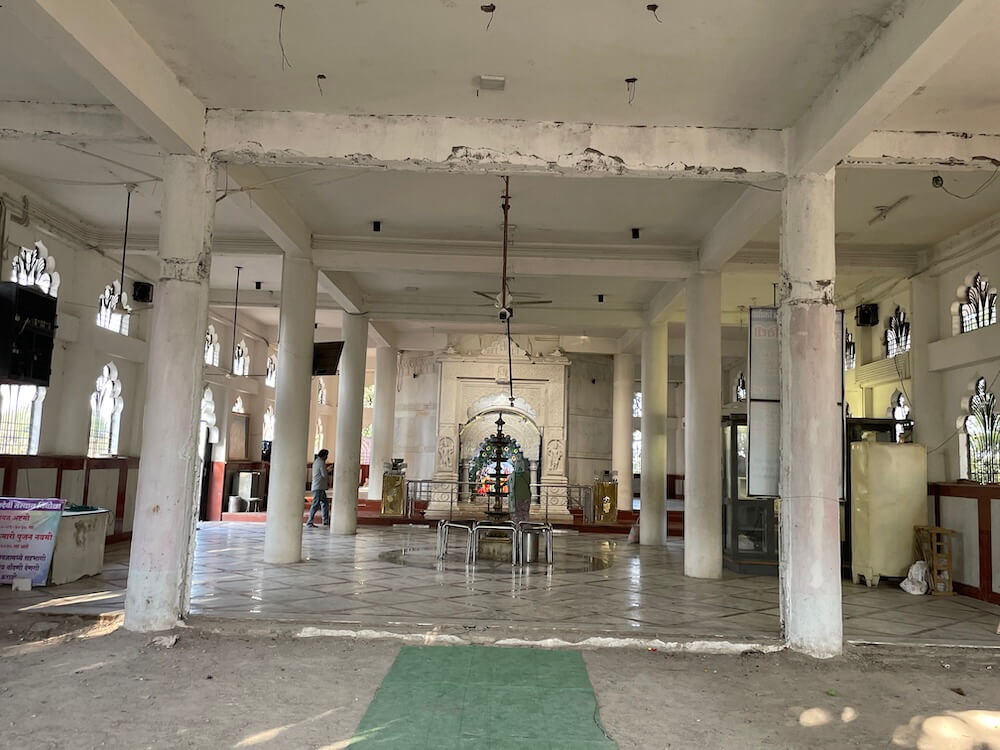
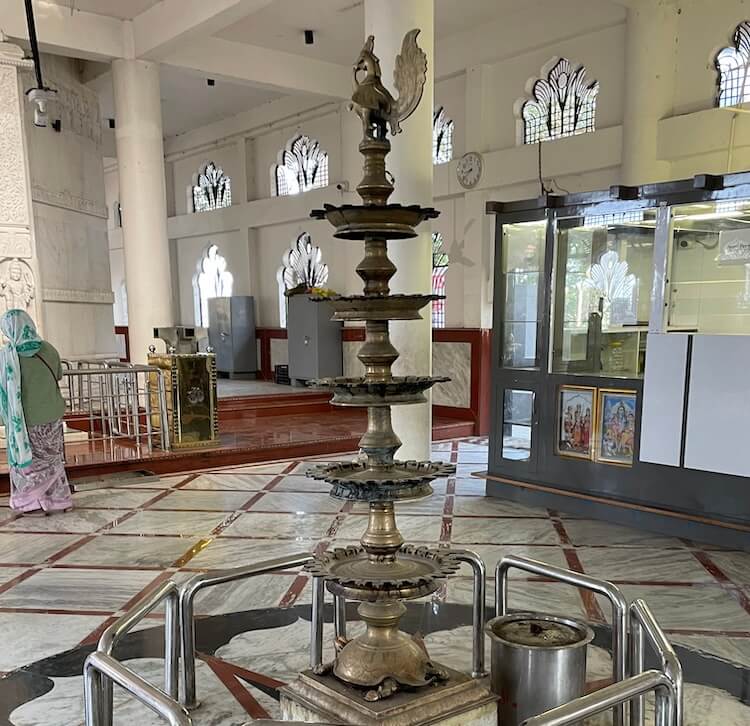
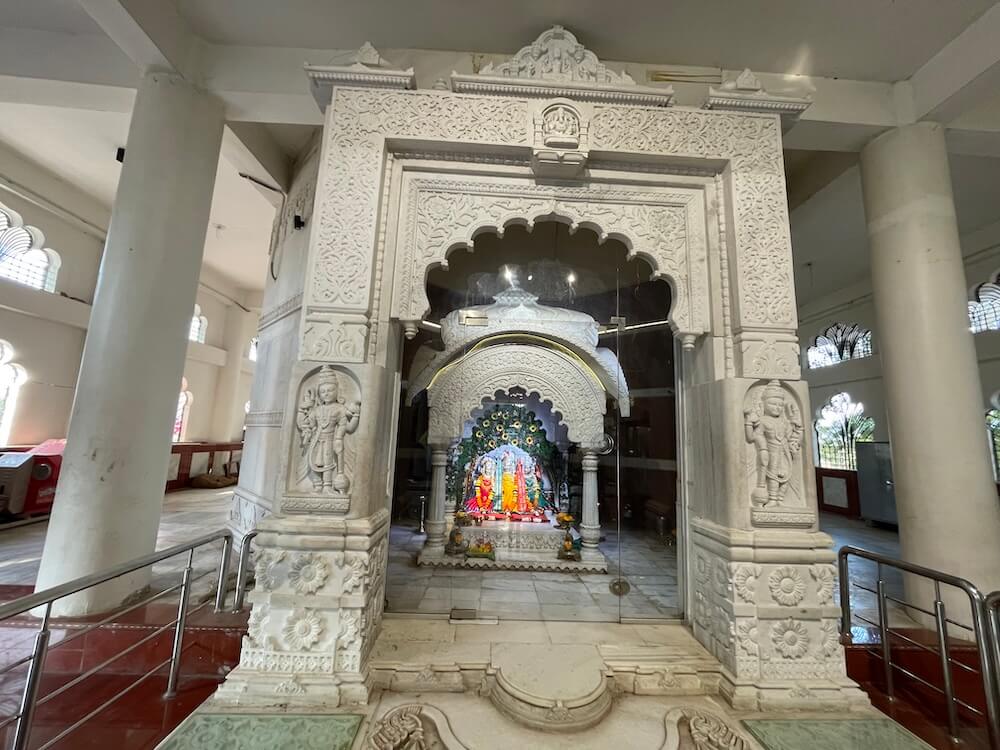
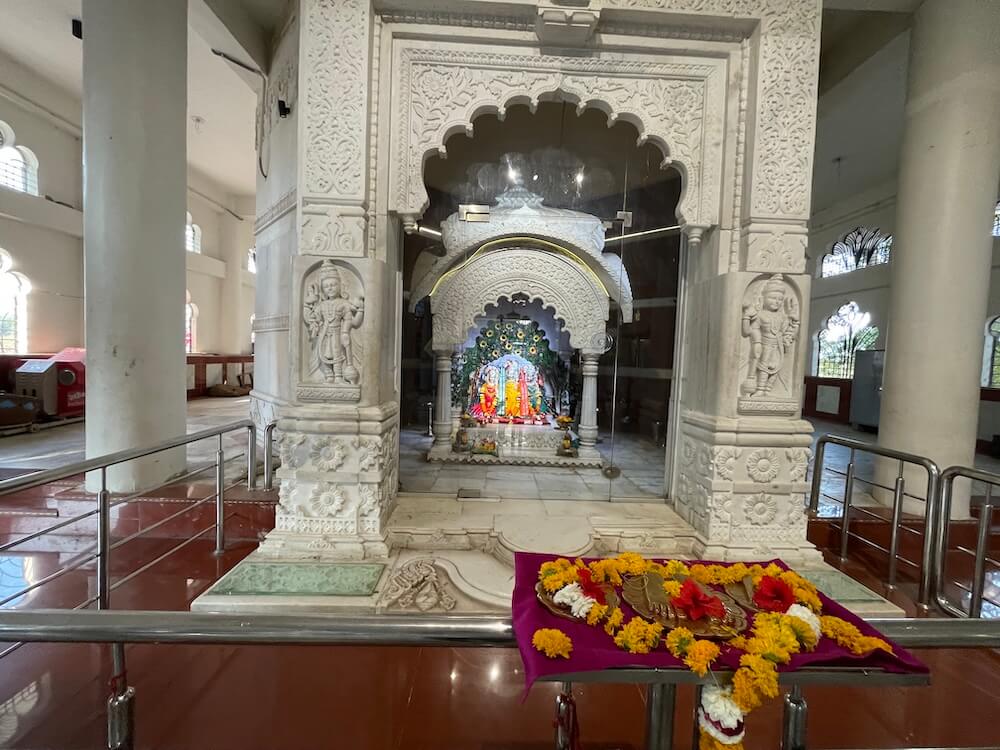
There are many shops in the temple premises selling worship materials and Prasad. Adjacent to the temple is a Yajnashala. Homa-havans are performed here during festivals. The temple structure consists of a spacious Sabha Mandap and a Garbhagriha. In the center of the large Sabha Mandap, a massive brass lamp (Samai) burns continuously. The entrance to the Garbhagriha features exquisite craftsmanship and carvings. Door guardians (Dwarpal) are carved on both sides of the entrance. Above the entrance, in the center, is an idol of Ganesha. The area above it also has beautiful carvings, including an idol of the Goddess. Inside the Garbhagriha, the arrows of the Goddesses are placed in a marble shrine with attractive carvings. The Goddesses are adorned daily with various ornaments and garments. The arrows have silver masks. There are lion sculptures on both sides of the Goddesses. Tridents are placed on both sides within the shrine.
The Garbhagriha of the temple is topped by a beautiful Shikhara. The Shikhara has five tiers that taper towards the top. These tiers contain niches (Devakoshtakas) in which the idols of the 64 Yoginis are seated. Above this is a two-tiered Amalaka topped with Panchadhatu Kalash. There are steps near the temple to reach the Triveni Sangam. On this path, one finds the shrines of Bhairavnath and Asara Mata. ‘Bhar’ (votive offerings) are found tied to the branches of the trees here. Many childless couples make vows to the Goddess for progeny. Once blessed with a child, they keep their infants for some time in the cradles hung under the trees here. Devotees visit the Triveni Sangam and take the holy water (Tirth) home.
Devotees believe that this Goddess never sends anyone back empty-handed, which is why many people come here for Darshan. Tuesday is considered the day of the Goddess, so there is a large crowd of devotees on this day. Abhishekam is performed on the Goddesses every full moon (Purnima). Devotees offer Naivedya consisting of nine Puranpolis, Urad dal Vadas, curd-rice, and papad, after filling the Goddess’s lap with a blouse piece and coconut (Oti). At this time, the Goddess is offered an Aarti with nine lamps. The visiting devotees are given Panchmeva Prasad. Many devotees also organize Bhandaras (community feasts) in the temple premises. Every Monday, on Shivratri, Somvati Amavasya, and every Monday of the Shravan month, devotees perform milk Abhishekam on the Swayambhu Shivlingas in the riverbed. A large fair is held here on Gudi Padwa in the month of Chaitra. The tradition of selling earthen pots (Gadgi) is still preserved today. Devotees from the neighboring village of Kokalwadi and surrounding villages participate with great enthusiasm in the Chaitra and Sharadiya Navratri festivals. This place is famous throughout Vidarbha for the first tonsure ceremony (Chudakarma Sanskar) of children.
This sacred temple stands as a testament to deep spiritual devotion, ancient architectural grandeur, and rich local cultural traditions.
The sanctum sanctorum houses the divine idol consecrated according to ancient Vedic traditions, surrounded by serene courtyards and traditional temple architecture.
Navratri, Maha Shivratri, Annual Temple Jatra & Deepotsav
Compare and book flights, secure top-rated local hotels near the temple, hire reliable guides, and rent cars instantly.
Extend your pilgrimage by visiting other highly sacred temples located nearby.


Add ₹999 more to unlock FREE SHIPPING!
Your sacred cart is currently empty.
Shop Photo FramesFill in your delivery details below to place your order.
Add comment