
Add ₹999 more to unlock FREE SHIPPING!
Your sacred cart is currently empty.
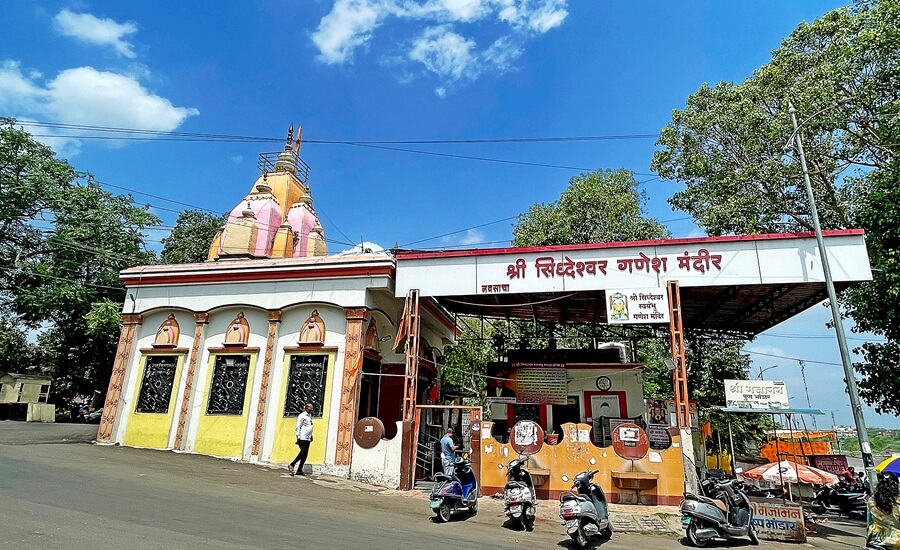
Shop Photo FramesThe tradition of worshipping Ganesha, who holds the honor of being the first to be worshipped, is ancient. One prevalent view is that the form of Ganesha was realized through the synthesis of the Gajraj from the non-Aryan tradition and the Yaksha from the Aryan tradition. Ancient Ganesha idols have been discovered in archaeological excavations conducted at many places. No matter how worn or eroded a Ganesha idol may be, it can be easily identified by its distinct shape or trunk. In this same manner, the ancient temple of Siddheshwar Ganesha, discovered during excavations, is situated on the banks of the Panjara River in the city of Dhule. This temple is a place of faith for thousands of devotees.
Regarding this Siddheshwar Ganpati temple, the abode of Riddhi and Siddhi, the legend goes that about two hundred years ago, a devotee of Ganesha named Mannalal Baldev Sharma used to sit in a serene spot on the banks of the Panjhara river in the city of Dhule, performing his daily devotion to Ganesha with deep absorption. He would not remain for even a single moment without chanting the name of Ganesha. Pleased by this devotion of his Ganesha appeared to him in a dream one night. In the dream, Ganesha told him that He was buried underground at a certain place. Following this divine vision, he excavated the spot seen in the dream. At that time, a stone idol of Ganesha was discovered there at a depth of about twenty feet. Later, a temple of Ganesha was built at this very site.
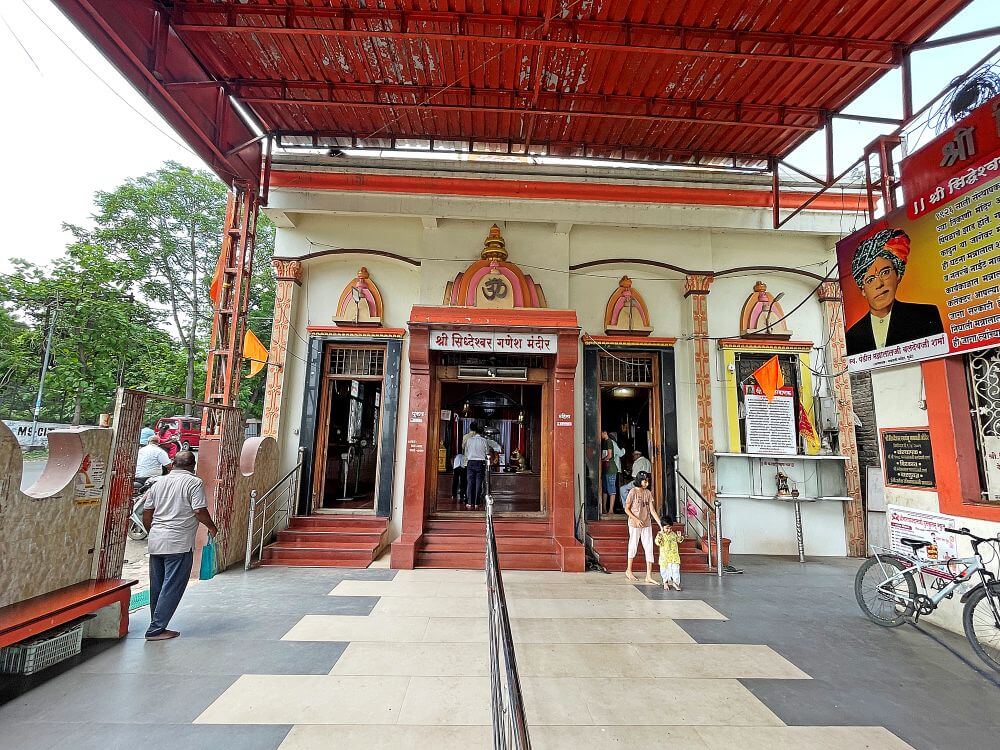
The structure of this temple consists of a Rangamandapa (procession hall), Mukhamandapa (entrance hall), Sabhamandapa (main assembly hall), and Garbhagriha (sanctum sanctorum). The Rangamandapa features a decorative railing on its outer right and left sides. There are three steps to ascend to the Mukhamandapa, which is situated at a higher elevation than the Rangamandapa. A queue management system has been arranged by installing stainless steel railings in the center and on both sides of these steps, which are approximately fifteen feet long. There are three entrances to proceed from the Mukhamandapa into the Sabhamandapa. On both sides of the central main entrance, there are square pillars with balconies supported by brackets. Above the balcony, there is a replica of a five-petaled spire (Panchadala Shikhara) topped with two Amalakas and a pinnacle (Kalasha). In the center of the spire, there is an Om symbol. On both sides Above the balconies of the sub-shrines are trefoil-shaped spires. On the outer wall near the entrance of the assembly hall, there are two square pillars on the right and left sides, topped with ornate brackets.
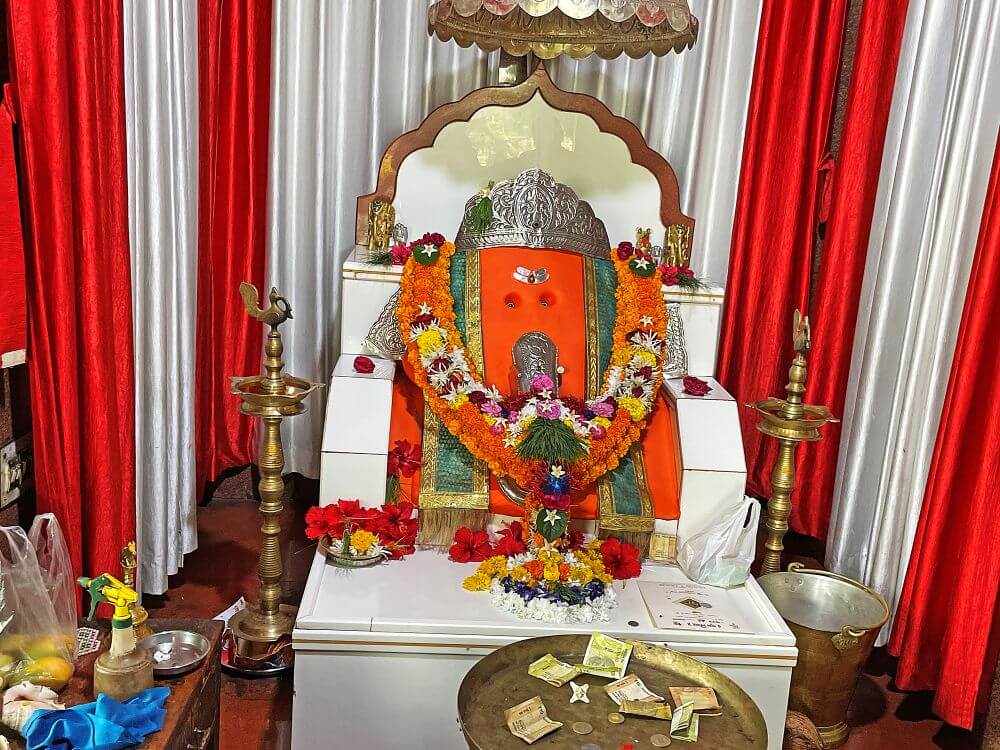
The assembly hall is enclosed, with windows in the walls to allow for light and ventilation. The sanctum sanctorum here is situated at a higher level than the assembly hall. The wooden door frames of the sanctum sanctorum feature vertical carvings. There are two windows in the enclosed sanctum sanctorum to allow for air and sunlight. In the center of the sanctum sanctorum, upon a pedestal, sits the vermilion-anointed stone idol of Ganesha, housed within a canopy whose roof is supported by four square pillars connected by arched curves. It feels as though the idol’s eyes are casting a benevolent gaze upon the devotees. Ganesha wears a silver crown on his head. The idol’s trunk and tusks are made of silver. There is a silver canopy above the idol’s head.
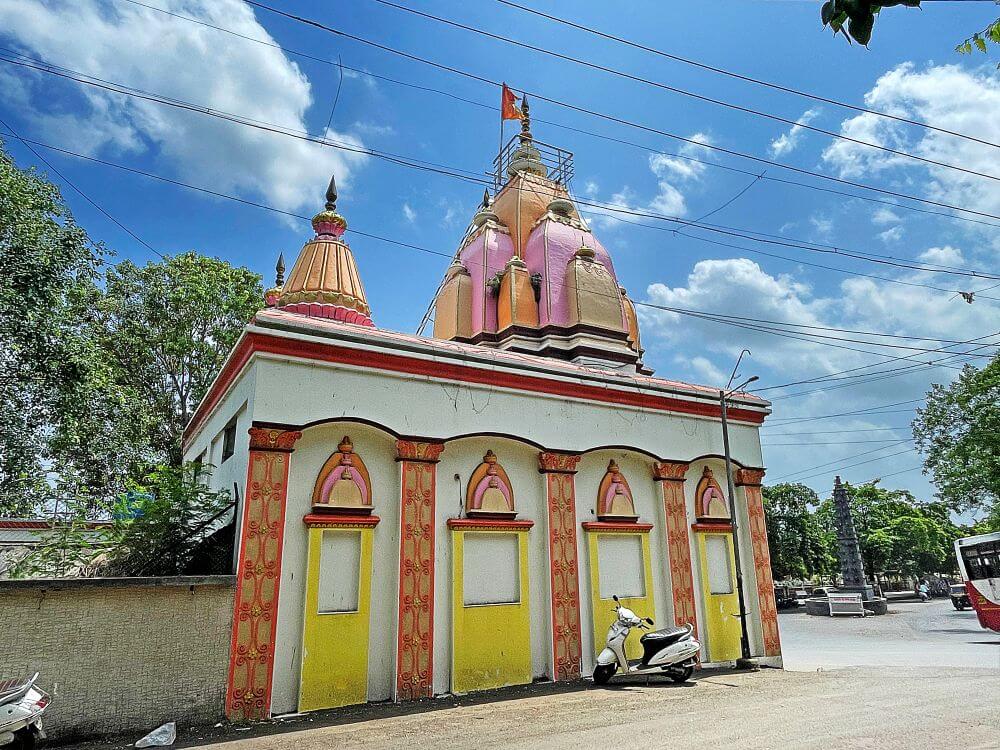
There is a parapet on all four sides of the temple roof. On the roof of the assembly hall, there are two dome-shaped spires adorned with vertical ridges and lotus flower carvings. At the apex, there is an amalaka topped with a kalasha. Above the sanctum sanctorum, there is a tall spire, also crowned with an amalaka and a kalasha. Surrounding the main spire on all four sides are twelve smaller spires, each featuring an amalaka and a kalasha.
The festival of Ganesh Jayanti on Magh Shuddha Chaturthi and the ten-day Ganeshotsav in the month of Bhadrapada are celebrated here with great enthusiasm. During these times, programs such as Ganesh Yaga, Atharvashirsha, Mahaabhishek, Bhajans, Kirtans, Pravachans, and music performances are organized. Mahaprasad is also arranged for the devotees on these occasions. There is a constant flow of devotees visiting for Darshan every month on Sankashti and Vinayaki Chaturthi, as well as on Tuesdays. Many devotees from the city begin their day by seeking the blessings of this Ganesha.
This sacred temple stands as a testament to deep spiritual devotion, ancient architectural grandeur, and rich local cultural traditions.
The sanctum sanctorum houses the divine idol consecrated according to ancient Vedic traditions, surrounded by serene courtyards and traditional temple architecture.
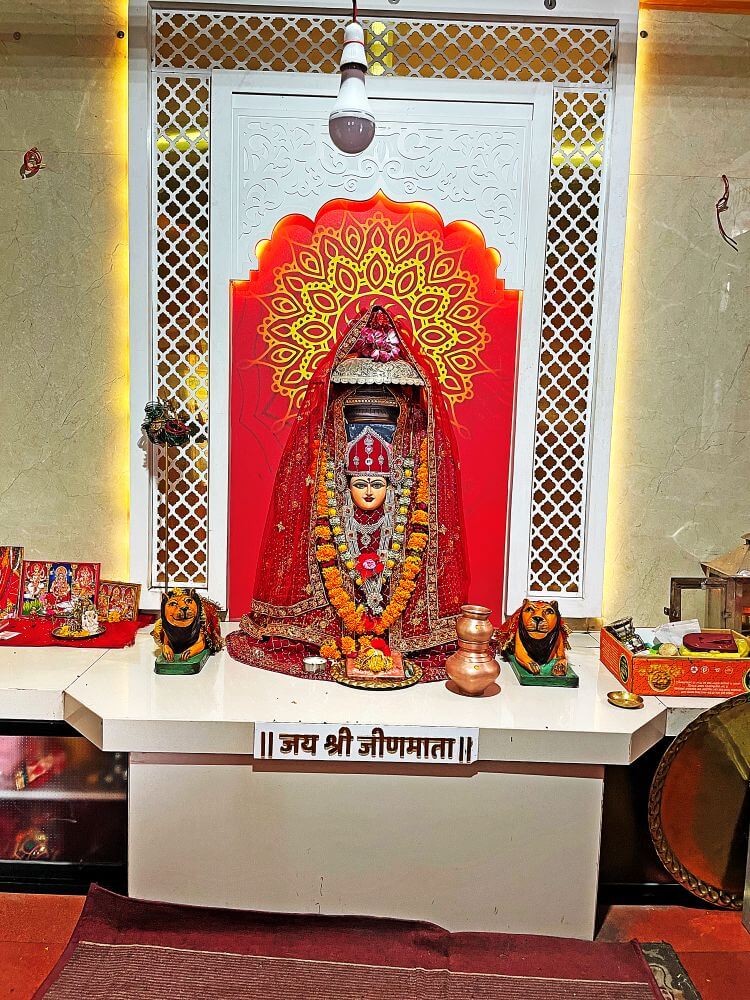
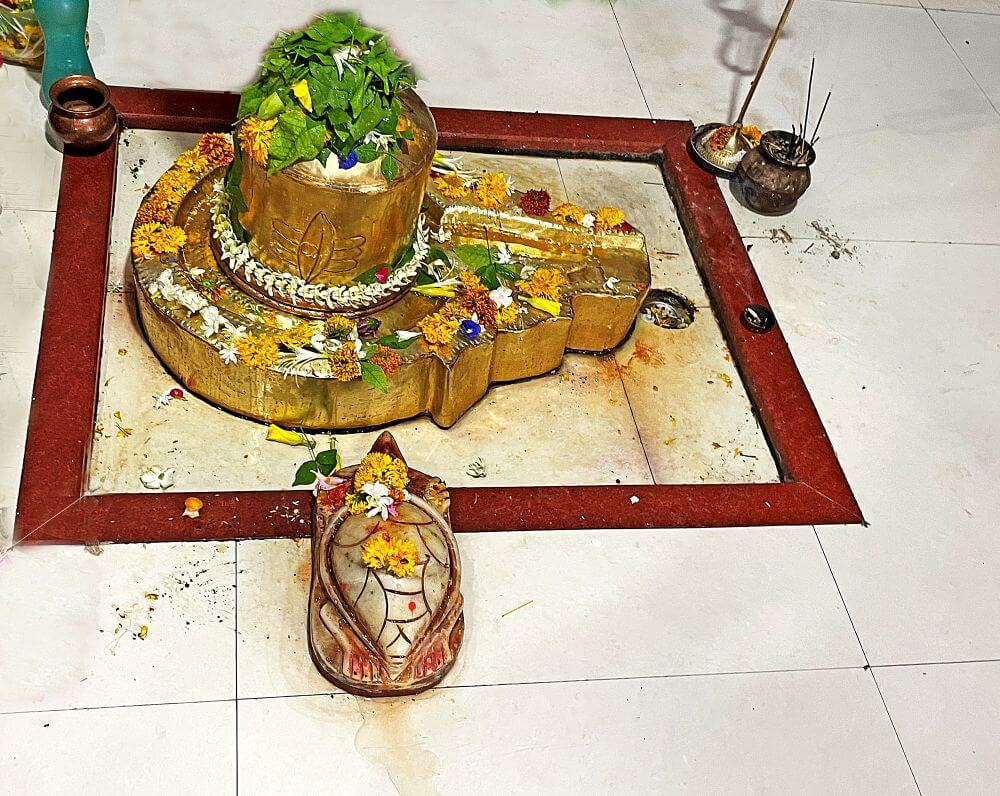
Navratri, Maha Shivratri, Annual Temple Jatra & Deepotsav
Compare and book flights, secure top-rated local hotels near the temple, hire reliable guides, and rent cars instantly.
Add ₹999 more to unlock FREE SHIPPING!
Your sacred cart is currently empty.
Shop Photo FramesFill in your delivery details below to place your order.
Add comment