
Add ₹999 more to unlock FREE SHIPPING!
Your sacred cart is currently empty.
Shop Photo FramesMaharashtra has been blessed with a great tradition of brave warriors and saints. Many saints have graced this land, carrying the banner of the Warkari tradition on their shoulders and enriching it. These saints spread devotion in this soil in simple language. An important saint in this tradition is Sant Sopandev, the younger brother of Sant Dnyaneshwar. He took Sanjeevan Samadhi at the confluence of the Karha and Chambli rivers in the city of Saswad. Today, this Samadhi site is a place of faith for millions of devotees. Regarding the spiritual significance of this place, it is said: “He who cannot visit Kashi, should come to Saswad; where the secret Ganga flows, at the feet of Sopan.”
The four siblings—Nivritti, Dnyandev, Sopan, and Muktabai—are revered as the pioneers of the spiritual revolution in the land of Maharashtra. Among them, Sant Sopandev was born in the year 1199 Shaka. He considered his elder brother, Sant Dnyaneshwar Maharaj, as his Guru. The personality of Sopandev was extremely calm, restrained, and devoted to knowledge. According to mythological references, these four siblings are considered incarnations of various deities. Among them, Sopandev is considered an incarnation of Lord Brahma. Just as Dnyaneshwar Maharaj presented the profound meaning of the Gita in the Prakrit language through the Bhavarthadipika, also known as Dnyaneshwari, Sopandev carried forward this tradition in a fluent style. At the age of 15-16, he wrote the text ‘Sopandevi’, consisting of 700 verses, on the Bhagavad Gita. His language is simple, direct, and clear. He wove the complex principles of Brahmavidya into simple verses that common devotees could understand. Along with this literature, he composed about 50 Abhangs and a Haripath of six Abhangs. His literature prominently features the glory of Pandhari and the importance of the Guru’s grace. Setting aside the ego of knowledge, he emphasized only devotion and equality. Exactly one month after the Samadhi of Sant Dnyaneshwar, on Margashirsha Vadya Trayodashi of the year 1218 Shaka, Sopandev took Sanjeevan Samadhi on the banks of the Karha River in Saswad. Sant Namdev, Nivrittinath, and Muktabai were present on this occasion. According to Namdev’s Abhang Gatha, Pandurang himself chose the site for this Samadhi and gave the final bath to Sopandev. In the Warkari tradition, Sant Sopandev is affectionately called Sopankaka.
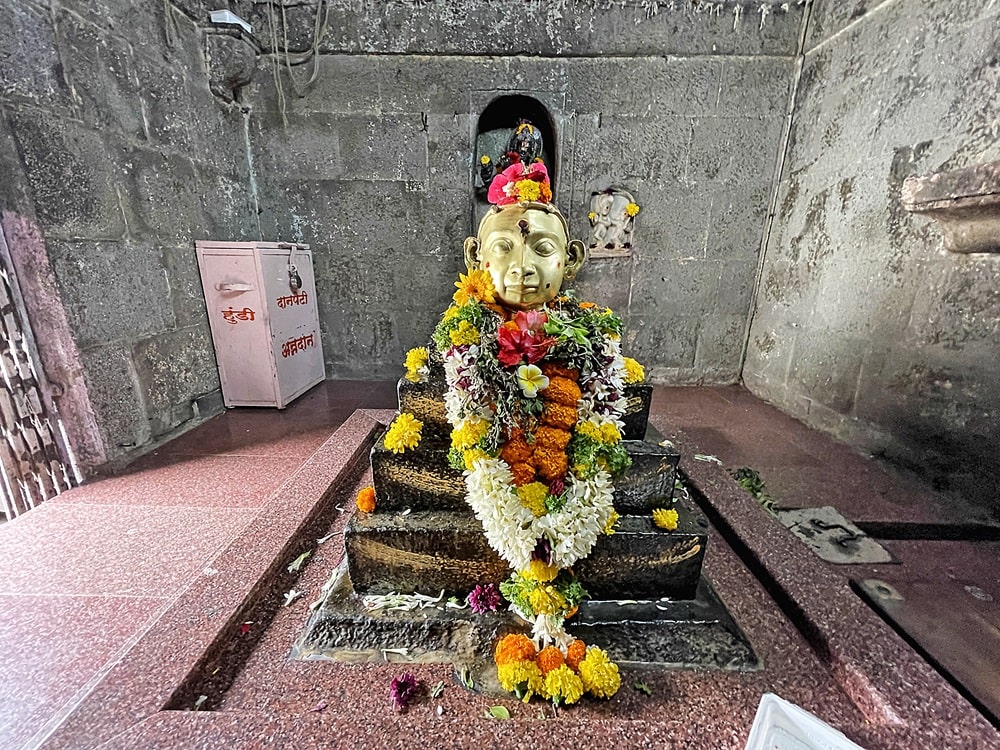
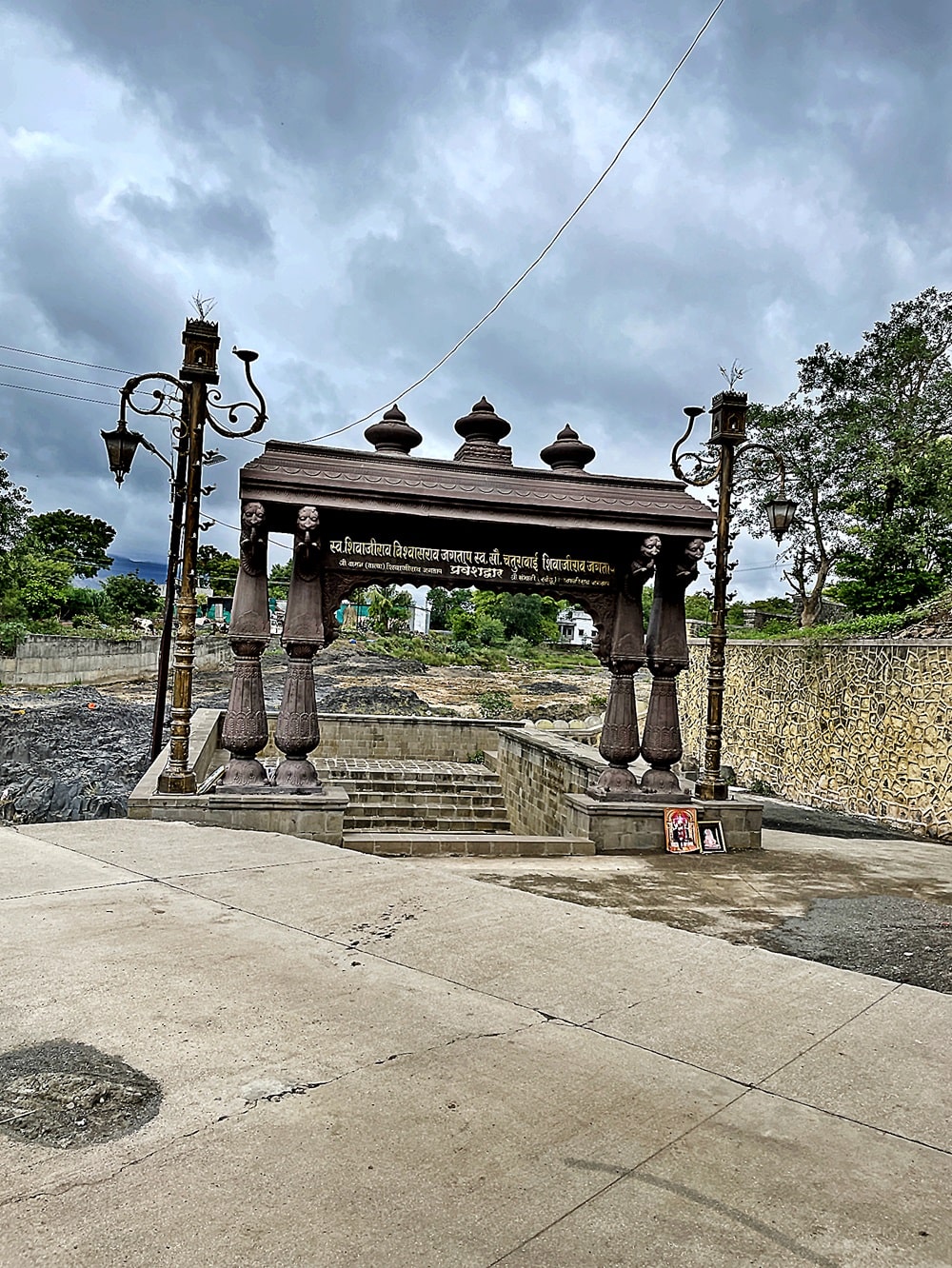
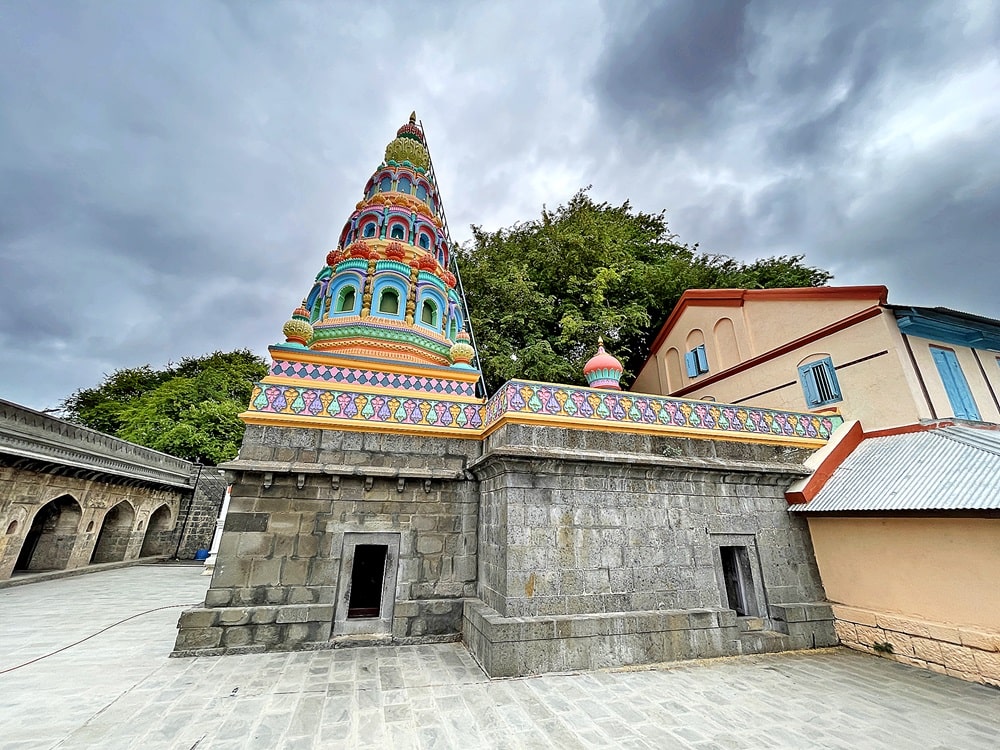
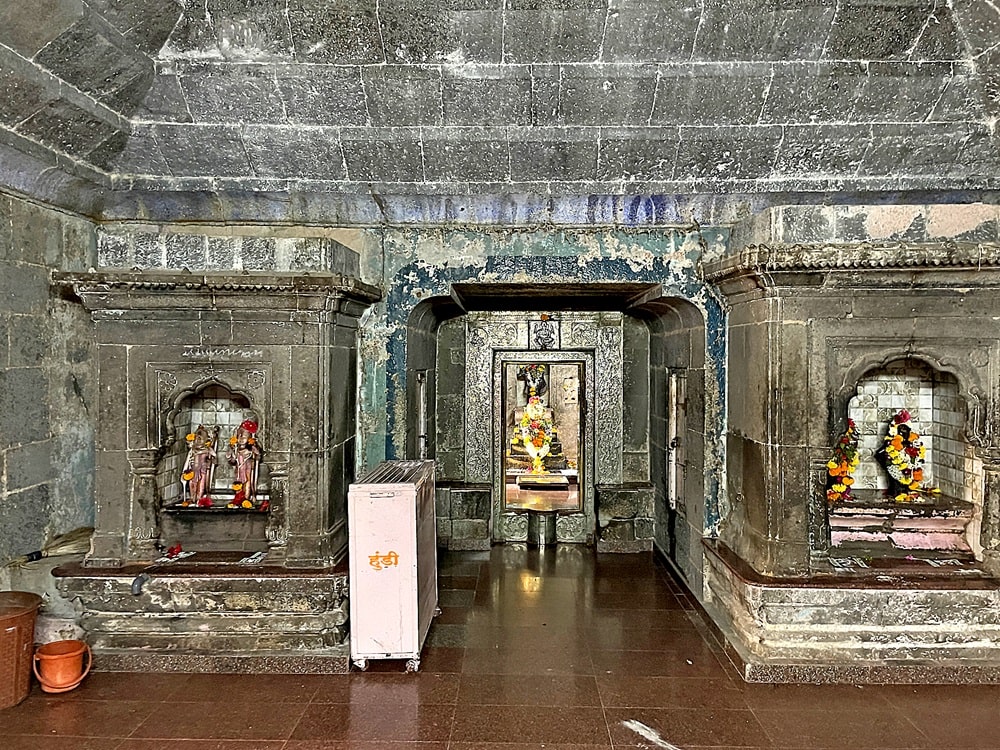
One enters the courtyard of the Samadhi temple by climbing a few steps through a stone-built main gate. There are covered corridors in the paved courtyard. Upon entering, one first sees the Nageshwar temple. The Samadhi temple of Sopandev is located behind this Nageshwar temple. This Nageshwar temple existed even before the Samadhi of Sopandev. In front of the Nageshwar temple, there is a Nandi idol carved in black stone on a pedestal. The ornaments on the Nandi, the cloth on its back, and the bells around its neck are skillfully carved. Additionally, images of Hanuman and Ganpati are carved in the Nandi Mandap. The Nageshwar temple is built entirely of stone. After the renovation carried out a few years ago, verses from Sopandev’s ‘Sopandevi’ text have been inscribed on the white marble tiles installed on the temple walls. An architectural feature here is that if one speaks in a low voice in one corner of the assembly hall (Sabhamandap), it can be heard clearly by a person standing in the opposite corner. However, a person standing in the center hears nothing. This is an excellent example of ancient acoustics. There is a large water tank in front of the main Samadhi temple, known as Bhagirathi Kund. There is a legend that Pandurang had summoned all the holy rivers here for the bathing of Sopandev’s Samadhi. Therefore, the water in this tank is considered sacred. This east-facing temple is structured with a Veena Mandap, Sabhamandap, Antaral, and Garbhagriha. The two-story Veena Mandap has wooden pillars and a tin roof. According to the Warkari tradition, continuous Veena playing takes place in this hall. The wooden pillars here have beautiful carvings of leaves, flowers, vines, and parrots. There is a wooden balcony on the second floor above these pillars. From the Veena Mandap, one enters the Sabhamandap of the temple. In the niches on the front wall of the Antaral in the Sabhamandap, there are idols of Shri Ram, Sita, and Vitthal-Rukmini. The entrance to the Garbhagriha is covered with silver sheets. The door frame is carved with vines and flowers, and there is an idol of Ganesha on the lintel. In the center of the Garbhagriha is the Sanjeevan Samadhi of Sant Sopandev. This Samadhi is made of black stone and is covered with silver sheets. A silver mask of Sopandev is placed on the Samadhi. In a niche on the wall behind the Samadhi, there is a small idol of Lord Shri Krishna and a nearby idol of Radha-Krishna. Behind the temple is a Dattatreya temple. Above the Garbhagriha of the temple is a tall, tapering spire (Shikhara). In the niches at each level of this spire, there are idols of various deities and saints.
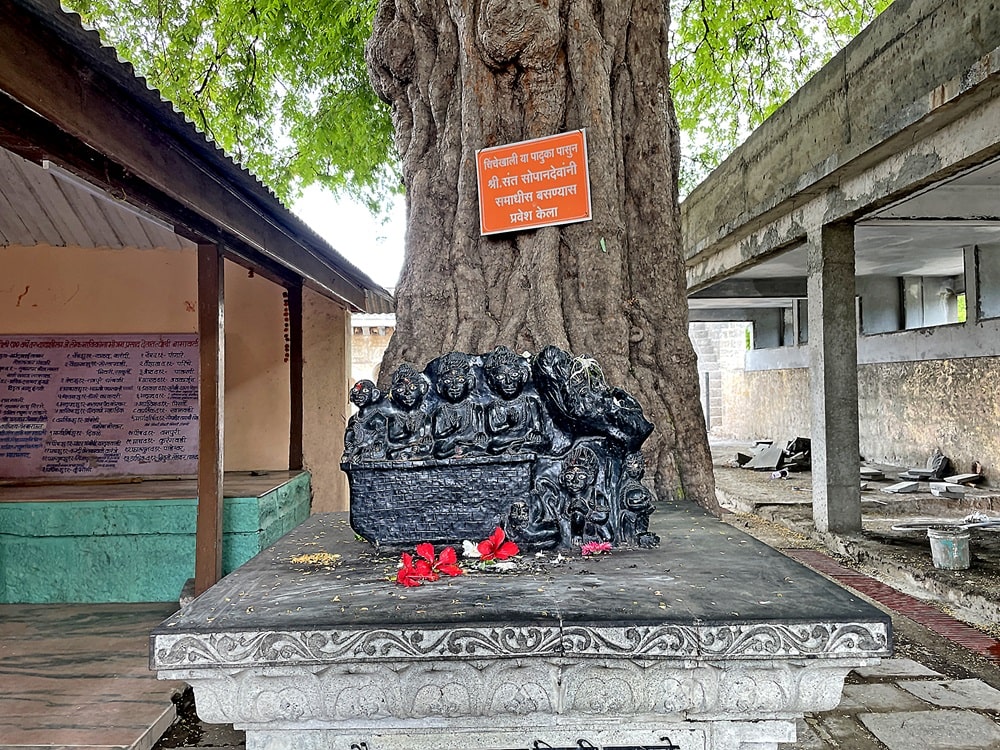
Under a tamarind tree on the north side of the temple, there is a stone pedestal. It is believed that from this spot, Sant Sopandev entered to take Samadhi at the age of nineteen. Next to this tree is a sculpture symbolizing the event where Dnyaneshwar Maharaj made a wall move.
Sopankaka took Sanjeevan Samadhi in Saswad in the month of Margashirsha. To mark this, the Samadhi festival is celebrated from Margashirsha Vadya Ashtami to Margashirsha Vadya Chaturdashi. On the main day of Trayodashi, at 12 noon, flowers are showered on the Samadhi and Gulal is thrown. After this, the Palkhi (palanquin) of Sopandev is taken around the village of Saswad. On the occasion of Ashadhi Wari, Sopandev’s Palkhi travels on foot from Saswad to Pandharpur. Saswad is an important halt for the Palkhi of Dnyaneshwar Maharaj. At this time, the city of Saswad takes on a festive look. Sopandev’s birth anniversary is celebrated on Tripurari Purnima. Kakad Aarti takes place in this Samadhi temple every morning at 5:30. This is followed by Panchamrit Puja, Naivedya, and Aarti. A discourse (Pravachan) is held every evening at 7:00. Devotees can visit the Samadhi daily from 5:30 AM to 10:00 PM.
This sacred temple stands as a testament to deep spiritual devotion, ancient architectural grandeur, and rich local cultural traditions.
The sanctum sanctorum houses the divine idol consecrated according to ancient Vedic traditions, surrounded by serene courtyards and traditional temple architecture.

Navratri, Maha Shivratri, Annual Temple Jatra & Deepotsav
Compare and book flights, secure top-rated local hotels near the temple, hire reliable guides, and rent cars instantly.
Extend your pilgrimage by visiting other highly sacred temples located nearby.


Add ₹999 more to unlock FREE SHIPPING!
Your sacred cart is currently empty.
Shop Photo FramesFill in your delivery details below to place your order.
Add comment