
Add ₹999 more to unlock FREE SHIPPING!
Your sacred cart is currently empty.
Shop Photo FramesAccording to sacred local lore, the majestic Vaijnath Mahadev Temple in the village of Vasan is home to a Shiva lingam believed to have emerged from the hoofprint of a cow. This ancient shrine is also known as Vasaniya Mahadev. As recorded in the Gandhinagar Gazetteer, the temple is so integral to the region’s identity that the village itself took the name Vasan from this divine association. Devotees hold that the sanctum of Lord Mahadev here dates back more than two thousand years. Both Lord Shiva and Goddess Parvati reside in this temple and notably, it houses twelve Shiva lingams. A particularly striking feature of this temple is that on certain days of the year, the first rays of the sun fall precisely on the kumkum mark on Parvati’s forehead in the sanctum—a marvel that devotees see as divine alignment.
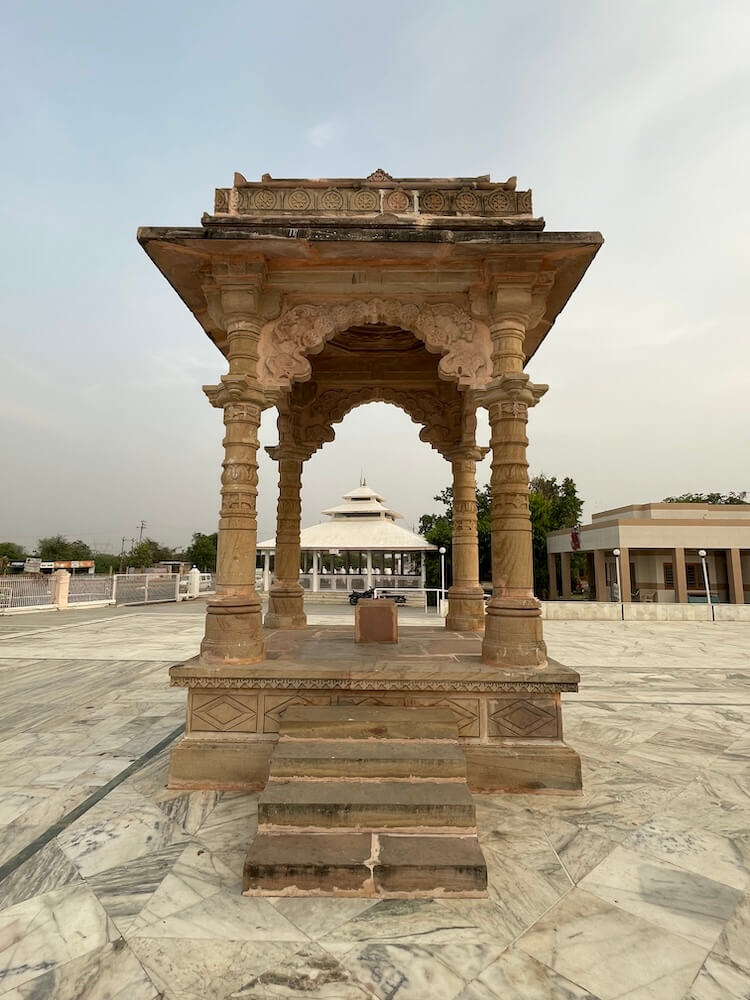
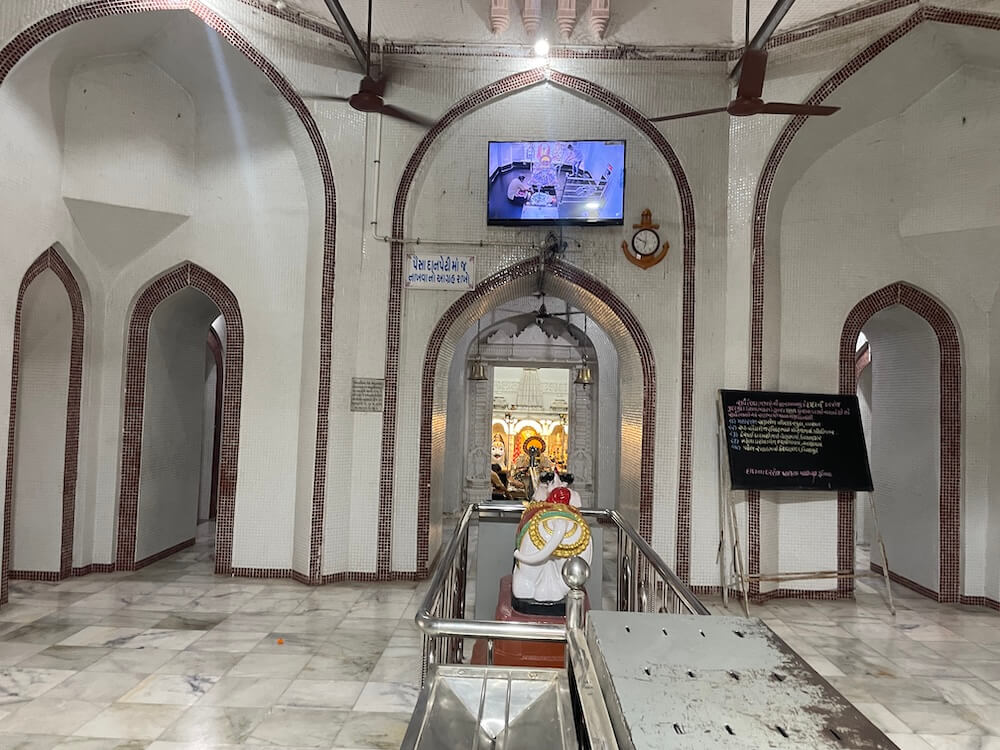
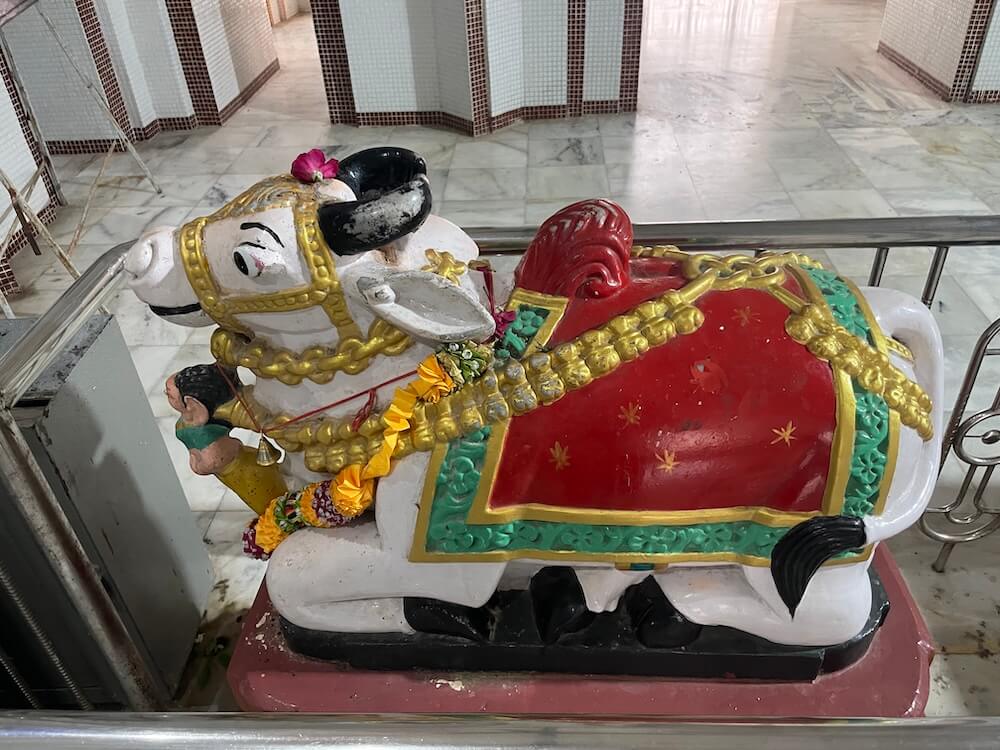
Out of the twelve Shiva lingams in the temple, ten have been installed along the pradakshina marg (circumambulatory path). Of the remaining two inside the sanctum, one rests in the hand of Goddess Parvati, while the other is the swayambhu (self-manifested) lingam of Vaijnath Mahadev. Another remarkable aspect of the temple is that it was built entirely according to principles of vastu shastra, using no iron or cement and features 111 intricately carved pillars and 13 spires. Unique to this temple is the placement of the tortoise idol behind Nandi instead of in front. Belief runs deep that darshan of this awakened Shiva lingam can cure ailments and ease suffering. This healing association led to the name Vaidyanath Mahadev, which eventually evolved into Vaijnath Mahadev.
In ancient times, Gujarat was divided into three regions, i.e. Saurashtra, Anarta in the north and Lat in the south. The present-day Gandhinagar district fell within Anarta. It is believed that the Vaijnath Mahadev temple was established during the reign of Mahakshatrapa Rudradaman I, around 150 BCE. One legend speaks of a herdsman who used to bring his cows to graze in the forests here. One cow stopped giving milk after returning home for several days. Curious, the herdsman followed her one day and saw her stopping at a spot and releasing milk directly onto the ground. The milk would vanish into the earth. Alarmed, the herdsman shouted, startling the cow, whose hoof got stuck in the ground at that very spot. Distressed, the herdsman prayed to Lord Shiva, who responded with a divine voice instructing him to consecrate that place and establish a temple. He did so and it is said that to this day, hoof marks can still be seen in the area. Over time, a grand temple was built around the sacred lingam.
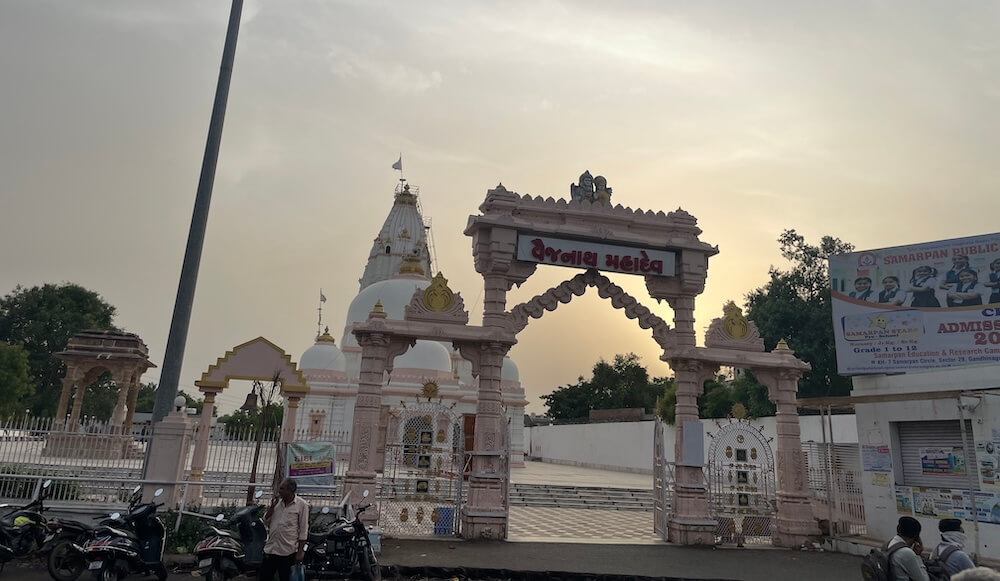
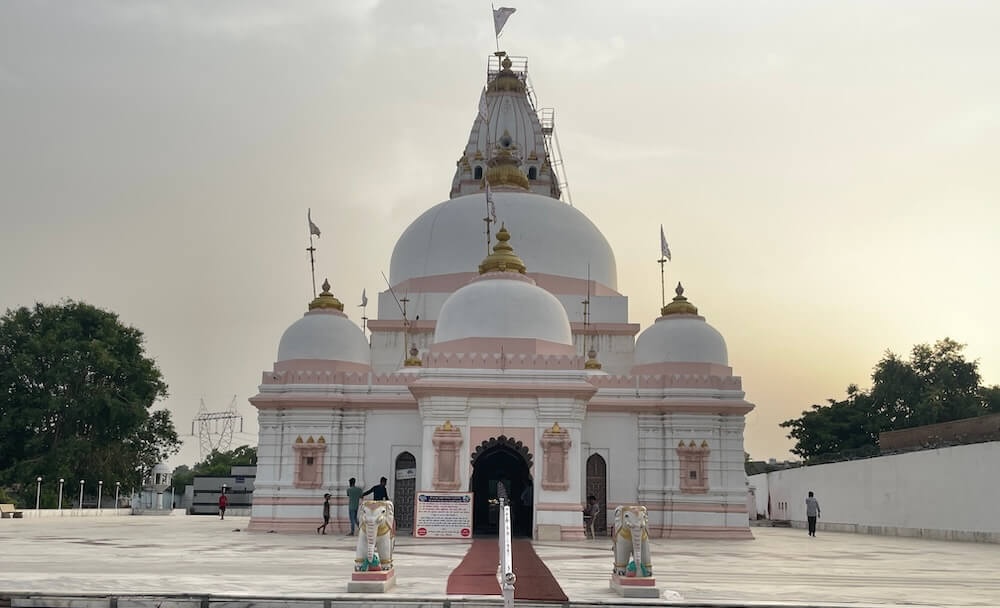
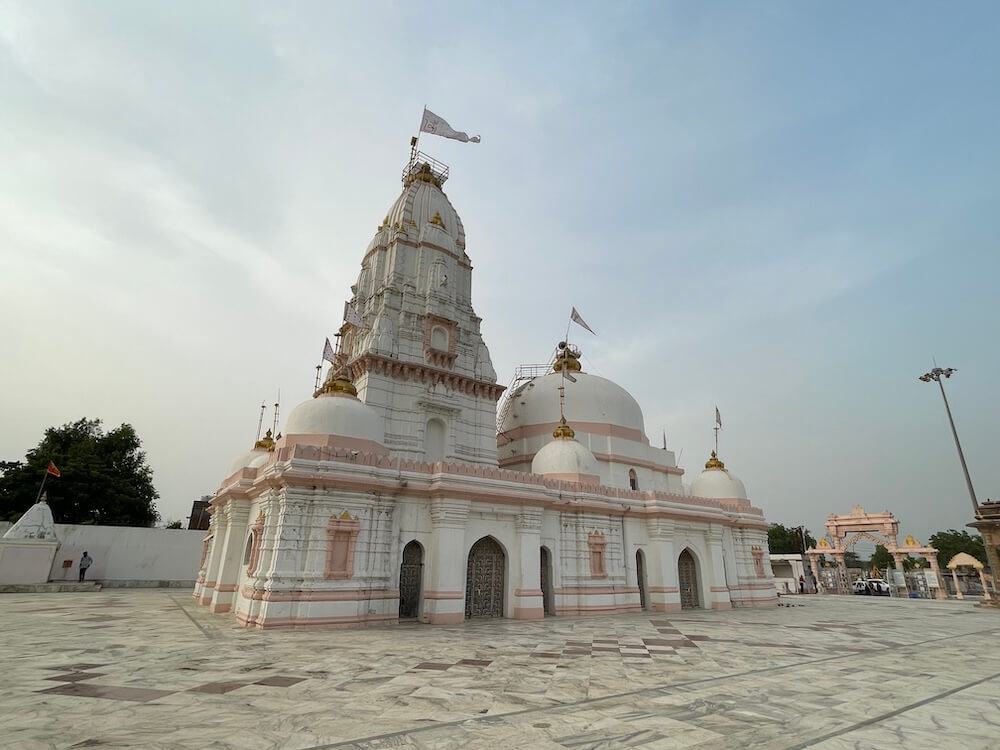
The Vaijnath Mahadev temple stands magnificently along the Gozaria–Gandhinagar highway, within a sprawling compound. The ornamental entrance arch of the temple is crowned with a sculpture of Shiva and Parvati. Just inside, a giant bell hangs on the left. Five steps lead to the raised platform upon which the temple sits, flanked by two elegant elephant sculptures. To the left is the yagna mandap, while the temple itself—painted in serene shades of white and pink—rises majestically in front. The sanctum is crowned by a tall urushringa-style spire, while the prayer and viewing halls are topped with domes. The prayer hall features an arched entrance with statues of Bhairavnath and Hanuman on either side and also a sculpture of Ganesha. Small entryways on all four sides allow access to the inner hall. Within this mandap, symbolic representations of the twelve jyotirlingas from across India have been established. They are Omkareshwar, Trimbakeshwar, Grishneshwar, Rameshwaram, Mahakaleshwar, Somnath, Vishweshwar, Nageshwar, Kedarnath, Bhimashankar and others.
The sanctum entrance, made of white marble, is guarded by stone sculptures of Jaya and Vijaya, the divine doorkeepers. Inside, the marble pillars are richly carved. At the center lies the self-manifested lingam born of the cow’s hoof, enshrined in a marble vessel and adorned with a silver cover. A serpent’s hood acts as a parasol over the lingam and water flows down from a silver spout above as continuous abhishek. Behind the lingam is a silver idol of Shiva’s face seated on a silver throne. Flanking it are statues of Nandi. Further behind, a separate shrine to the left holds another Shiva face, while to the right are idols of Vishnu and Lakshmi. At the center of the back sanctum stands a beautifully crafted idol of Goddess Parvati.
Behind the temple is a small shrine to Goddess Meldi. To the left, a building houses the temple office and a dining hall where lunch is served from 12 to 1:30 PM. Devotees must obtain meal passes before 9:30 AM. Managed by the Vaijnath Mahadev Trust, the temple welcomes visitors from 7 AM to 7:30 PM. Faith holds that heartfelt prayers to this awakened lingam can cure skin diseases and allergies and help childless couples conceive. Hundreds of devotees visit to offer bel leaves, flowers and perform water or milk abhishek. On Mahashivratri, the temple is packed with devotees and special religious programs are organized throughout the night. Mondays during Shravan month also draw large crowds.
Across the road stands a grand Hanuman temple, home to a towering 51-foot statue. Upon entering, visitors walk through a beautifully landscaped garden. At the center of the paved courtyard is the main shrine. A replica of the Ashok Vatika from the Ramayana is displayed, showing Hanuman delivering Rama’s message. To the left is a shrine for Shani Dev and a temple housing idols of Ram, Lakshman and Sita. Nearby are smaller idols of Hanuman and Garuda, as well as a vermillion-coated standing idol of Hanuman enshrined in a wooden canopy. To the right stands a statue of Lalji Maharaj, a devoted temple servant. This temple, built 50 years ago, hosts a Sundarkand recitation every Saturday. Behind it are small shrines for Siddhivinayak, Sai Baba, Khodiyar Mata, Adishakti, Radha-Krishna and Jalaram Bapa.
This sacred temple stands as a testament to deep spiritual devotion, ancient architectural grandeur, and rich local cultural traditions.
The sanctum sanctorum houses the divine idol consecrated according to ancient Vedic traditions, surrounded by serene courtyards and traditional temple architecture.
Navratri, Maha Shivratri, Annual Temple Jatra & Deepotsav
Compare and book flights, secure top-rated local hotels near the temple, hire reliable guides, and rent cars instantly.
Extend your pilgrimage by visiting other highly sacred temples located nearby.


Add ₹999 more to unlock FREE SHIPPING!
Your sacred cart is currently empty.
Shop Photo FramesFill in your delivery details below to place your order.
Add comment