
Add ₹999 more to unlock FREE SHIPPING!
Your sacred cart is currently empty.
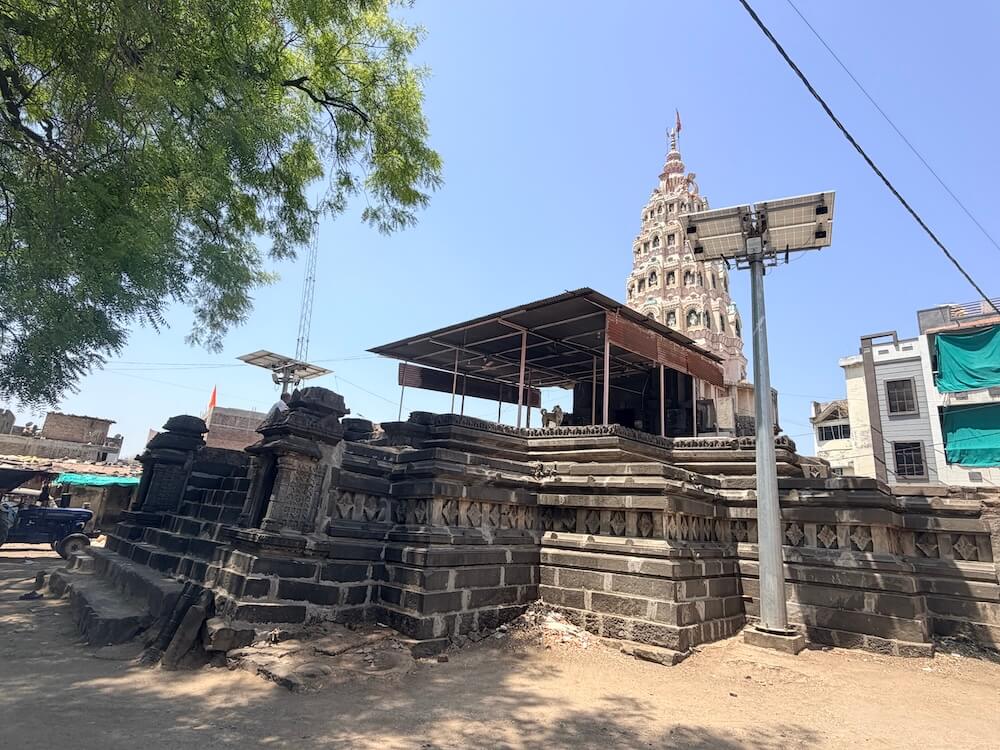
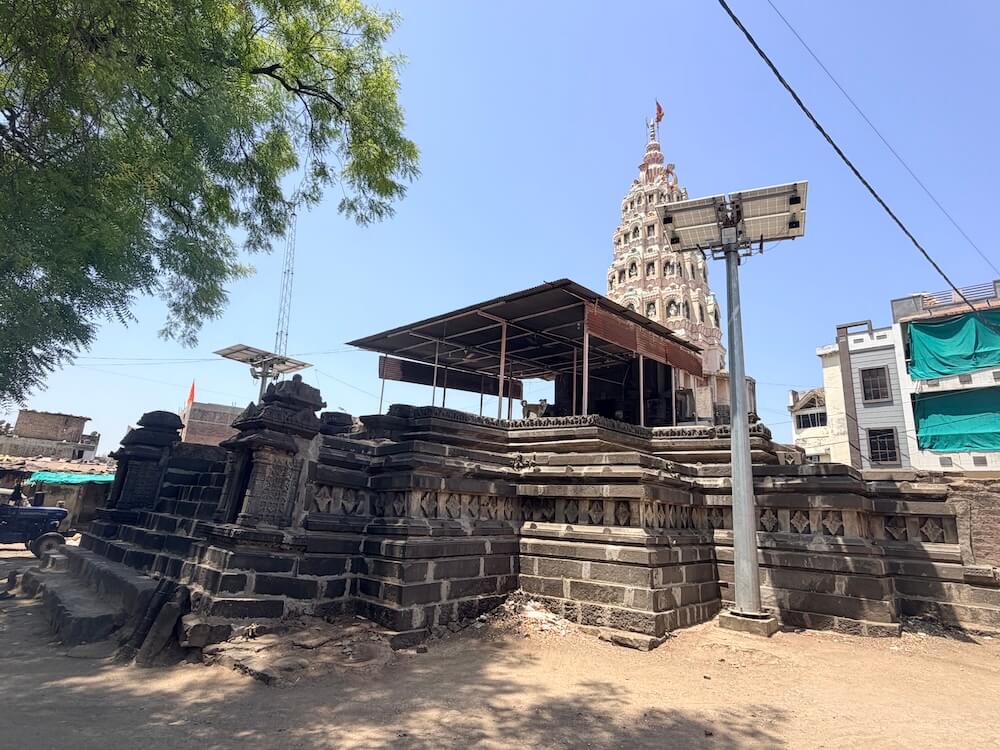
Shop Photo Framesis a historic village. According to legends from the Ramayana era, the Vanara Sena and Riksharaj Jambuvant, who were searching for Mother Sita, stayed in this village for one night. It is because of this stay by Jambuvant that the village was named ‘Jamb’. In this village, there is an ancient and sculpture-rich east-facing Shri Vishnu Mandir built during the Chalukya rule in the eleventh century. Built on a grand stone plinth eight feet high from the ground, this temple is considered significant for the study of architecture and iconography. A continuous row of elephants, known as ‘Gajathar’, is carved along the circumambulation path of the temple, and on the outer walls, one can see the Dashavatara of Shri Vishnu, his twenty-four forms, beautiful Surasundaris, and a rare idol of the devotee Prahlada in a humble posture.
Jamb village is known as an old and agriculture-based village in this region. The area of Parbhani, where Jamb village is located, was known as ‘Prabhavatinagar’ in ancient times. During the Maurya Empire, that is, in the third century BCE, this part was a part of the ancient kingdom of Mulaka Mahajanapada. In the subsequent period, the Satavahana dynasty came to power here. During the rule of the Satavahana kings, agriculture expanded significantly in the Marathwada region, and many new villages were established in the Godavari basin. In the medieval period, especially from the eighteenth century onwards, this entire region came under the suzerainty of the Nizam of Hyderabad. Under the Nizam’s rule, due to the economy based on cotton production on the Deccan plateau, small villages like Jamb developed into significant agricultural centers. Records of rural administration in this area are found in the Ryotwari revenue system documents implemented in the year १८८४ CE during the Nizam’s era. After the military action known as ‘Operation Polo’ in the year १९४८ CE, the Hyderabad State was merged into India, and the entire Parbhani district, including Jamb, became a part of the Indian Union.
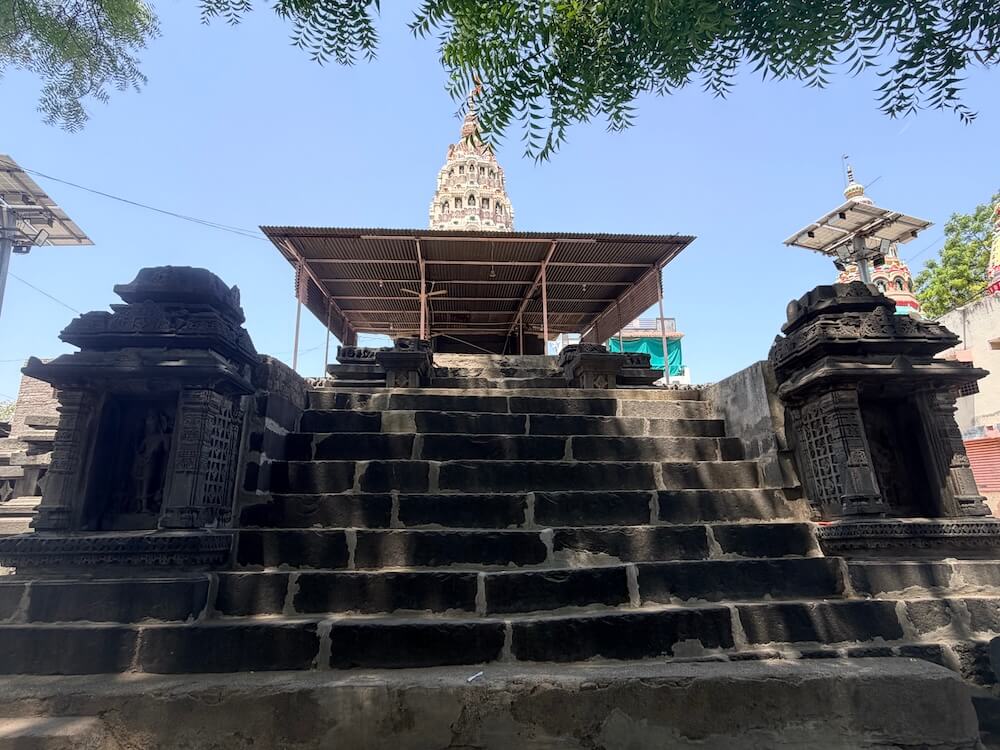
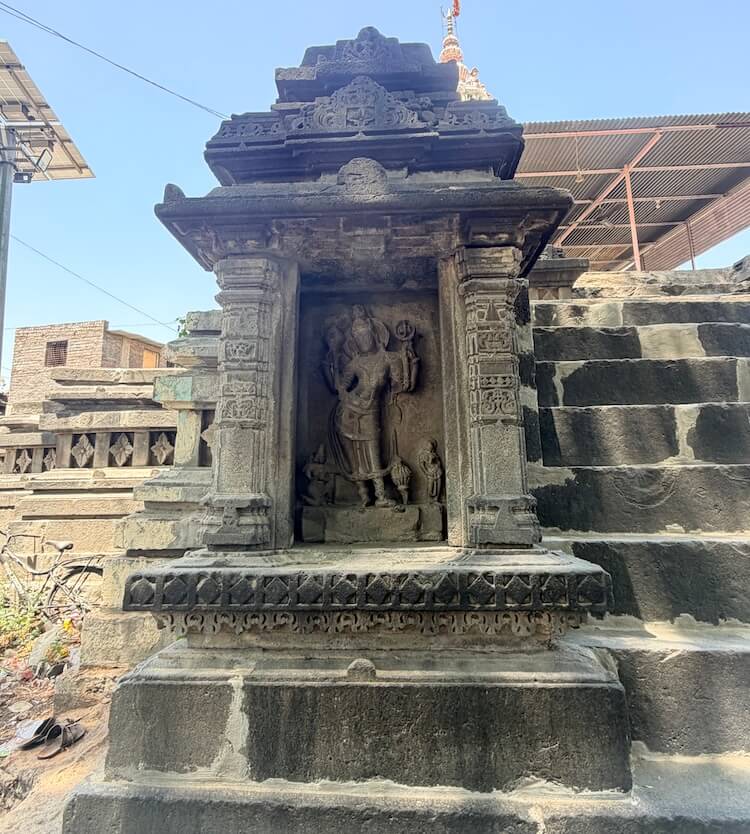
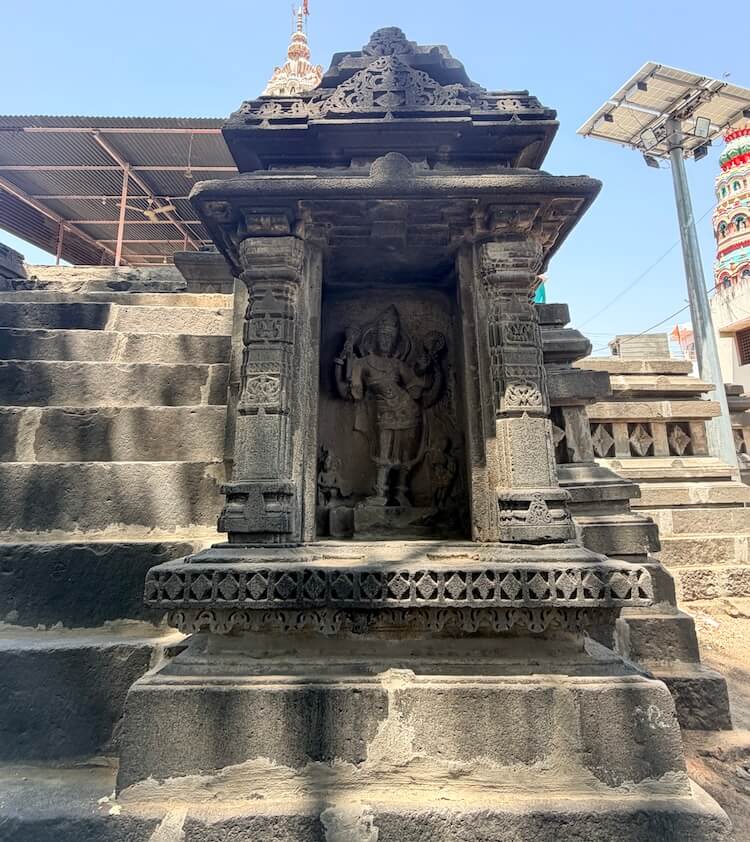
Right in the middle of this historic village stands an ancient temple of Shri Vishnu. Built during the Chalukya rule in the eleventh century, this east-facing temple is considered very important for the study of architecture and iconography. Many sculpture-rich temples are found in the Parbhani district. This temple is counted among them. This entire temple is built on a grand stone plinth, or Adhishthana, about eight feet high from the ground. The original structure of the temple was in the traditional Chalukya architectural style, consisting of an east-facing Mukhamandapa, Ardhamandapas on the south and north sides, a central Sabhamandapa, Antarala, and Garbhagriha. Over time, the Mukhamandapa, the Ardhamandapas on both sides, and the Sabhamandapa of this temple have completely collapsed. Even so, the Upapitha, main Adhishthana, Antarala, Garbhagriha, and the idol pedestal of the temple are still in very good condition. Previously, this temple had entrances from three directions: east, south, and north. At present, the main front entrance does not exist. Now, only the entrance steps and the Devakoshthakas (niches) on their sides remain.
In the Garbhagriha of this sculpture-rich temple, an idol of a Goddess was worshipped in place of the main Vishnu idol for many years. Therefore, local devotees used to know this temple as ‘Aiche Mandir’ (Mother’s Temple). It is said that the original ancient idol of Shri Vishnu from this temple is kept safe in the Balaji Mandir in Parbhani city. Previously, an idol of the Goddess and three vermilion-smeared Tandale (stones) to her left were worshipped on the ancient idol pedestal in the Garbhagriha. Subsequently, in the recent past, that is, in November २०२५, the villagers performed the full ritualistic and scriptural installation of a new idol of Shri Vishnu at this place.
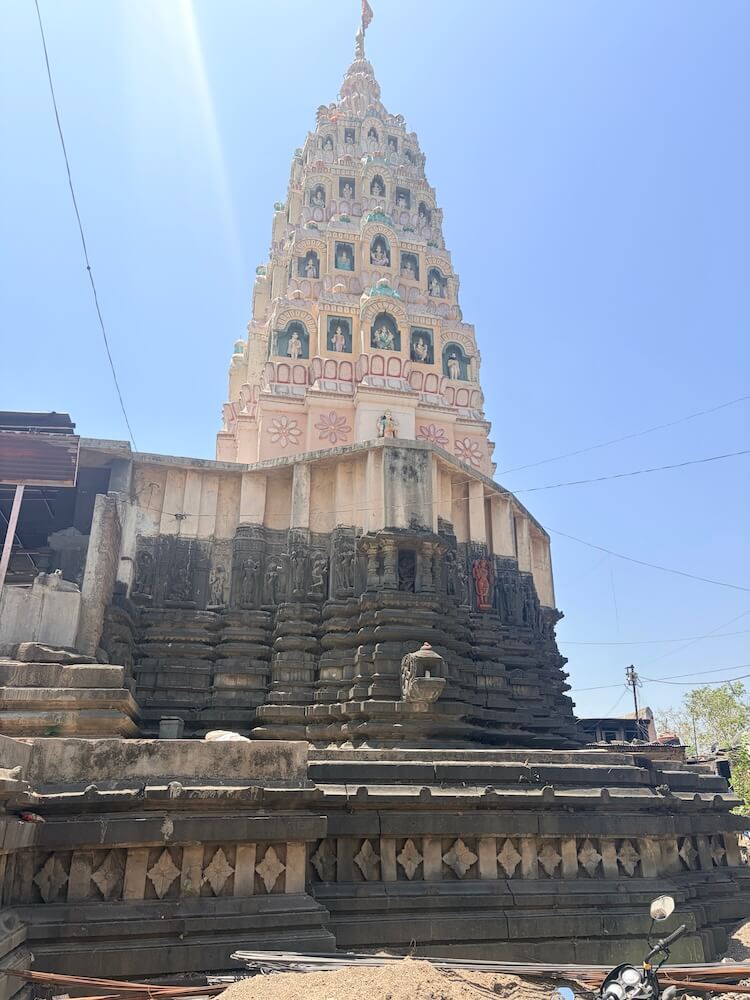
The entrance to the temple’s Antarala is of the single-jamb type. On both sides of this entrance, beautiful ‘Jalavatayana’, or carved stone windows, are installed. A panel of the Saptamatrikas is carved on the door frame. A beautiful sculpture of Ganesha is seen on the Lalatabimba, which is right in the middle of the door jamb. When entering the Antarala, there are two ancient idols in the niches on the walls on both sides. On the left side, in the outer area, one can see a standing vermilion-smeared idol. Currently, a tin roof has been placed in the open space in front of the temple. The Antarala of the temple is adorned with excellent craftsmanship. The main entrance to the Garbhagriha is of the five-jamb type and has very beautiful carvings on it. A sculpture of Ganesha is also carved on the Lalatabimba in the middle of this door lintel. Above the Garbhagriha is a tapering Shikhara. Many niches are carved on it. A two-tiered Amalaka and a Kalasha are placed on the top of this Shikhara.
Many sculptures are carved on the exterior of this temple. At the base of the temple, a continuous ‘Gajathar’, or a row of elephants, is carved along the entire circumambulation path. Therefore, it creates a magnificent illusion that this entire grand temple is being carried on the backs of elephants. Various idols from the २४ forms of Shri Vishnu and many sculptures of Surasundaris are carved on the outer walls of the temple. The various expressions and delightful postures of these Surasundari sculptures are worth seeing. On the exterior of the temple, at one place, an idol of Bhairavi with a fierce and intense face is seen carved. In the left hand of this Bhairavi is a weapon called ‘Khatvanga’. Her right hand has been broken over time. A beautiful necklace, a girdle (Mekhala) at the waist, strings of pearls on the thighs, and a garland of skulls at the feet are carved on this idol. The ornaments called Tode (anklets) are also clearly visible on the feet of this Goddess.
On the Mandovara of the temple, that is, the upper part of the outer walls, along with the idols of Surasundaris and other deities, a very rare idol of the devotee Prahlada in a humble posture is carved. There are very humble, bright, and calm expressions on the face of this idol. The idol is slightly bent forward from the waist. Ornaments like Mekhala, Tode, and Grivika are carved on the body of this idol of Prahlada. A string of pearls is visible in his joined hands. There is a Karanda Mukuta on the head of the idol. A beautiful Prabhavali (halo) is carved behind it. The Dashavatara of Vishnu is depicted in very fine carving on the exterior of the temple. In a niche on the south side of the temple, there is a sculpture of the Varaha avatar of Vishnu. Likewise, in the devakoshtaka (niche) on the western side, an idol of Shri Vishnu in the Yogamudra posture is carved. This idol of Vishnu, seated in Padmasana, has four arms. In the upper two hands, the deity holds the Shankha (conch) and Chakra (discus). Both lower hands are in the Yogamudra. In the right hand, a ‘Padma’ or lotus is held. Various ornaments are carved upon this idol, and a prabhavali (halo) is depicted behind it. Such characteristic idols of Yoga Vishnu, found in the architecture of the Chalukya and Rashtrakuta periods, are also seen in the ancient temples of Umarga and Talikhed in the Latur district.
On the outer wall behind the garbhagriha (sanctum sanctorum), a ‘Makarapranala’—a water chute shaped like the mouth of a Makara (mythical sea creature)—is installed to carry out the sacred tirtha (consecrated water) from the abhishek performed on the deity inside. Generally, in Shiva temples, a ‘Gomukha’ is used to drain this water, whereas in Vishnu temples, such a Makarapranala is specifically constructed. In the devakoshtaka situated just above this Makarapranala, an ugra (fierce) idol of Lord Narasimha is carved. On one side of this temple, there once existed an ancient stone barav (stepwell), but at present, it has been completely filled in. Every year, many history researchers and architectural scholars visit this temple to study its rich sculptural heritage and exquisite craftsmanship. It is said that many students from Marathwada have earned their Ph.D. (doctorate) degrees by focusing their research on the unique sculptures of Surasundaris found on this temple.
Traditional festivals associated primarily with the Vaishnava tradition are celebrated in this temple. Special pujas, bhajans, and kirtans are organized on Ashadhi and Kartiki Ekadashi. Gokulashtami, or Shri Krishna Janmashtami, which falls in the month of Shravan, is a major festival here. On this day, to mark the birth anniversary of Shri Krishna, an avatar of Lord Vishnu, special religious rituals, Maha-aarti, and a cradle ceremony are performed in the temple at night. The following day, the Dahi Handi festival takes place. Generally, the temple remains open for darshan for devotees from early morning until late at night.
This sacred temple stands as a testament to deep spiritual devotion, ancient architectural grandeur, and rich local cultural traditions.
The sanctum sanctorum houses the divine idol consecrated according to ancient Vedic traditions, surrounded by serene courtyards and traditional temple architecture.
Navratri, Maha Shivratri, Annual Temple Jatra & Deepotsav
Compare and book flights, secure top-rated local hotels near the temple, hire reliable guides, and rent cars instantly.
Extend your pilgrimage by visiting other highly sacred temples located nearby.


Add ₹999 more to unlock FREE SHIPPING!
Your sacred cart is currently empty.
Shop Photo FramesFill in your delivery details below to place your order.
Add comment