
Add ₹999 more to unlock FREE SHIPPING!
Your sacred cart is currently empty.
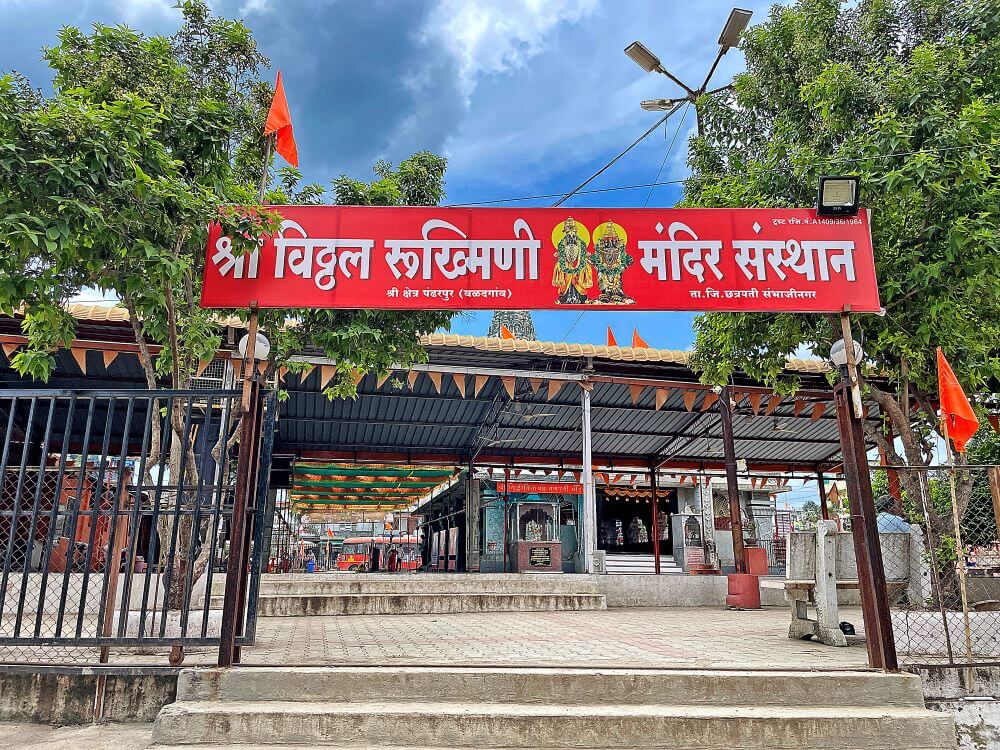
Shop Photo FramesMany places today are recognized as ‘Prati-Pandharpur’ (a replica of Pandharpur), such as Wadala in Mumbai, Karhar in the Javli taluka of Satara, Dudhivare Apti in the Maval taluka of Pune, Nandwal in Kolhapur district, and Kaundinyapur in Amravati district, which is known as the Vidarbha-Pandhari. A unique feature of the Shri Kshetra Pandharpur located in the Waluj area near Chhatrapati Sambhajinagar city is the Kham River that flows by it. Just as the Chandrabhaga River at Pandharpur takes the shape of a crescent moon, the Kham River also flows in a crescent shape in front of the Vitthal temple in the Pandharpur area of Waluj. Because of this, the temple is a place of deep faith for thousands of devotees.
The Pandharpur of Vithoba is a place of faith for crores of devotees not only from Maharashtra but also from Karnataka and Telangana. During the Ashadhi and Kartiki Yatras held at Pandharpur, a multitude of devotees gathers there. Palanquins of saints from various villages travel to that place. Lakhs of Warkaris participate in these Dindis; however, those who cannot participate in these pilgrimages for various reasons visit the Vitthal temples in their own localities for Darshan. There are as many as 56 such Vitthal-Rukmini temples in the vicinity of Chhatrapati Sambhajinagar city. However, this temple holds special significance for devotees due to the Kham River, which resembles the Chandrabhaga. This temple has a tradition spanning at least 100 years. A unique aspect here is that the area where this temple is located has also been named Pandharpur.
Before the Waluj area in Chhatrapati Sambhajinagar was developed by the Maharashtra Industrial Development Corporation (MIDC), it was covered with dense thickets. There was an ancient Vitthal-Rukmini temple here near Valadgaon. The legend regarding this temple is that Pundalik, a great devotee of his parents, lived in Pandharpur. Seeing the service he rendered to his parents, the Lord of Vaikuntha was pleased. While Vitthal and Rukmini were on their way to meet him in Pandharpur, they saw this area along the banks of the Kham River. Seeing the beautiful surroundings, Vitthal and Rukmini were tempted to stop here. After resting for some time, they proceeded towards Pandharpur. The footprints they left behind at the place where they stopped are still there, and it is on that very spot that this temple stands today.
Previously, there was a small temple here. The devotees of the Waluj area came together and first renovated this ancient temple in 1964. At that time, idols identical to those of Vitthal-Rukmini in Pandharpur were consecrated here. Subsequently, in 1965, the temple was registered with the Charity Commissioner. Over time, in 1985, the Waluj area was declared an industrial zone. Many factories were established here, and the village prospered. The flow of devotees to this temple began to increase. The devotees then decided to renovate this old temple and give it a grand appearance. The renovation work began in the year 2002. The work was completed in 2007, and the temple was realized in its present form.
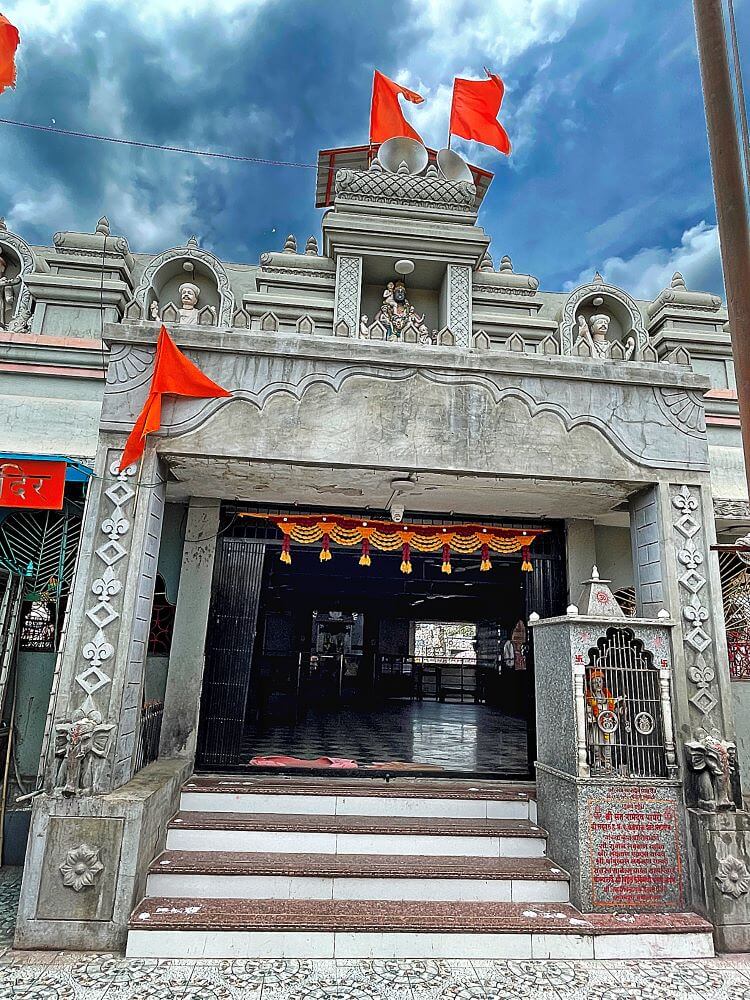
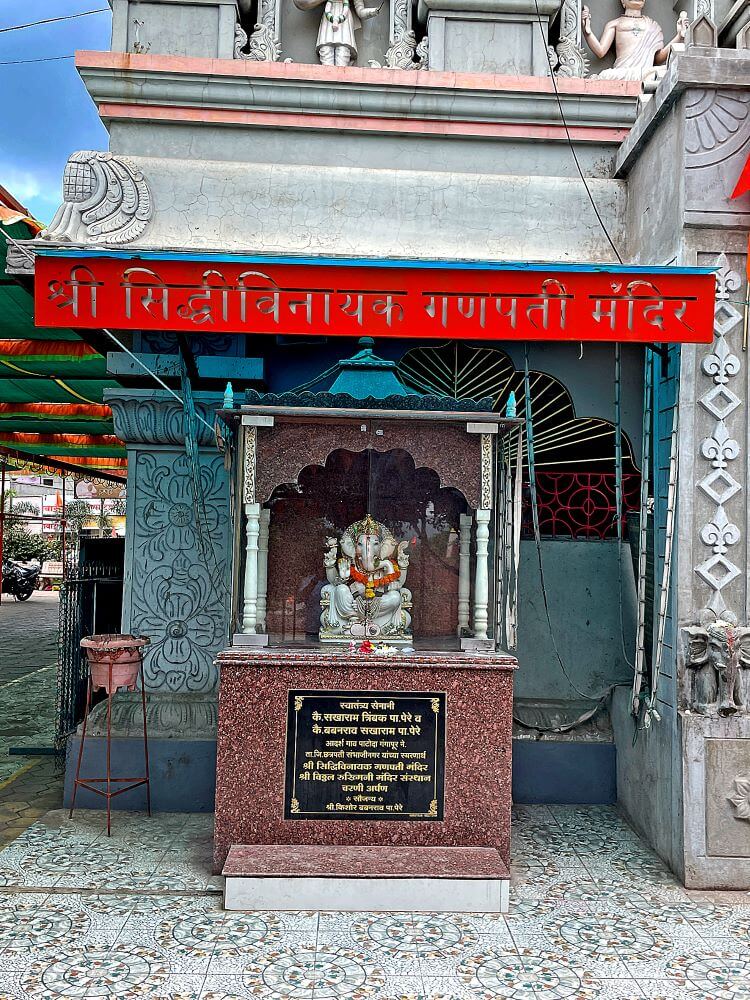
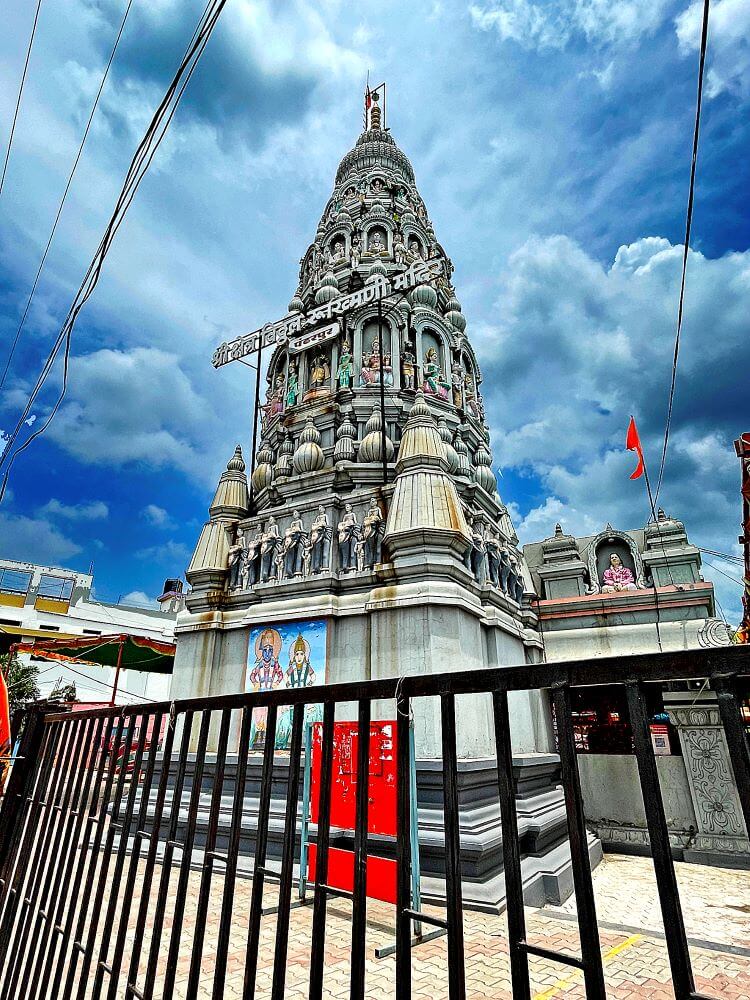
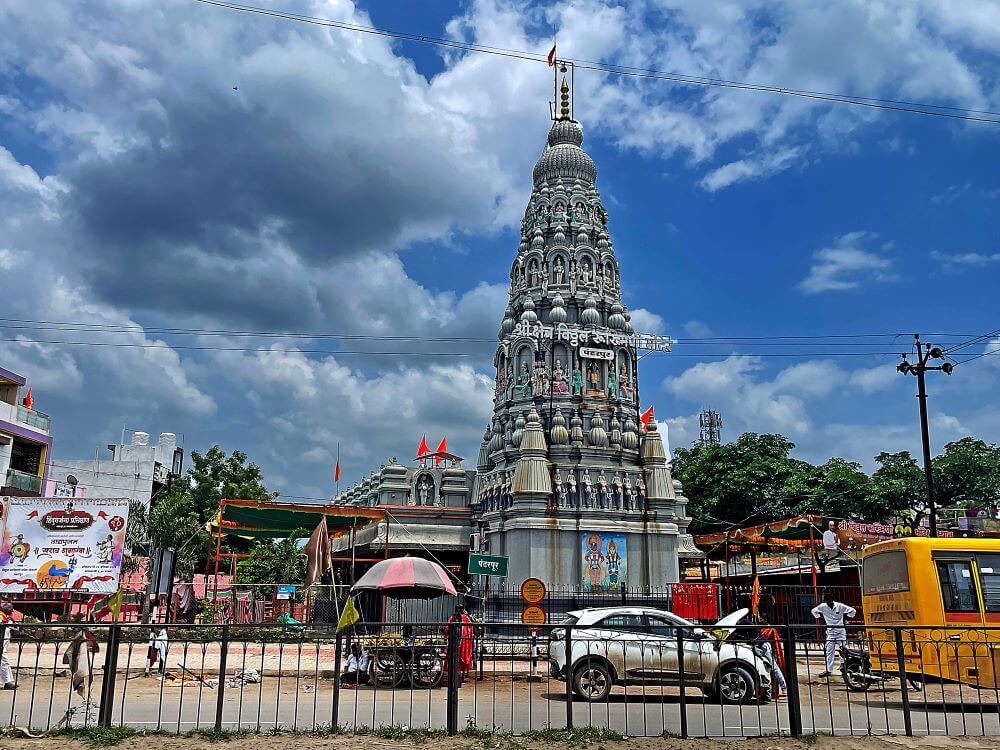
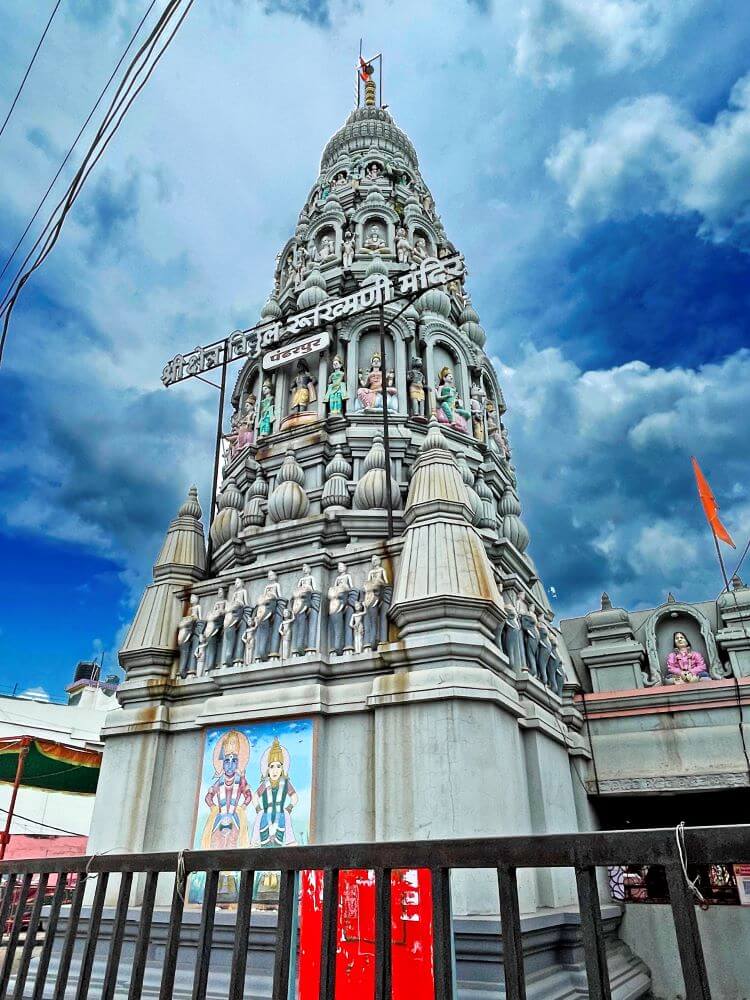
This temple structure is situated along the main road of Waluj town. The temple is designed with a Sabha Mandap (assembly hall), a Garbhagriha (sanctum sanctorum), and a towering Shikhara (spire) above it. This design bears a resemblance to the Dravidian architectural style. Many idols of deities and saints have been installed on the Shikhara up to the Kalash. In addition, there are replicas of many smaller Shikharas. The temple consists of a Darshan Mandap, a Sabha Mandap, and a Garbhagriha. The temple is slightly elevated from the ground, and one enters the Darshan Mandap by climbing four steps. In the niches above the Darshan Mandap are idols of the great saints of Maharashtra. To the right of this Mandap is a small temple of Siddhivinayak Ganpati, and to the left is a Tulsi Vrindavan. Just as there is a ‘Namdev Payari’ (Namdev step) in the Vitthal temple of Pandharpur, a similar arrangement has been made here. On the steps here is a marble idol of Saint Namdev holding a Veena.
One enters the Sabha Mandap of the temple through the main entrance of the Darshan Mandap. On the upper part of the walls of this Sabha Mandap are idols of the Dashavatar. There is another similarity to the Pandharpur temple, which is the Garuda Khamb (Garuda pillar) in this Sabha Mandap. It is a tradition to embrace this Garuda pillar located on the left in the Sabha Mandap before taking Darshan of Vitthal-Rukmini. Steel railings have been installed in front of the Garbhagriha for the convenience of devotees and to facilitate orderly Darshan. In the Garbhagriha, there are beautiful idols of Vitthal and Rukmini in a Makhar (ornamental frame) on a pedestal. It is said that these idols are identical to the idols in the temple at Pandharpur.
The temple is crowded with devotees every Ekadashi. For Warkaris, the Ashadhi and Kartiki Ekadashi are the two most important dates. On those days, lakhs of devotees gather here. Many Dindis from surrounding villages arrive here. On these days, the temple is illuminated with electric lights, and the sanctum sanctorum of the temple is decorated with flowers.
This sacred temple stands as a testament to deep spiritual devotion, ancient architectural grandeur, and rich local cultural traditions.
The sanctum sanctorum houses the divine idol consecrated according to ancient Vedic traditions, surrounded by serene courtyards and traditional temple architecture.
Navratri, Maha Shivratri, Annual Temple Jatra & Deepotsav
Compare and book flights, secure top-rated local hotels near the temple, hire reliable guides, and rent cars instantly.
Extend your pilgrimage by visiting other highly sacred temples located nearby.


Add ₹999 more to unlock FREE SHIPPING!
Your sacred cart is currently empty.
Shop Photo FramesFill in your delivery details below to place your order.
Add comment