
Add ₹999 more to unlock FREE SHIPPING!
Your sacred cart is currently empty.
Shop Photo FramesLocated at a short distance from Ramtek city, the Ramtek Fort is one of the ancient and significant pilgrimage sites in the Nagpur district. According to references in the Padma Purana, Lord Rama, along with his wife Sita and brother Lakshmana, resided on this fort for four months during their period of exile. The great poet Kalidasa has also described Ramtek in his classic poem, Meghaduta. Due to the increasing number of devotees and tourists visiting this place, it has been granted ‘B’ grade pilgrimage status by the State Government.
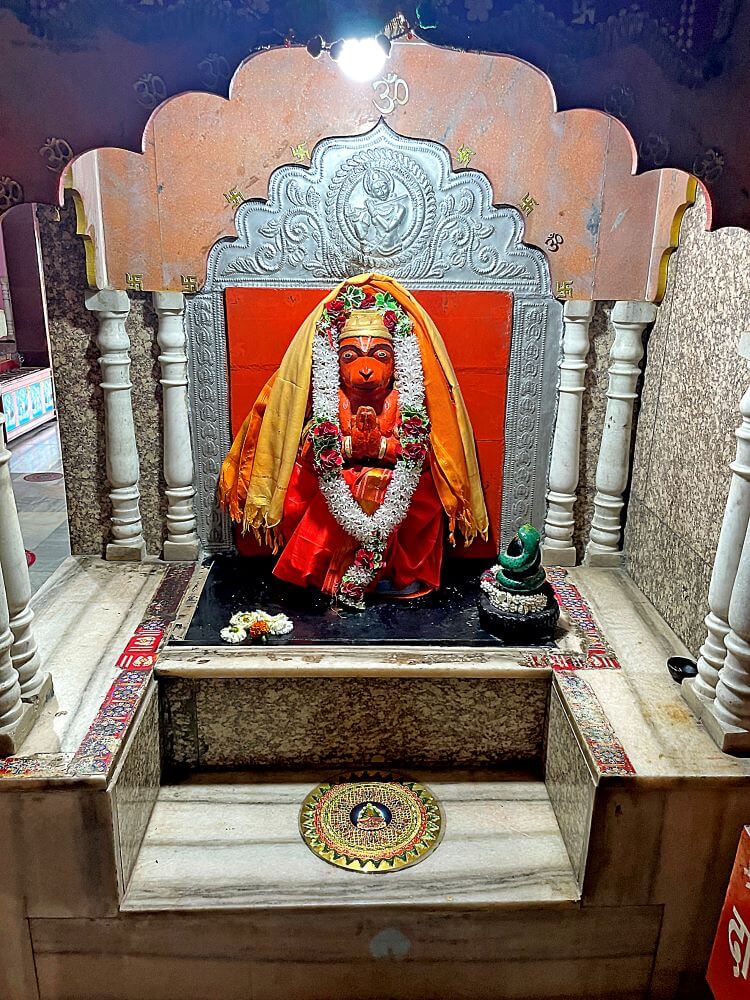
This famous temple of Shri Rama is situated at a distance of approximately 3 kilometers from the town of Ramtek. As it is located on a small hill, it is also known as the ‘Gad Mandir’ (Fort Temple). Records indicate that this fort-like temple was built by Raghuji Bhosale, the first king of the Bhosale dynasty of Nagpur. Although there is a direct road to reach this temple, an old stairway path from Ramtek village also exists. On this fort, along with the main temple of Shri Rama, the prominent temples include the Lakshmana Temple, Lakshmi Narayana, Agastya Rishi, Varaha Temple, and Chakradhar Swami.
According to the references in the Valmiki Ramayana and the Padma Purana, while Lord Shri Rama was traveling from Dandakaranya towards Panchavati along with Lakshmana and Sita, He resided at the ashram of Sage Agastya here for the four months of the monsoon season. (This ashram still exists here today.) During this time, Shri Rama saw heaps of human bones in the ashram premises. Regarding this, Sage Agastya explained that these remains belonged to sages and ascetics. The Lord of Lanka, Ravana, and his illusory demons would obstruct the sacrificial rituals of the sages and kill them. Upon hearing this, Shri Rama became enraged and took a vow before Sage Agastya that He would liberate this entire region from the demons. (According to scholars, the word ‘Tek’ means ‘vow’. It is said that because Shri Rama took this vow here, this place came to be known as ‘Ramtek’.) During this period, while staying with Sage Agastya, Shri Rama acquired knowledge of various weapons. For the destruction of the demons, Sage Agastya gifted divine weapons to Shri Rama at this time. It was by using these very weapons that Shri Rama later vanquished Ravana.
Near the first west-facing main gate of the fort, which one must pass before entering the temple, is the Varaha Temple. Among the ten avatars of Vishnu, Varaha is considered the third avatar. Because the idol of Varaha is present in this temple, the main entrance here is known as the ‘Varaha Darwaza’. This Varaha idol dates back to the Vakataka period. The idol is situated on a high plinth supported by four pillars and measures 5 feet in height and 6 feet in length. There is a narrow space between the four legs of this idol. Devotees believe that if one can pass through the narrow space under its belly from one side to the other, their wishes will be fulfilled.
It is said regarding the Varaha Temple that in the past, the entire country was under Muslim rule. During the reign of Aurangzeb, the condition of Hindu kings and the temples located there was dire. Many temples were being demolished and mosques were being built in their place. Among Muslims, the Varaha (pig) is considered impure and unholy. Seeing a pig was considered an ill omen. Taking advantage of this, many Hindu kings built fortifications around temples and installed Varaha idols at the entrances, so that Muslim invaders would not reach the temples and Hindu deities and temples would remain safe from their terror. The installation of the Varaha at the entrance of the Ramtek Fort Temple fortifications must have been done with this very intention, and the entrance must have been named ‘Varaha Darwaza’.
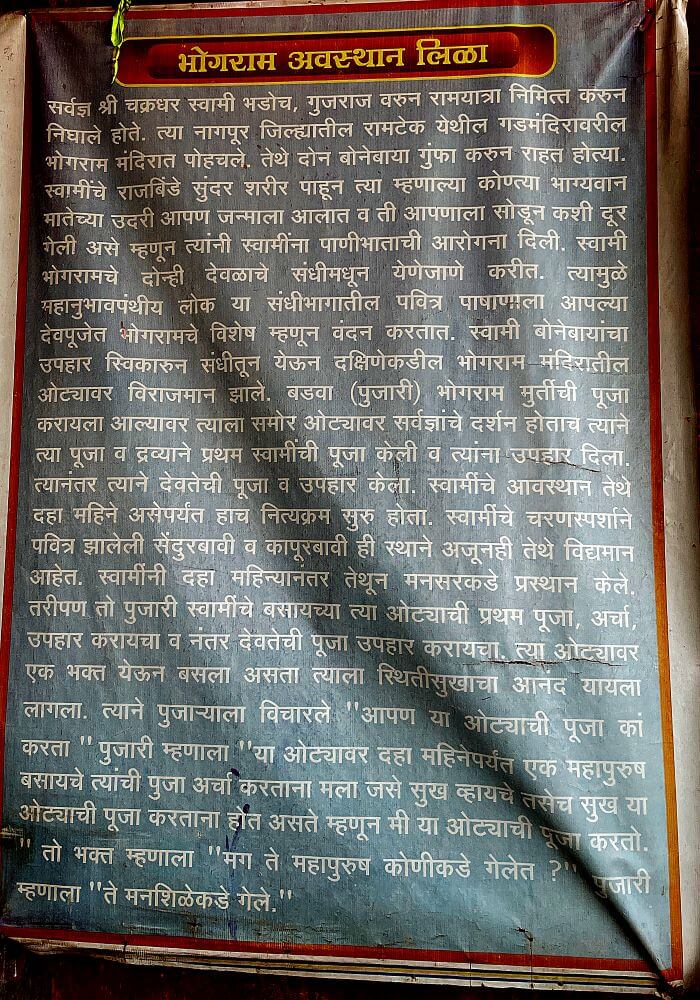
In front of the Varaha Temple is the temple of Chakradhar Swami, the founder of the Mahanubhava sect. Chakradhar Swami started the Mahanubhava sect in the year 1267. He created awareness in society against superstition. Swami strongly opposed the caste system and meaningless traditions. He also preached equality between men and women. During his travels, he stayed at this place in Ramtek for some time. The text ‘Leela Charitra’ mentions that from here, he went further to Mansar in Nagpur district.
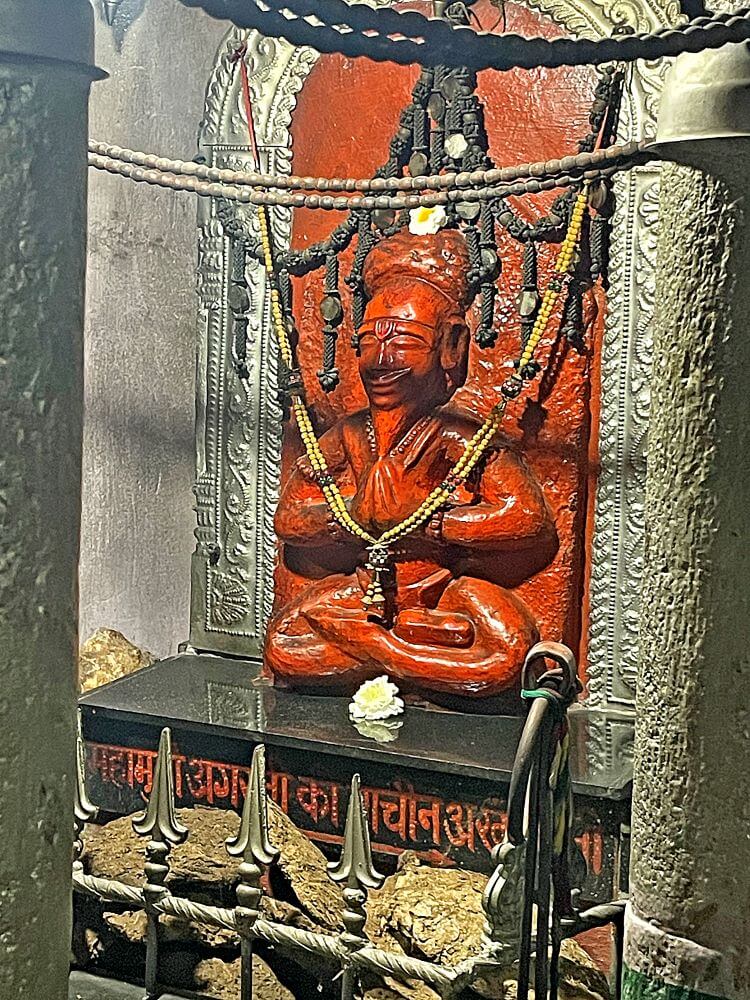
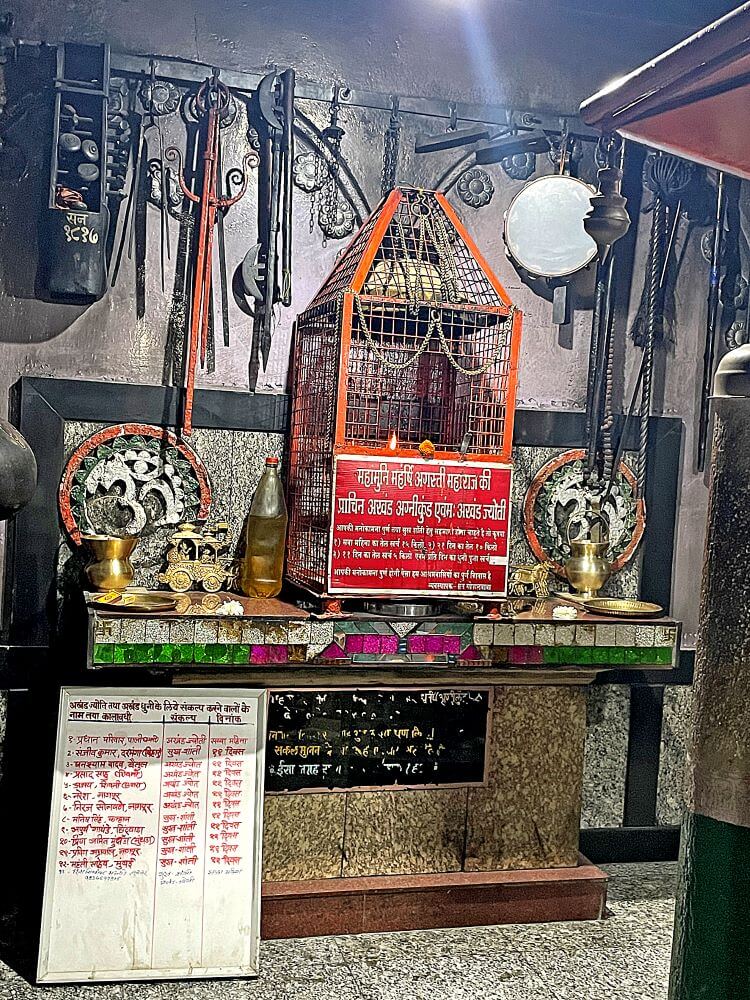
In front of the Chakradhar Swami Temple is the ashram of Sage Agastya. It is said that Lord Shri Ram and Sage Agastya met in this ashram. Since ancient times The sacred fire here remains continuously lit even after hundreds of years. There is an idol of Sage Agastya in this temple.
The construction of the Ramtek Fort and the temples located there has been carried out solely with the help of stone and lime. Even after the passing of many centuries, the construction here remains secure. In the temple complex, the first is the Dasharatha Temple. Behind the temple is a large pond, and upon it stands a dome-shaped structure. There are steps on two sides to enter the pond. It is said that the water level in this pond remains the same throughout the year; it never increases or decreases. On the wall beneath the dome, a Gandabherunda (a mythical bird with a human or bird torso, but possessing two heads and two wings) is carved. From near this pond, there is a stairway path to reach the fort from Ramtek village.
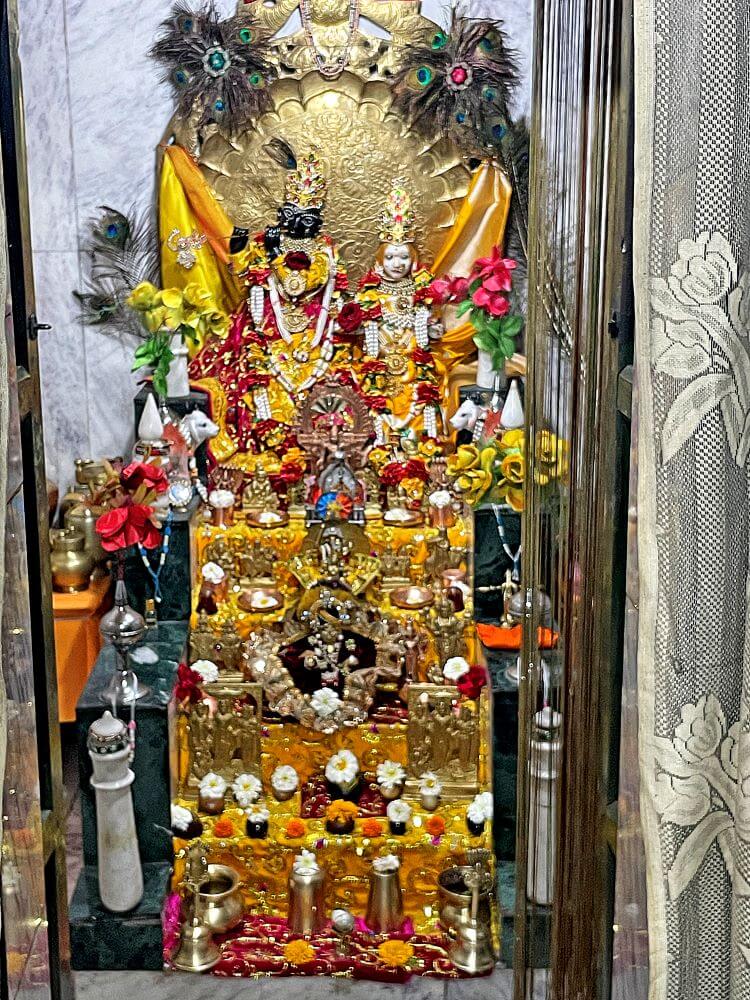
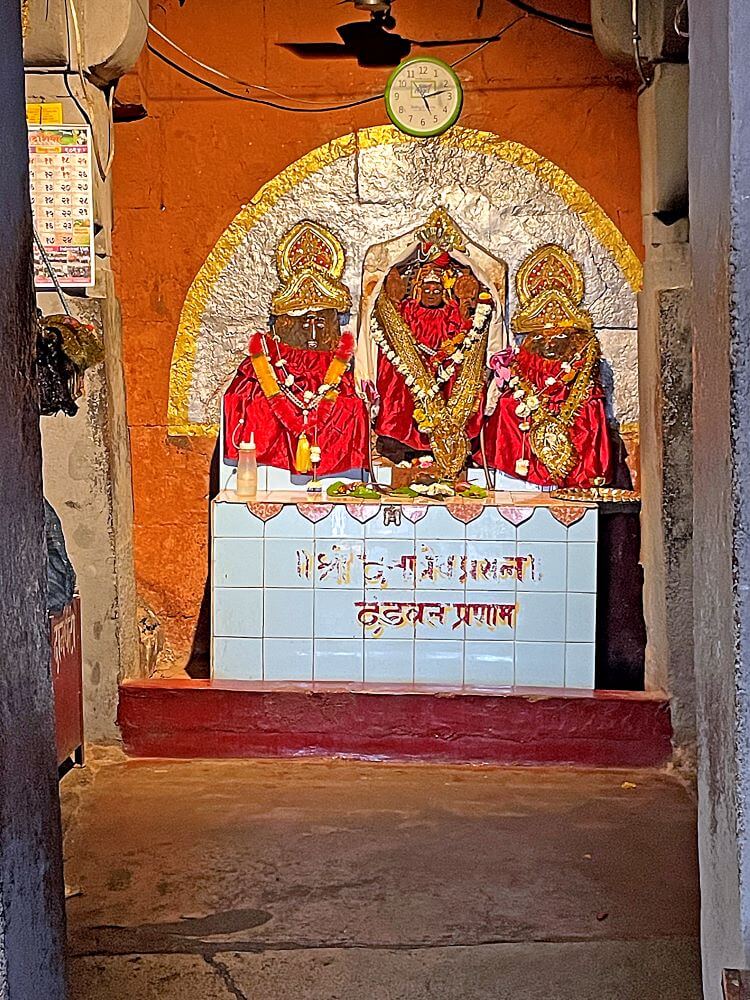
In front of the Dasharatha Temple is the Lakshmana Temple, and behind it stands the magnificent temple of Shri Rama. These temples house unique idols of Shri Rama, Sita, and Lakshmana. According to ancient records, before the installation of these idols, only the padukas of Shri Rama were worshipped here. Raghuji Bhonsle had taken a vow to install idols here if he achieved success in the Devgad expedition, and for that, Jaipur Idols had also been ordered from there; however, as Lord Rama appeared in a dream and instructed them to consecrate the ancient idols from the Sur River, the idols brought from Jaipur were not installed here, and they can still be seen there today. The idols currently present in these temples are made of black stone and are two point five to three feet in height. The carvings on these temples are distinctive. In both these temples, one can see the weapons used by the warriors of the Bhonsle dynasty of Nagpur. Behind the Shri Ram temple is the Lakshmi Narayan temple.
Two major festivals are held in these temples every year. The first festival begins on Chaitra Shuddha Pratipada and continues until Ram Navami. The festival commences in the early morning with the Abhisheka of the idol of Shri Rama, followed by the Mahapuja. On the day of Ram Navami, the birth of Shri Rama is celebrated at twelve o’clock in the afternoon. During this period, Mahaprasada is served daily to the visiting devotees. The second important festival here is celebrated on Tripurari Purnima (Kartik Purnima). In the local language, this is called ‘Tipur Purnima’. During this time, rangoli and decorations are prepared in front of every house in the city, including the temple. This festival is celebrated from Ashwin Purnima to Kartiki Purnima. On the evening of the full moon day, a grand procession is taken out through the city. More than fifty floats based on the life of Shri Rama participate in it. At twelve o’clock at night, the deity’s old garments and Pitambar from a year or two ago are burnt on the temple spire as ‘Tripur’.
During this festival period, countless devotees from Vidarbha, Marathwada, Madhya Pradesh, Chhattisgarh, and Andhra Pradesh come here. Since this hill temple of Ramtek was built by the Bhonsle dynasty of Nagpur, the worship, pilgrimage, and festival planning are still managed by their descendants today.
Apart from the temples, Ramtek is famous for its manganese mines. Large deposits of manganese are available here. Out of the total manganese reserves in the country, forty percent are in Maharashtra, with Ramtek holding a significant share. Additionally, the betel leaves of Ramtek are famous and are supplied to Mumbai and Pune. The honor of having the first Sanskrit university in Maharashtra also goes to Ramtek. The Kavi Kulguru Kalidas Sanskrit University has been established here by the Government of Maharashtra.
This sacred temple stands as a testament to deep spiritual devotion, ancient architectural grandeur, and rich local cultural traditions.
The sanctum sanctorum houses the divine idol consecrated according to ancient Vedic traditions, surrounded by serene courtyards and traditional temple architecture.
Navratri, Maha Shivratri, Annual Temple Jatra & Deepotsav
Compare and book flights, secure top-rated local hotels near the temple, hire reliable guides, and rent cars instantly.
Extend your pilgrimage by visiting other highly sacred temples located nearby.


Add ₹999 more to unlock FREE SHIPPING!
Your sacred cart is currently empty.
Shop Photo FramesFill in your delivery details below to place your order.
Add comment