
Add ₹999 more to unlock FREE SHIPPING!
Your sacred cart is currently empty.
Shop Photo FramesDapoli Taluka in Ratnagiri district is known as the Mini Mahabaleshwar of Maharashtra. Although this place is a favorite among thousands of tourists, this taluka also holds religious and historical significance. The Kadyavarcha Ganpati in Anjarle, Chandika Devi in Dabhol, Mahalakshmi in Kelshi, and the Keshavraj Temple in Asud draw the footsteps of lakhs of devotees toward Dapoli. In this same lineage, the ancient Vyaghreshwar Temple in Asud is also a place of faith for thousands of devotees. This temple is situated on the banks of the Bhatkhandi River in a region rich in natural beauty.
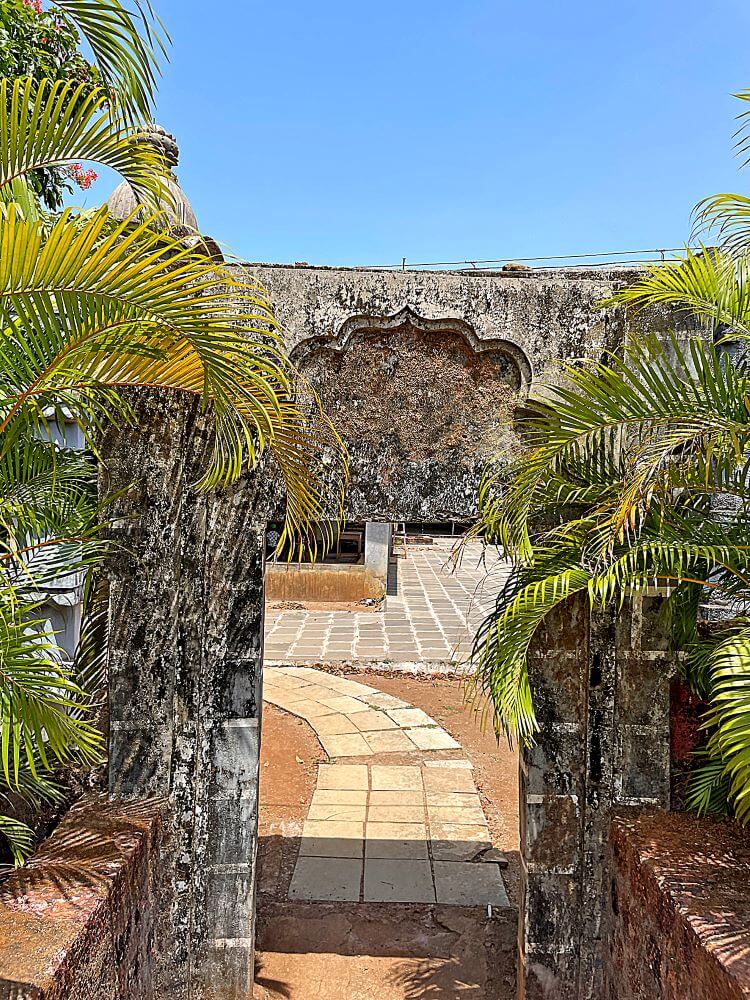
On the Dapoli-Harnai road, at Asud, stands the twelfth-century Vyaghreshwar Temple. This is considered a vibrant abode of Lord Shiva and the family deity of the Chitpavan Brahmin families bearing the surnames Ranade, Manohar, Faphe, Kandrap, Akhave (Bharadwaj Gotra), Vaishampayan, Sahasrabuddhe (Nityundan Gotra), Dharap, Vidwans, Marathe (Kapi Gotra), Ketkar (Gargya Gotra), and specifically the Kashyap Gotra Joshi families of the region. There are two ways to reach the temple: one is a staircase made of laterite stone, and the other is a motorable road that leads directly to the temple. Upon entering the temple courtyard through a small arch-like gateway in the five-foot-high and three-foot-wide fortification, one can see ancient stone lamp towers (Deepmalas) about twelve feet high on both sides. The tradition of placing lamps on them during festivals is still observed here today.
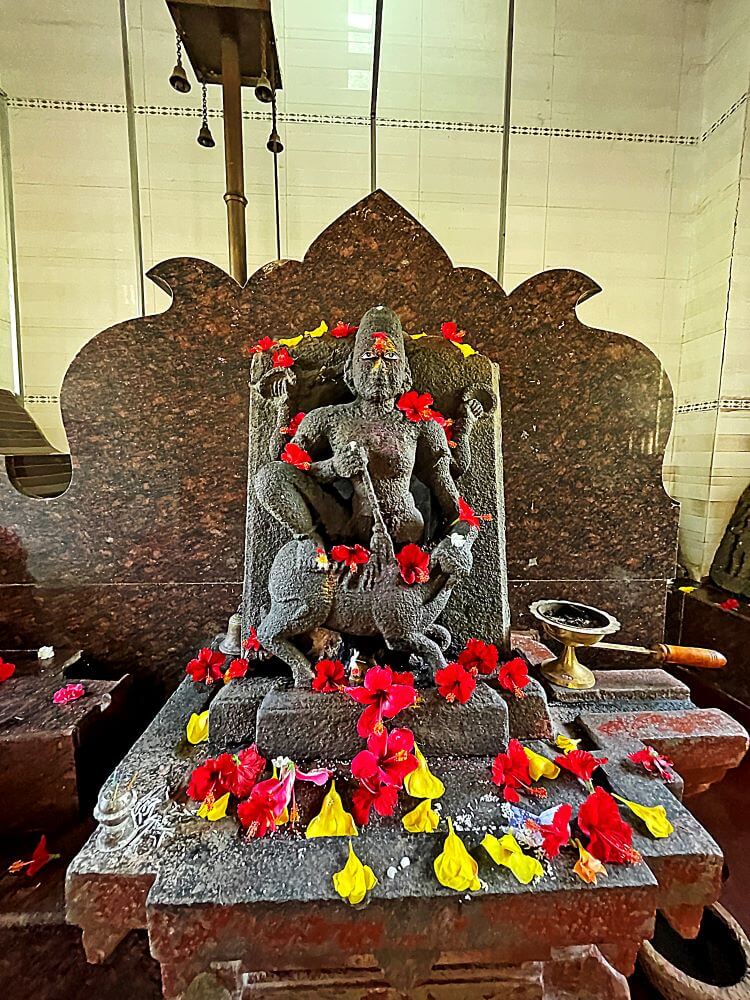
Next to the main temple, there is a square-shaped stepped well. Since it holds water throughout all twelve months, when water dries up elsewhere during the summer, the villagers and the surrounding settlements rely on this very well. There are steps made of laterite stone to descend into the well. This same During the festival period, a continuous stream of water is poured onto the Vyaghreshwar Linga from a Sahastradhara vessel, while on other days, it is performed using an Abhishek vessel. Additionally, there are shrines dedicated to Ganpati, Mother Yogeshwari, and Kalbhairav within the temple premises.
The temple is structured with a Sabhamandapa (assembly hall), Antarala (vestibule), and Garbhagriha (sanctum sanctorum). The Sabhamandapa here is in the form of an Ardhamandapa and appears to have been newly constructed. A distinctive feature of this Sabhamandapa is the Nandi, which is three feet wide and two and a quarter feet tall. This Nandi is a replica of the Nandi at the Shri Kshetra Mahabaleshwar temple in Satara district. There is a sculpture of Sage Agastya being held in the mouth of the Nandi. The legend associated with this is that when the enraged Sage Agastya drank all the water of the ocean, there was chaos on Earth. Lord Shiva then ordered Nandi to capture and bring Sage Agastya before him. Upon learning of this, Agastya went into hiding, but Nandi found him, held him in his mouth, and brought him before Lord Shiva. This very legend is depicted through this Nandi idol. The well-proportioned bodies of the sage and the Nandi, along with the ornaments they are adorned with, are all carved from a single stone here.
The Antarala and Garbhagriha constitute the original temple, and its plinth is adorned with carvings of dancers, Gandharvas, deities, and various animals. The wooden pillars in the Antarala are intricately carved, while their bases are made of stone. Scenes from mythology, particularly the Dashavatara, are skillfully carved onto these pillars. On the Lalatabimba of the door frame of the Garbhagriha, there is an image of a Shiva Linga. One can enter the Garbhagriha by descending five steps from the Antarala. The Swayambhu Linga of Vyaghreshwara in the Garbhagriha is made of black stone. Only men, and that too while wearing wet clothes or a traditional silk garment (Sowale), are permitted to enter the Garbhagriha. This tradition has been followed for many centuries. Above the Garbhagriha, there is a small, stepped spire (Kalash). The upper portion of the Antarala and Garbhagriha features a tiled roof.
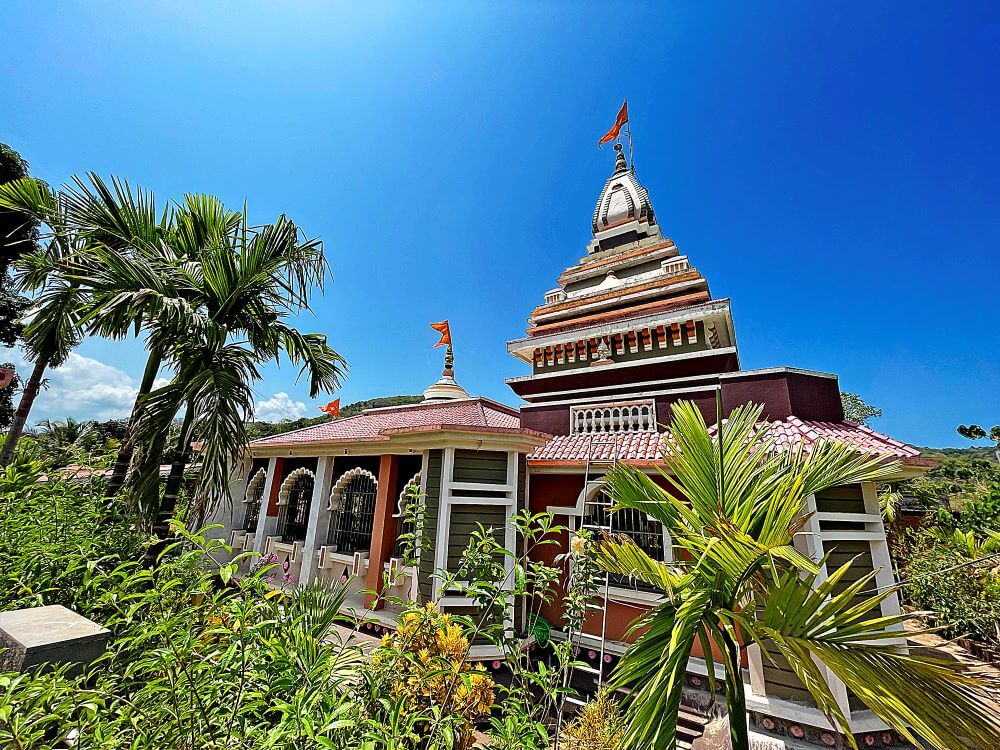
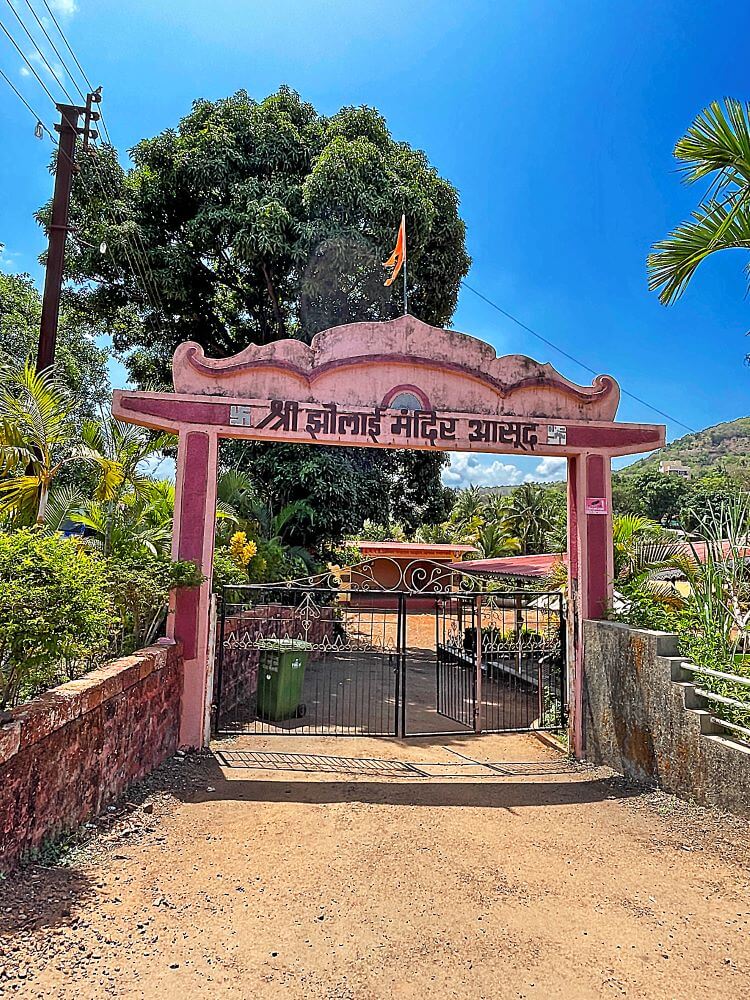
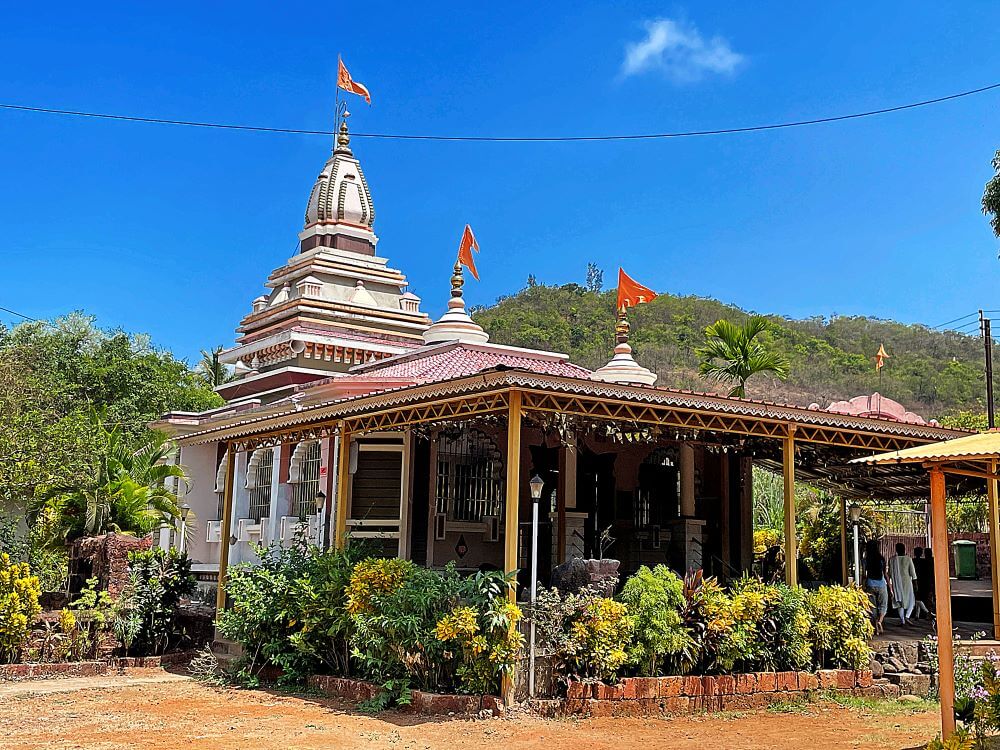
In the temple premises, there are two hero stones (Virgals) featuring carvings divided into three sections. The bottom section depicts a warrior fighting in battle, the middle section shows celestial nymphs (Apsaras) arriving to escort the warrior, and the top section portrays the warrior worshipping a Shiva Linga. It is said that these hero stones date back to the 12th to 13th centuries. Adjacent to this temple is the temple of Jolai Mata, the village deity of Asud.
At the Vyaghreshwar Temple, grand festivals are celebrated, including the Maharudrotsav on the last Monday of Shravan, the Tripurotsav on Kartik Purnima, and Mahashivratri in the month of Magh. On Mahashivratri, the day begins with Laghurudra, followed by Sahasradharabhishek and a palanquin procession. Thousands of devotees are present here on this occasion. Along with various religious programs, social initiatives such as yoga camps, medical camps, eye treatment camps, and blood donation drives are also organized here.
This sacred temple stands as a testament to deep spiritual devotion, ancient architectural grandeur, and rich local cultural traditions.
The sanctum sanctorum houses the divine idol consecrated according to ancient Vedic traditions, surrounded by serene courtyards and traditional temple architecture.
Navratri, Maha Shivratri, Annual Temple Jatra & Deepotsav
Compare and book flights, secure top-rated local hotels near the temple, hire reliable guides, and rent cars instantly.
Extend your pilgrimage by visiting other highly sacred temples located nearby.


Add ₹999 more to unlock FREE SHIPPING!
Your sacred cart is currently empty.
Shop Photo FramesFill in your delivery details below to place your order.
Add comment