
Add ₹999 more to unlock FREE SHIPPING!
Your sacred cart is currently empty.
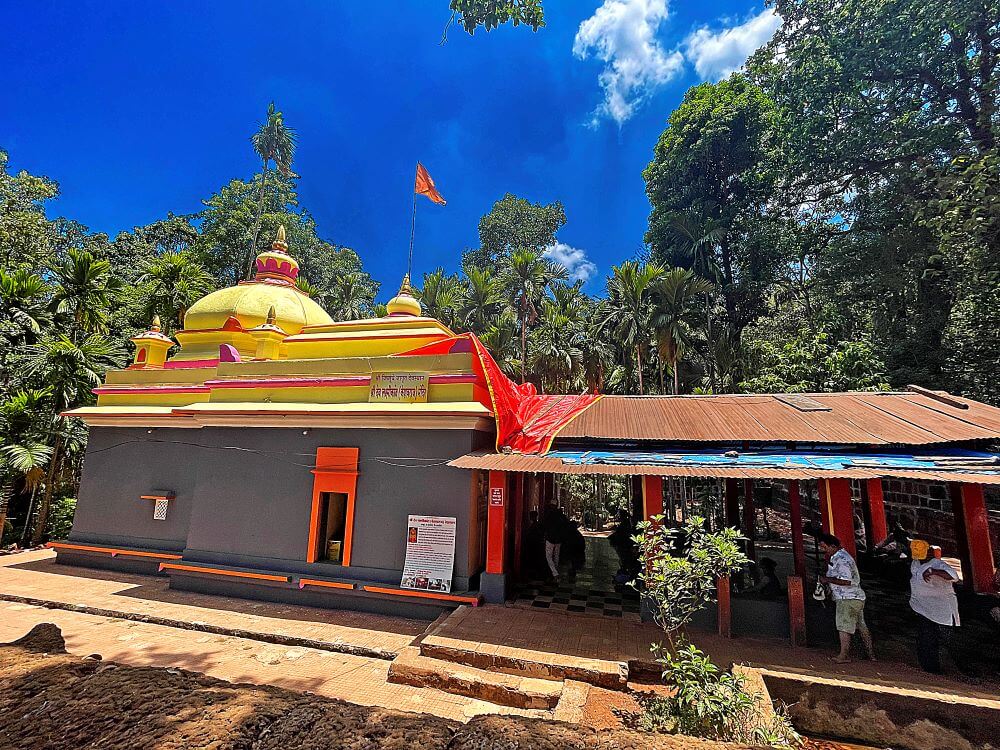
Shop Photo FramesThe temple of Lord Laxmikant (Keshavraj) in Asud, Dapoli taluka, and its surrounding area have been immortalized in Marathi literature through the celebrated work ‘Garambicha Bapu’ by the renowned Marathi author Shri Na. Pendse. This vibrant place of worship, dedicated to Lord Vishnu and dating back approximately five thousand years, is nestled in a lush, nature-rich environment and serves as a place of deep faith for millions of devotees. It is said that the five Pandavas built this temple in a single night at the behest of Lord Vishnu. Devotees believe that their heartfelt wishes are fulfilled by the darshan of Keshavraj.
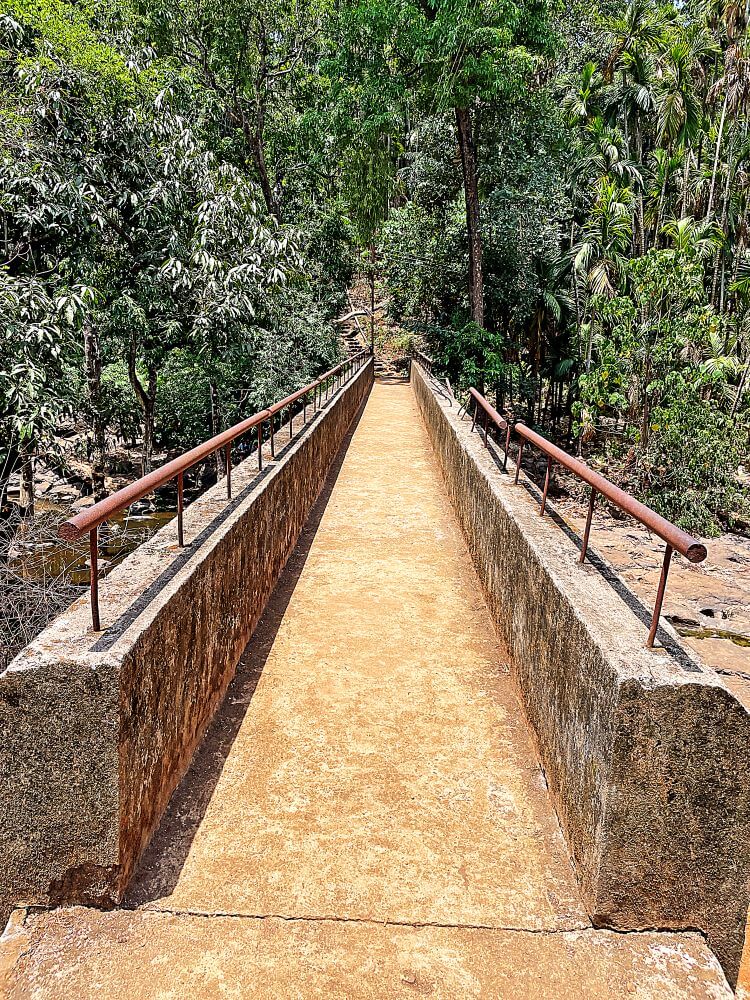
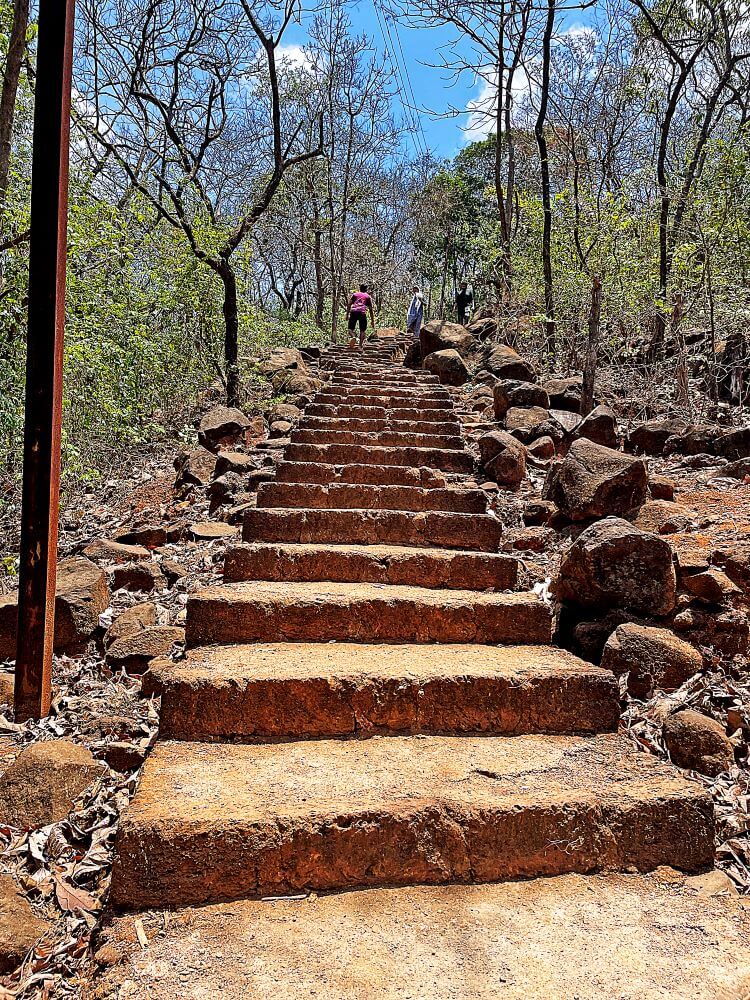
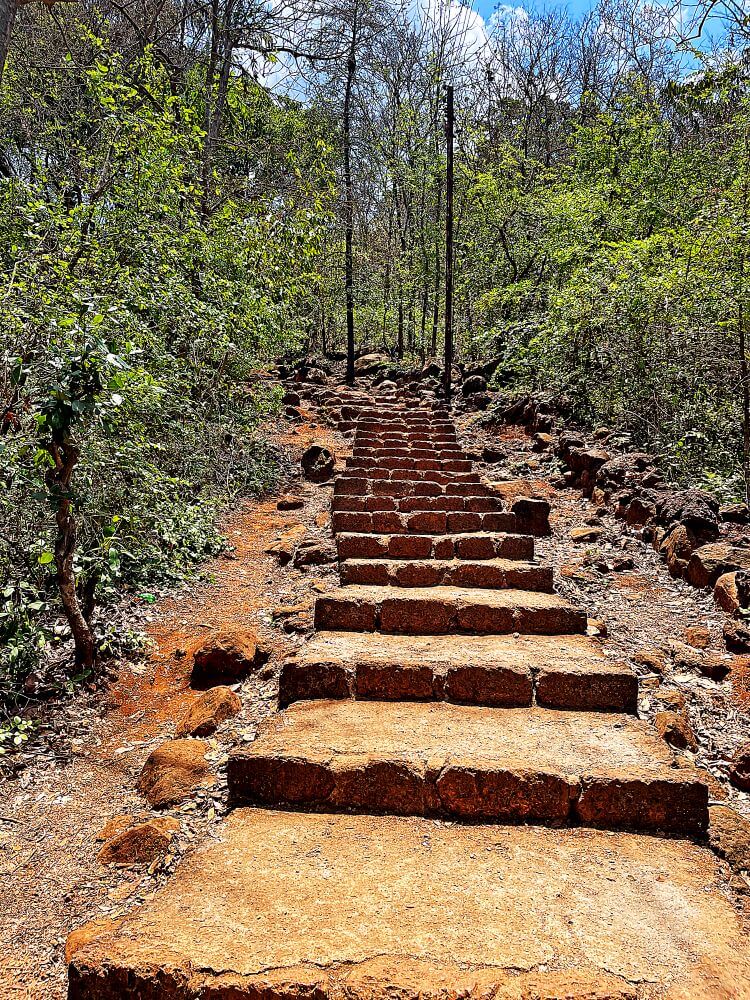
Asud village is located on the Dapoli-Harnai road. From there, one must leave their vehicles at Dabkewadi, about one to one-and-a-half kilometers away, to begin the trek to the Keshavraj temple. After passing the houses in the hamlet, the path to the temple winds through dense greenery, particularly through groves of betel nut trees. One must cross a small stream along this path, over which a permanent bridge has now been constructed. After crossing the bridge and walking for five to ten minutes, one reaches a small plateau on the hillside where the Keshavraj temple comes into view. Upon entering the courtyard, one sees a stone wall (gadga) with a small, doorless entrance. One must bow down to enter the temple premises. To the left of this entrance is a Ganpati temple, and to the right is a ‘Gomukh’ (cow-faced spout) from which water flows perennially.
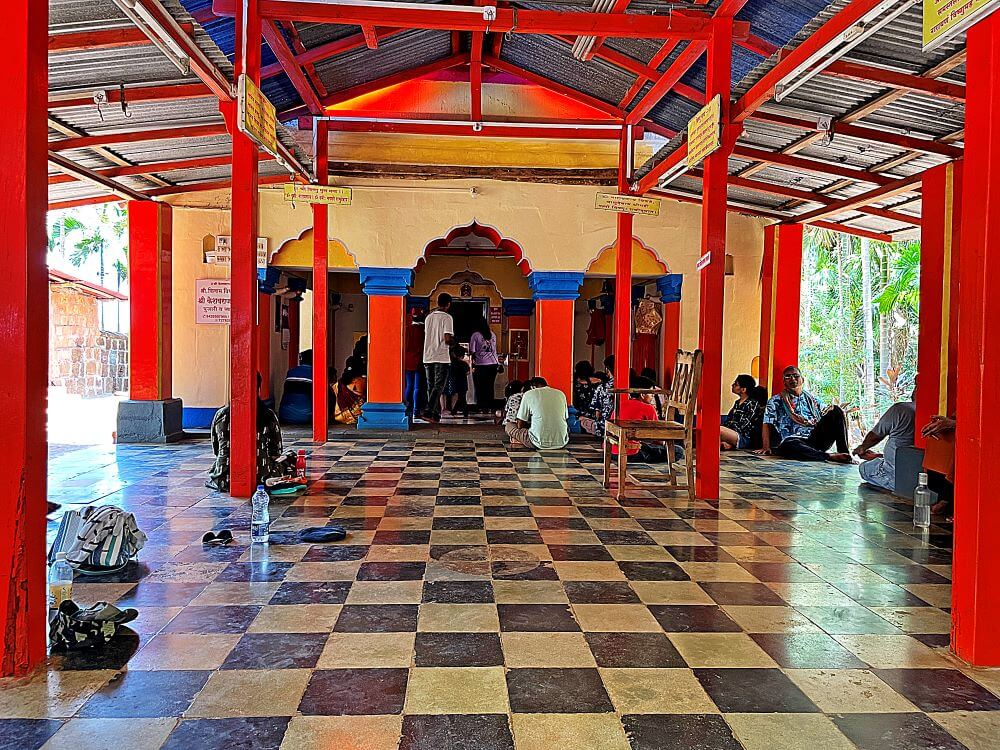
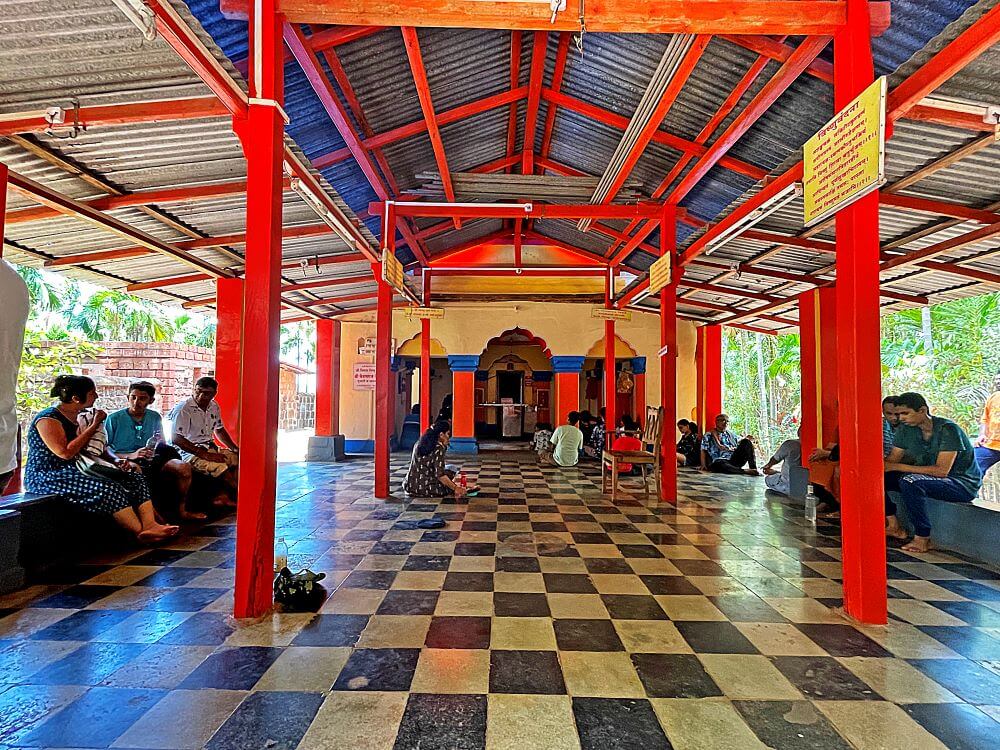
The Keshavraj temple, built of black stone, has a simple structure. The east-facing temple does not feature elaborate carvings. A natural spring flows from the mountain above the Gomukh, and water is brought to the temple through stone channels. Notably, the spring flows from beneath the roots of a mango tree located on the flat land where the mountain ends. Devotees wash their hands and feet in the water from this Gomukh before entering the temple. The temple courtyard is paved and enclosed by walls on all four sides. The temple structure consists of an open assembly hall (sabhamandap), an antarala (vestibule), and the sanctum sanctorum (garbhagriha). The antarala and garbhagriha constitute the original temple, while the sabhamandap was added in 1987. Both the antarala and the garbhagriha are topped with shikhars (spires). One can enter the antarala from the sabhamandap, and there are also doors on the left and right sides. At the entrance of the sanctum, there are statues of Hanuman on the left and Garuda on the right. A figure of Ganpati is carved on the lintel above the entrance. The idol of Shri Dev Laxmikant, or Keshavraj, in the sanctum is three-and-a-half feet tall and carved from black stone. In his lower right hand, Keshavraj holds a lotus (padma), in his upper right a conch (shankh), in his upper left a discus (chakra), and in his lower left a mace (gada). According to the specific order of these four attributes, Lord Vishnu has 24 forms, known by names such as Keshav, Narayan, Madhav, Govind, Vishnu, Madhusudan, and Trivikram. Based on the order of the attributes held by this idol, it is the form of Keshav.
Lord Keshavraj is the family deity (kuldevata) of 23 lineages in this region, including the Agarkar, Agharkar, Biwalkar, Datar, Dandekar, Deodhar, Dixit, Dhamdhere, Barshetkar, Bhat, Gangal, Rajwade, Mehendale, Paranjape, Thosar, Kokane, Gole, Bhatwadekar, Maydeo, Sabnis, Vaidya, Watve, and Joshi (some) families. The Keshavraj temple is also famous as a ‘Devrai’ (sacred grove) temple. The villagers believe in the command of Keshavraj that the dense forest seen after leaving Dabkewadi must be preserved as it is, and not a single tree should be cut. Because of this, the forest wealth here remains intact.
Every day, a ‘Mahabhishek’ is performed for Keshavraj, and the deity is worshipped after being adorned with a dhoti and an upper garment (uparane). This is followed by the offering of ‘Mahanaivedya’ and a ‘Maha-aarti’. Two festivals are celebrated here in the month of Kartik: one from Kartik Shuddha Ekadashi to Purnima, and the second from Kartik Krishna Ekadashi to Trayodashi. On both occasions, a ‘Mahaprasad’ is served on the Purnima and Trayodashi days. According to historical records, the Peshwas used to provide an annual grant (varshasan) to this temple.
This sacred temple stands as a testament to deep spiritual devotion, ancient architectural grandeur, and rich local cultural traditions.
The sanctum sanctorum houses the divine idol consecrated according to ancient Vedic traditions, surrounded by serene courtyards and traditional temple architecture.
Navratri, Maha Shivratri, Annual Temple Jatra & Deepotsav
Compare and book flights, secure top-rated local hotels near the temple, hire reliable guides, and rent cars instantly.
Extend your pilgrimage by visiting other highly sacred temples located nearby.


Add ₹999 more to unlock FREE SHIPPING!
Your sacred cart is currently empty.
Shop Photo FramesFill in your delivery details below to place your order.
Add comment