
Add ₹999 more to unlock FREE SHIPPING!
Your sacred cart is currently empty.
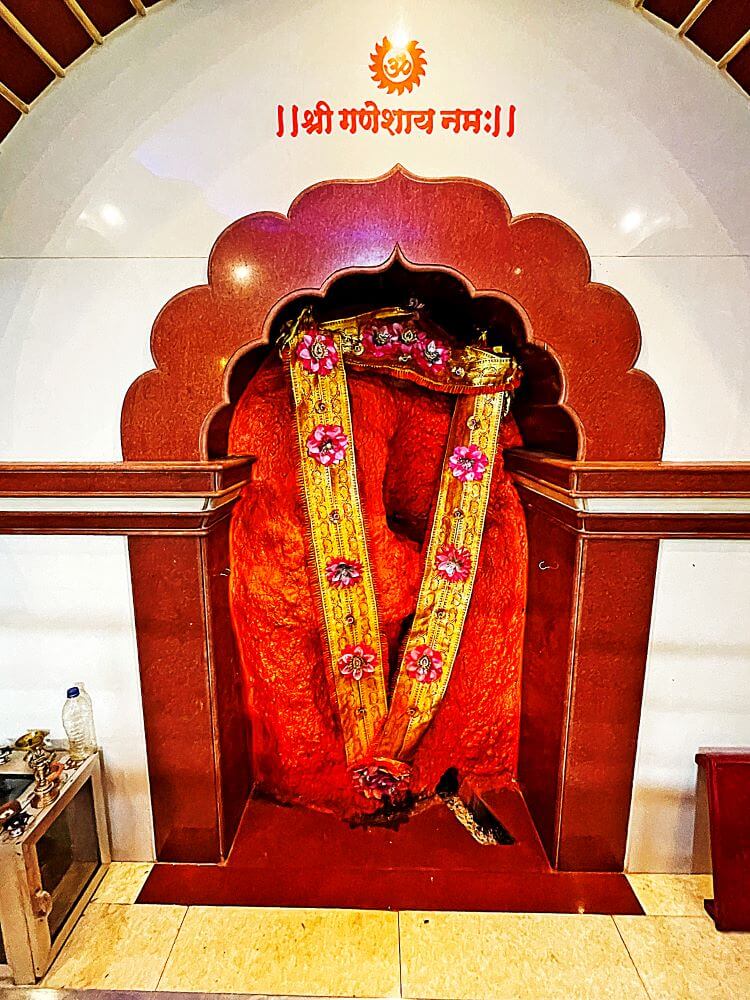
Shop Photo FramesGaneshgule, located near Pawas in the Ratnagiri district, is renowned as a powerful (Jagrut) and self-manifested (Swayambhu) shrine of Lord Ganesha. It is said that the popular saying, “The Ganesha of Gule went to Pule,” originated from this very place. The fishing community and merchants traveling by sea would make vows to this Ganesha to ensure the safe passage of their boats and ships. Many devotees firmly believe that vows made here are fulfilled. For this reason, this Ganesha is also known as the “Ganesha of the Seafarers” (Galbatwalyancha Ganesh).
The legend of the temple states that Ramchandrapant Chiplunkar of Pavas suffered from a chronic stomach ailment. Physicians were unable to find a cure for his pain. Distressed by the constant agony, Ramchandrapant finally decided to take Jalasamadhi and set off towards the sea coast of Guhagar. However, as the pain became unbearable, he could not proceed further and lay down in a thicket nearby. Even in that state, he began an Anushthana (ritual devotion) to Lord Ganesha. After 21 days, Lord Ganesha appeared to him in a vision and told him that he would soon recover. He said, “I reside here. Build a temple for me at this spot; Shahu Maharaj of Satara will assist in the construction of the temple.” Once the news of Ramchandrapant’s divine vision and his recovery from the stomach ailment spread through the region, devotees began to flock to this place. In time, when the greatness of this Ganesha reached the ears of Shahu Maharaj of Satara, he had the temple built here.
According to mythology, the fourth form of Ganesha in the Sankashtanashana Stotra is Gajavakra. This Gajavakra defeated Gajasura (who was named Gajasura because he was born with the face of an elephant and the body of a demon). Consequently, Gajasura’s son, Lambasura, became enraged and went to the Himalayas and He performed rigorous penance to Lord Mahadeva. Pleased with this, Lord Mahadeva granted Lambasura the boon of immortality. However, he also warned him, “If you trouble my family, you will be destroyed by my Trishula.” After receiving the boon from Mahadeva, Lambasura became arrogant. He no longer feared anything. He began to wreak havoc everywhere. He caused great distress to the sages, saints, and the gods alike. All the gods praised Lord Ganesha and commenced the Omkar Yajna. It was then that Shri Ganesha manifested from the sacrificial fire pit (Yajnakunda). This was Lambodara, who had incarnated for the destruction of Lambasura. Lambodara began the battle with Lambasura, but Lambasura resorted to illusory warfare. He stole Lambodara’s weapons, the Pasha (noose) and the Ankusha (goad). This battle took place at Ganpatipule. The invisible Lambasura fled from there to Ganeshgule. Lambodara caught up with him there as well. Realizing that his end was near, Lambasura jumped into the Narmada River near Omkar-Amaleshwar in Madhya Pradesh. Mahadeva’s To slay Lambasura, who had received the boon of fearlessness, Lambodara began the worship of Mahadeva and, having pleased him, obtained a trident from him. With this trident, Ganesha slew Lambasura. Since then, the five-trunked Ganesha near the Jyotirlingas of Ganpatipule, Ganeshgule, and Omkar-Amaleshwar came to be known by the name Lambodara.
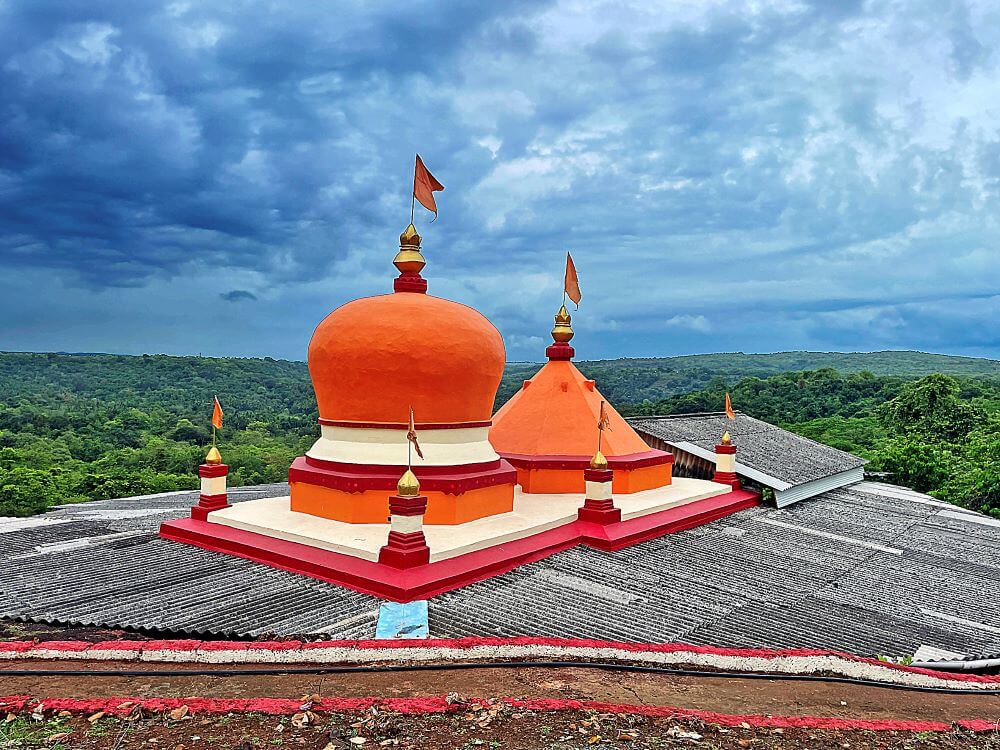
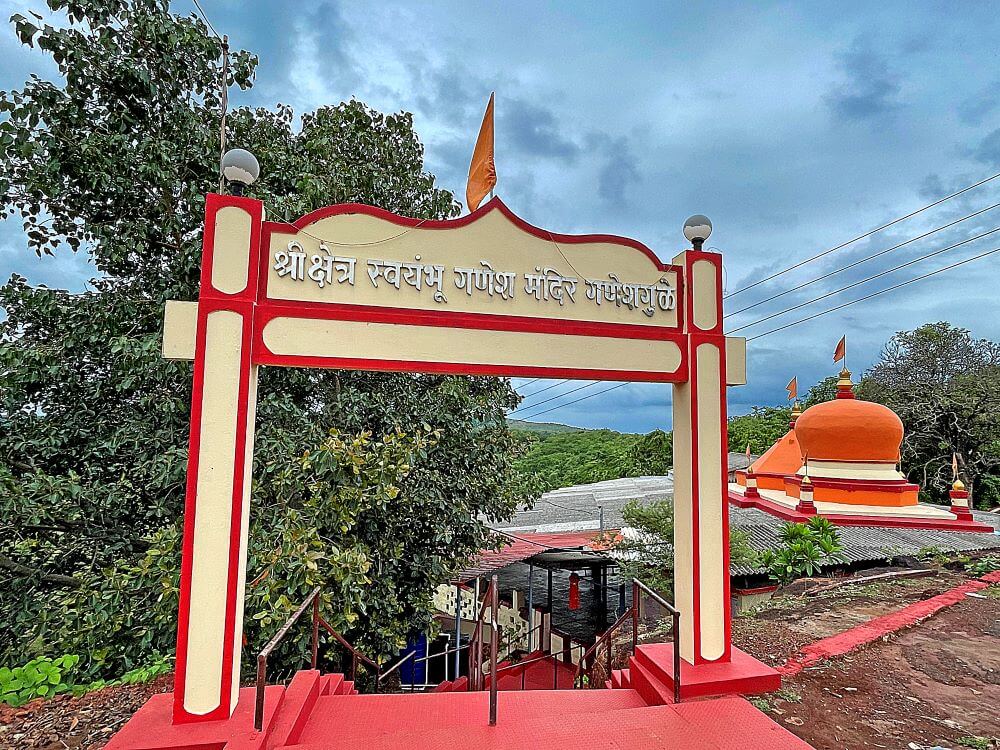
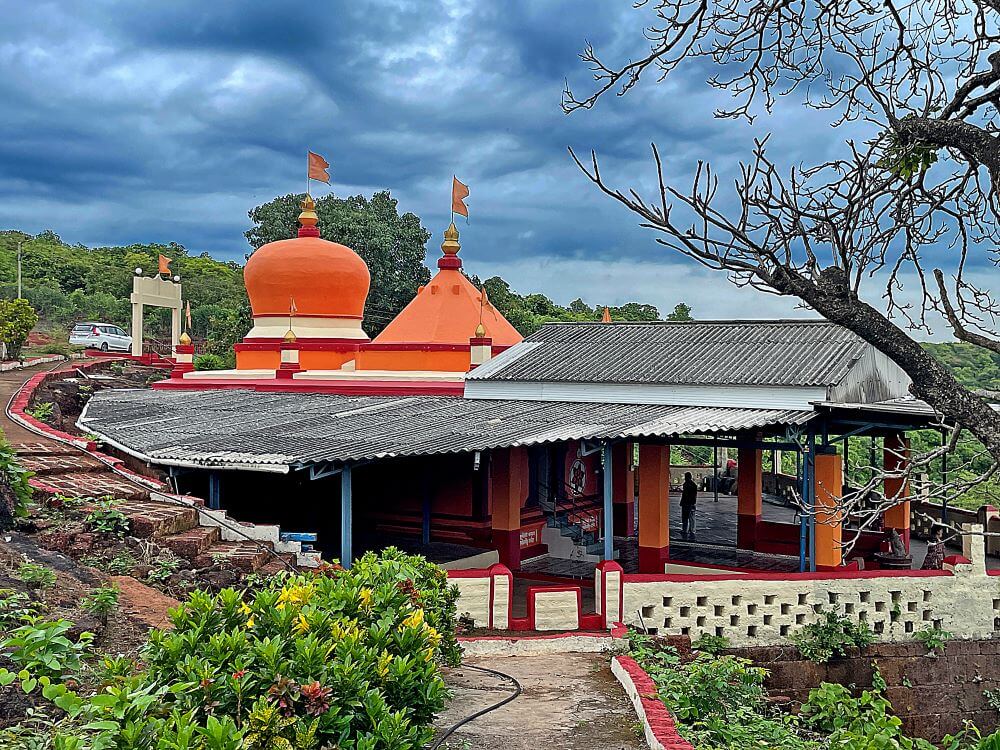
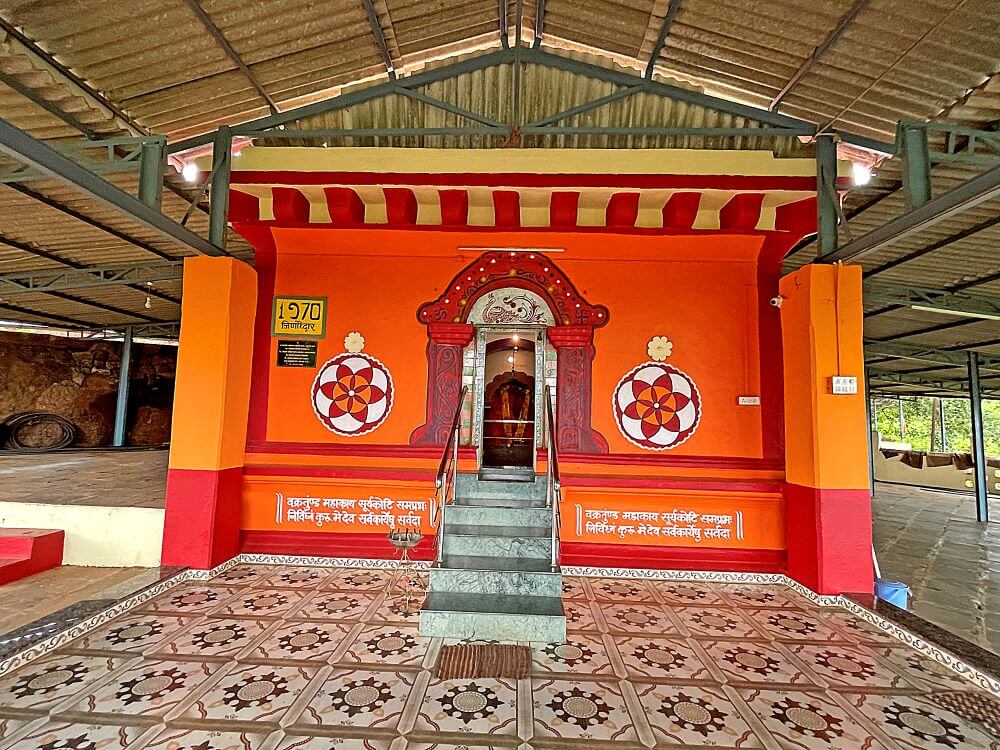
Ganeshgule is a pilgrimage site located three kilometers from Pawas on the Ratnagiri-Pawas-Purnagad road. Situated slightly off the main road, the two dome-shaped shikhars of this temple are visible from a distance. One of them is circular, while the other is octagonal. After descending about 20 steps from the arch, one enters the temple courtyard. This south-facing temple of Ganesha is built on a four-foot-high plinth along the hillside. The temple is still in good condition and is constructed of laterite stone. The temple courtyard is entirely paved. The beautiful paintwork on the temple makes it look vibrant. In front of the main entrance, there is a Tulsi Vrindavan and a brass idol of a mouse holding a laddu. A record on the wall of the entrance indicates that the temple was renovated in 1970.
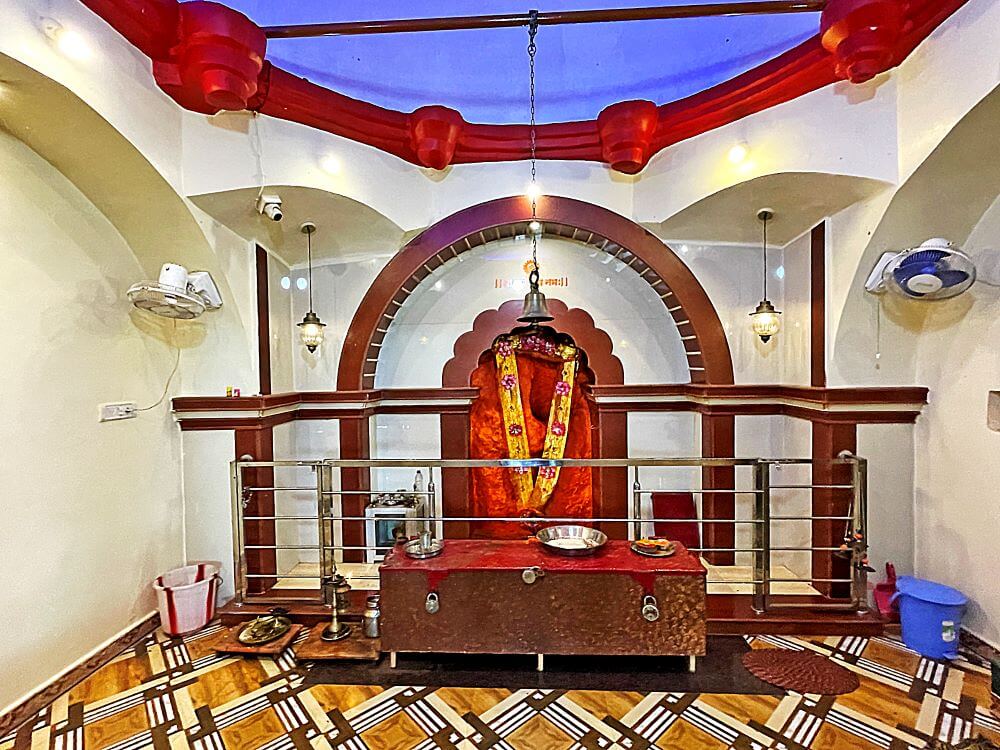
There are two sanctum sanctorums in the temple. In the first sanctum, near the entrance of the second, there is a stone slab approximately eleven feet high. Devotees worship this as the idol of Lord Ganesha. The second sanctum has remained permanently closed since ancient times. This can be understood by observing the two domes atop the temple. Looking behind the Ganesha idol, the doorway and its arch between the two sanctums are clearly visible. In the past, water used to flow continuously from the stone slab (from the navel of the Ganesha idol) located in the sanctum. Although it has stopped today, traces of it can still be felt here. There is a hall on the left side of the main temple. From the front area of the elevated temple, one can behold the deep valley and the surrounding landscape adorned with lush green vegetation.
Near the temple, there is a stepwell carved out of laterite stone, approximately 70 feet deep with stairs. Locals believe it dates back to the era of the Pandavas. A unique feature of this well is that its water level never fluctuates; it remains constant even during the monsoon season.
A three-day festival is celebrated at the temple on Maghi Chaturthi. During this time, Dindis (processions) arrive from many surrounding villages to the rhythmic sounds of Taal and Mridangam. On Ganesh Chaturthi in the month of Bhadrapada, a one-and-a-half-day Ganeshotsav is celebrated here by the local Brahmin community. Devotees can have darshan of the Lord Ganesha here daily from 6 AM to 8 PM. Apart from the Ganesh temple, there are temples of Shri Adityanath, Shri Vadeshwar, and Shri Laxminarayan in Ganeshgule village. Although this village is famous for its Ganpati temples, its two-kilometer-long coastline is an attraction for many tourists. Along with the groves of coconut and casuarina trees, the crystal-clear white sand on this beach is a major draw. During the winter months, large sea turtles come to this sand to lay their eggs.
This sacred temple stands as a testament to deep spiritual devotion, ancient architectural grandeur, and rich local cultural traditions.
The sanctum sanctorum houses the divine idol consecrated according to ancient Vedic traditions, surrounded by serene courtyards and traditional temple architecture.
Navratri, Maha Shivratri, Annual Temple Jatra & Deepotsav
Compare and book flights, secure top-rated local hotels near the temple, hire reliable guides, and rent cars instantly.
Extend your pilgrimage by visiting other highly sacred temples located nearby.


Add ₹999 more to unlock FREE SHIPPING!
Your sacred cart is currently empty.
Shop Photo FramesFill in your delivery details below to place your order.
Add comment