
Add ₹999 more to unlock FREE SHIPPING!
Your sacred cart is currently empty.
Shop Photo FramesThe ashram of Swami Swarupanand, located at Pawas in Ratnagiri district, is considered one of the most important pilgrimage sites in the state. Swami Swarupanand, who advocated the ‘So-ham’ practice for self-realization and bestowed the ‘Ram Krishna Hari’ guru mantra upon his disciples, is revered by many. Thousands of devotees from across the state visit this place daily to seek blessings at the Sanjeevan Samadhi of Swami Swarupanand, who explained the essence of the Dnyaneshwari in simple Marathi and showed the path of spiritual progress. Devotees who visit here share that they experience spiritual contentment while forgetting themselves in the lap of nature, amidst profound silence.
Swami Swarupanand, whose original name was Ramchandra Vishnu Godbole, was born on 15 December 1903 in the village of Pawas, nestled in the lap of nature. After completing his primary education in Pawas and secondary education in Ratnagiri, Swami Swarupanand went to the Aryan Education Society’s school in Angrewadi, Mumbai, for further studies. Having received spiritual values from childhood, Swami Swarupanand was proficient in various subjects due to his extraordinary intelligence. While engaged in the reading, listening, and contemplation of spiritual subjects, he was also inspired by the thoughts of Lokmanya Tilak and Mahatma Gandhi and participated in the freedom struggle. Swami Swarupanand, who participated in the Non-Cooperation Movement led by Gandhiji, started a school named ‘Swavalambanashram’ in Pawas in 1923 to provide self-reliant national education to the youth. In this school, along with training students in hand-spinning and weaving Khadi on handlooms, training in Mallakhamb, physical exercise, and stick fighting was also provided. National gatherings and discourses were also held here.
Fearing government wrath, as the number of students dwindled, the school was closed, and they moved to Pune. From there, they earned the Vangmay Visharad degree at Tilak College. In the year 1930, they had to endure imprisonment for participating in the Salt Satyagraha. While at Yerwada Jail, they met Acharya Javadekar, S. M. Joshi, Shankarrao Deo, and others. During their stay there, while utilizing the solitude for the practice of meditation, they composed a nine-verse poem in praise of the Sadguru, titled ‘Navratnahar’.
During this period, a deep yearning for liberation arose within Swami Swarupanand, and feeling a profound longing for the grace of a Sadguru, his maternal uncle took him to Baba Maharaj Vaidya, a self-realized soul of the Nath tradition. After receiving initiation into the Nath sect from Baba Maharaj, he was given the name Swarupanand. His spiritual journey commenced from that point. In his subsequent life, he authored numerous scriptures and also He initiated the devotees into the Soham mantra. In 1933, when he contracted malaria, his follower Dr. Baba Desai requested him to stay at his home in Pawas. From then until 1974, he resided at Desai’s Anant Niwas.
Over time, as the feeling of renouncing the body arose, he decided to take Samadhi. A place was designated for this purpose, and a cave was constructed there. This cave was sealed with stones brought from the Jyotiba mountain in Kolhapur. On August 15, 1974, Swamiji attained Sanjeevan Samadhi here. As Swamiji had instructed earlier, his body was placed in the Padmasana posture. Thousands of devotees were present at this Samadhi ceremony. This magnificent temple has been erected where the Samadhi is located. Prior to that, the Swarupanand Ashram was established here in 1972. The management of this place is still overseen by the Swami Swarupanand Seva Mandal, which was founded in 1967.
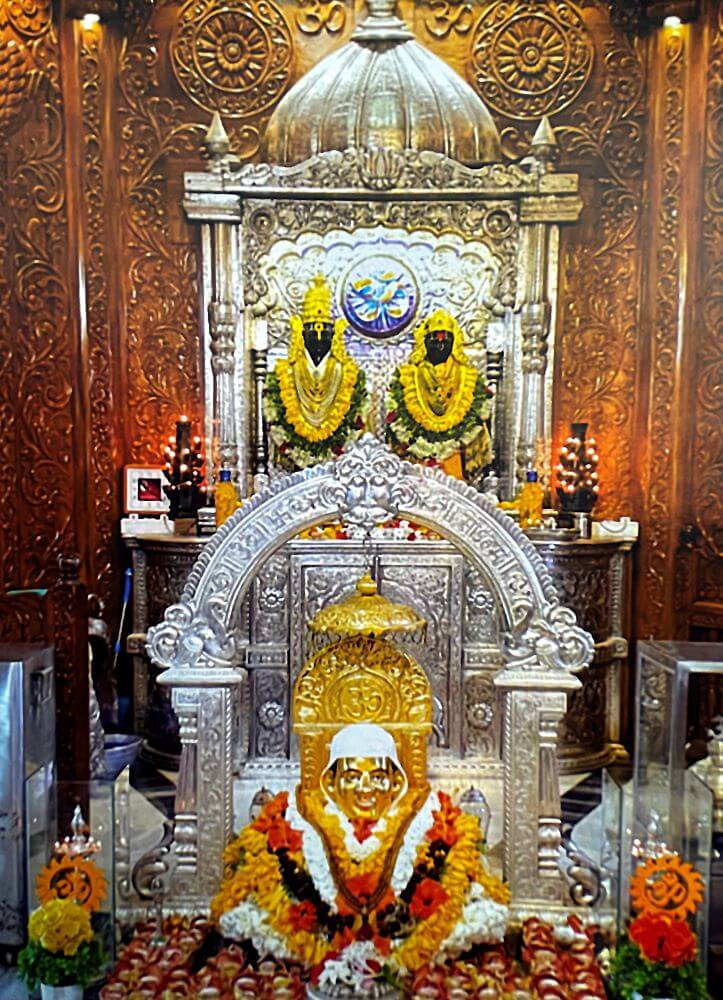
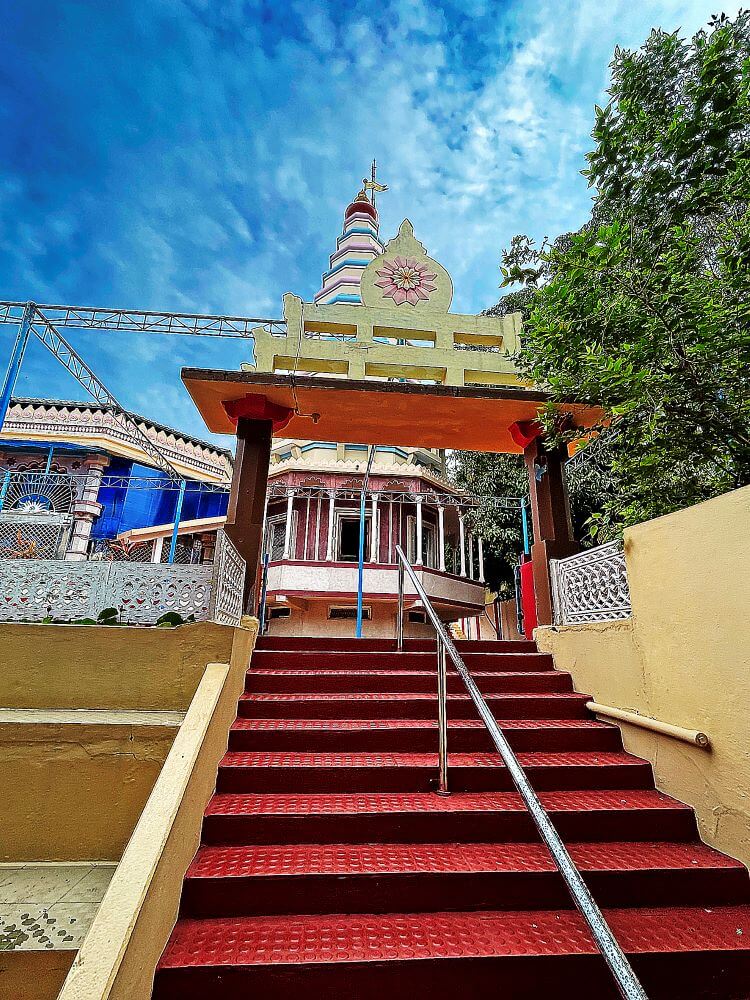
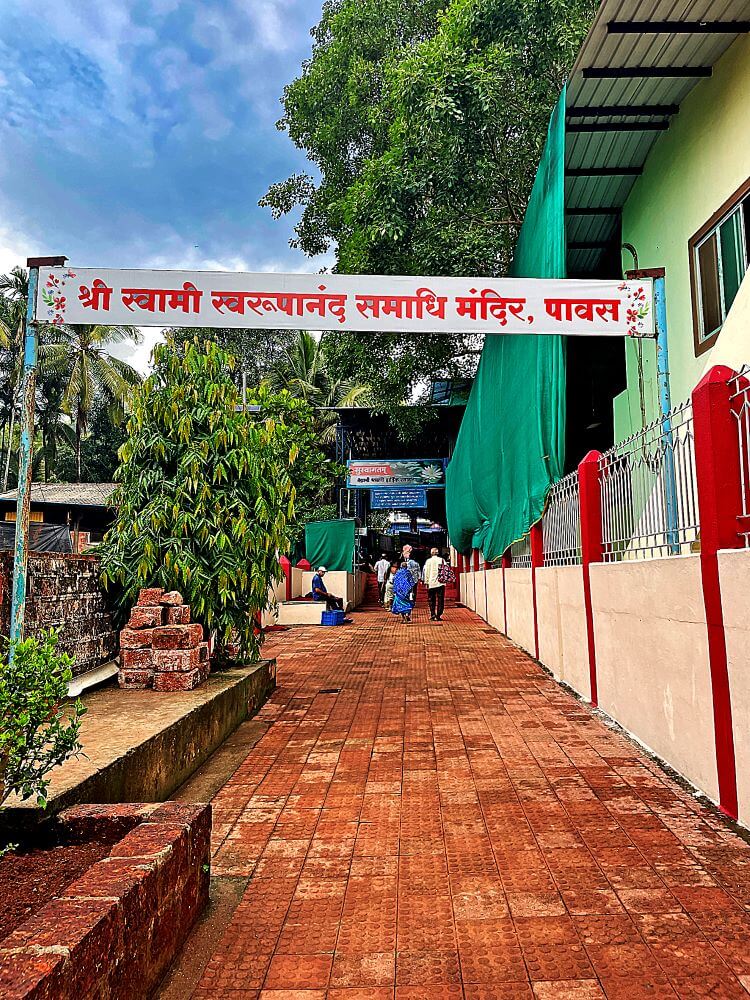
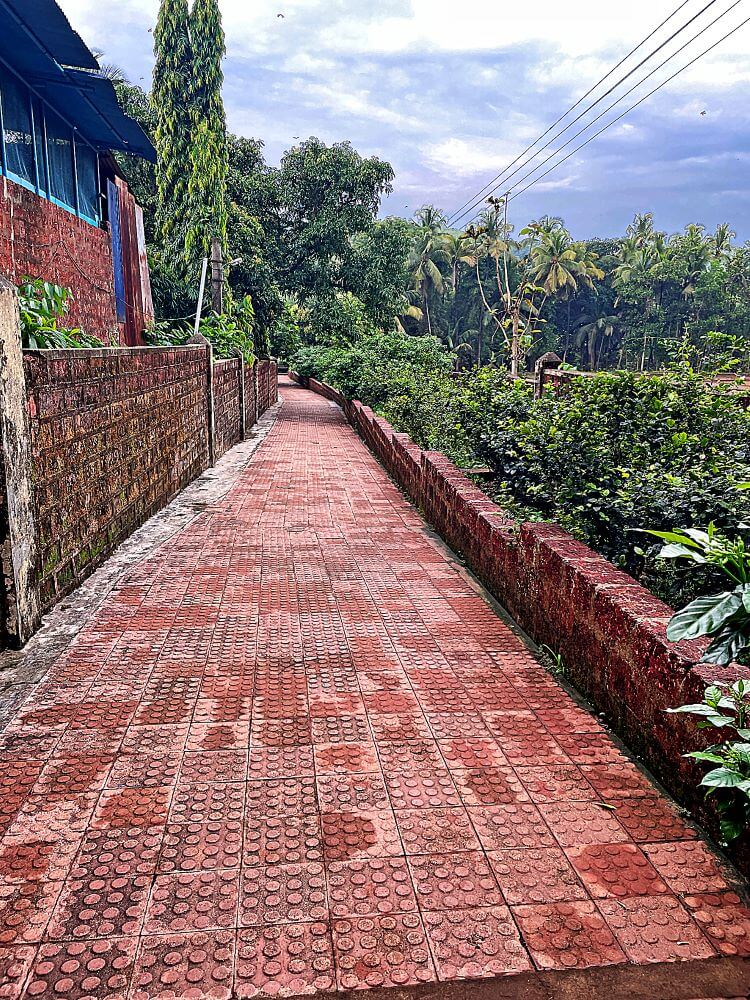
Away from the bustling surroundings and residential areas, this temple is situated in a serene and picturesque location. The temple’s magnificent spire catches the eye from a distance. Upon entering through the gateway, as one proceeds towards the temple, one reaches the main entrance while reading the verses composed by the Swami on both sides and experiencing the profound peace of this place. The area around the main entrance is beautifully decorated. Near the steps of the main entrance, there are sculptures of elephants on both sides. The temple structure consists of a Saint’s Hall (the assembly hall here is known as the Saint’s Hall) and the sanctum sanctorum. The Saint’s Hall has sixteen pillars on both sides, adorned with statues of Saint Eknath, Saint Dnyaneshwar, Saint Tukaram, and Saint Nivrutti-nath, along with portraits of other saints and great personalities. Directly ahead, in the sanctum sanctorum, lies the flower-adorned Samadhi shrine of the Swami. On the Samadhi stone here, within a silver canopy, the Swami’s A silver mask has been placed. In front of the mask are the Padukas, and behind the Samadhi stone slab are the adorned idols of Vitthal-Rukmini. Below the Samadhi stone slab is the meditation cave. It was here that the Swami attained his actual Samadhi.
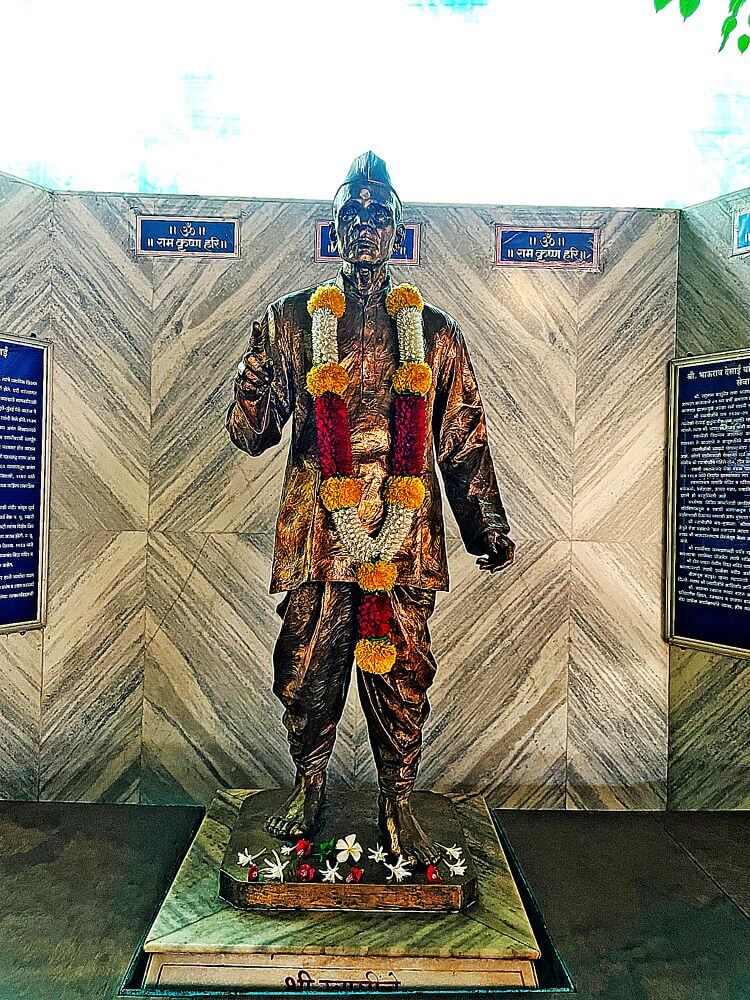
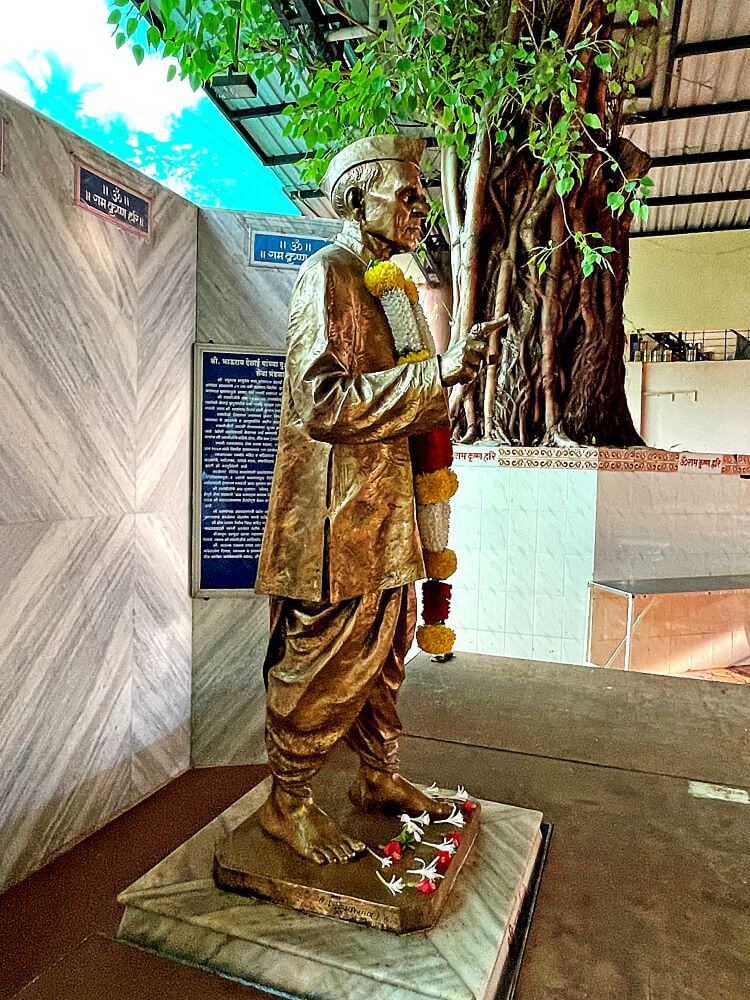
Near the temple is the birthplace of the Swami. This old Konkani-style tiled house, featuring a traditional veranda and courtyard, is regularly plastered with cow dung. Here, there is an attractive idol of the Swami, flanked by his portraits on both sides. The site also houses old photographs of the Swami, as well as a pictorial exhibition depicting the life story of Dnyaneshwar. Behind the birthplace, there is a Tulsi plant and an old, deep, rectangular well. In a room adjacent to this house, there is an idol of the Swami, with two small lamp towers nearby. Here, one can find beautiful idols of Radha-Krishna and Shri Ram-Lakshman-Sita-Hanuman, as well as a portrait of Dnyaneshwar. In the temple premises, there is a statue of the Swami’s disciple, Raghunath Vasudev, also known as Bhaurao Desai.
The temple conducts daily Kakad Aarti, Samruddha Puja, and Shej Aarti. Following the afternoon and evening Aartis, the Mahaprasad of Khichdi is served to the devotees. The Guru Purnima festival is celebrated here on Ashadh Shuddha Purnima. The Swami Punyatithi festival is observed from Shravan Vadya Navami to Dwadashi. During this time, the chanting of Om Ram Krishna Hari continues uninterrupted for 72 hours, followed by Mahaprasad. The Swami Janmadin celebration takes place from Margashirsha Vadya Saptami to Dwadashi. The Punyatithi Mahotsav of Swami’s Guru, Ganesh Nath Maharaj, is held from Paush Vadya Panchami to Dwadashi, during which an unbroken week-long recitation of the Dnyaneshwari is performed. During the temple’s anniversary celebration, which occurs between Phalgun Vadya Pratipada and Rangpanchami, a discourse is held every evening.
The organization’s free devotee accommodation is located five minutes away from the temple. (Contact: ๙३५९९५९०७९) A free health center is also operated on the ground floor here. Sewing and embroidery classes for women’s empowerment are also conducted within the temple premises. After crossing a bridge beyond the Pawas ST bus stand, on the right side is Anant Niwas, where the Swami resided for about ๔० years. Outside its entrance are images of the Swami, great saints, realized souls, as well as idols of gods and goddesses. Upon entering, there is a veranda and the Swami’s room on the left side. Only one person is allowed to enter this room at a time. Inside, there is an idol of the Swami as well as old photographs. Many items used by the Swami have been preserved here. It is said that it was in this very building that the Swami experienced the vision of the Saguna form of the Nirguna-Nirakara Shri Mahavishnu. The Swami did the majority of his writing here. This includes translated texts such as Shrimat Abhang Dnyaneshwari, Shri Bhavarthagita, Shri Abhang Amritanubhav, Sanjeevani Gatha (collection of Abhangs), and Changdev Pasashti. It was in this room that Shridhar Swami, Gagangiri Maharaj, Bhalchandra Maharaj, and Rashtriya Swayamsevak Sangh Sarsanghchalak Golwalkar Guruji had met the Swami.
This sacred temple stands as a testament to deep spiritual devotion, ancient architectural grandeur, and rich local cultural traditions.
The sanctum sanctorum houses the divine idol consecrated according to ancient Vedic traditions, surrounded by serene courtyards and traditional temple architecture.
Navratri, Maha Shivratri, Annual Temple Jatra & Deepotsav
Compare and book flights, secure top-rated local hotels near the temple, hire reliable guides, and rent cars instantly.
Extend your pilgrimage by visiting other highly sacred temples located nearby.


Add ₹999 more to unlock FREE SHIPPING!
Your sacred cart is currently empty.
Shop Photo FramesFill in your delivery details below to place your order.
Add comment