
Add ₹999 more to unlock FREE SHIPPING!
Your sacred cart is currently empty.
Shop Photo FramesThe Harihareshwar Temple in Golap, located a short distance from Pawas in the Ratnagiri district, is one of the important pilgrimage sites in the district. A unique feature of this temple is that it houses three separate idols of Brahma, Vishnu, and Mahesh on a single pedestal. It is one of the rare temples in the Konkan region to feature such distinct idols. These beautiful idols are considered the pride of not only the village of Golap but the entire Konkan region. The performance of Tiprya (stick dance) and sword-wielding during the Kartikotsav, which has been celebrated for 135 years, is a special attraction here.
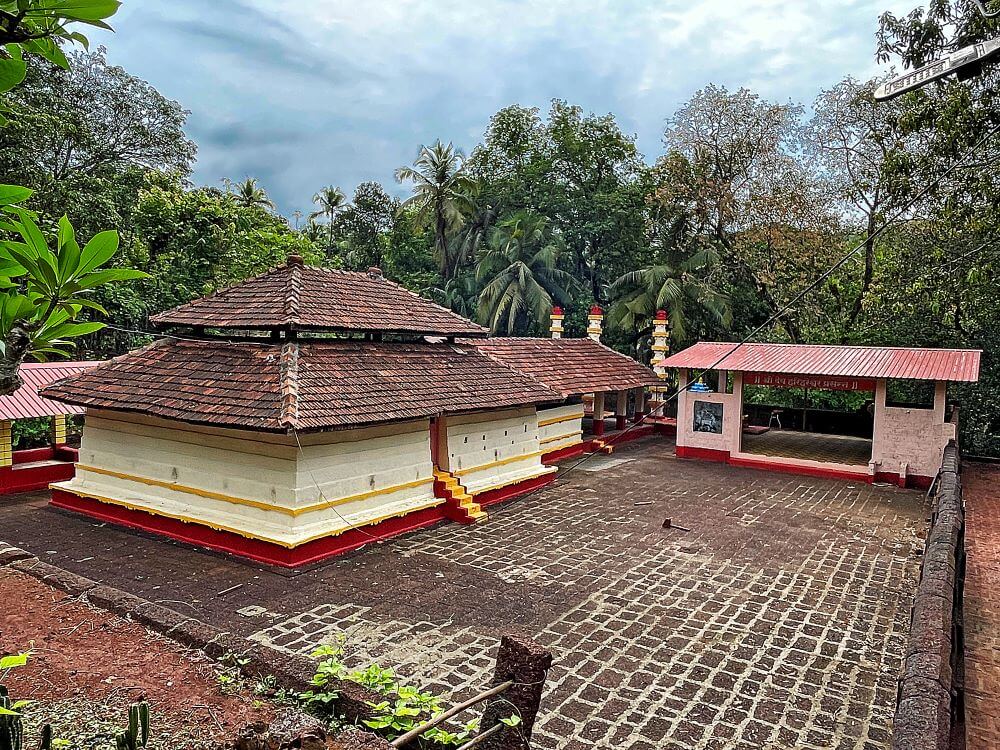
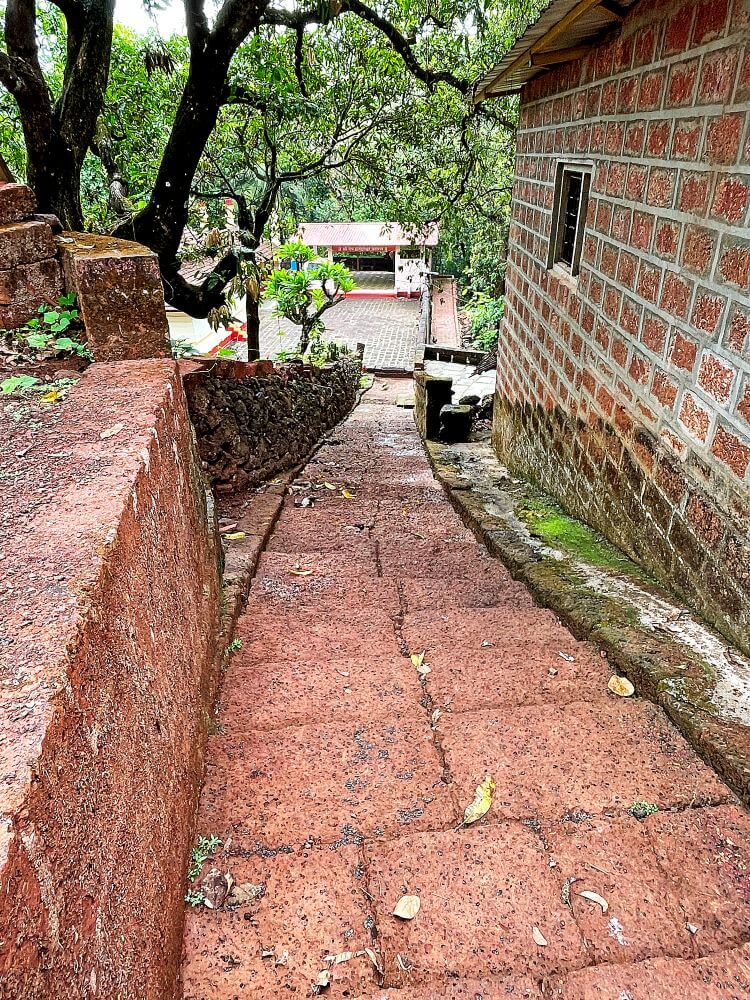
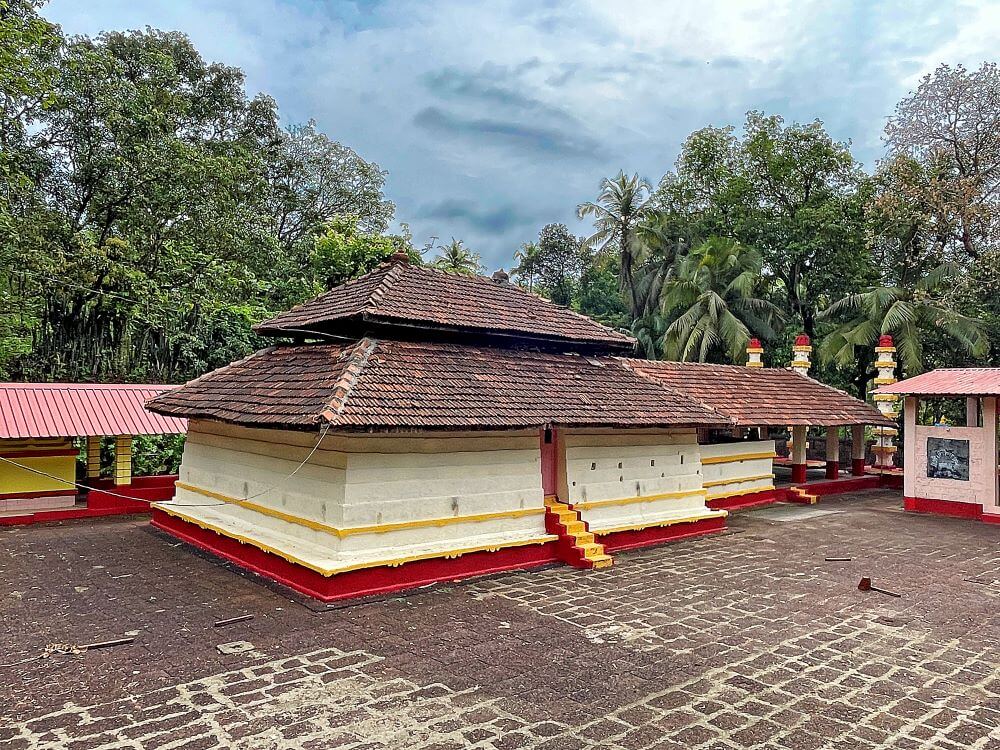
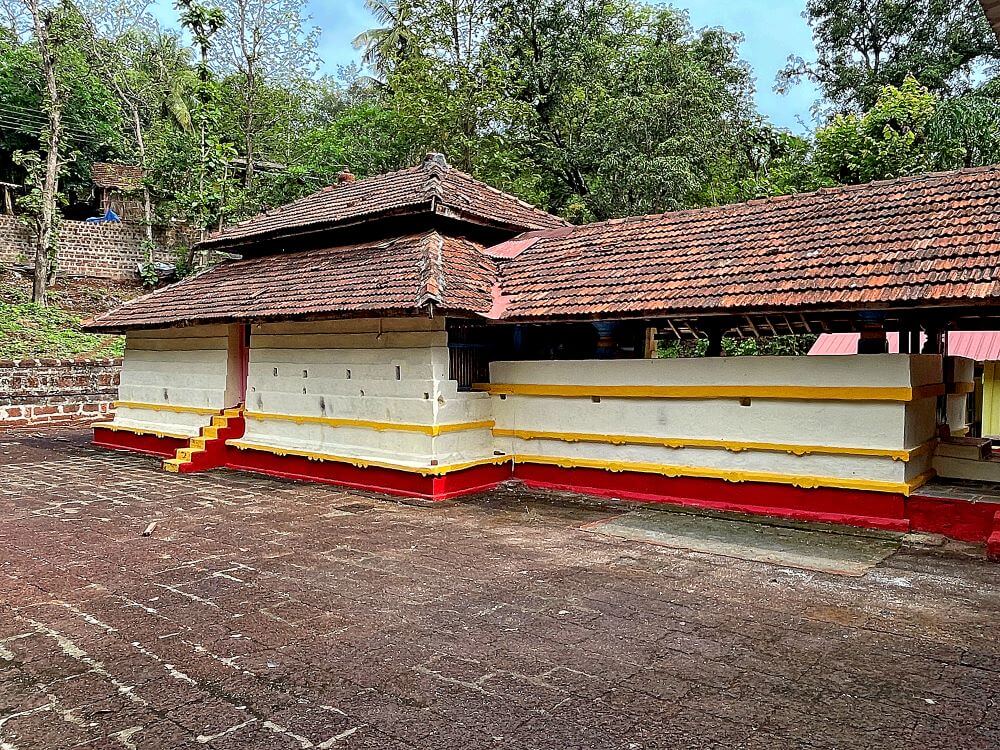
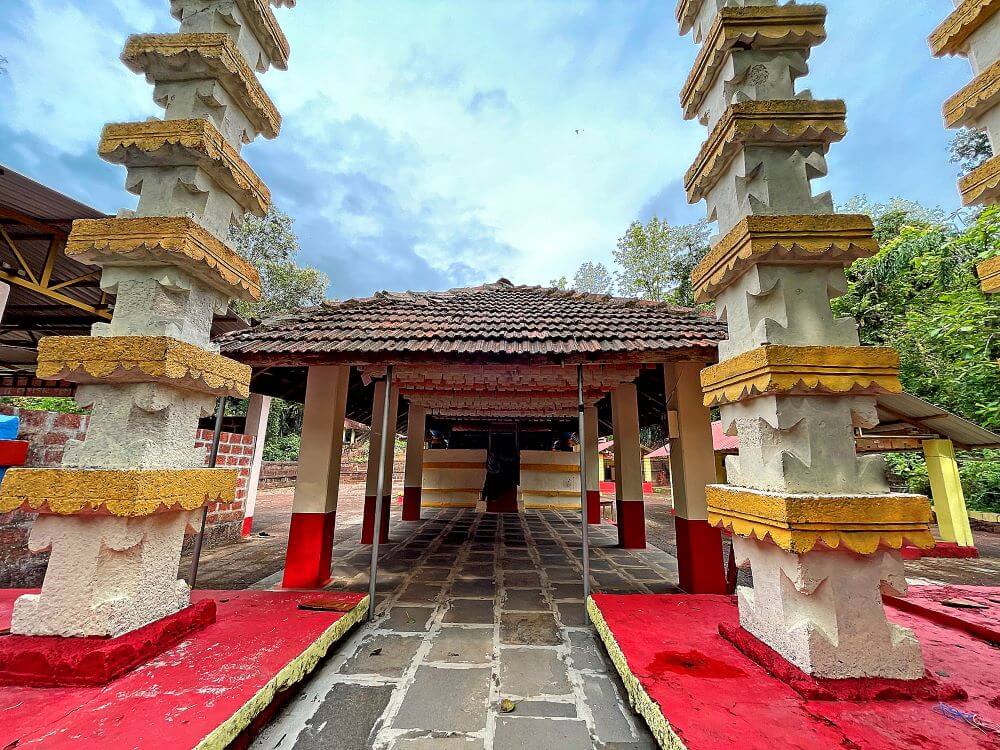
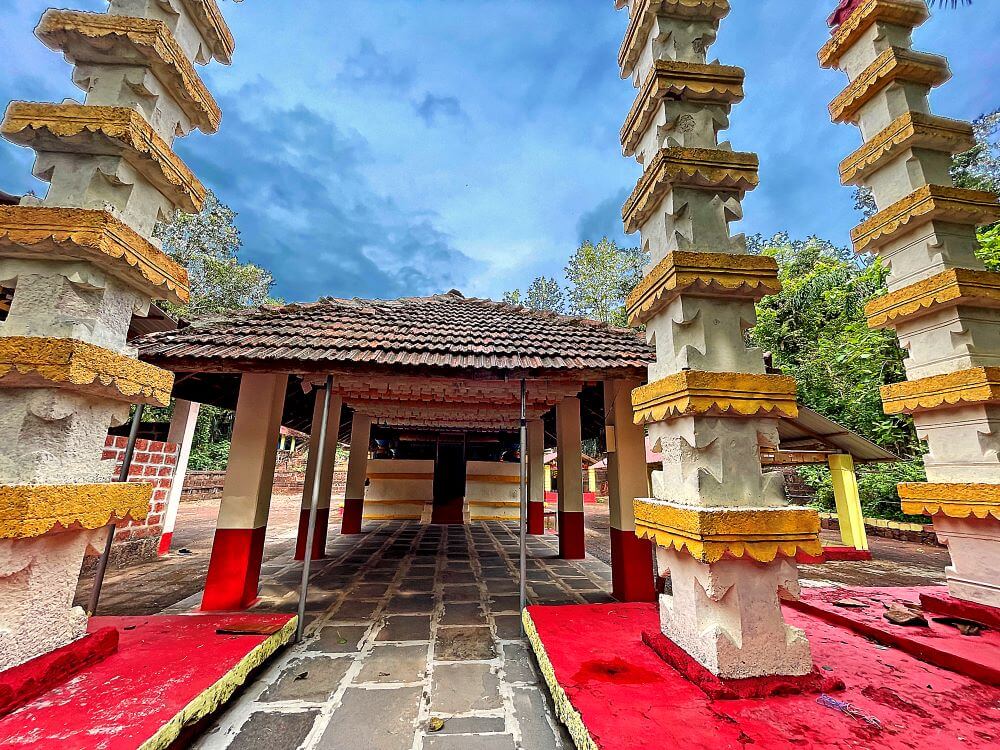
Golap village is situated on the Ratnagiri-Pavas road. To reach the Harihareshwar temple, which is located slightly below the main road, there is a stone-paved path (footpath) made of laterite stone. While walking along this path, one passes the temple of the village deity, Ravalnath, before catching a glimpse of the Harihareshwar temple. This temple is situated in a nature-rich area surrounded by trees on all sides. Tiled and two-storied The temple is surrounded by a sturdy fortification made of laterite stone. One enters the temple courtyard through the gateway in this fortification. The entire courtyard is paved with laterite stone. In front of the temple entrance, on a high platform, stand three traditional Konkani-style lamp pillars (Deepmalas), and right next to them is a small stage. During festivals, various programs and plays are performed from this stage.
The temple structure consists of two sabhamandapas (halls), an antarala (vestibule), and a garbhagriha (sanctum sanctorum). The first sabhamandapa is of an open type, while the second is an ardhamandapa. The construction predominantly utilizes wood. In the second sabhamandapa, there are stone benches that are two feet high. On both sides of the entrance to the antarala, there are wooden lattices through which one enters the vestibule. In front of this antarala lies the garbhagriha, built in the traditional Konkani stone masonry style. On both sides of the entrance to the garbhagriha are idols of Ganapati and Lord Ananta. Inside the garbhagriha, on a raised platform, are the elegant and beautiful idols of Brahma, Vishnu, and Mahesh. Among these, the idol of Vishnu is on the left, Lord Brahma is in the center, and the idol of Shankara is on the right.
The idol of Vishnu is Chaturbhuj (four-armed), holding a Padma (lotus) in the lower right hand, a Shankha (conch) in the upper right hand, a Chakra (discus) in the upper left hand, and a Gada (mace) in the lower left hand. According to the sequence of these attributes in iconography, such an idol is referred to as Keshava-Vishnu. Vishnu wears Makarakundala (crocodile-shaped earrings) in his ears, and the Vaijayantimala (garland of victory) around his neck, with the Kaustubha gem resting on his chest. The Prabhavali (halo) behind him is carved with the Dashavatara (ten incarnations) of Vishnu. Near the right foot below is Garuda, while on both sides are attendants waving a Chauri (fly-whisk). Behind the attendants, Bhudevi and Sridevi are carved holding lotuses in their hands.
In the center is the idol of Lord Brahma. This idol is extremely exquisite and beautiful. Lord Brahma’s crown is usually depicted as a Jatamukuta (matted hair crown); however, a unique feature of this idol is that it is depicted as a Kiritamukuta (tall conical crown), similar to that of Lord Vishnu. Of the four faces of this idol, three are visible from the front, while the fourth face is turned towards the back. All three front-facing heads have beards. The lower right hand is in the Varada Mudra (gesture of boon-giving) and holds an Akshamala (rosary), while the lower left hand holds a Kamandalu (water pot). The upper two hands hold the Sruk and Sruva, the implements required for Yajna (sacrificial rituals). Attendants are depicted on both sides at the base. There is a Prabhavali (halo) behind Lord Brahma’s idol, but it does not have any figures carved into it. However, figures of seekers and ascetics can be seen on the pillars surrounding it.
The idol of Mahesh, or Shiva, here is adorned with a matted crown (Jatamukuta) and serpent-earrings (Sarpakundala). In his upper right hand, he holds a Damaru, while his lower right hand holds a Matulunga fruit. In his upper left hand, he holds a Trishula, and in his lower left hand, he holds a severed head. According to legend, an enraged Shiva, during a dispute, severed the fifth head of Lord Brahma, which then remained stuck to his hand. After wandering for 12 years, it finally fell off at the sacred site of Varanasi. In accordance with this legend, the severed head is visible in the deity’s left hand. A serpent band (Nagabandha) is carved into Shiva’s arm. At his feet are attendants holding flower garlands, and behind them are attendants waving a fly-whisk (Chauri). Behind the attendant on the right side stands Nandi.
The idols of Brahma, Vishnu, and Mahesh are unique and appear to have been carved by the same artist. The ornaments and weapons on these idols are carved in a uniform manner. The expressions on the faces of all three idols also appear serene. It is said that these three idols, which are three to four hundred years old, were brought from Kashi. In the temple premises, there are shrines dedicated to Mahalakshmi, Kshetrapal, and Garuda. In front of the temple, there is a path leading towards the river. On this path, there is a pond made of large dressed stones. Water flows into it from a Gomukh (cow-faced spout). It is said that the water flowing from the Gomukh originates from beneath the Harihareshwar idol. There is a mention of this in the Harihareshwar Aarti as well.
Although the Harihareshwar temple is ancient, the Kartikotsav celebrated here has a tradition spanning 135 years. This festival continues from Kartik Shuddha Dashami to Kartik Vadya Pratipada. During this period, Tiprya (traditional stick dance) and the wielding of swords (patte), which are not seen anywhere else, are performed daily. The skillfully wielded swords are a major attraction here. On Dashami, all the deities are adorned in traditional attire. Thousands of devotees are present for the festival. Villagers who have moved away for work or business, as well as daughters of the village returning to their maternal home, make it a point to attend the festival.
This sacred temple stands as a testament to deep spiritual devotion, ancient architectural grandeur, and rich local cultural traditions.
The sanctum sanctorum houses the divine idol consecrated according to ancient Vedic traditions, surrounded by serene courtyards and traditional temple architecture.
Navratri, Maha Shivratri, Annual Temple Jatra & Deepotsav
Compare and book flights, secure top-rated local hotels near the temple, hire reliable guides, and rent cars instantly.
Extend your pilgrimage by visiting other highly sacred temples located nearby.


Add ₹999 more to unlock FREE SHIPPING!
Your sacred cart is currently empty.
Shop Photo FramesFill in your delivery details below to place your order.
Add comment