
Add ₹999 more to unlock FREE SHIPPING!
Your sacred cart is currently empty.
Shop Photo FramesThe original seat (Moolpeeth) of Adi Shakti Shri Yamai Devi, the family deity (Kuldevata) of many lineages in the state, is located in the village of Aundh in the Khatav taluka of Satara district. It is believed that Yamai Devi, the embodiment of Shiva and Shakti, is the combined worshipped form of Shiva and Parvati. There are many seats of Yamai Devi in Maharashtra and other states, but the temple at Aundh holds greater significance as it is the awakened original seat.
The legend regarding the name Aundh and the temple of the Goddess states that in ancient times, a demon named Aundhasur resided in the Kantakgiri region. He was extremely powerful and terrorized the area, often troubling the sages and seers performing penance. Jyotiba fought against Aundhasur, but his strength began to wane. Through divine insight, he realized that the demon was destined to be slain by the hands of Yamai Devi. He requested Yamai Devi to come to this place. Yamai Devi fought Aundhasur and defeated him. Acknowledging his mistake, Aundhasur requested the Goddess to do something so that his name would be remembered. The Goddess granted him the boon that this region would henceforth be known by his name and then slew him. Since then, the Kantakgiri region became known as Aundh. At the request of Jyotiba, the Goddess agreed to reside in this very region.
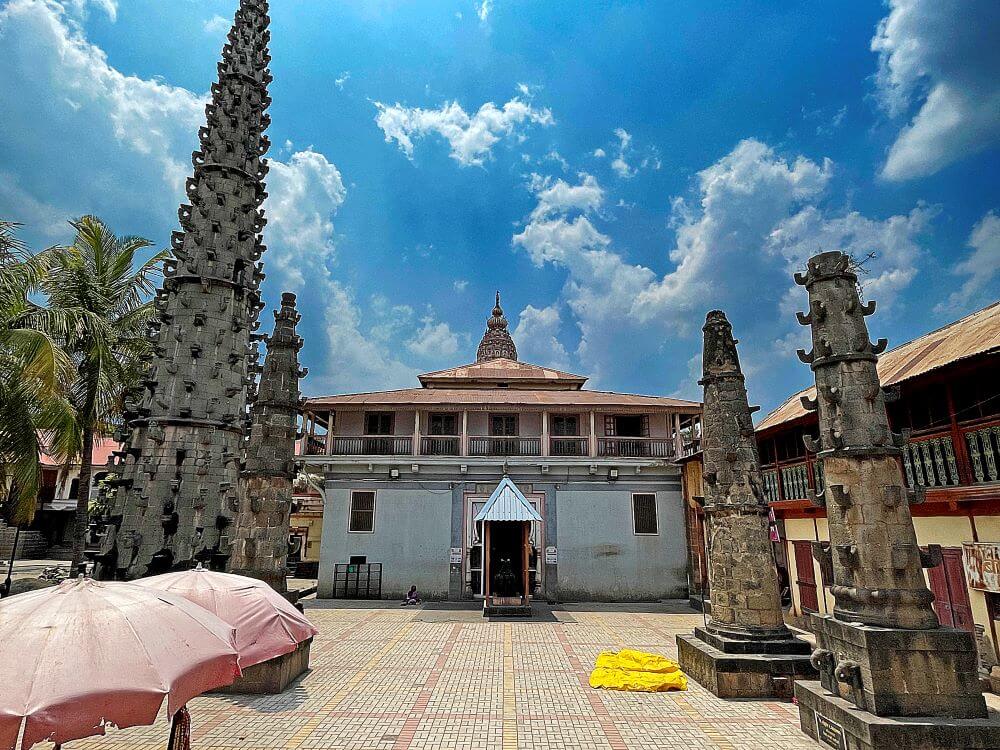
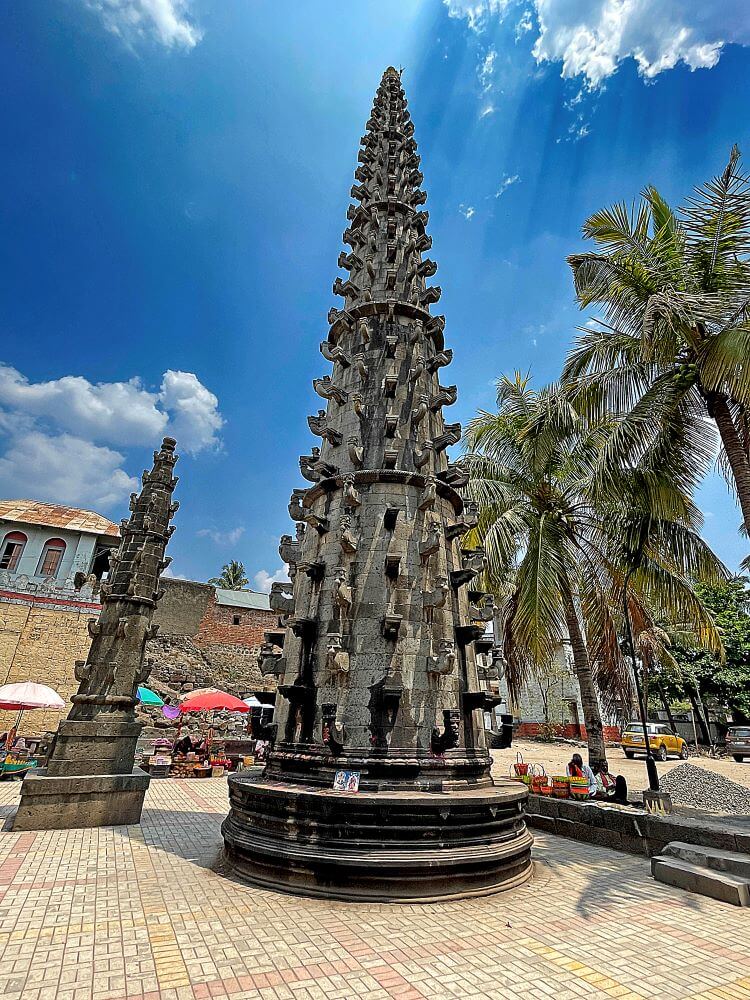
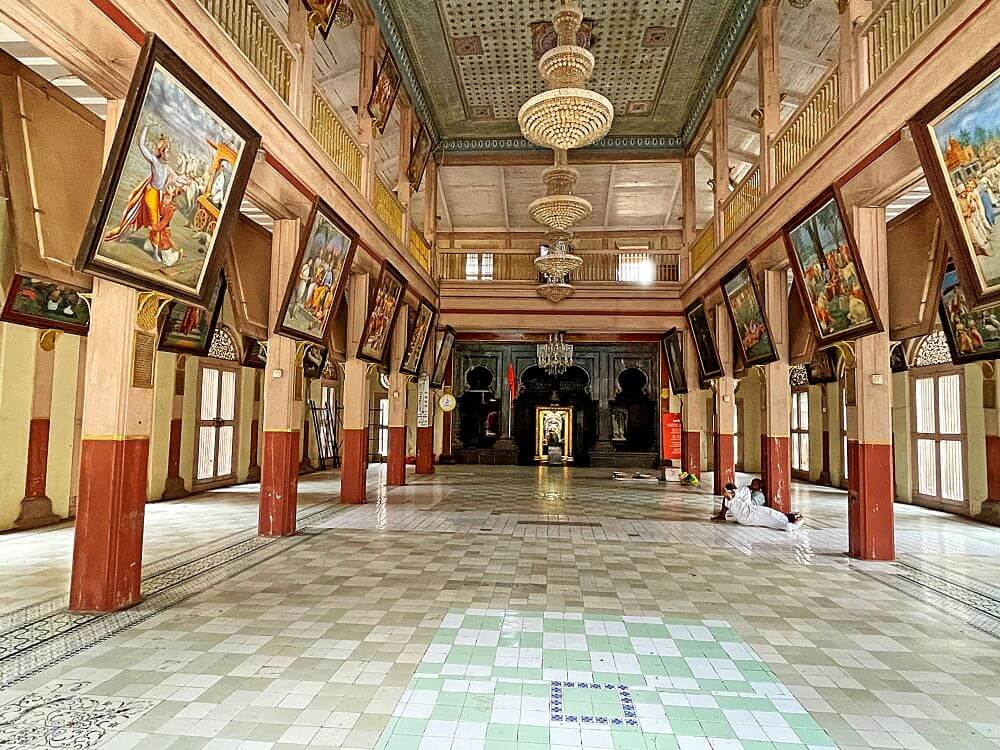
There are two temples of Yamai Devi in Aundh village and on the hill near the village. The temple in the village was built by Bhagwanrao Pantpratinidhi and is located near his palace. In front of the east-facing temple, there are four grand lamp towers (Deepmalas), one of which is approximately 65 feet tall. It is said that this is the tallest lamp tower in Maharashtra. In the temple premises, there is a sculpture of the demon Aundhasur. The assembly hall (Sabhamandap) of this temple is made of wood, and the idol of the Goddess is carved in black stone and seated within a silver arch (Prabhaval). There are two ways to reach the temple on the hill from Aundh village. One is the old stairway path consisting of 433 steps. The other is a newly constructed asphalt road through which vehicles can go directly to the temple.
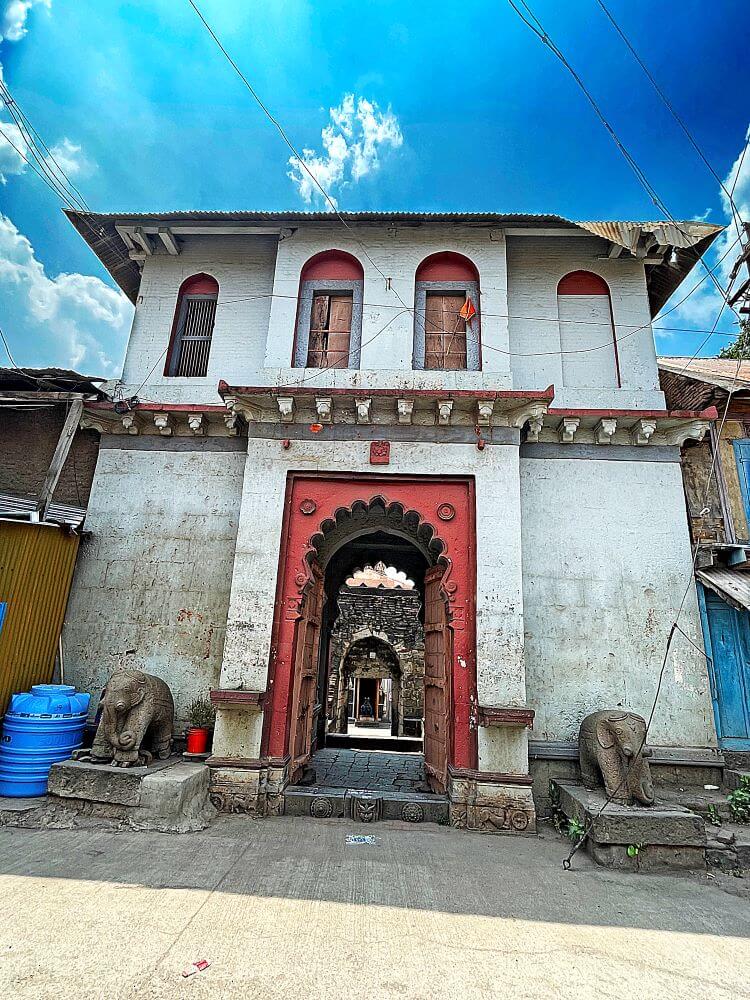
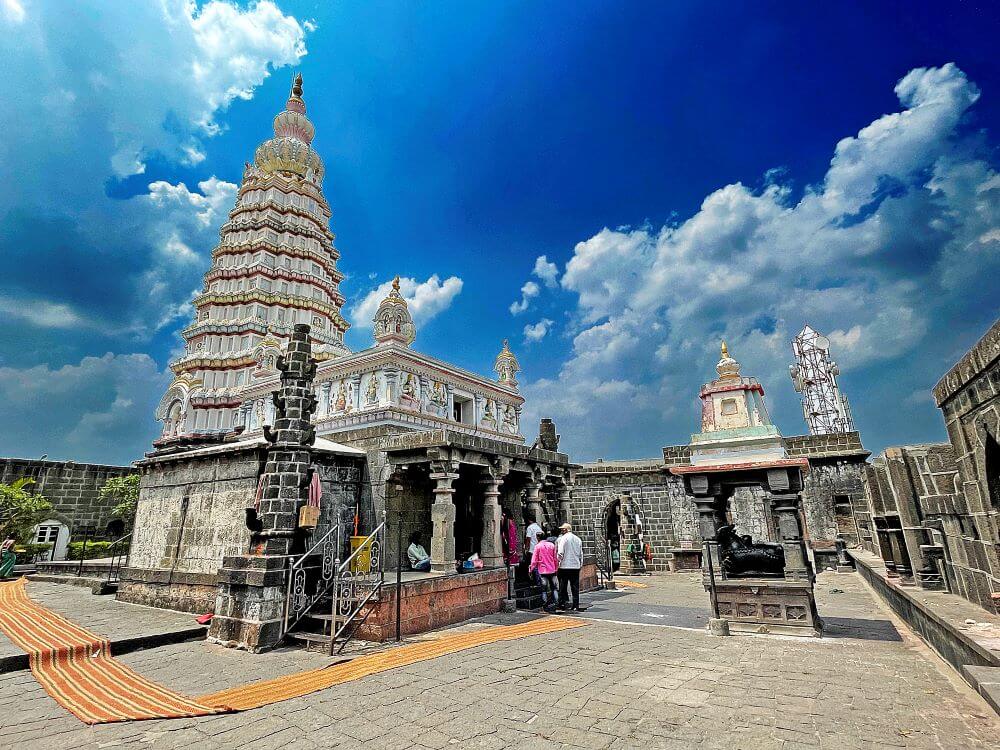
The original temple of the Goddess on the hill is surrounded by high fortifications, constructed similarly to the Khandoba temple in Jejuri. This fortification has ten bastions and entrances on the south and north sides. Inscriptions on the east and north sides of the fortification record the construction of the temple and the wall. One can enter the temple premises through the northern entrance. Inside the fortification, there are nine alcoves (Ovaryas) containing marble idols of various deities. The main temple stands on a plinth one to one and a half meters high and is of Hemadpanti architecture. The temple is beautifully painted, and great care has been taken to ensure that the sculptures are not damaged during this process. The sculptures here include idols of many gods and goddesses along with the Dashavatara. The spire features intricate carvings of vines, flowers, and animals.
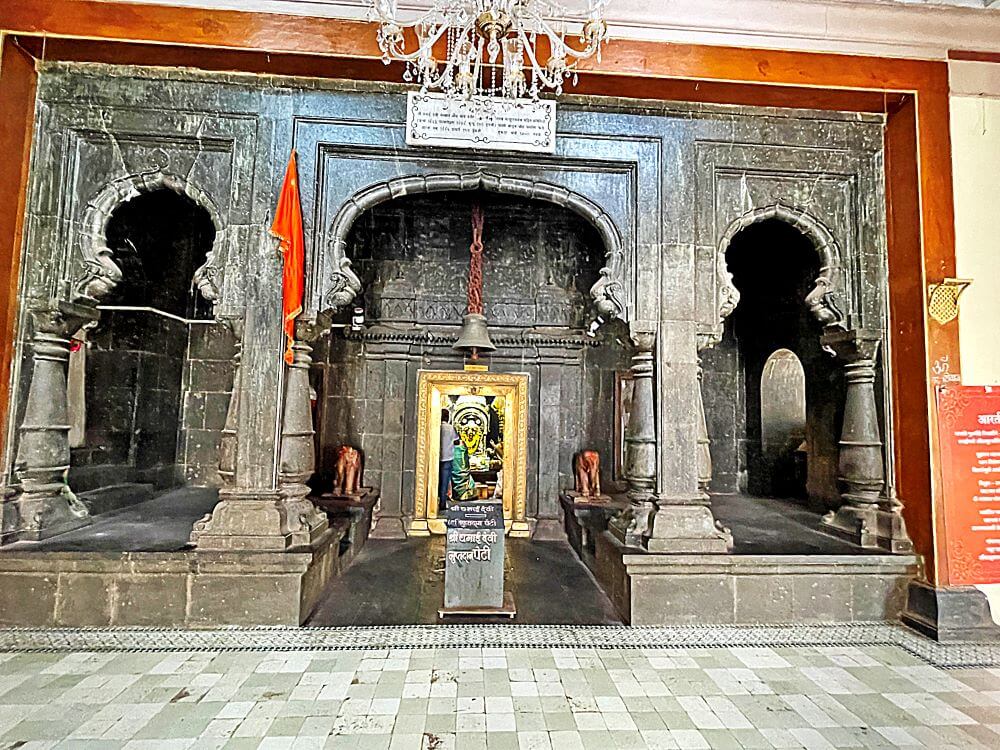
In front of the main temple is the Nandi Mandap. There are tall lamp towers on both sides of this Nandi Mandap. The temple structure consists of an assembly hall and a sanctum sanctorum (Garbhagriha), with carvings on the ceiling of the assembly hall. The idol of Yamai Devi in the sanctum, adorned in a silver arch, is unique and about five feet tall. The idol is four-armed (Chaturbhuj), holding a trident, mace, arrow, and a leaf-shaped vessel. There is a Shiva Linga in front of this idol. There are stairs on both sides of the entrances to reach the high fortification around the temple. From this fortification, one can enjoy a panoramic view of the entire Aundh village and the surrounding area. The presence of wind turbines everywhere makes this region appear even more beautiful.
In the temple premises, apart from the Goddess’s temple, there is another temple. Although it is a temple of Dattatreya, it does not contain an idol of Dattatreya but a Linga. The Linga represents the form of Dattatreya, containing the three seats of Brahma, Vishnu, and Mahesh; such a temple is considered rare. It is said that these temples date back to the Chalukya period.
A grand festival is held here during Navratri. In this festival, Gondhalis, Dabris, cleaning staff, and torchbearers have the honor of serving. On the full moon day of the month of Paush, a two-day fair is held as a victory celebration for the slaying of Aundhasur. Devotees from Maharashtra and outside the state come to this fair. On the first day, all the lamp towers are illuminated, and the Goddess’s palanquin procession is taken out. The Goddess is adorned with a nose ring, a necklace (Dorla), a Lakshmi necklace, silver eyes, and a silver crown. During this time, the Goddess is worshipped, and a procession is taken out in a chariot. The atmosphere is filled with enthusiasm, and the showering of Gulal and coconut pieces makes the surroundings vibrant.
This sacred temple stands as a testament to deep spiritual devotion, ancient architectural grandeur, and rich local cultural traditions.
The sanctum sanctorum houses the divine idol consecrated according to ancient Vedic traditions, surrounded by serene courtyards and traditional temple architecture.
Navratri, Maha Shivratri, Annual Temple Jatra & Deepotsav
Compare and book flights, secure top-rated local hotels near the temple, hire reliable guides, and rent cars instantly.
Extend your pilgrimage by visiting other highly sacred temples located nearby.


Add ₹999 more to unlock FREE SHIPPING!
Your sacred cart is currently empty.
Shop Photo FramesFill in your delivery details below to place your order.
Add comment