
Add ₹999 more to unlock FREE SHIPPING!
Your sacred cart is currently empty.
Shop Photo FramesThe Siddheshwar Mahadev Temple, located in the village of Kuroli Siddheshwar in the Khatav taluka of Satara district, is highly renowned. Every year, a month-long fair is held here from Kojagiri Purnima to Kartik Purnima. This is considered one of the major pilgrimages in the Satara district. A unique feature of this festival is that once a vow made to Siddheshwar Mahadev is fulfilled, devotees celebrate by setting off fireworks. This distinct tradition of bursting fireworks upon the fulfillment of a vow is rarely seen elsewhere.
The legend of the temple states that about ๔๐๐ years ago, a saintly man named Ram Swami lived in the village of Kuroli. His father’s name was Gangadhar Gosavi. Ram was the eldest son of Gangadhar Pant. Seeing his sharp intellect, his father provided him with a high-level education. Consequently, he secured a prestigious position in the court of Adil Shah of Bijapur. However, as Ram Swami’s nature was inherently spiritual, he did not find satisfaction in serving the Yavanas; thus, he left his job and returned to Kuroli to take up farming. One day, while ploughing his field, his ploughshare got stuck in the soil. After struggling to remove it, the Swami went home. That very night, Lord Mahadev appeared to him in a dream and commanded him to build a temple where his presence resided in the field. Upon searching as instructed in the dream, he discovered a Shiva Linga in the ground. Subsequently, the Swami built a temple there, which is the Siddheshwar Mahadev Temple of today.
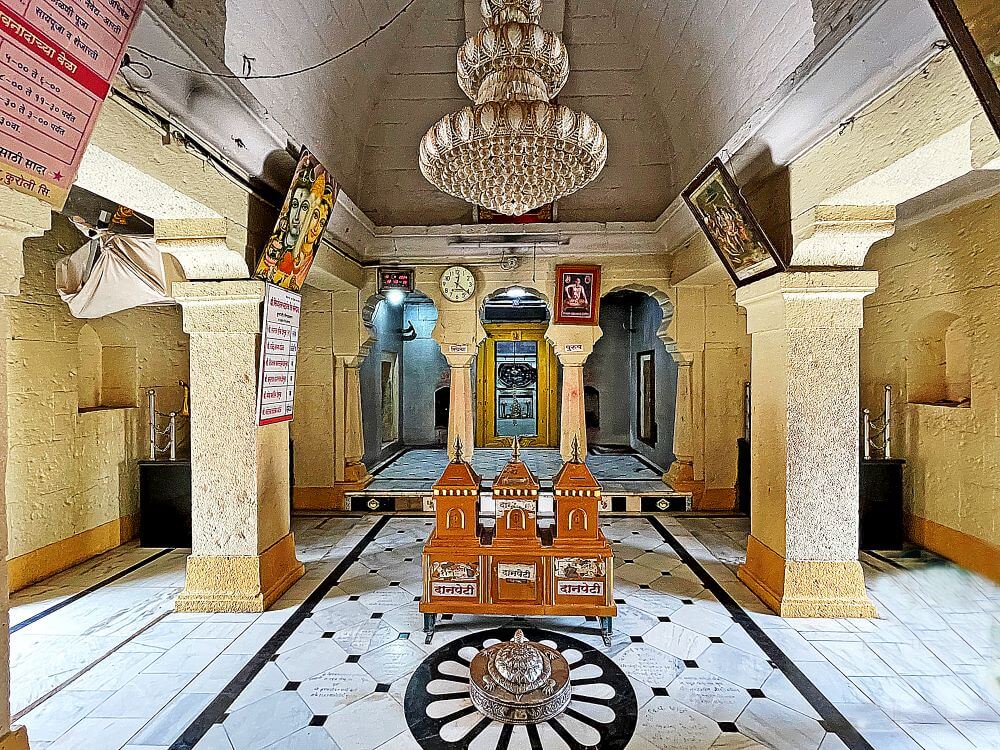
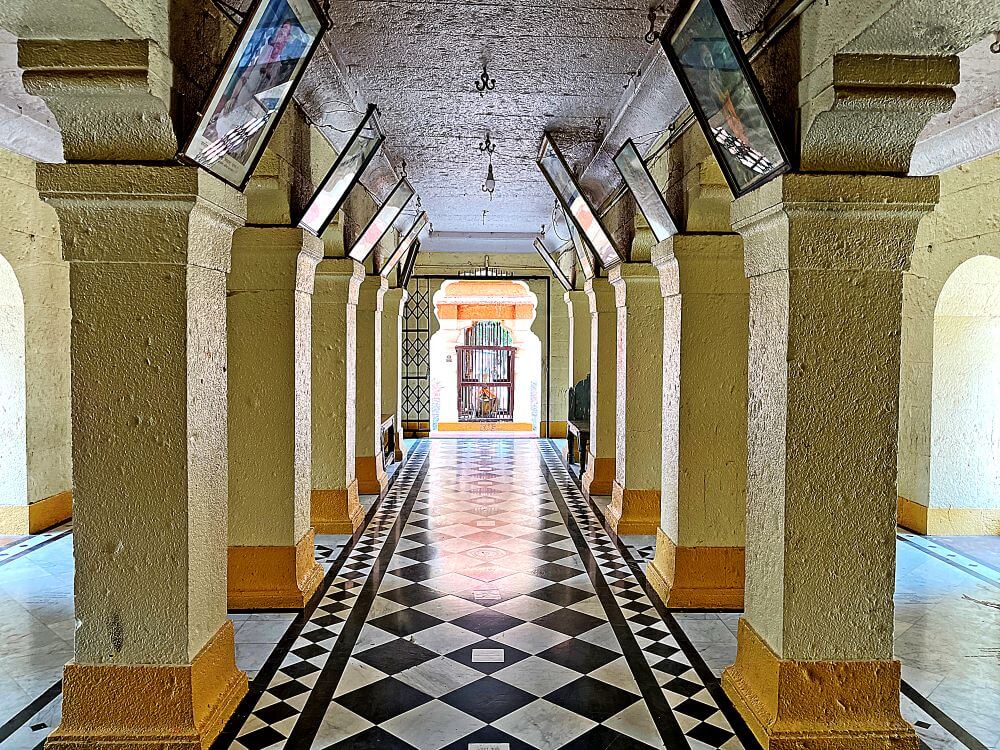
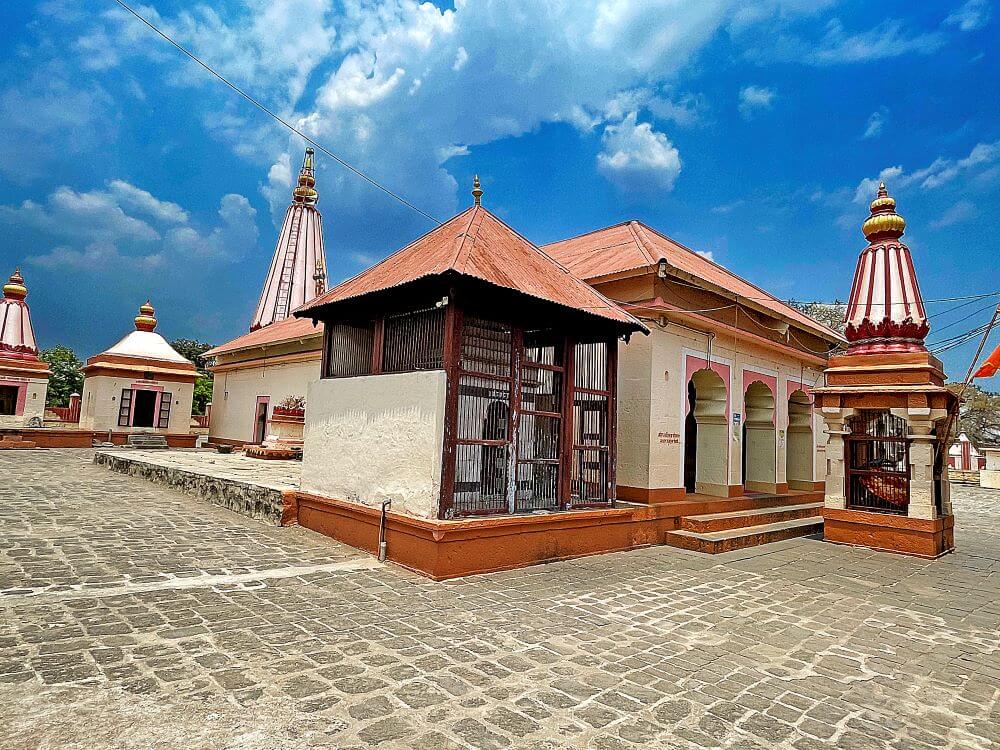
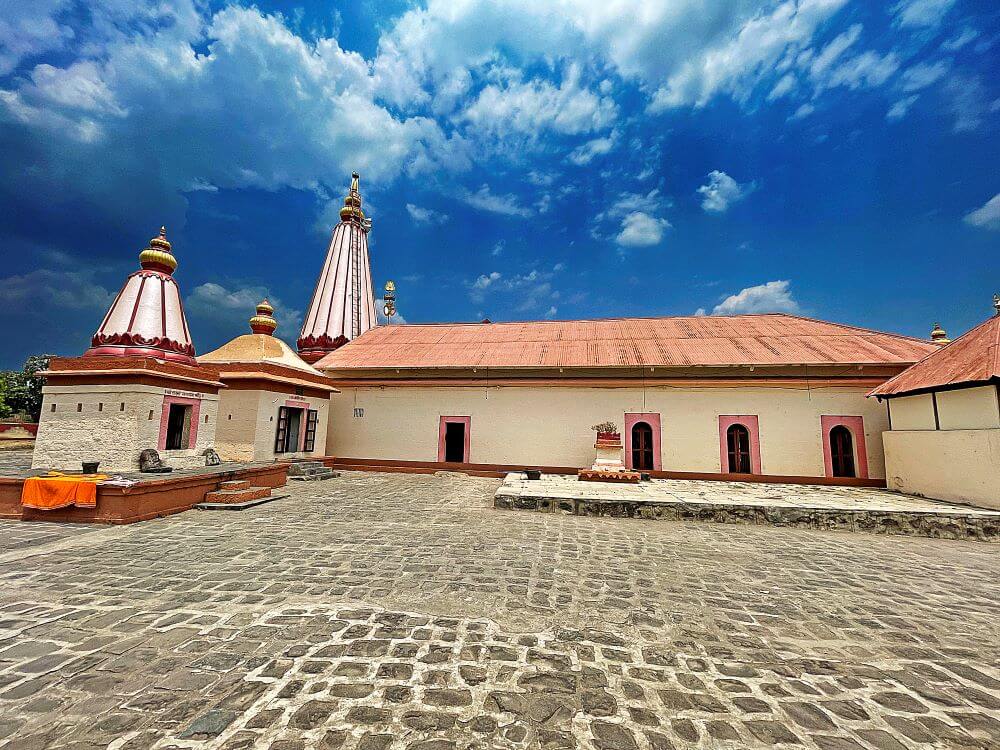
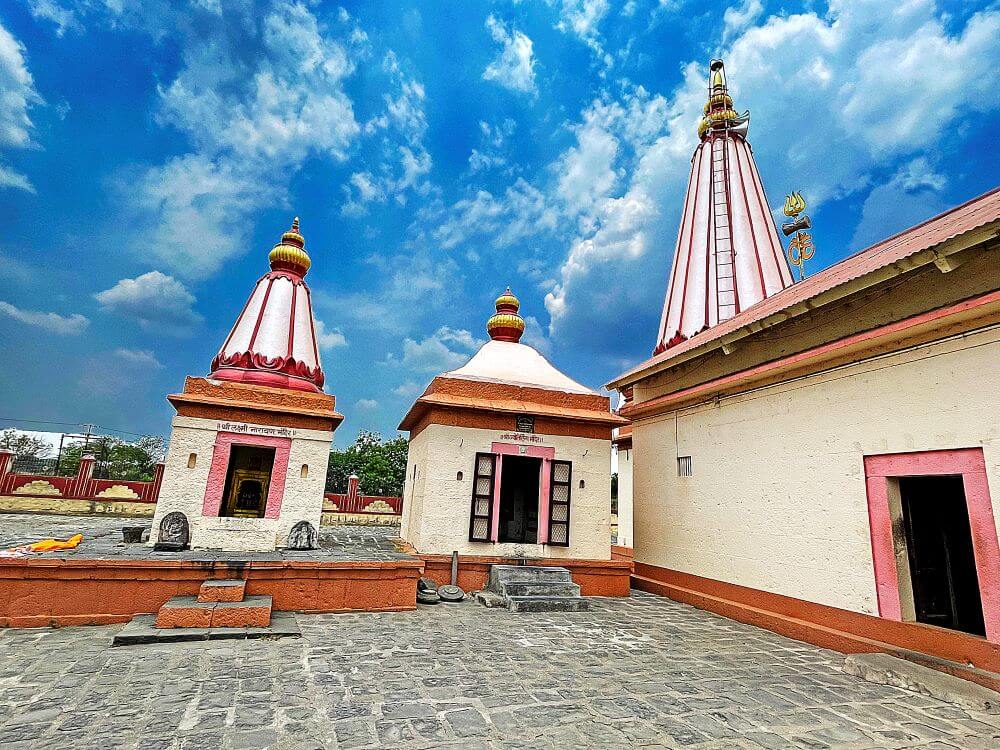
One can reach the village of Kuroli via Vaduj on the Satara-Rahimatpur road. The Siddheshwar Temple, situated at the entrance of the village, is built in the Chalukya style and consists of a Nandi Mandapa, Garbhagriha (sanctum sanctorum), Antarala (vestibule), and a Sabha Mandapa (assembly hall). The entrance to the assembly hall is made of wood. In front of the main temple is the Nandi Mandapa, where the stone Nandi in the center is covered with brass plating. There is a Deepmala (lamp tower) in the courtyard, and the entire area is paved. The assembly hall is rectangular and about ๙ meters long, featuring ๑๔ square stone pillars. Due to the painting and the chandeliers installed in various places, this assembly hall appears quite distinctive.
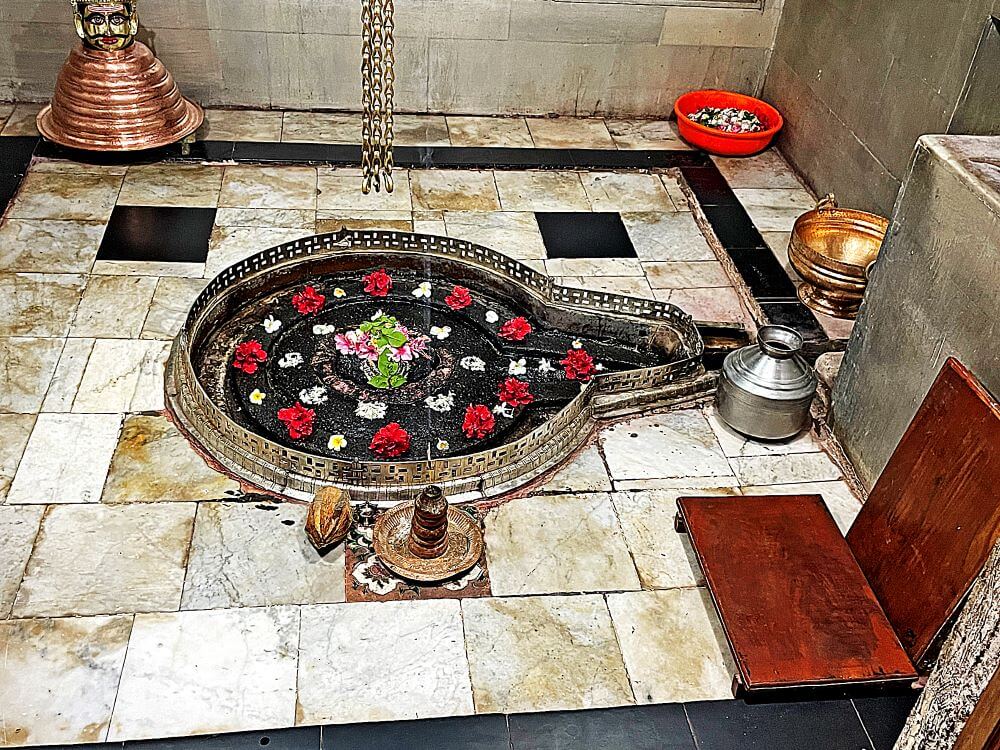
The entrance to the Antarala is covered with brass plating. In the northern niche, there are the Padukas (footprints) of Shri Ram Swami. The doorframe of the Garbhagriha also features brass plating, with an image of Lord Ganesha on the Lalatbimba (lintel) and a Kirtimukha at the bottom. In the southern niche of the entrance, there is an idol of Ambabai, and in the northern niche, an idol of Ganapati. Inside the Garbhagriha, there is a Swayambhu (self-manifested) Shiva Linga made of a single stone. A mark on the Linga is said to be where the ploughshare struck it. Around this Shiva Linga, there is an ornate artwork made of silver plating. A unique characteristic of this Shiva Linga is that when an Abhisheka (ritual bathing) is performed with a stream of water from a Kamandalu, a sound resembling a whistle is heard, which is known as Shiv-Naad. Behind the Shiva Linga, in a niche in the wall, is an idol of Ganesha.
In a stone room adjacent to the Garbhagriha, a wooden cot with bedding is kept for the rest of Siddheshwar Maharaj. A copper vessel and cup are kept there for the Maharaj to drink water. In the room opposite, the Maharaj’s crown and items required for festivals are stored. Around this temple, there are smaller shrines dedicated to deities such as Lakshminarayan, Jyotirlinga, Kalbhairav, Vitthal, Suryanarayan, and Khandoba. Behind the main temple, there is a square stepwell (Barav) with stairs leading down.
According to historical records, Chhatrapati Shahu Maharaj renovated this temple. Additionally, the Pant Pratinidhis of Aundh started an annual grant for the temple’s lighting and maintenance. In the temple premises, there is also the Samadhi of Parashuram Pant Airwadkar, a devotee of Siddheshwar. Every Shravan Monday, a large number of devotees come here for Darshan.
The main festival here is the month-long fair held annually from Kojagiri Purnima to Kartik Purnima. During this period, lakhs of devotees come for the Darshan of Siddheshwar. During the pilgrimage, devotees observe a month-long fast. On Kartik Purnima (Tripurari), a Dahi Handi program is held here. At this time, the Palkhi (palanquin) of Siddheshwar Maharaj is taken out. It features a mask of Siddheshwar Maharaj decorated with various ornaments. The uniqueness of the Palkhi is that it is carried at a very high speed, and many devotees run alongside it. At this time, a grand display of fireworks begins as part of the vow fulfillment by devotees, which lasts for two to three hours.
This sacred temple stands as a testament to deep spiritual devotion, ancient architectural grandeur, and rich local cultural traditions.
The sanctum sanctorum houses the divine idol consecrated according to ancient Vedic traditions, surrounded by serene courtyards and traditional temple architecture.
Navratri, Maha Shivratri, Annual Temple Jatra & Deepotsav
Compare and book flights, secure top-rated local hotels near the temple, hire reliable guides, and rent cars instantly.
Extend your pilgrimage by visiting other highly sacred temples located nearby.


Add ₹999 more to unlock FREE SHIPPING!
Your sacred cart is currently empty.
Shop Photo FramesFill in your delivery details below to place your order.
Add comment