
Add ₹999 more to unlock FREE SHIPPING!
Your sacred cart is currently empty.
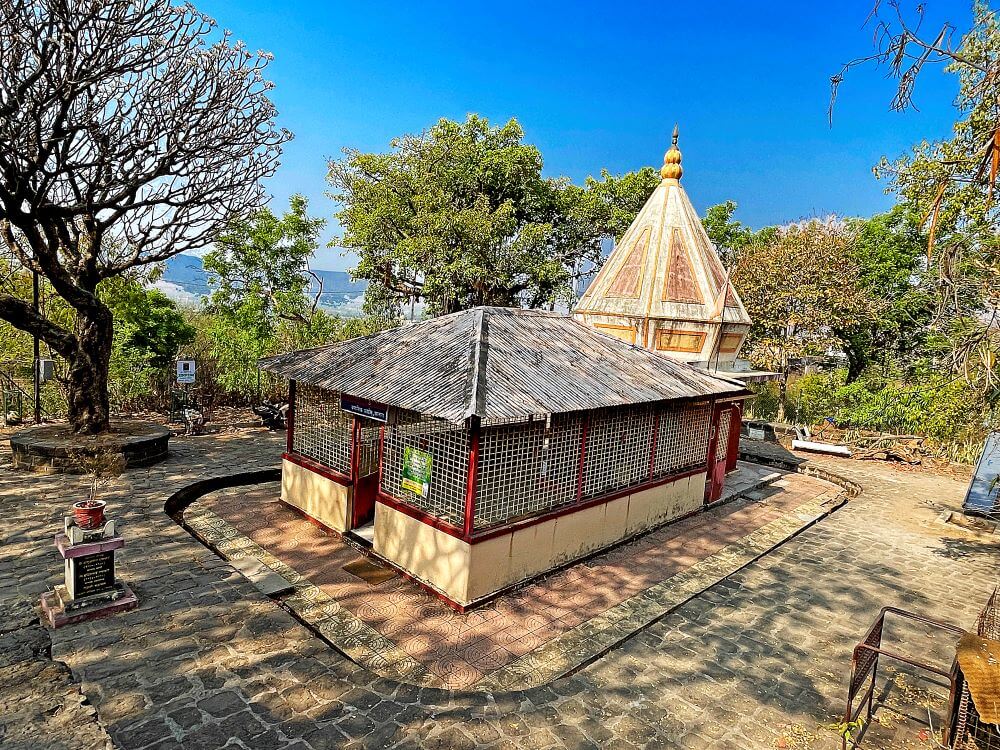
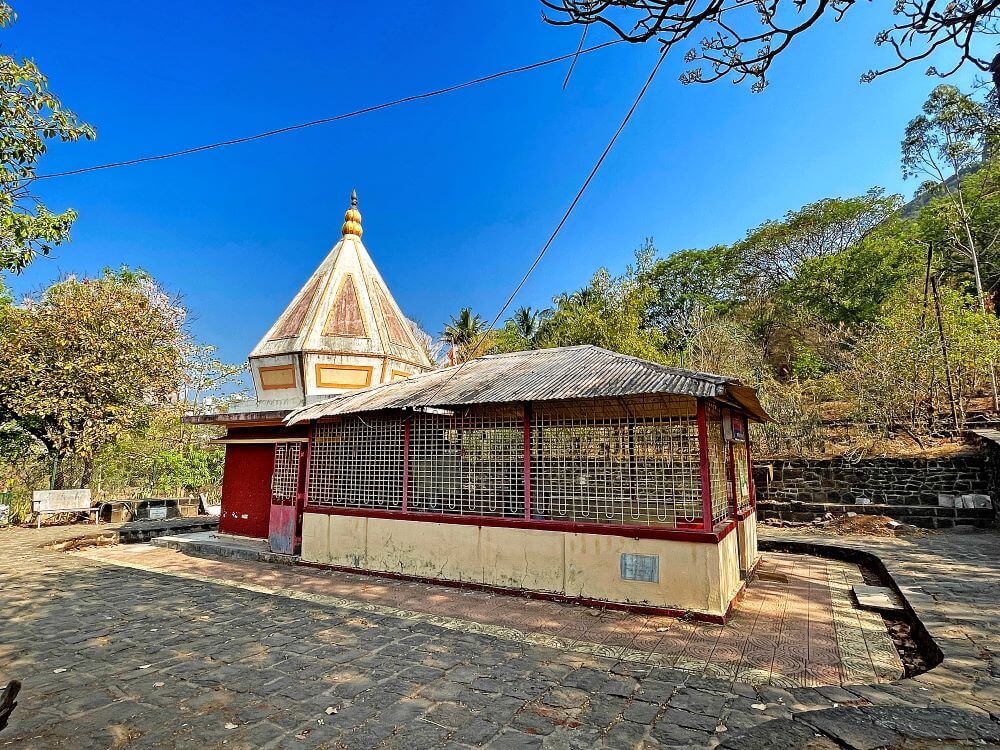
Shop Photo FramesThe Khinditil Ganpati (Ganpati in the mountain pass) and the nearby Kuraneshwar Mahadev Temple, situated at the foothills of the famous Ajinkyatara Fort in Satara city, are renowned pilgrimage sites. These ancient temples, sanctified by the footsteps of Chhatrapati Shivaji Maharaj, are places of deep faith for many devotees. It is said that the original idol in the sanctum sanctorum of the Ganpati temple is concealed behind a wall, and a new idol placed in front of this wall is worshipped here.
When Chhatrapati Rajaram Maharaj made Satara his capital in 1698, many devotees used to visit these temples at the foothills of the Ajinkyatara Fort, making the area well-known. Aurangzeb, determined to destroy the Maratha Empire, sought to capture Satara and set up his base at Karanje village, north of Satara. His son Azim Shah was stationed in the Urmodi valley, while Tarbiyat Khan’s forces were positioned near the Sarjerao pasture up to Khindwadi and beyond the eastern slopes of the fort. Thus, Aurangzeb had besieged the fort from all sides.
After the siege, to prevent the desecration of the Khinditil Ganpati idol by Aurangzeb’s Muslim army, a wall was built in front of the original idol, and a wax idol was installed for worship. Following several battles, the Marathas recaptured Ajinkyatara. Once the situation stabilized, devotees wished to uncover the original idol; however, it is said that Ganpati appeared to the priest in a vision, instructing him not to attempt to remove the wall and to continue worshipping the current idol, assuring him that His presence dwells within it as well. Since then, the original idol remains behind the sanctum wall, and the wax idol is worshipped to this day.
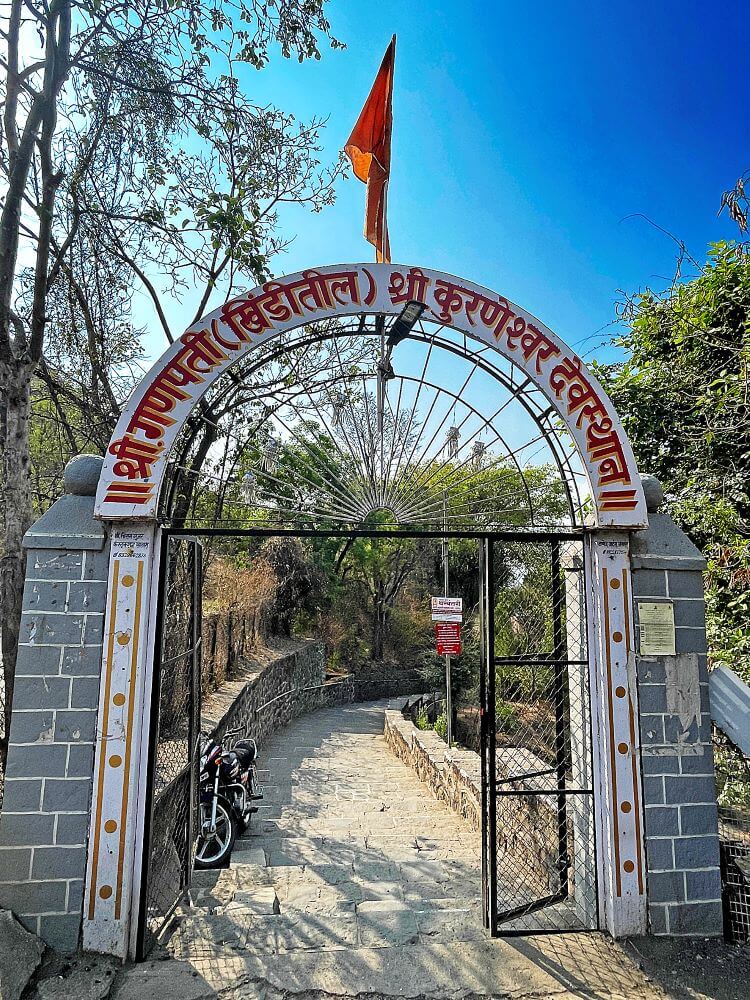
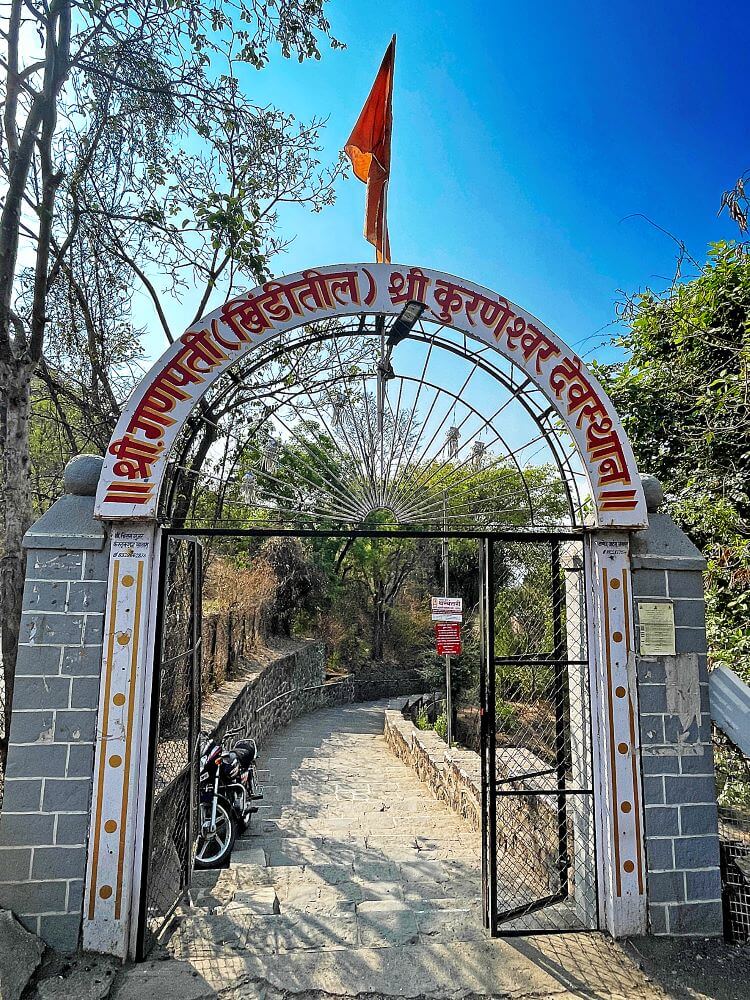
After exiting a tunnel on the road from Satara city towards Sajjangad, one finds the Khinditil Ganpati and Kuraneshwar Mahadev temple site right along the route. Descending about 100 steps from an archway on the road, one reaches the Ganpati temple nestled in dense greenery. The temple is structured with a Sabhamandap (assembly hall) and a Garbhagriha (sanctum sanctorum). In the Sabhamandap, there is a metal idol of Mushaka, Ganpati’s vehicle, holding a laddu. Beyond this, in the sanctum, is the vermilion-anointed idol of Ganpati. The idol is adorned with a silver crown, and the back wall is decorated with intricate silver plating. The temple has a tiled roof, and the shikhar (spire) above the sanctum features small niches housing various deities.
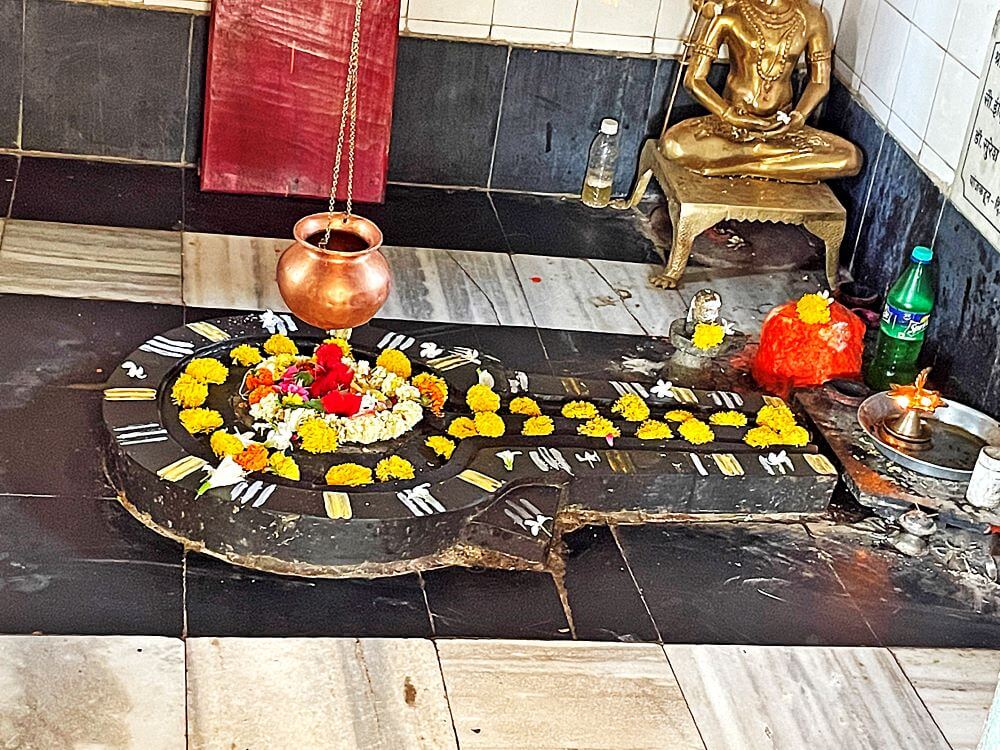
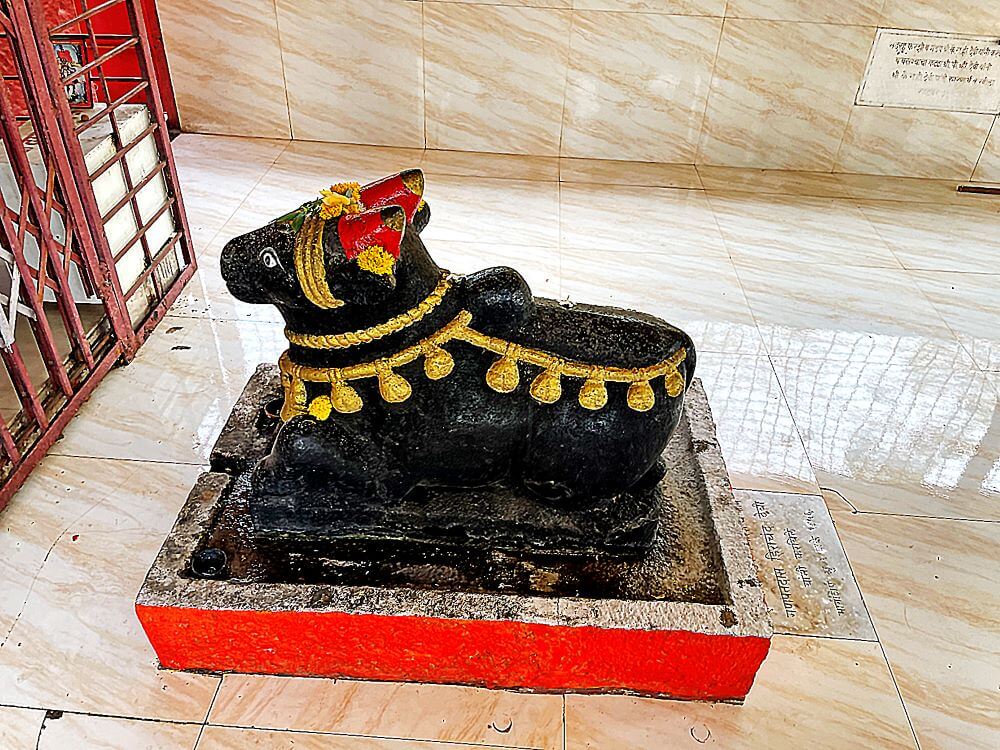
Behind the Ganpati temple, near a hall-like building, a path of stone steps leads further down to the Kuraneshwar Mahadev Temple. The entire area has been systematically developed by the temple committee, making it an attraction for both devotees and tourists. The surroundings are filled with arches of lush vines, wood carvings crafted from tree trunks, fountains, and abundant greenery. In front of the Kuraneshwar temple stands an ancient Tulsi Vrindavan. Upon entering the temple, one sees a Nandi idol carved from a single piece of black stone in the Sabhamandap, and the Kedareshwar Mahadev Linga in the sanctum. The temple spire is dome-shaped. Additionally, there is a Dattatreya temple in the vicinity.
The temple premises are home to mango, amla (Indian gooseberry), gulmohar, chafa (plumeria), and many other trees. There is an ancient tradition in Indian culture of dining under an amla tree, known as ‘Avali Bhojan’. The temple committee has made arrangements for those who wish to partake in such a meal. It is believed that sitting in the shade of an amla tree provides positive energy due to the vibrations emitted by the tree. Trees bearing mature amla fruits are considered to possess greater energy. In this regard, the amla tree is worshipped, and ‘Avali Bhojan’ is performed during the month of Kartik. It is believed that Lord Vishnu resides in this tree. Lord Vishnu is the deity of movement, vibrations, and consciousness. The science behind ‘Avali Bhojan’ suggests that one should sit under the tree, consume amla, and cook some food under its shade to benefit from the proximity to the tree.
Before being deposed, King Pratap Singh had initiated an annual grant (varshasan) for the maintenance of almost all temples in Satara. Accordingly, an annual grant of 28 rupees was started for the Ganpati and Kuraneshwar temples. Following the Maratha era, this grant continued under the British government and is still received from the Government of Maharashtra after independence. Grand five-day festivals are celebrated here on Bhadrapad Shukla Chaturthi and Magh Shukla Chaturthi.
This sacred temple stands as a testament to deep spiritual devotion, ancient architectural grandeur, and rich local cultural traditions.
The sanctum sanctorum houses the divine idol consecrated according to ancient Vedic traditions, surrounded by serene courtyards and traditional temple architecture.
Navratri, Maha Shivratri, Annual Temple Jatra & Deepotsav
Compare and book flights, secure top-rated local hotels near the temple, hire reliable guides, and rent cars instantly.
Extend your pilgrimage by visiting other highly sacred temples located nearby.


Add ₹999 more to unlock FREE SHIPPING!
Your sacred cart is currently empty.
Shop Photo FramesFill in your delivery details below to place your order.
Add comment