
Add ₹999 more to unlock FREE SHIPPING!
Your sacred cart is currently empty.
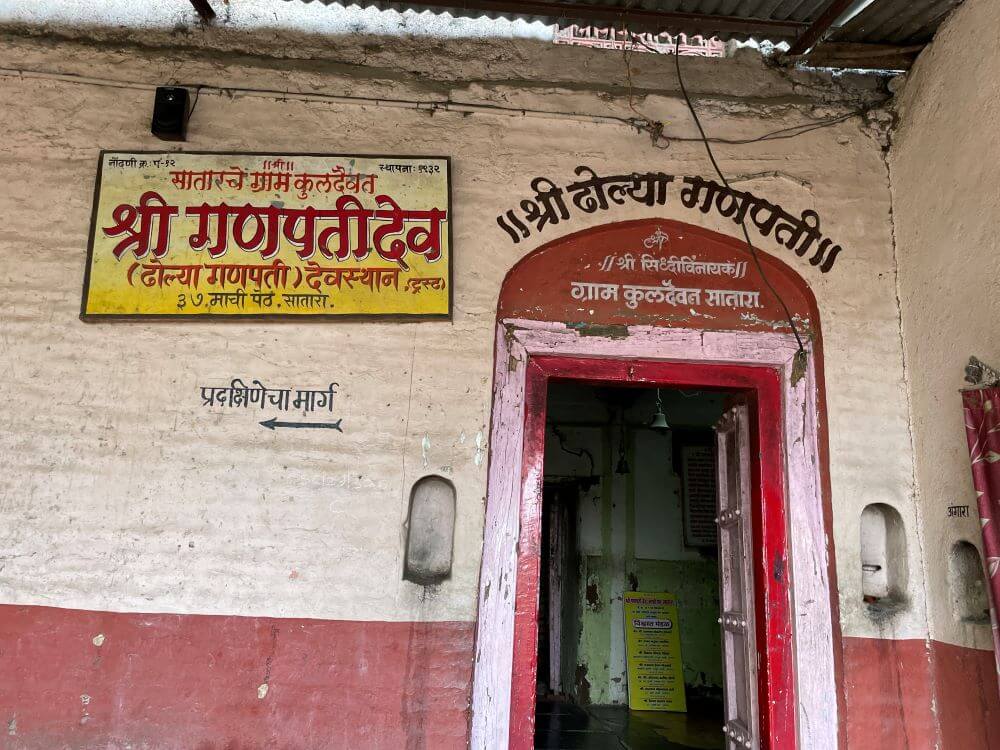
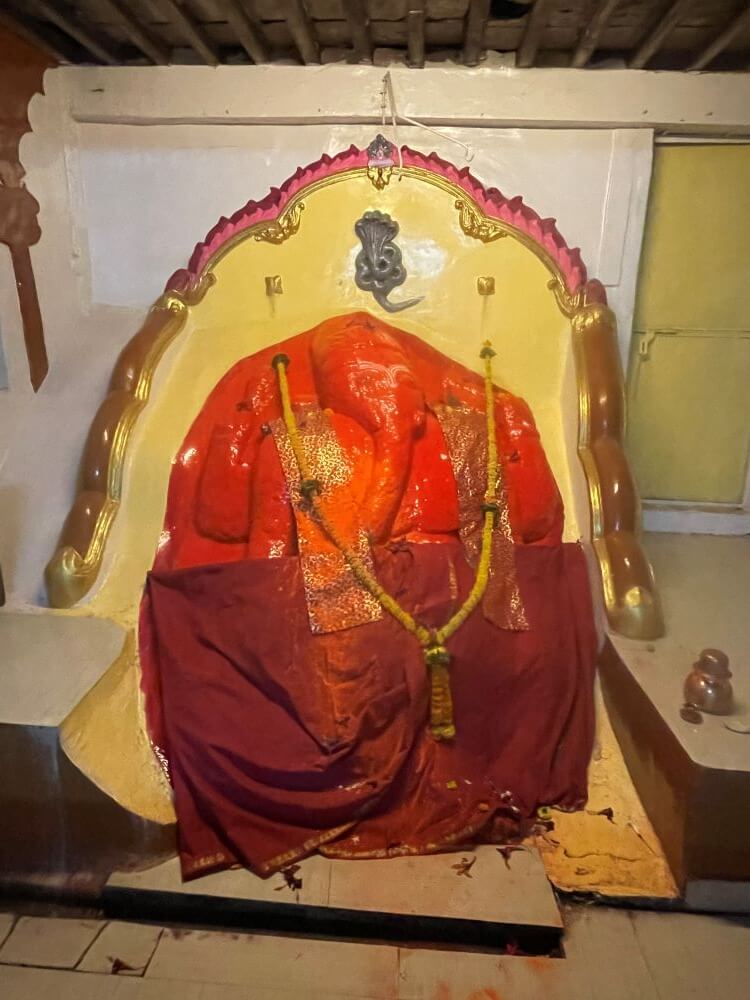
Shop Photo FramesThe Jyeshtharaj Ganpati Temple, situated at the foothills of the Ajinkyatara Fort, is considered the Gramdaivat (presiding deity) of Satara city. This monolithic stone idol, weighing approximately 25,000 kilograms, stands 11 feet tall and is 6.5 feet wide. Due to its massive size, it has earned the name ‘Dholya Ganpati’. The temple was built by King Bhoj of the Shilahara dynasty, and a tradition dating back to ancient times is followed here, where the first Akshata (sacred rice) is offered to this Ganpati before commencing any auspicious work.
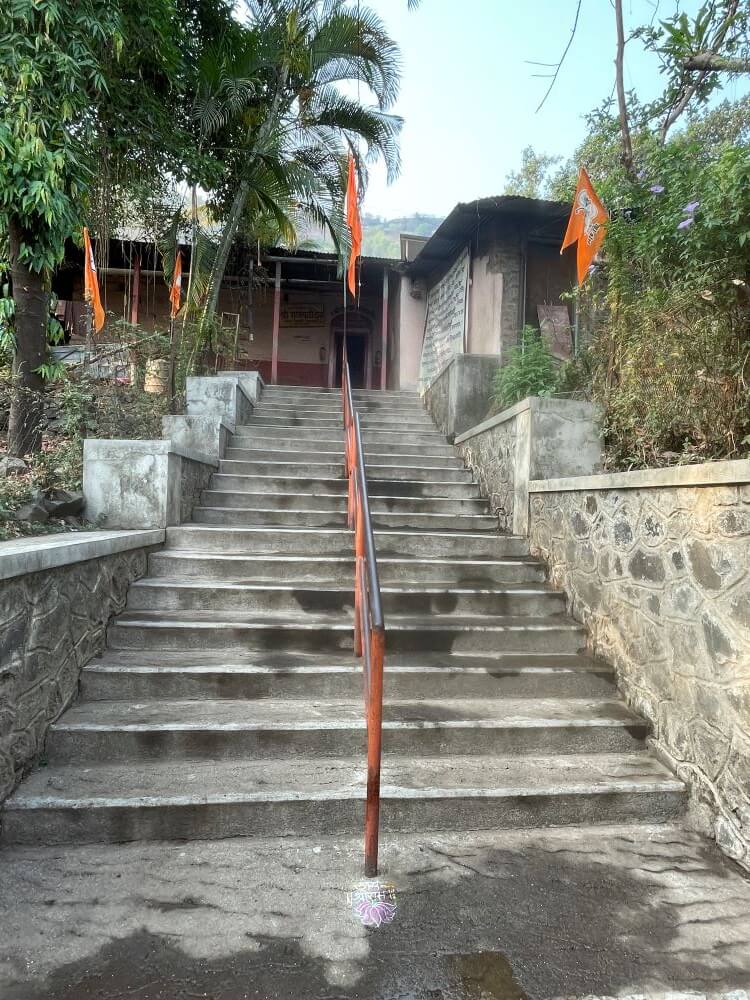
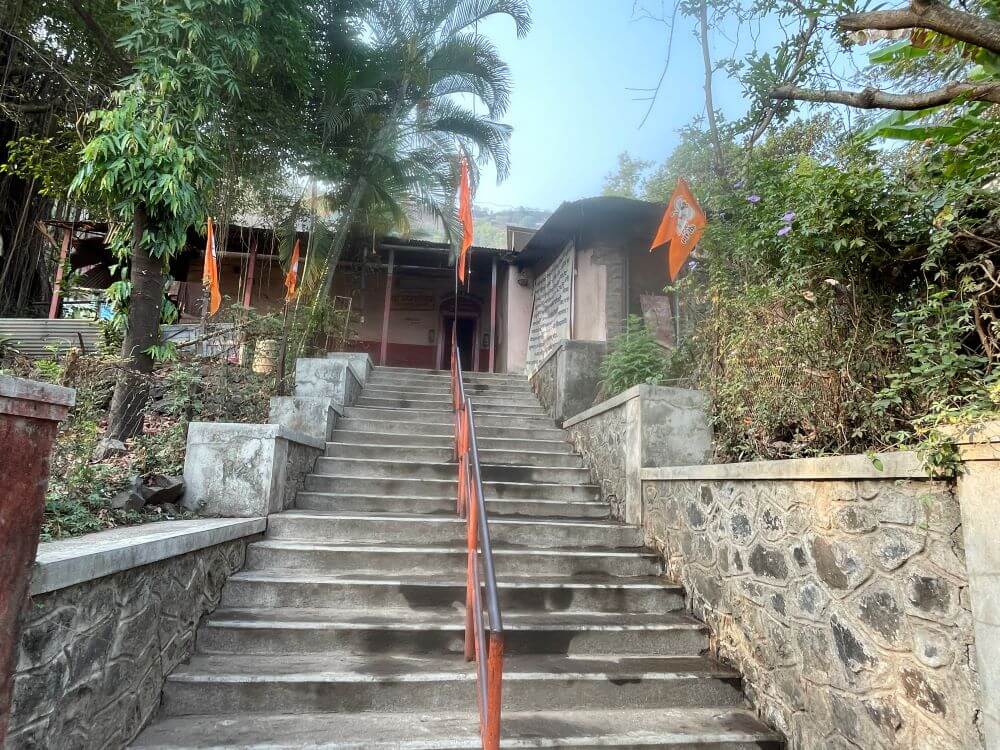
The Jyeshtharaj Ganpati Temple is located on an incline at the foothills of the Ajinkyatara Fort, on the route from the Satara Palace via Yadav Gopal Peth towards the Samarth Temple. Upon seeing the temple, the Ganesha idol appears as if it were installed within a house. The temple does not have a Shikhar (spire); instead, it has a tiled roof similar to a common house. It is believed that the temple was kept without a Shikhar to protect the sanctity of Jyeshtharaj from iconoclasts, as this region witnessed constant warfare during the Mughal era. The temple remains in that same state today. According to historical records, during the reign of Chhatrapati Shahu Maharaj, a separate path was carved through the hills to reach this temple from his Rangmahal Wada and Adalat Wada.
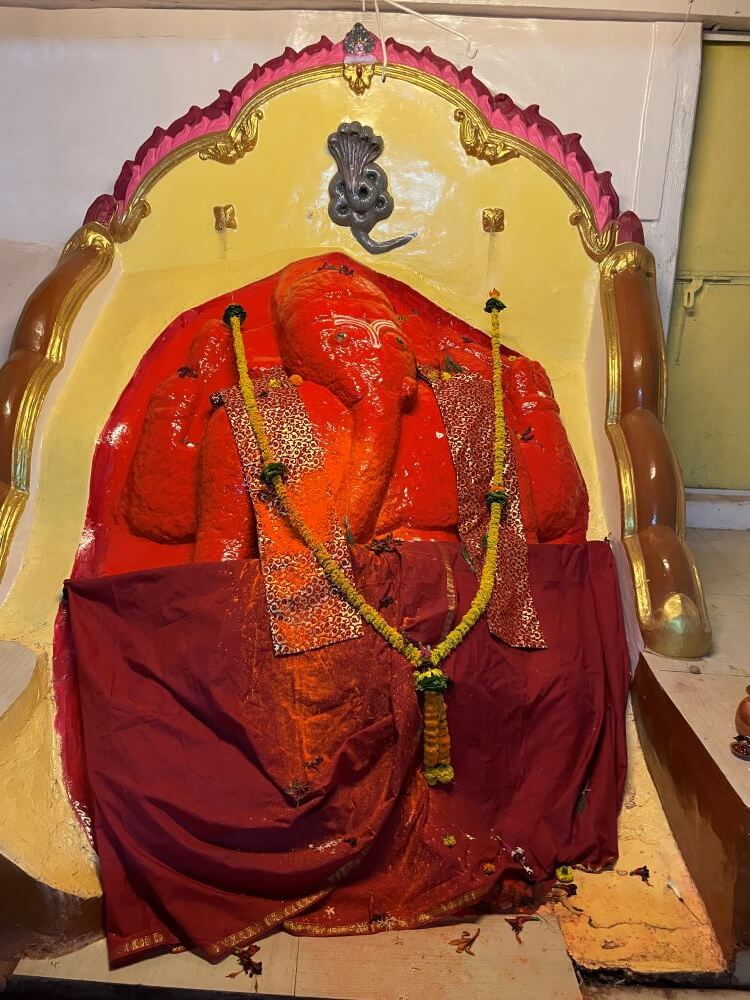
The idol of Ganesha in the Jyeshtharaj temple is made of a single stone, is smeared with vermilion (Shendur), and measures 11 feet in height and 6.5 feet in width. The meditation posture of this Ganesha appears somewhat fierce, and it seems as though his gaze is directed to one side. The trunk is turned to the right, and the Ganpati has a very large belly. Beads were embedded in the eyes of the idol in 1930. A five-headed serpent (Panchmukhi Nag) rests on the forehead of the deity. The idol is Chaturbhuj (four-armed); in one right hand, he holds a lotus, and in the other, a Modak, while one left hand holds a Parshu (axe), and the other is in a blessing posture. The idol is depicted in such a way that the trunk is lifting the Modak from the right hand. Lord Vishnu is seated on the Makhar (ornamental frame) behind Ganpati, and a serpent with its hood raised is also present above his head. Because this idol of Ganpati is somewhat aggressive, robust, and Lambodar (pot-bellied), the villagers of Satara named him ‘Dholya’, a name that remains prevalent today.
It is said about this Ganpati that vermilion had been applied to the idol for hundreds of years. Consequently, the size of the idol kept increasing day by day, making it appear even more magnificent. Over time, the thick layer of vermilion began to peel off. Water from the Ganpati’s Abhishek (ritual bathing) began to seep inside the layer of vermilion surrounding the idol. As the accumulation of water increased inside, it gathered and began to trickle down near the navel of the Ganpati, where the vermilion layer was thinner. In 1934, Kashinath Sahasrabuddhe removed the seven to eight-inch thick layer of vermilion from the idol. This vermilion was transported away in 14 bullock carts. It was then that the devotees were able to see the original idol of Ganpati. The stone from which this monolithic Ganpati idol was carved is rare today, as no hammer can work on this stone; it must be shaped by grinding.
An annual grant of 15 rupees was sanctioned for this temple by the Chhatrapati Kings of Satara. This annual amount of 15 rupees is still provided to the temple by the state government today. The Maghi Ganeshotsav is celebrated on a grand scale in this temple every year. Additionally, various programs are held here on Sankashti Chaturthi, Vinayaki Chaturthi, and Angarki Chaturthi. During these times, a Naivedya of Modaks is offered to Ganpati. This Ganesha is worshipped while wearing silk Sovale (ritual attire). Replicas of this Ganesha are found in many old Wadas in and around Satara, which indicates the long-standing fame of this Ganpati.
This sacred temple stands as a testament to deep spiritual devotion, ancient architectural grandeur, and rich local cultural traditions.
The sanctum sanctorum houses the divine idol consecrated according to ancient Vedic traditions, surrounded by serene courtyards and traditional temple architecture.
Navratri, Maha Shivratri, Annual Temple Jatra & Deepotsav
Compare and book flights, secure top-rated local hotels near the temple, hire reliable guides, and rent cars instantly.
Extend your pilgrimage by visiting other highly sacred temples located nearby.


Add ₹999 more to unlock FREE SHIPPING!
Your sacred cart is currently empty.
Shop Photo FramesFill in your delivery details below to place your order.
Add comment