
Add ₹999 more to unlock FREE SHIPPING!
Your sacred cart is currently empty.
Shop Photo FramesThe village of Yavteshwar is nestled in the lap of the Yavteshwar hill, located to the west of Satara city. Situated at an altitude of 1230 meters above sea level, the Yadava-era Yavteshwar Temple here is famous as a vibrant and powerful abode of Lord Shiva. The fair held here is the first of its kind in this region. During this festival, the palanquin procession departs from the temple and proceeds to a nearby mango tree; after collecting mango blossoms, it returns to the temple. This tree is famously known as the Deva-Amba (Divine Mango Tree).
The legend of the Yavteshwar Temple states that 750 to 800 years ago, a king named Kidwan ruled this region. The king suffered from leprosy, and despite trying many remedies, nothing seemed to work. One day, he came to this hill, which was covered in dense bamboo (Yavat) forests, for a hunt. After the hunt, feeling thirsty, he searched for water and discovered a spring. After quenching his thirst, he washed his hands and face with the water. As soon as the water touched his body, the leprosy on his hands and face vanished. That night, Lord Mahadeva appeared to him in a vision, saying, “I am present a short distance from here. Excavate me and build my temple.” Following this, the king searched for the location and built a temple for Mahadeva. This is the Yavteshwar Temple!
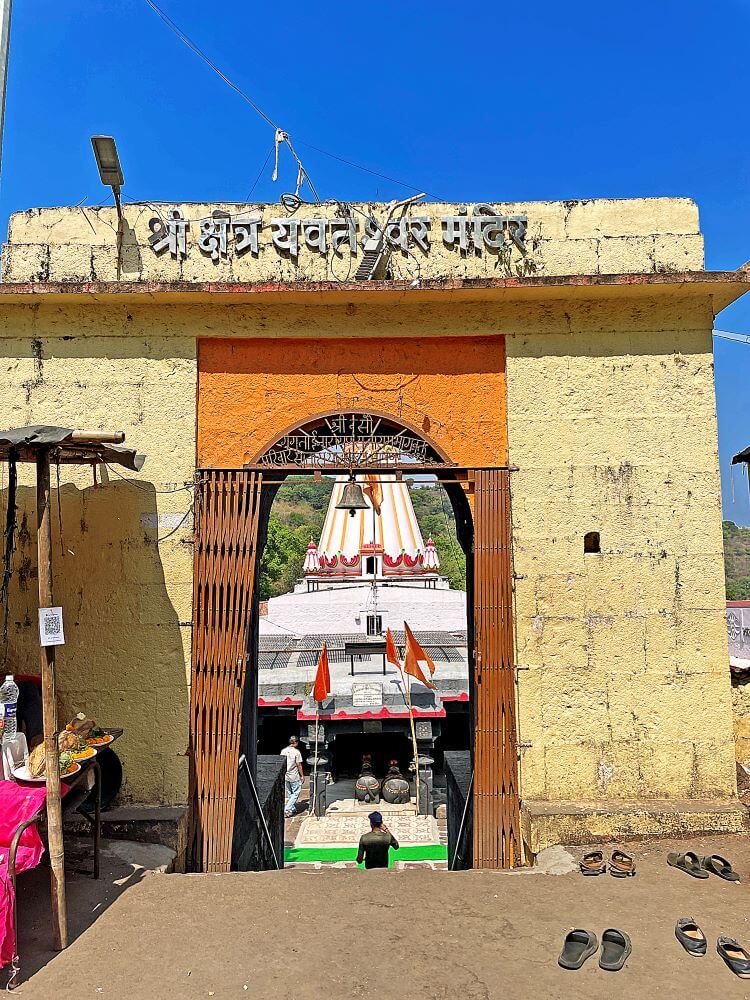
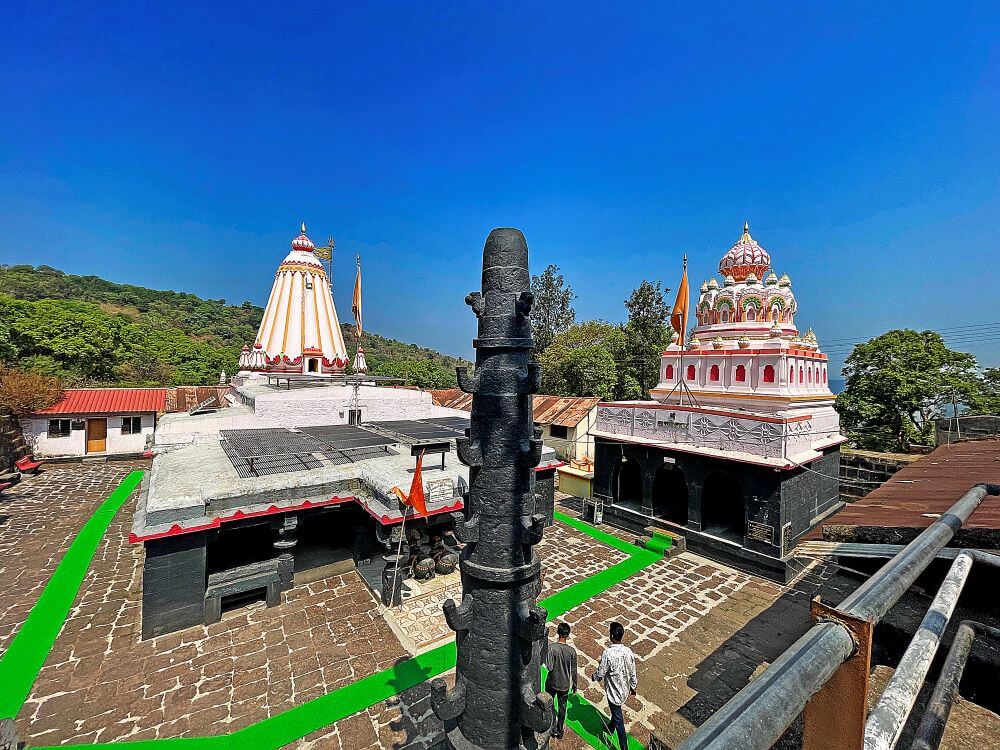
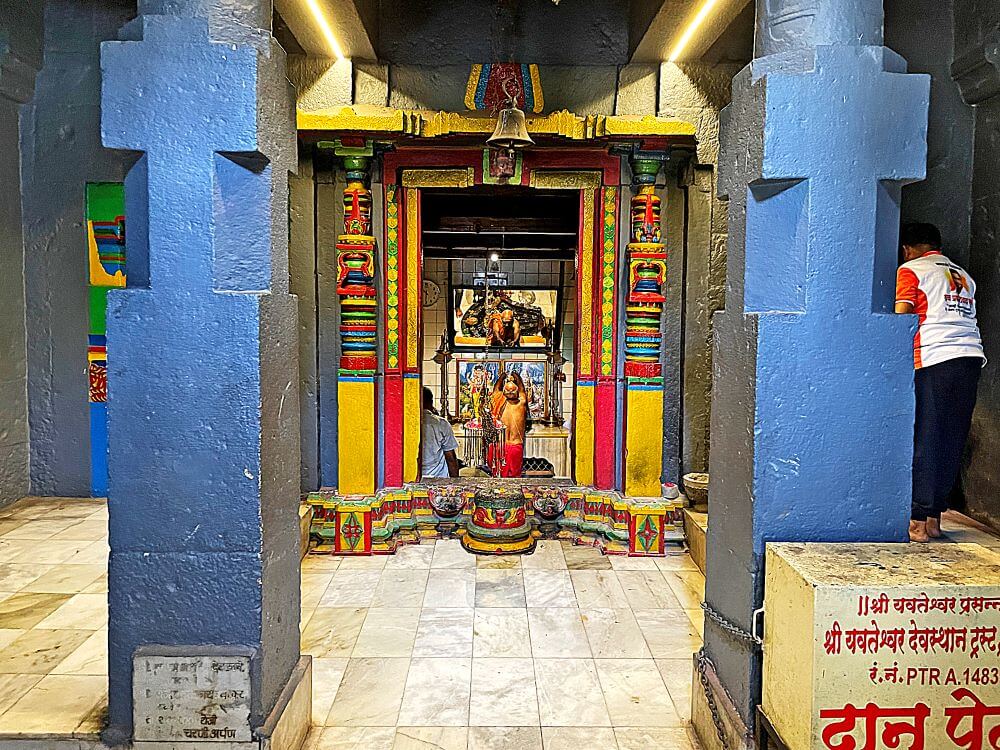
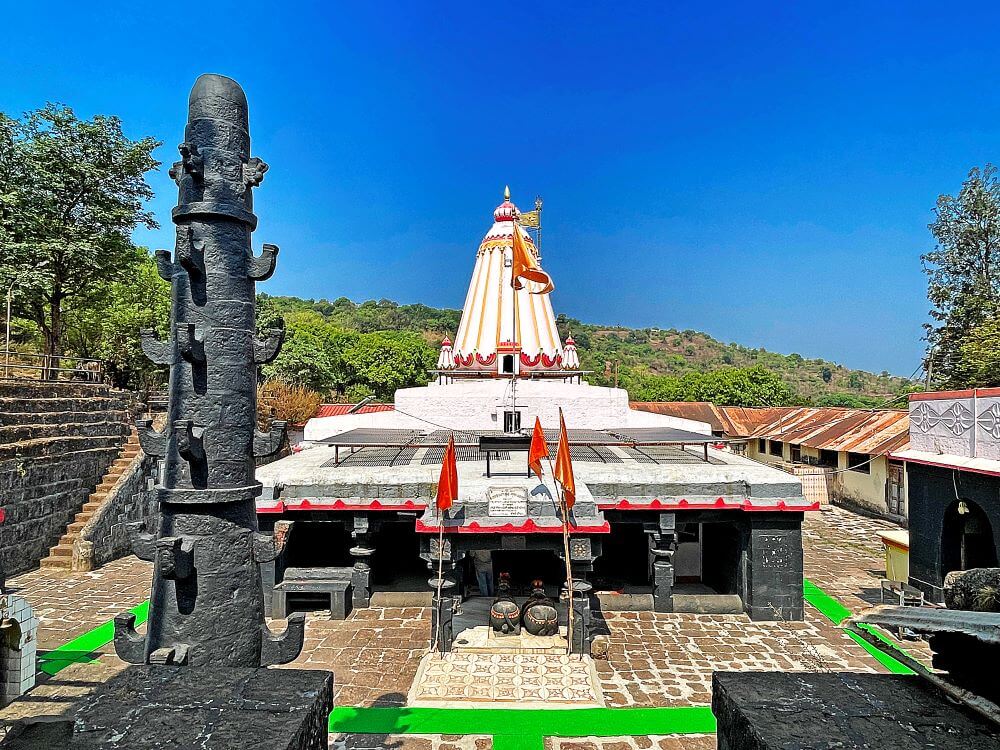
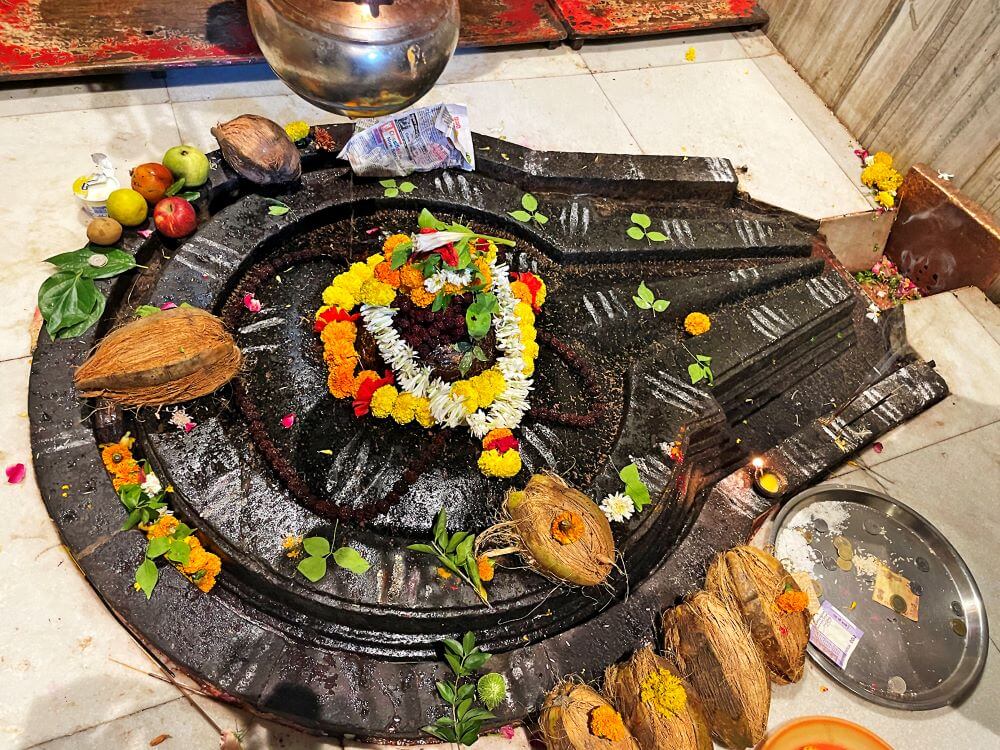
The temple is located on the northwestern tip of the Yavteshwar hill. The Yavteshwar Temple dates back to the Yadava period and is built in the Hemadpanti architectural style. In the past, this area had many groves of bamboo (Yavat); it is believed that the hill and the village derived the name Yavteshwar from this or from the temple itself. Records indicate that the temple was renovated during the reign of Chhatrapati Shahu Maharaj, and the revenue of this village was assigned for the maintenance of the temple. There is a direct road to reach the temple. One enters the temple premises after descending a few stone steps through an arched gateway. Where the steps end, there stands a tall and ancient lamp pillar (Deepmal). Beyond that, the main temple, built entirely of stone, has a Nandi Mandapa attached to it. There are two statues of Nandi in this Nandi Mandapa. The temple structure consists of the Nandi Mandapa, Sabha Mandapa (assembly hall), Antarala (vestibule), and the Garbhagriha (sanctum sanctorum). The stone pillars in the Sabha Mandapa and Antarala do not feature elaborate carvings. The door frame of the Garbhagriha is carved with various floral motifs. To the right of this entrance is an idol of Lord Ganesha. The Shiva Linga in the Garbhagriha is said to be ancient and self-manifested (Swayambhu). In front of this Shiva Linga, carved from a single block of black stone, is an idol of Mother Parvati.
To the right of the main temple is the temple of Kalbhairav. The idol of Kalbhairavnath, carved from a single black stone, is unique. It is said that after the construction of the Yavteshwar Temple, this idol of Kalbhairav was brought from Kashi and consecrated here. To the west of the temple is a water tank known as the ‘Devache Tale’ (God’s Tank). It is believed that it was this water that cured King Kidwan’s skin disease. In the surrounding area, there are temples of Rameshwar and Maruti to the south, Ghatai Devi to the north, and Ganesha in front. Devotees believe that the temple follows a spiritual tradition similar to the Kashi Vishweshwar Temple in North India, and thus, visiting this temple grants the same merit as a pilgrimage to Kashi Vishweshwar.
A large fair is held here on the day of Ashwin Amavasya. During this time, a palanquin procession accompanied by the sound of drums and cymbals goes to the spreading mango tree located a short distance from the temple, where the tree is worshipped. After the worship, a branch of mango blossoms is cut from the tree and placed in the palanquin. The procession then returns to the temple. This fair continues until the blossoms on this tree bear fruit. It is a tradition here that the Sannyasis are given the first darshan of the deity, followed by other devotees. Additionally, a fair is held on Kartik Shuddha Pratipada. A grand festival is celebrated on Mahashivratri. From here, one can view the Kanher Dam, Sajjangad, Jarandeshwar, and Meruling.
This sacred temple stands as a testament to deep spiritual devotion, ancient architectural grandeur, and rich local cultural traditions.
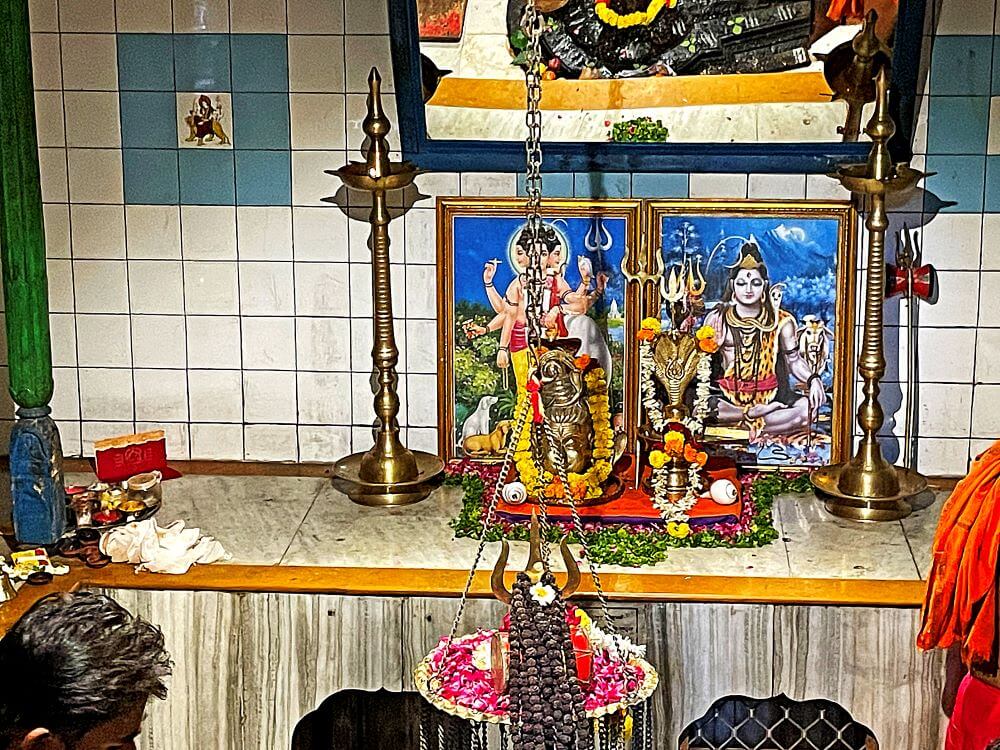
The sanctum sanctorum houses the divine idol consecrated according to ancient Vedic traditions, surrounded by serene courtyards and traditional temple architecture.
Navratri, Maha Shivratri, Annual Temple Jatra & Deepotsav
Compare and book flights, secure top-rated local hotels near the temple, hire reliable guides, and rent cars instantly.
Extend your pilgrimage by visiting other highly sacred temples located nearby.


Add ₹999 more to unlock FREE SHIPPING!
Your sacred cart is currently empty.
Shop Photo FramesFill in your delivery details below to place your order.
Add comment