
Add ₹999 more to unlock FREE SHIPPING!
Your sacred cart is currently empty.
Shop Photo FramesThe Javali Valley is famous in the history of Maharashtra. In the Hindavi Swarajya of Chhatrapati Shivaji Maharaj, this valley held a very significant place. It was at the foothills of Pratapgad, in the Javali Valley, that Shivaji Maharaj vanquished Afzal Khan. Just as this place holds historical importance, it is also of special significance from a religious perspective. The temple of Adishakti Ramvardayini Devi in the village of Par, located a short distance from the foothills of Pratapgad, is considered one of the important awakened shrines of Maharashtra. It is said that Lord Shri Rama himself consecrated this Goddess.
Nestled in the lap of the Sahyadri mountains and surrounded by dense forests, the village of Par was formerly known as Parvatipur. For the sake of convenience in daily usage, the first and last syllables of this name were taken, and it became established as Par. Although there is no precise mention of when Parvatipur was established, this village is referenced in numerous historical documents. The installation of the goddess Ramvardayini here by Lord Rama is mentioned by Saint Eknath Maharaj in the ‘Aranyakanda’ section of his Bhavartha Ramayana and in the Ramvijay scripture by Shridhar Swami. According to historical records, Samarth Ramdas Swami came to reside at Sajjangad at the request of Chhatrapati Shivaji Maharaj. During that time, he visited the village of Parvatipur to seek the blessings of this goddess, Shri Ramvardayini. He offered golden flowers at the feet of the Goddess, closed his eyes, and began to pray to her with deep devotion:
Tuljapur thakena | chalili pashchimekade ||
Parghati jaganmata | sadya yeuni rahili ||
Aisi tu dayalu mata | hempushpachi ghetale ||
Before this Goddess, who fulfills all the wishes of her devotees, Samarth prayed for the prosperity and rise of Hindavi Swarajya.
The legend of the Ramvardayini Temple states that in ancient times, this place was a dense forest. Two demons named Atibal and Mahabal resided there. They spread terror in the region. To slay them, the gods TwoRan towards Vishnu. Atibala was slain in the battle against Vishnu, but Mahabala could not be killed by Vishnu. Therefore, all the gods requested Adishakti to slay Mahabala. Accordingly, Adishakti cast her spell of enchantment upon Mahabala. Absorbed in the enchantment of Adishakti, Mahabala declared that he was superior to all the gods and that the gods should ask him for a boon. Accordingly, the gods asked for the boon that he should meet his death. Mahabala reluctantly agreed, but at the same time, he also asked the gods for a boon: that he would reside here in the form of a mountain, and that Adishakti should reside upon that mountain. The gods granted his wish and established Adishakti on the banks of the Koyna River here. She is the very Varadayini Devi of this temple.
According to another legend, the search for Sita after her abduction by Ravana To test Lord Shriram, Mother Parvati appeared before Him in the form of Sita; however, Lord Shriram recognized Mother Parvati’s true form and humbly asked, “O Mother, why are you troubling yourself unnecessarily?” At that moment, Mother Parvati was pleased and, after blessing Lord Shriram with success in His mission, she disappeared. Thereafter, Lord Shriram consecrated her at this site. Because she bestowed a boon upon Lord Shriram, she came to be known as Ramvaradayini. Although these legends vary, they strongly convey the significance and antiquity of this temple.
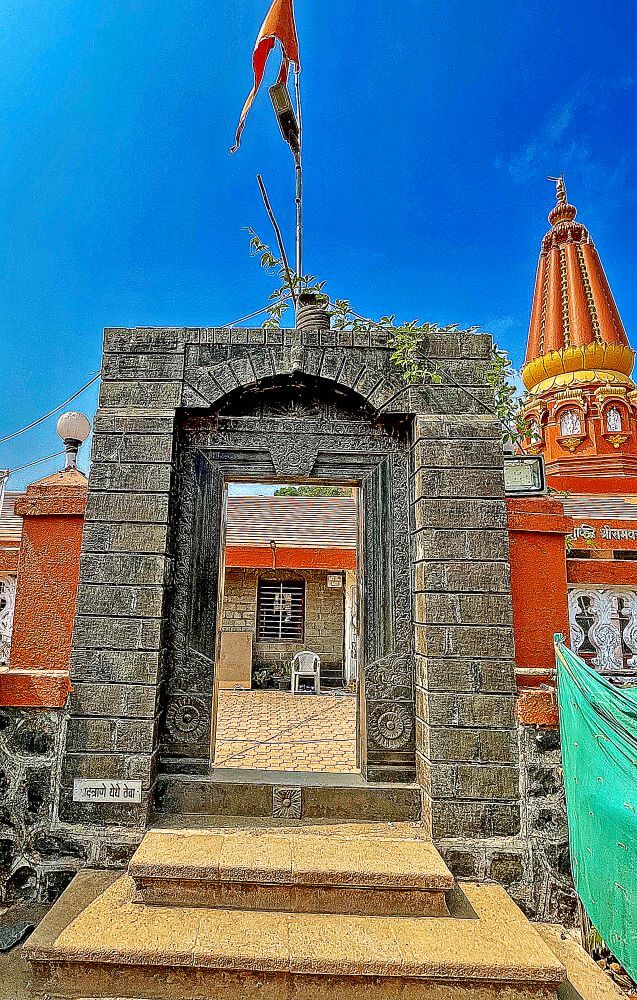
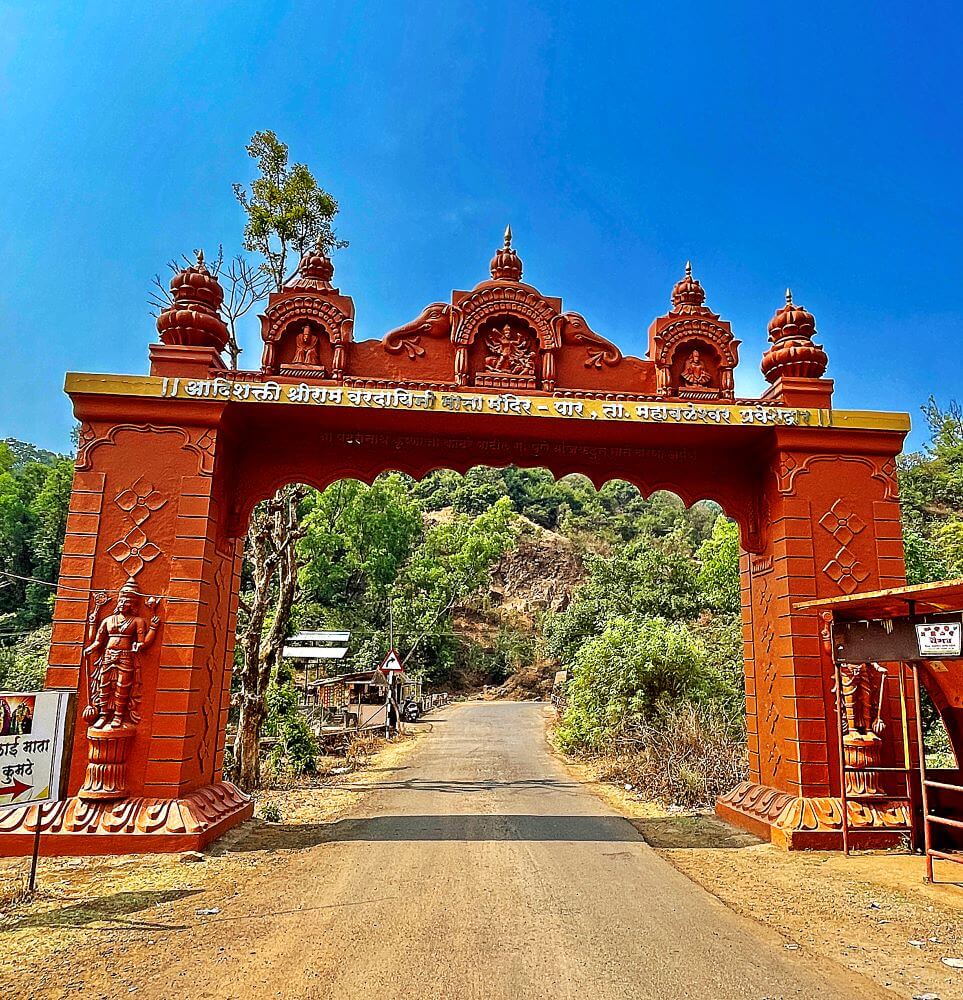
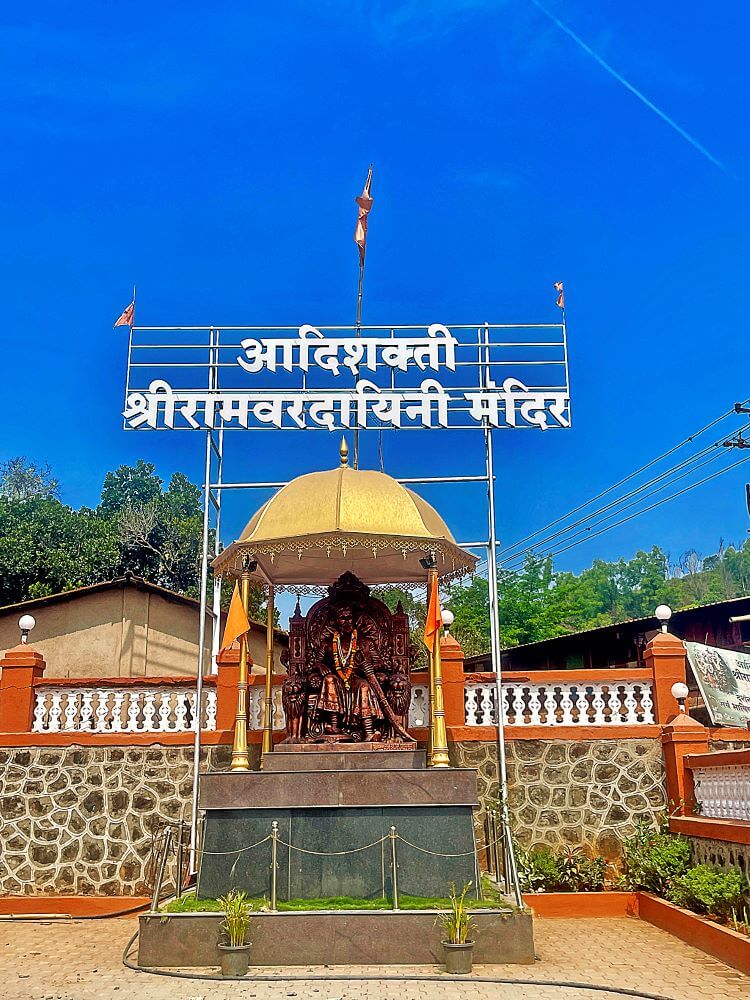
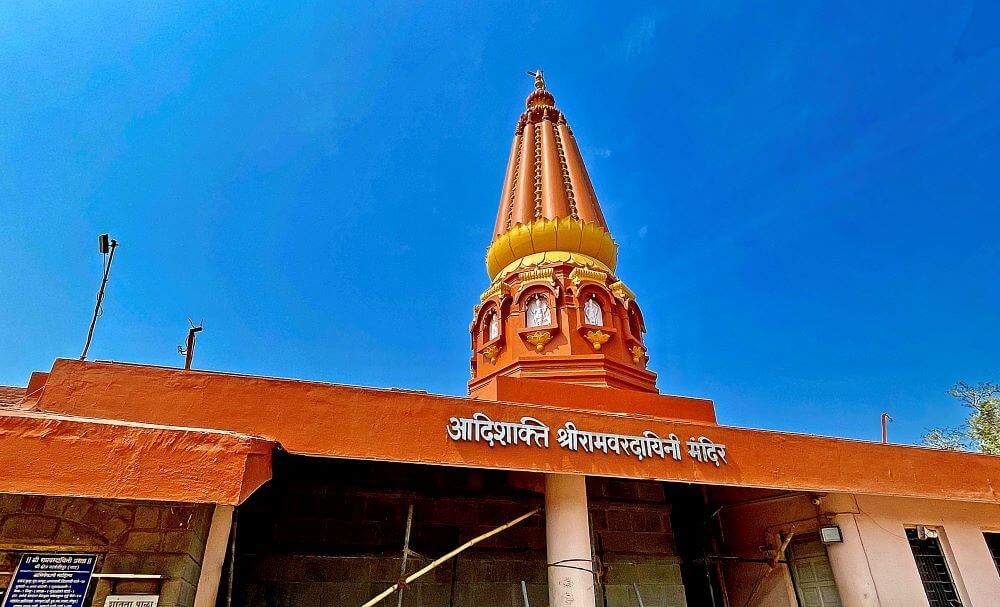
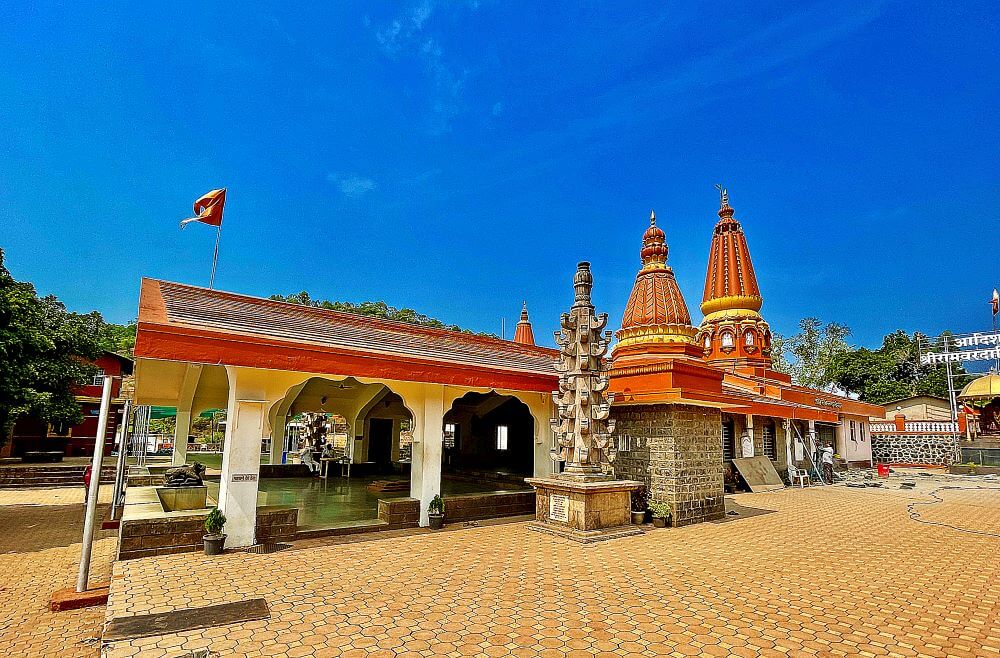
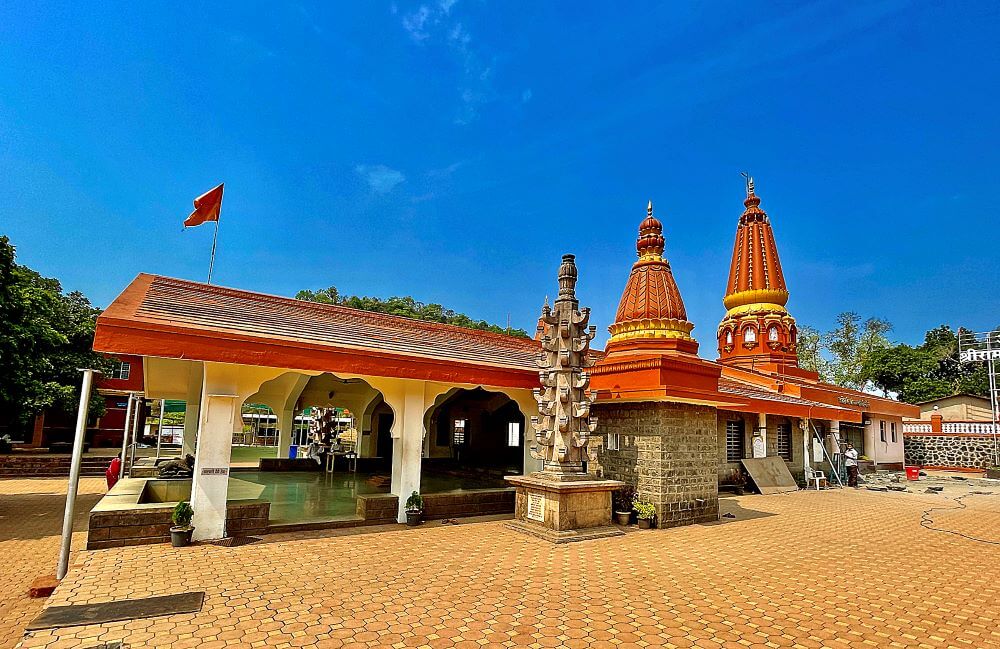
On the Mahabaleshwar-Poladpur road, before reaching Pratapgad Fort, lies the village of Kumbharoshi. There is an archway on this route through which one can proceed towards the village. About four kilometers from this archway is the temple of the primordial power, Goddess Ramvardayini. This temple, which was originally made of black stone, attained its current form after a renovation carried out a few years ago. The temple faces east, is surrounded by fortification walls on all sides, and the temple premises are kept very clean and tidy. A statue of Chhatrapati Shivaji Maharaj has been erected in the temple courtyard. In addition to this, there are small shrines dedicated to the Deepmal, Manai, and Jholai goddesses. The assembly hall (sabhamandap) of the temple is spacious, and from this hall, one can enter the sanctum sanctorum by climbing a few steps. The inner sanctum and the seat of the Goddess here remain as they were originally. There are two idols on the throne in the sanctum sanctorum; among them, on the left side is the two-and-a-half-foot tall idol of Shri Vardayini Devi, and on the right side is the three-foot tall idol of Shri Ramvardayini.
This abode of the primordial power, Goddess Shri Ramvardayini Devi, is considered a vibrant Shakti Peeth in Maharashtra. Goddess Ramvardayini Devi is the family deity of many renowned lineages. For this reason, there is always a steady stream of devotees at this place. For the convenience of devotees arriving from out of town, accommodation facilities have been provided by the Temple Trust at the Bhakta Niwas.
The pilgrimage festival is held here from the thirteenth day of the waning moon of Chaitra to the sixth day of the waxing moon of Vaishakha. On the third day of the festival, which is the new moon day of Chaitra, the presiding deities of the surrounding villages are brought to the temple premises in the form of a Gudi (a ceremonial staff). There is an ancient tree in the courtyard of the Shri Ramvardayini Devi temple, where the Bagad ritual takes place. The procession held on the final day of the festival is known as Chhabina. On this day, at five o’clock in the morning, the idol of the Goddess is placed in a palanquin and taken through the village in a grand procession accompanied by music. Following this, various rituals such as Laghurudrabhishek and Homahavan are performed in the temple. During Navratri, after the Ghatasthapana, the festival of the Goddess is celebrated with great splendor for the next nine days.
Apart from the temple, a unique feature of this area is the village of Par, also known as Parvatipur, which has been famous since the era of Chhatrapati Shivaji Maharaj as a major marketplace for groceries, textiles, and essential commodities. This village is divided into three settlements: Pethpar, Parpar, and Sondpar. The surrounding area is extremely picturesque, and right next to the village of Par, on the road leading to the Koyna River, stands a sturdy, stone-built, long and wide bridge constructed by Chhatrapati Shivaji Maharaj. This four-arched bridge is 16 meters long and 6 meters wide. This stone bridge is still in excellent condition today, and heavy vehicles like buses and trucks continue to pass over it. Before the construction of this bridge, a small idol of Lord Ganesha, which was worshipped by Chhatrapati Shivaji Maharaj himself, can also be seen here on the lower side.
This sacred temple stands as a testament to deep spiritual devotion, ancient architectural grandeur, and rich local cultural traditions.
The sanctum sanctorum houses the divine idol consecrated according to ancient Vedic traditions, surrounded by serene courtyards and traditional temple architecture.
Navratri, Maha Shivratri, Annual Temple Jatra & Deepotsav
Compare and book flights, secure top-rated local hotels near the temple, hire reliable guides, and rent cars instantly.
Extend your pilgrimage by visiting other highly sacred temples located nearby.


Add ₹999 more to unlock FREE SHIPPING!
Your sacred cart is currently empty.
Shop Photo FramesFill in your delivery details below to place your order.
Add comment