
Add ₹999 more to unlock FREE SHIPPING!
Your sacred cart is currently empty.
Shop Photo FramesThe city of Panchgani, located near Mahabaleshwar in the Satara district, holds a unique identity. Panchgani is characterized by its pleasant climate, mountains, valleys, waterfalls, caves, and plateaus, making it a region rich in natural beauty. While Panchgani is renowned for its tourism, it also holds significant historical and religious importance. The ancient Kedareshwar temple in Dandeghar and the powerful (Jagrut) Ghatjai Devi temple in the city are two sacred sites revered by thousands of devotees. The Kedareshwar temple stands as a testament to our ancient prosperity, while the Ghatjai Devi temple is famous for its vibrant festivals.
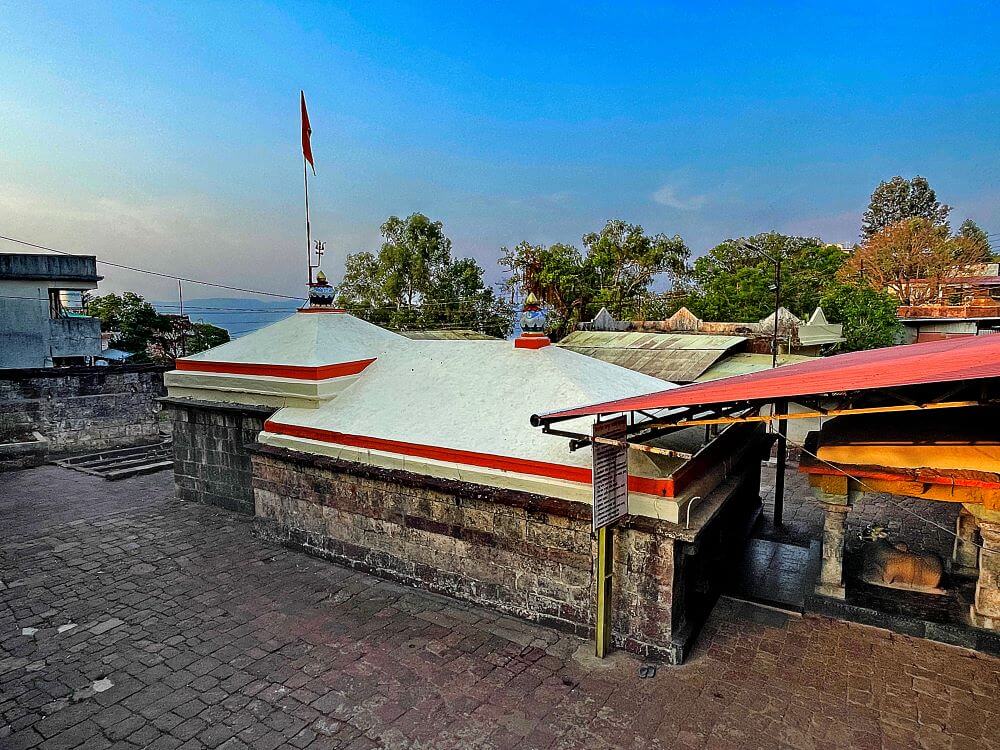
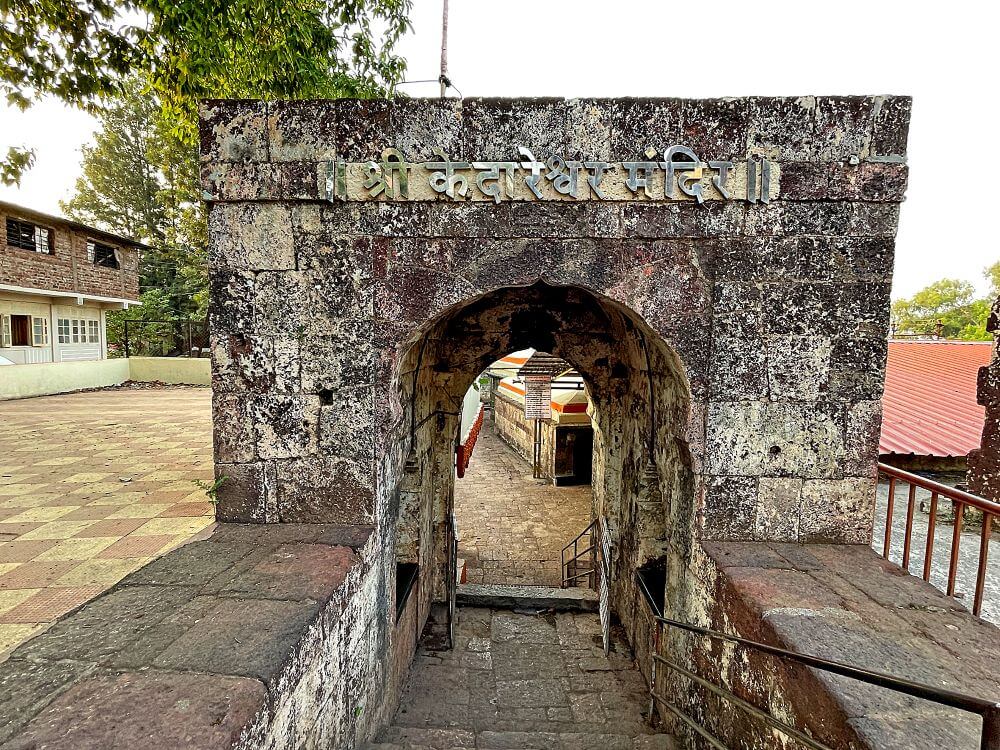
After descending the Pasarni Ghat on the Wai-Mahabaleshwar road, the village of Dandeghar is reached two kilometers before Panchgani. The ancient Kedareshwar temple is situated in the heart of the village, barely 200 meters from the main road. Scholars believe the temple, built in the Hemadpanti style, dates back to the 12th or 13th century. It is said that Chhatrapati Shivaji Maharaj often visited this temple for darshan. The Kedareshwar temple is surrounded by a high stone wall, and one must descend steps through a stone archway to reach the temple. On both sides of these steps, there are covered galleries (ovaris) built for the convenience of devotees.
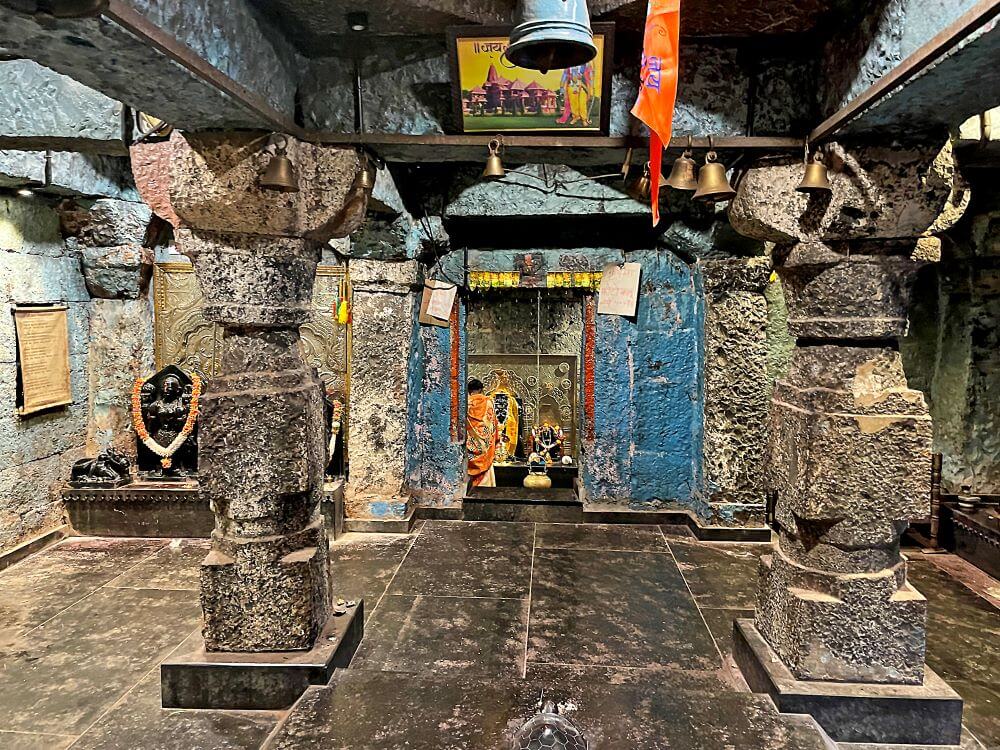
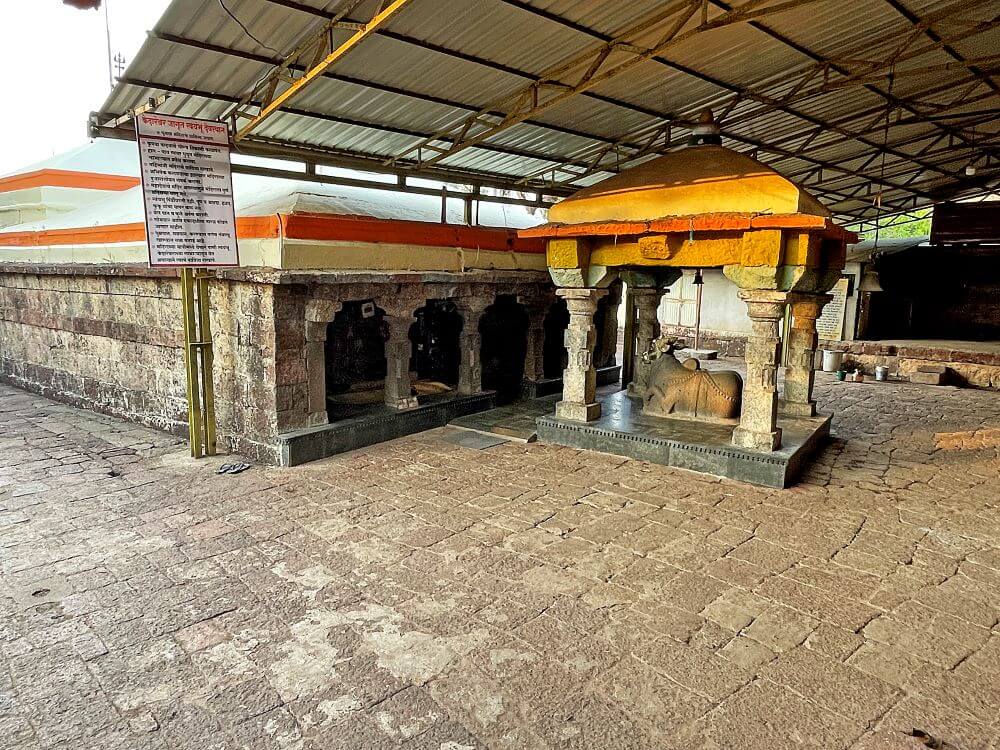
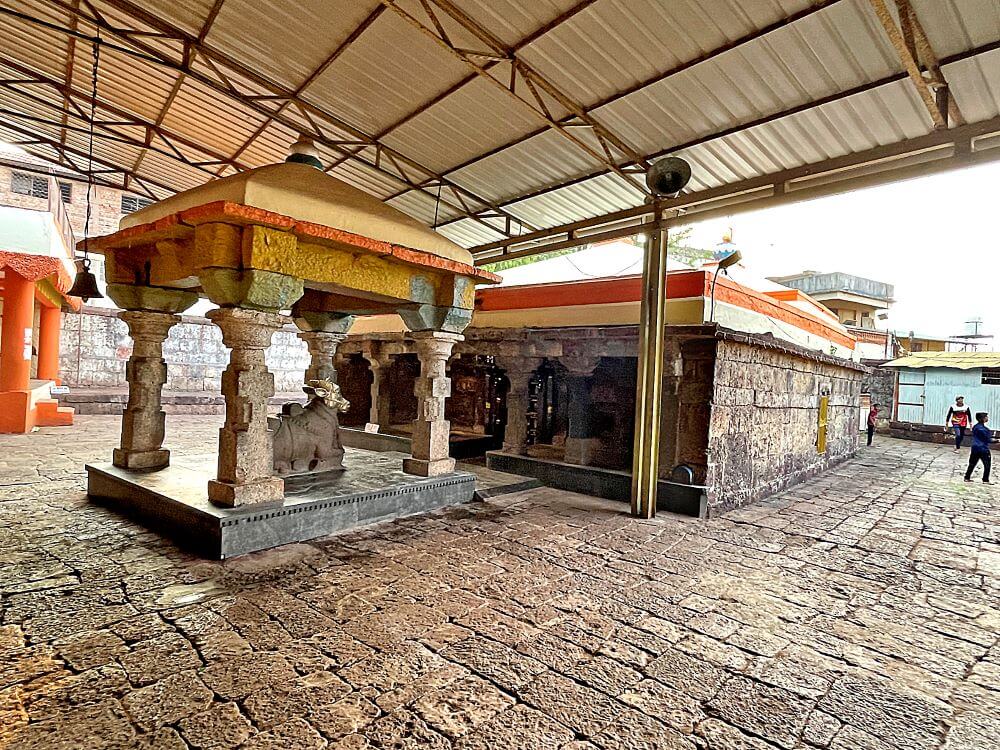
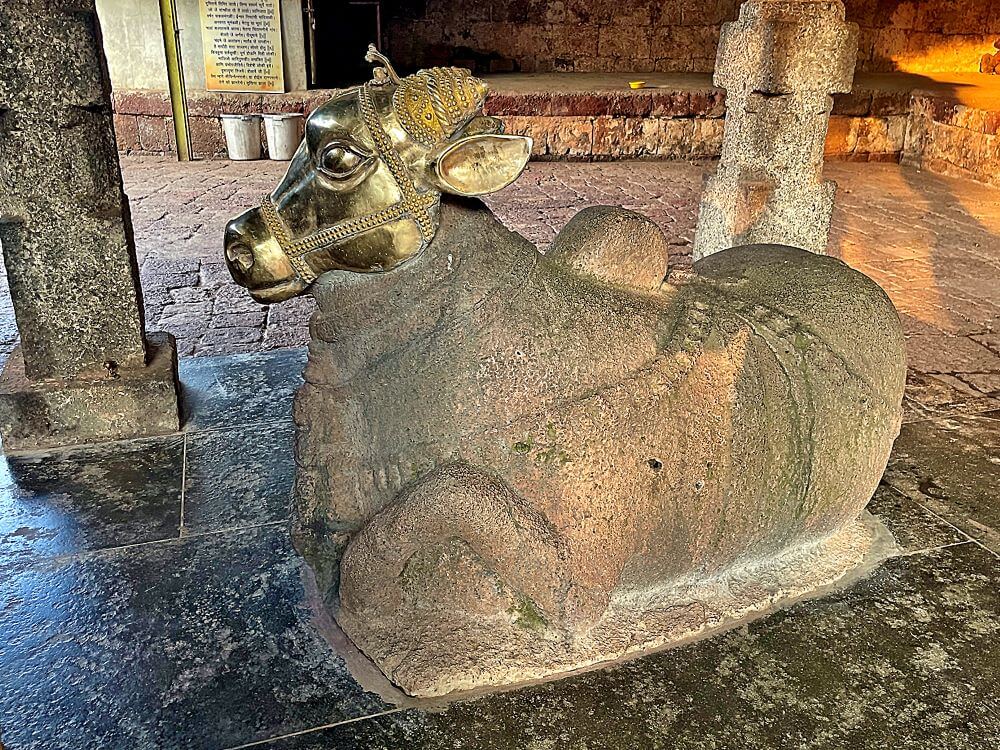
Near the temple arch, there are shops selling worship materials. Upon entering through the arch, one gets a view of the ancient temple located at a lower level. The temple structure consists of a Nandi Mandapa, a Jod Mandapa (connecting hall), a Sabha Mandapa (assembly hall), and the Garbhagriha (sanctum sanctorum). The Nandi idol in the Nandi Mandapa is about two and a half to three feet tall and appears unique due to the brass mask adorned upon it; such a brass mask on a Nandi is rarely seen elsewhere. Just two feet from the Nandi Mandapa is the Jod Mandapa of the main temple. This connecting hall, attached to the main Sabha Mandapa, has 10 stone pillars, while the Sabha Mandapa contains 16 pillars. All these pillars are circular in design. There is a small entrance to go from the Sabha Mandapa into the Garbhagriha. On both sides of this entrance are ancient idols of various deities, including Shri Bhairavnath and Devi Kadeshwari. One must descend steps to reach the Garbhagriha, which is located at a slightly deeper level than the Sabha Mandapa. There, a large, ancient Shiva Linga resides, and on the Shalu (base) of the Linga, there are rock-like stones from which water flows continuously. This water flows into the Pushkarani (sacred pond) located behind the temple. A unique feature of this temple is that, including the main Shiva Linga, there are a total of 22 ancient stone idols, and the intricate craftsmanship and carvings on them remain in excellent condition to this day.
The temple courtyard is paved with stone throughout. The stones laid during the temple’s construction remain in good condition today. To the right of the temple, along the circumambulation path (pradakshina marg), are the idols of Shri Sati and Shri Janani Mata. Behind the temple is a small Pushkarani where water flows from a Gomukh (cow-mouth spout) throughout all twelve months. There are steps on three sides to descend into this pond. In front of the temple, behind the Nandi Mandapa, are idols of Shri Ganesh, Shri Daji Buva, and Sant Dattatreya Maharaj Kalambe. Near the temple stands a mango tree that blossoms in the month of Ashwin; such trees that bear fruit out of season are rare.
Approximately two kilometers from the Kedareshwar temple, along the Wai-Panchgani road, stands the archway of the Shri Ghatjai Kaleshwari Devi temple, known as the presiding deity of Panchgani. A short distance from there, amidst dense greenery on the Table Land (a plateau on the mountain), lies the temple of Ghatjai Kaleshwari Devi. This is a powerful (Jagrut) shrine, and devotees in the region believe that because of this Devi, accidents rarely occur on the local ghat roads, and no one suffers major injuries.
It is believed that this Devi, residing in such a nature-rich area, grants the wishes of her devotees. After the Yatra of Bhairavnath in nearby Pasarni concludes, the annual Yatra festival of Ghatjai Kaleshwari begins on Magh Vadya Navami and Dashami. The competition among drummers playing to the rhythm of cymbals and the showering of gulal and coconut pieces are the highlights of this festival. During this time, the entire temple premises are decorated with lights and banners.
Various programs are held during this festival, including the Devi’s Bhandara (community feast), the procession of the Devi’s palanquin, Jagar (all-night vigil), and performances by drum troupes and Lezim groups, along with folk dramas. Additionally, on Ramdas Navami (Phalgun Krishna Navami), a Jagar and Yatra are held for the Devi. Thousands of devotees come for darshan on this occasion as well. Furthermore, there is a large influx of devotees every Tuesday, Friday, and during the nine days of Navratri.
This sacred temple stands as a testament to deep spiritual devotion, ancient architectural grandeur, and rich local cultural traditions.
The sanctum sanctorum houses the divine idol consecrated according to ancient Vedic traditions, surrounded by serene courtyards and traditional temple architecture.
Navratri, Maha Shivratri, Annual Temple Jatra & Deepotsav
Compare and book flights, secure top-rated local hotels near the temple, hire reliable guides, and rent cars instantly.
Extend your pilgrimage by visiting other highly sacred temples located nearby.


Add ₹999 more to unlock FREE SHIPPING!
Your sacred cart is currently empty.
Shop Photo FramesFill in your delivery details below to place your order.
Add comment