
Add ₹999 more to unlock FREE SHIPPING!
Your sacred cart is currently empty.
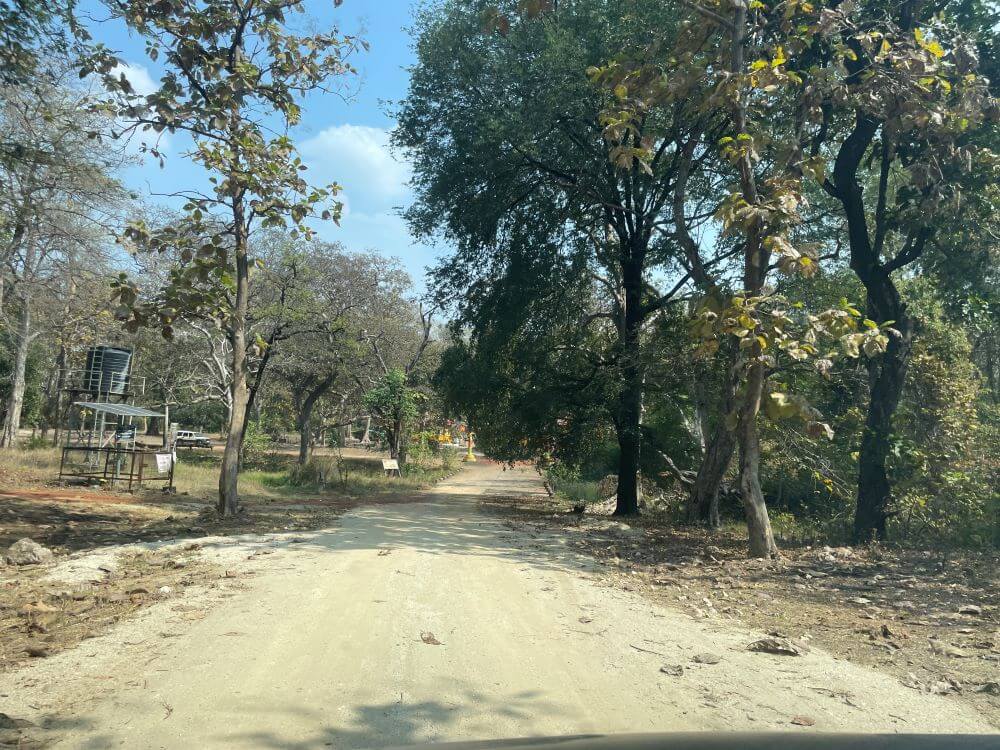
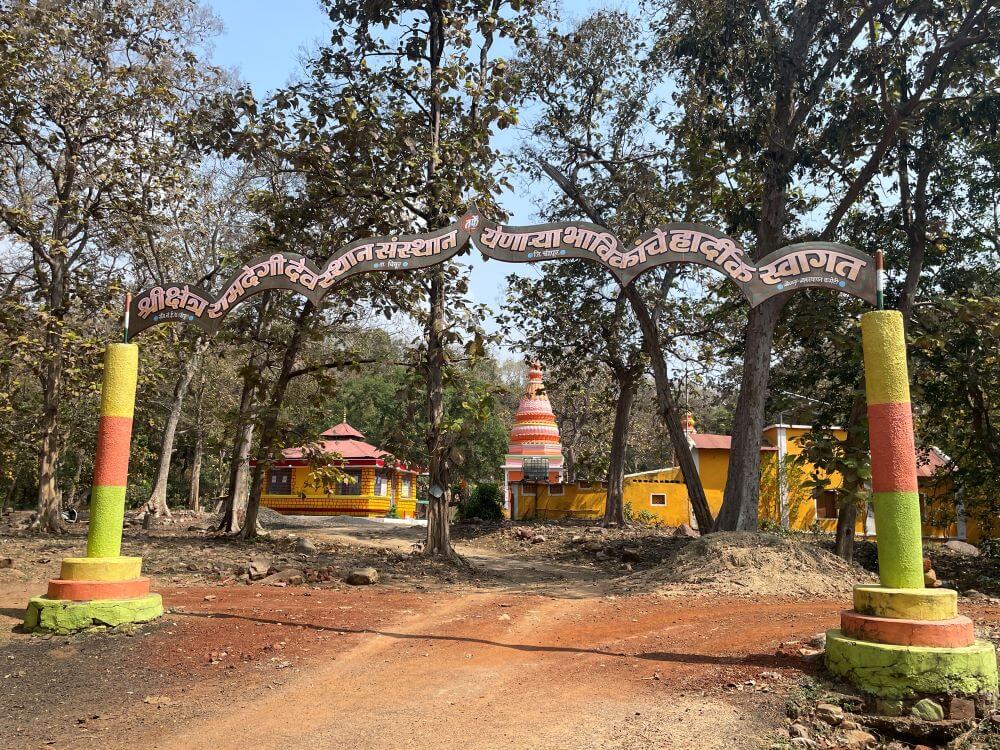
Shop Photo FramesRamdegi Devasthan is situated in the heart of the Tadoba Andhari Tiger Reserve forest, located in the midst of hills and along a riverbank, in a dense forest area two kilometers from the Nimdhela Safari Gate. In the Gondi language, ‘Dighi’ means a beautiful place for rest and relaxation! It is said that Lord Shriram rested here while traveling south, which is why this region was named ‘Ramdighi’. Over time, this evolved into the name ‘Ramdegi’. As it is a forest area, every devotee is registered at the Nimdhela Safari Gate before being allowed to proceed to the temple.
It is said that this area, which was once part of the Dandakaranya forest, had settlements seven hundred to eight hundred years ago. During that same period, this Hemadpanti-style temple was built on a hill seventy to eighty feet high within the dense forest. Eight hundred years ago, the Yadavas ruled over Vidarbha, and many temples were built in this region during that era. It is said that there are one hundred fifty to two hundred Hemadpanti-style temples in Vidarbha. Among all of them, Ramdegi Devasthan holds special significance. According to the renowned historian Annaji Jayramji, the great poet Kalidasa may have composed his epic poem ‘Meghaduta’ in this very region.
The legend of this temple states that a demon named Tadobasur lived in this area, and the forest has been known as the Tadoba forest ever since, named after him. At that time, a Bhil woman named Jamunabai lived there. She was a supreme devotee of Lord Rama. Tadobasur constantly harassed her, but she was brave and never fell into his clutches. She used to travel through this dense forest on horseback. Once, Tadobasur began to chase her. After crossing many hills and valleys, she reached the Ramdegi area. Realizing that Tadobasur was about to capture her, she cried out loudly, calling upon Lord Shriram, and threw herself from her horse into a deep valley. She survived because she fell into the water of a pond near the Ramdegi temple. Hearing her cry, Lord Shriram shot an arrow and killed Tadobasur. In the Ramdegi Devasthan premises, there is a small memorial temple of Mother Jamuna, which contains an idol of her riding a horse. There is a record stating that this idol was installed in the year ۱۷۲۰.
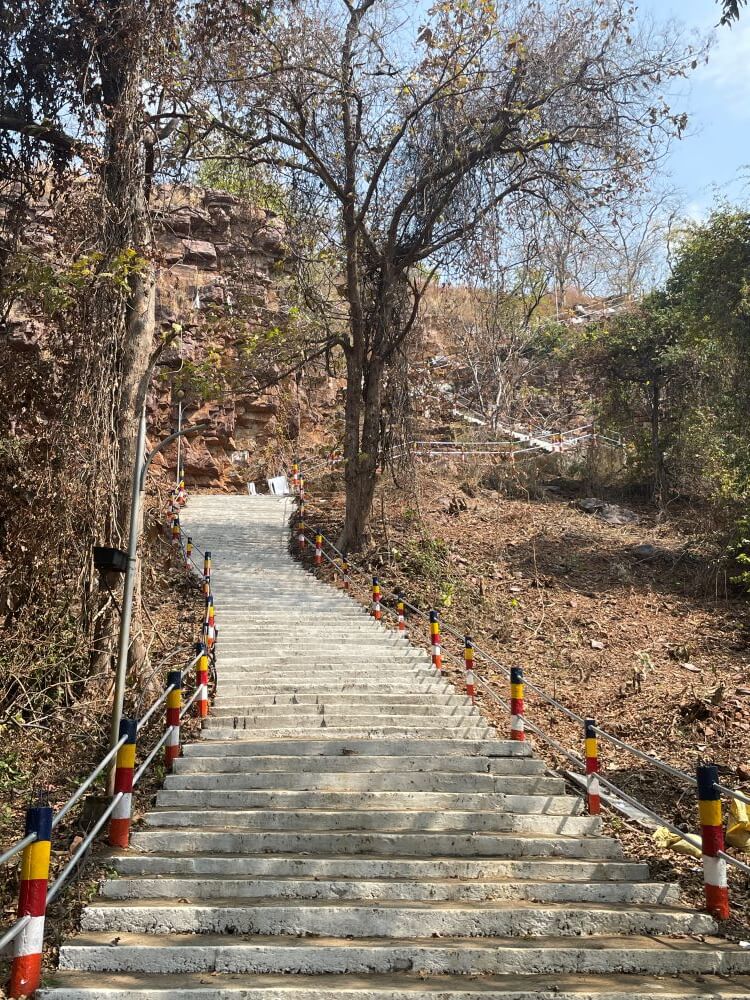
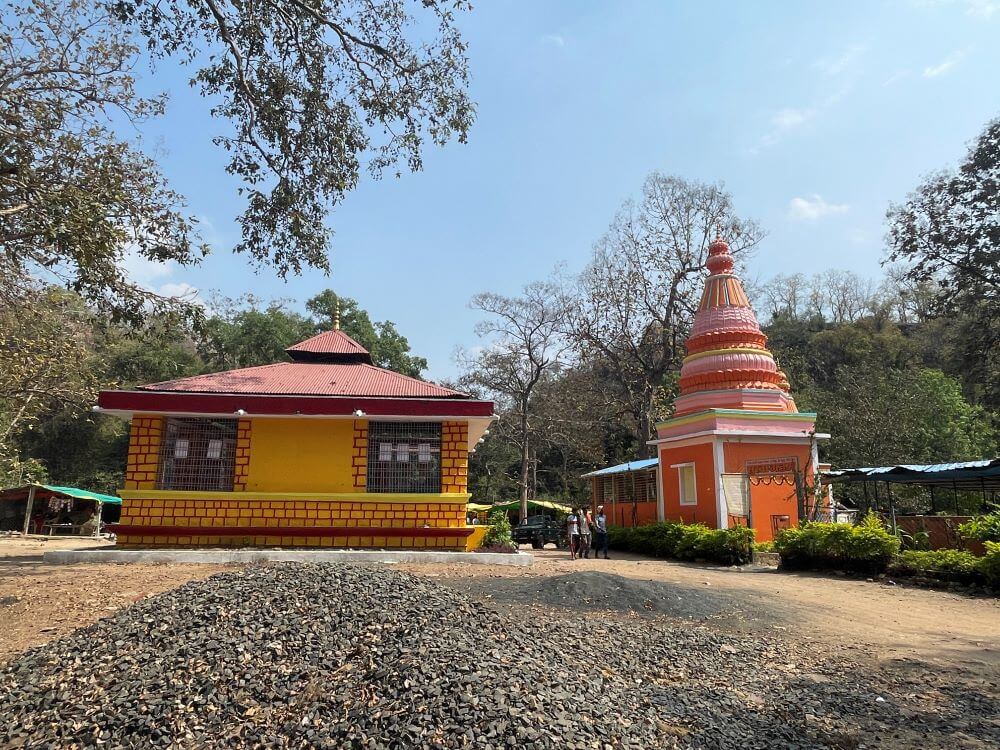
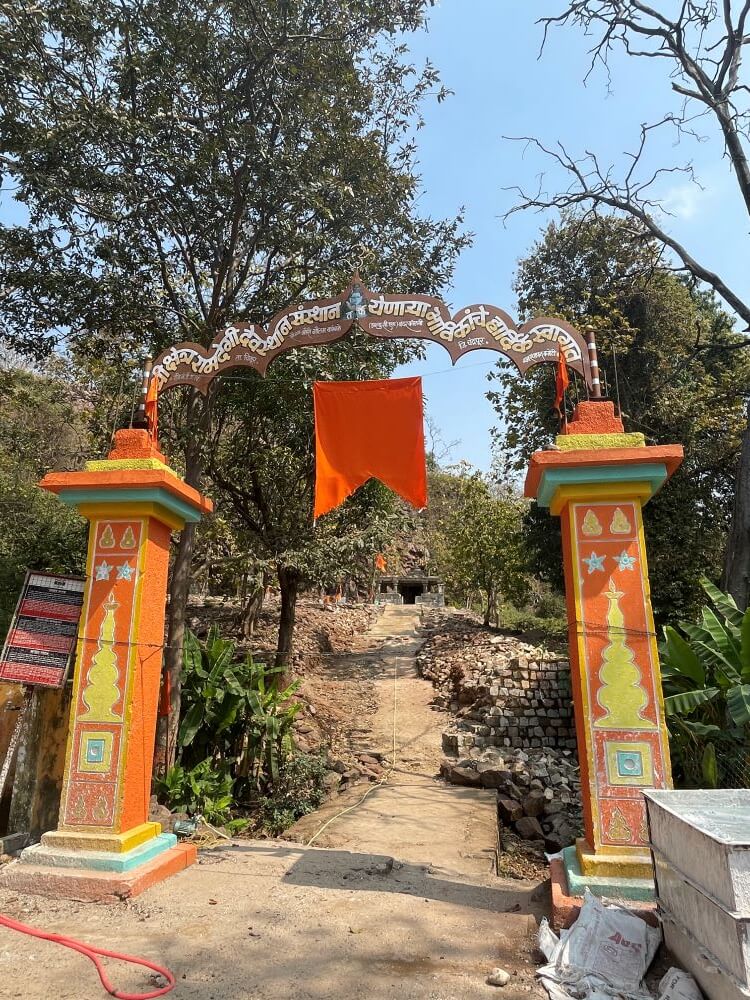
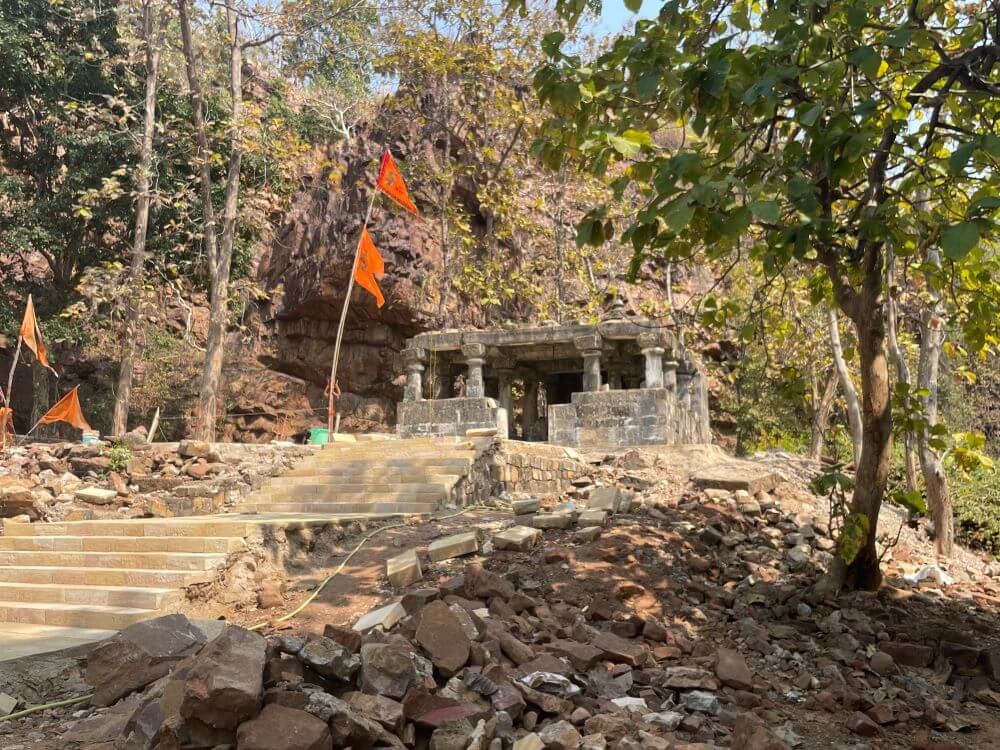
One can reach the Ramdegi temple by climbing about ۱۰۰ steps from the base. Because it is located on a mountain ridge, the temple premises are compact. In front of the temple, there is a small temple of Maruti, which houses a five-foot-tall idol. The main temple’s assembly hall (sabhamandap) has ۱۶ stone pillars, and there are half-walls on three sides of the hall. With hills on all sides and the temple in the center, the view here resembles a cup sitting in a saucer. This temple is constructed from reddish-pink sandstone. The structure of the temple consists of an assembly hall, an antarala (vestibule), and a garbhagriha (sanctum sanctorum). (This stone was formed due to volcanic eruptions and was later used for building temples, palaces, royal residences, monuments, and pillars.)
Although there is not much sculpture on the temple, load-bearing Yaksha figures are carved on the upper parts of all the pillars in the assembly hall. There are idols of Nandi in the assembly hall and the antarala. On the doorframe of the sanctum sanctorum, there is intricate carving on the upper side and an image of Lord Ganesha on the lalata-bimba (lintel). Inside the sanctum, there is a unique stone Shivling, and in front of it, a four-foot-tall brass Shivling with a mask of Lord Mahadeva. In the niches of the walls facing the Shivling, there are idols of Lord Ganesha and the Nagadevta. The temple spire features an amalaka and a kalasha.
A waterfall cascading from the high mountain behind the temple has formed a large water pond, which is called Sitakund. Apart from the temple, there is a Buddhist vihara named Sangharamgiri in this area. It contains images of many episodes from the life of Buddha. A fair is held here every year on January ۳۰ and ۳۱. History records that it was on this day that Babasaheb Ambedkar gave a voice to the Dalits and the oppressed. Additionally, there are two caves in this area large enough to accommodate ۴۰ to ۵۰ people, known as Bhim-napaara. It is said that these caves were created by Bhima and Arjuna. A fair is held at the Ramdegi Devasthan every Monday of the Margashirsha month, during which thousands of devotees come for darshan.
A dharmashala (pilgrim rest house) has been built at the base of the temple for the convenience of devotees. In this same area, there are temples dedicated to Shriram and Radhakrishna. There is a parking lot and many shops selling worship materials in the vicinity. Devotees and tourists visiting here eagerly enjoy the ‘pithla-bhakri’ cooked on traditional wood-fired stoves by local women. The Government of Maharashtra has also granted this place tourism status, and funds are periodically provided by the government for the development of this area.
This sacred temple stands as a testament to deep spiritual devotion, ancient architectural grandeur, and rich local cultural traditions.
The sanctum sanctorum houses the divine idol consecrated according to ancient Vedic traditions, surrounded by serene courtyards and traditional temple architecture.
Navratri, Maha Shivratri, Annual Temple Jatra & Deepotsav
Compare and book flights, secure top-rated local hotels near the temple, hire reliable guides, and rent cars instantly.
Extend your pilgrimage by visiting other highly sacred temples located nearby.


Add ₹999 more to unlock FREE SHIPPING!
Your sacred cart is currently empty.
Shop Photo FramesFill in your delivery details below to place your order.
Add comment