
Add ₹999 more to unlock FREE SHIPPING!
Your sacred cart is currently empty.
Shop Photo FramesDevotees firmly believe that the Amba Devi Temple, the revered village deity (Gramdaivat) of Warora town and its surrounding taluka in Chandrapur district, is a living deity (Jagrut Devsthan) and a fulfiller of vows. Hence, this 150-year-old ancient temple has become a sacred abode for thousands of devotees. A unique feature of this temple is that devotees from Warora town and the taluka carry a sacred flame (Jyot) lit from the temple’s sanctum (Garbhagriha) before Navratri, placing it before the deity established in their homes for Ghatsthapana. This eternal flame (Akhand Jyot) is kept lit for 9 days. Workers from public Navratrotsav Mandals also ceremoniously carry an eternal flame from this temple, amidst music and celebration, to be lit before their own deities.
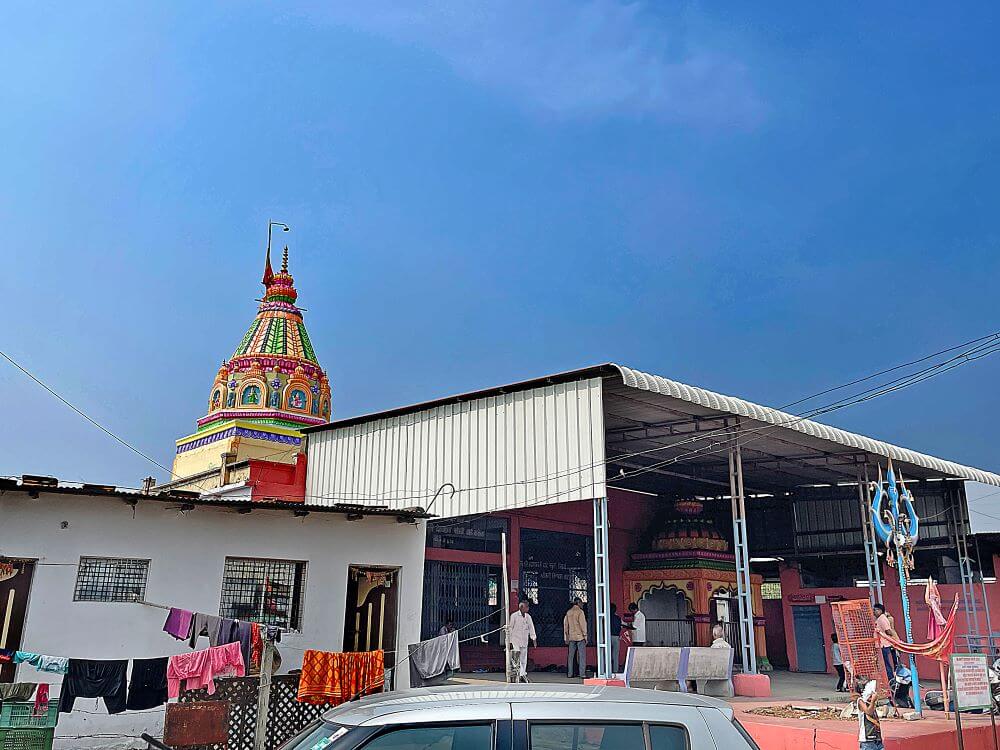
The temple, located in the heart of Warora town, currently stands in an area known as Khanji Ward. Previously, this place was a small village called Khanji. Dense forests surrounded this village. Approximately 150 years ago, the land revenue (Malguzari) of this area was managed by a person named Sarmukadam. One night, Sarmukadam received a divine vision (Swapnadrishtant) in a dream, indicating the Devi’s presence in the Khanji area. Following this, Sarmukadam excavated in Damu Patil Satpute’s field, where he discovered a deity’s idol (Tandala) smeared with vermillion (Shendurcharchit Murti). He then built a small temple at that very spot and consecrated the idol within it. With the growth of habitation, the Khanji area has now become an integral part of Warora town. Since then, devotees visiting for the Devi’s darshan began to experience the divine presence (Pratiti) of Amba Devi, leading to a continuous increase in the number of devotees. Consequently, a larger temple was constructed here a few years ago.
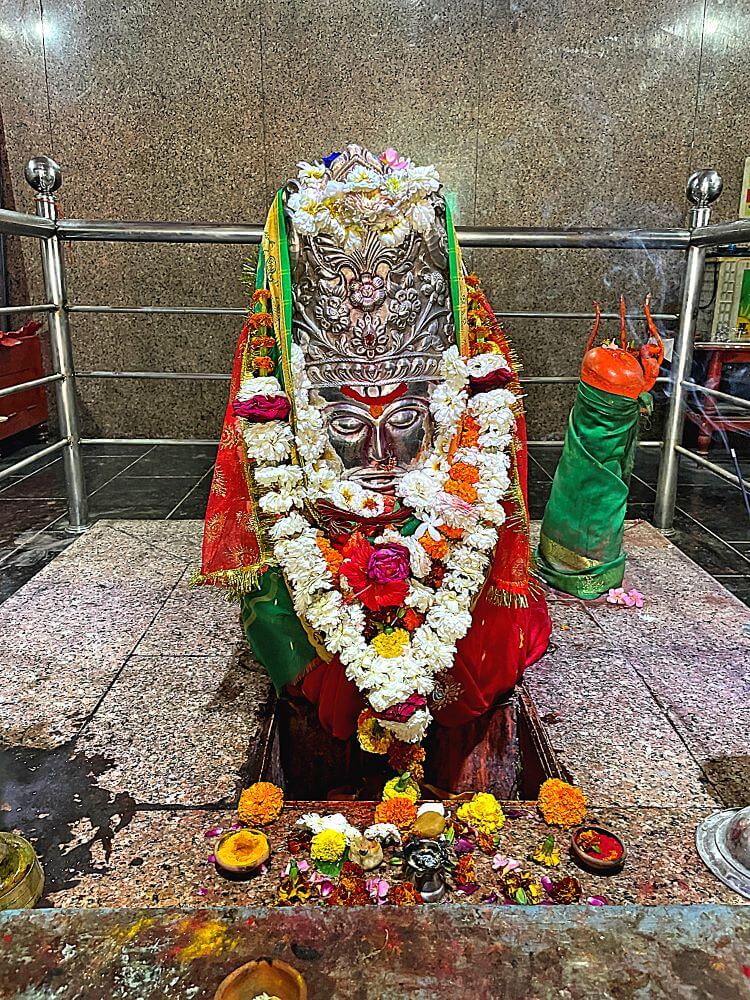
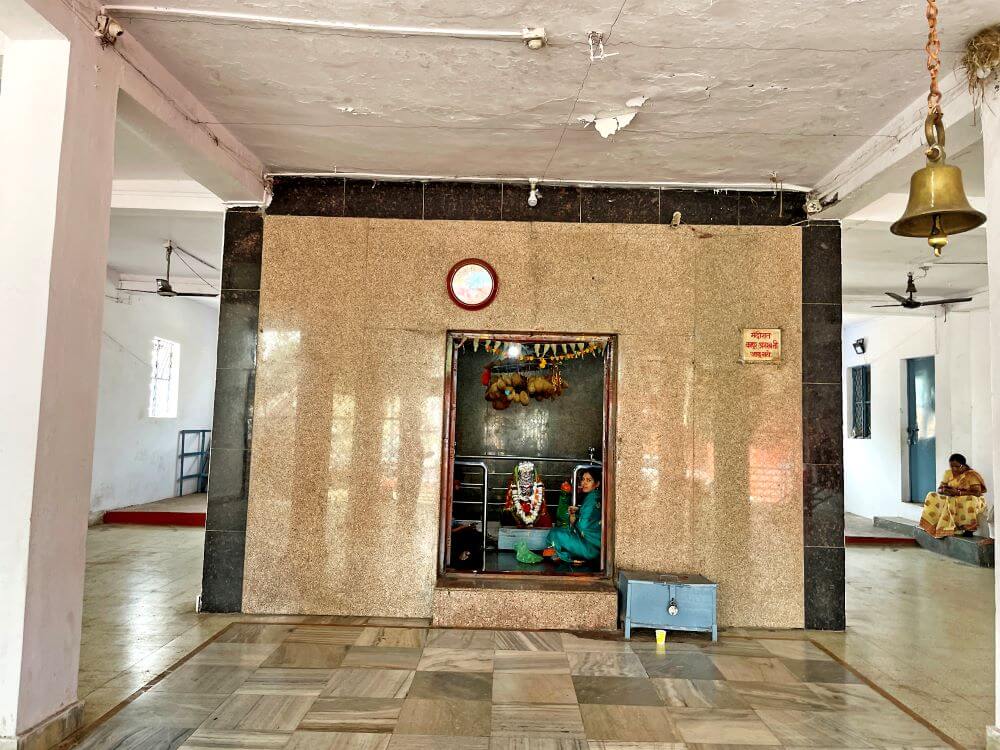
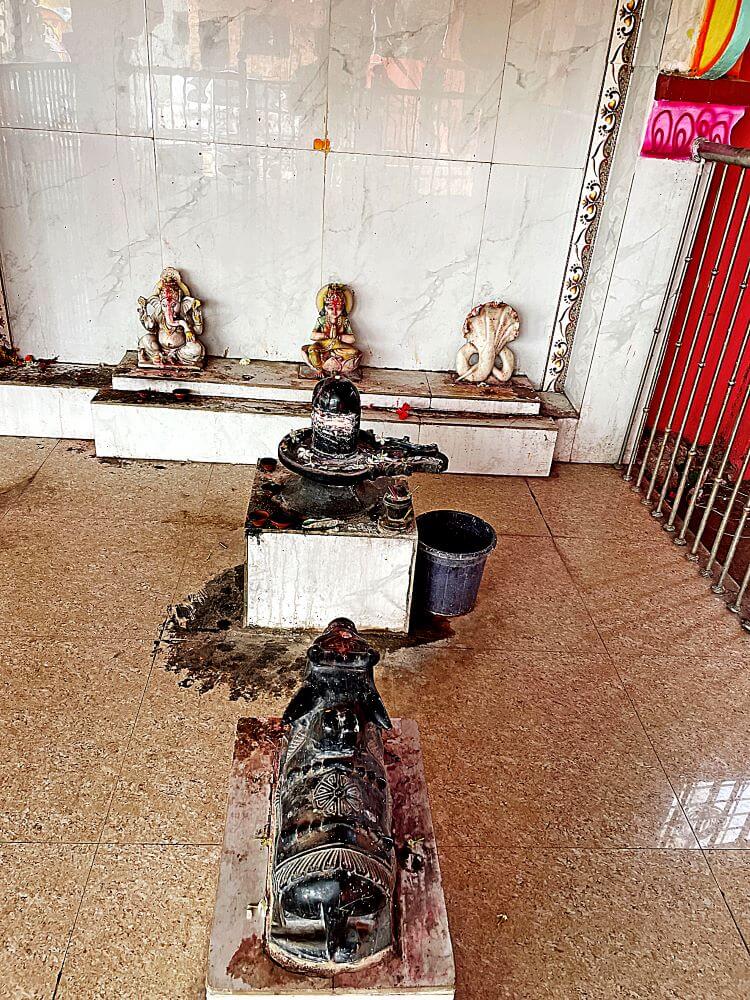
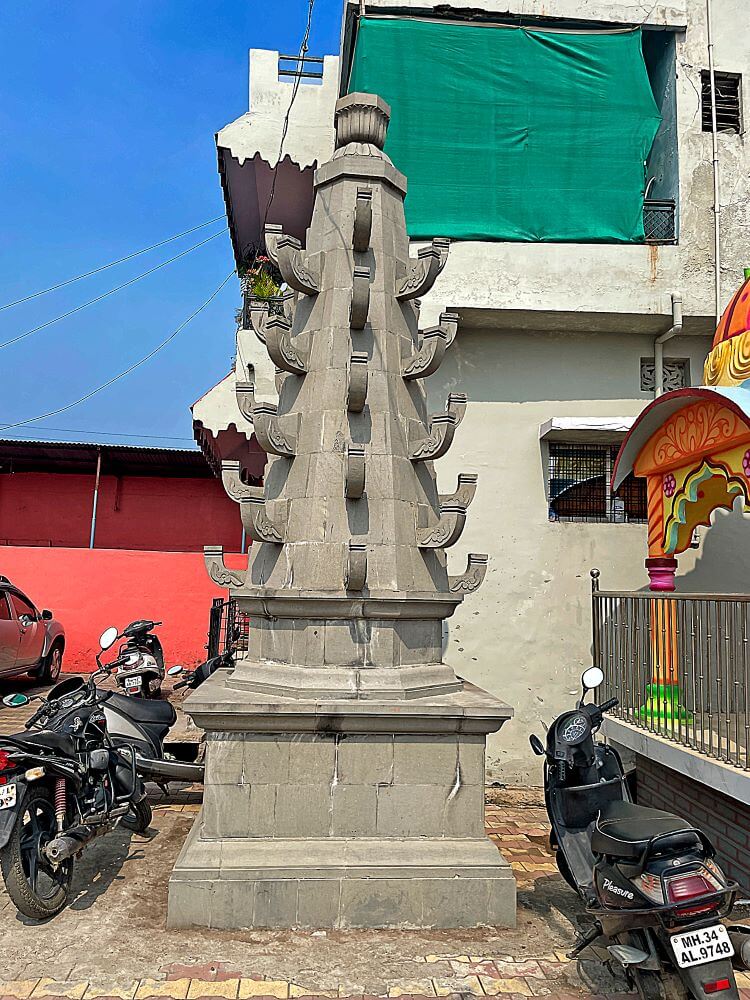
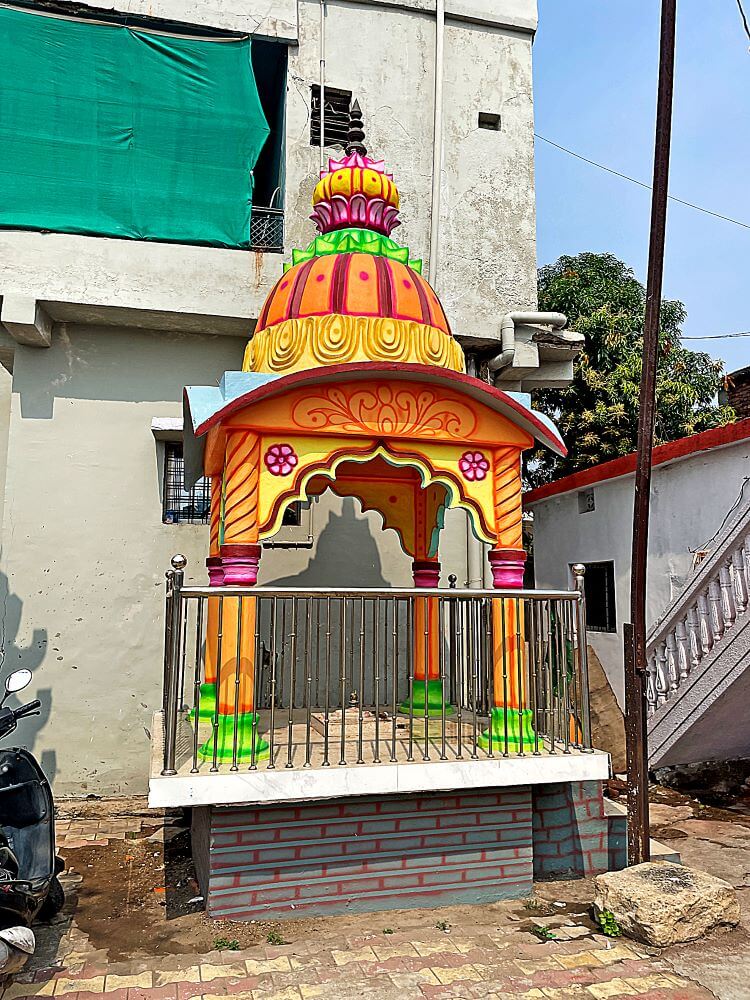
Although a new temple has been built, the Devi’s original idol in the form of a Tandala remains at the same spot. A new assembly hall (Sabhamandap) has been constructed in front of the original temple, and beyond that, another assembly hall (Nivara Shed) provides shelter for devotees. Within the sanctum (Garbhagriha), on a small platform, stands a 3-foot-tall idol of Amba Devi, appearing slightly inclined forward. The Devi’s idol is adorned with a silver crown and a mask. Within the temple premises, there is a Shivling with Nandi seated in front of it. A distinctive Deepmaal (lamp tower) stands in front of the temple. Every morning, the Devi’s grand worship (Mahapuja) is performed, followed by the evening Aarti. Tuesdays and Fridays witness a larger gathering of devotees here. Additionally, a fair (Yatra) is held here during Ashvin and Chaitra Navratra. During these 9 days, thousands of devotees visit to make vows to the Devi and to fulfill them. During the festival, Bhajan (devotional singing) and Mahaprasad (sacred food offering) are arranged after the evening Aarti. The ‘Durga Mata Daud’ (Durga Mata Procession), which commenced a few years ago in Warora town during Navratri, is particularly renowned. In this procession (Daud), starting from the Durga Mata Temple in Warora, hundreds of young men and women participate, carrying saffron flags (Bhagwa Dhwaj). The procession visits various places in the town and then concludes at the Amba Mata Temple.
It is said that for approximately 125 years, farmers from this region would annually bring grains from their fields to the temple premises to organize a Bhandara (community meal, Mahaprasad), offer Naivedya to the Devi, and partake in the Mahaprasad together. This tradition continued until a few years ago; however, due to urbanization, the extent of agriculture has diminished. Consequently, while the Bhandara is no longer held on a large scale, many farmers from the taluka’s villages still visit at their convenience, prepare Bhandara from the grains of their fields, and offer it as Naivedya to the Devi.
Due to the extensive coal mines in Chandrapur district, this city is renowned throughout the state as the ‘Black Gold City’. Furthermore, Warora, also located in this district, is famous for the 60,000,000-year-old (six crore) basalt rocks found here. Researchers claim that thousands of years old remains of creatures like dinosaurs have been found in the silt of the Wardha River bed and in the soil of Warora.
This sacred temple stands as a testament to deep spiritual devotion, ancient architectural grandeur, and rich local cultural traditions.
The sanctum sanctorum houses the divine idol consecrated according to ancient Vedic traditions, surrounded by serene courtyards and traditional temple architecture.
Navratri, Maha Shivratri, Annual Temple Jatra & Deepotsav
Compare and book flights, secure top-rated local hotels near the temple, hire reliable guides, and rent cars instantly.
Extend your pilgrimage by visiting other highly sacred temples located nearby.


Add ₹999 more to unlock FREE SHIPPING!
Your sacred cart is currently empty.
Shop Photo FramesFill in your delivery details below to place your order.
Add comment