
Add ₹999 more to unlock FREE SHIPPING!
Your sacred cart is currently empty.
Shop Photo FramesChandrapur is known as the most beautiful and scenic district in the state. The district is rich in forest wealth, perennial rivers, tiger reserves, wildlife sanctuaries, abundant mines, and factories. Its sculpture and iconography have been famous since ancient times. A temple in Kharwad village of Varora taluka stands as the crown jewel of all this sculptural beauty, famous for the intricate carvings on the idols of Brahma, Vishnu, and Mahesh housed within it.
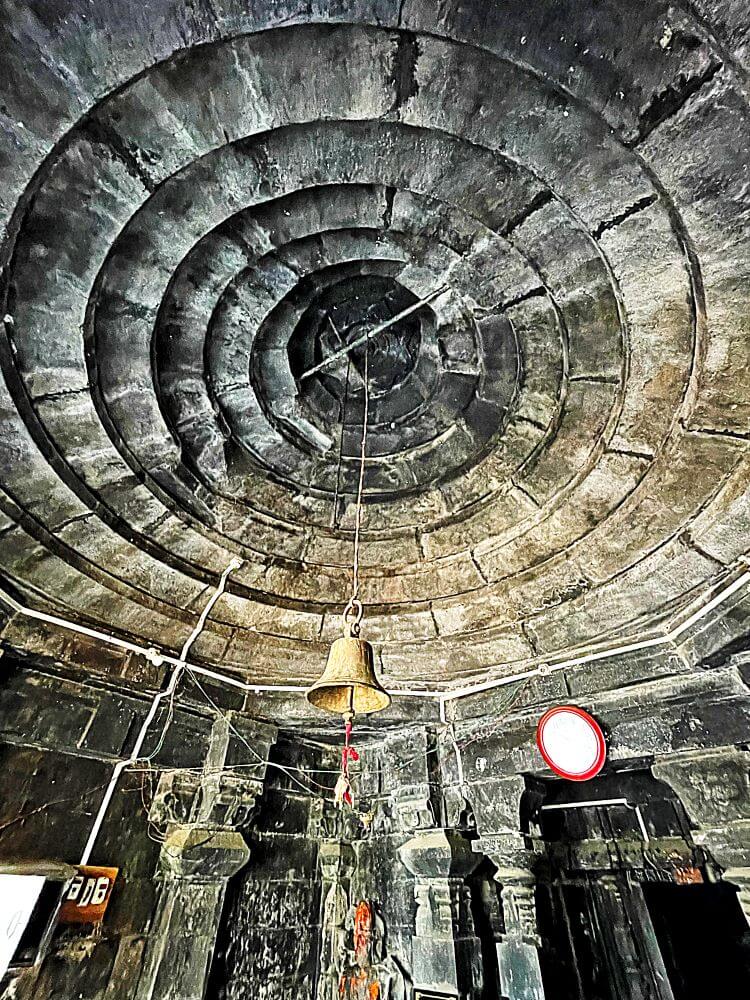
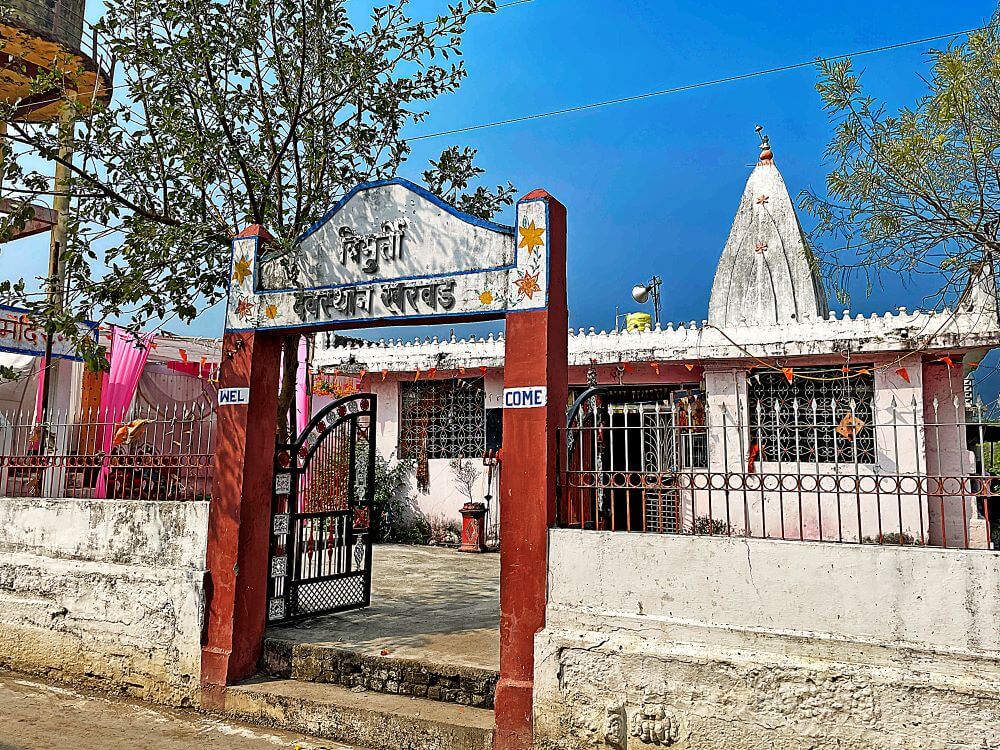
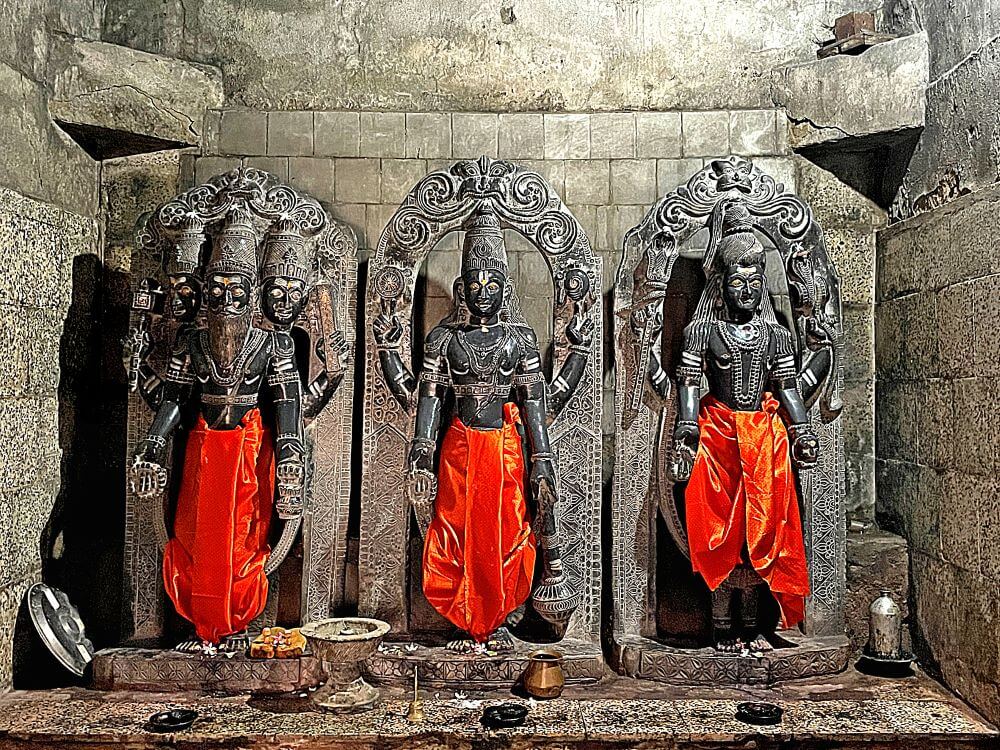
In Chandrapur district, only the villages of Dhanora and Kharwad possess Brahma-Vishnu-Mahesh (Trimurti) temples. Among them, the temple at Kharwad is considered particularly significant in terms of sculptural architecture. Kharwad village is located near the Brahmani Phata on the Nagpur-Varora road, close to Varora. This Hemadpanti-style temple is situated in the center of the village. The sanctum sanctorum contains images of Brahma, Vishnu, and Mahesh; however, these are newly installed. The main attraction here is the ancient idols of Brahma, Vishnu, and Mahesh located in the assembly hall (Sabhamandap). According to scholars, these idols are estimated to be between 1,000 to 1,200 years old. Previously, these were the original idols in the sanctum, but due to one of them being slightly damaged, they were moved to the assembly hall, and new idols were installed in the sanctum for worship.
The three idols in the assembly hall are intricately carved from head to toe. Each idol is carved from a single monolithic stone. It is said that these idols were discovered in the local riverbed. The first idol is of Lord Brahma, standing 5 feet 7 inches tall. The idol has a triangular back-slab (a flat stone behind the idol featuring various carvings, including a halo, extending to the base). This back-slab contains numerous compartments from top to bottom, each housing small, detailed images. The halo features miniature carvings of makara heads, elephants, horses, bulls, rams, and more. The four-armed idol of Lord Brahma holds the Varada Mudra and Akshamala in the left hands, while the right hands hold the Kamandalu and a manuscript. Brahma’s face features a pointed beard and curled mustaches. The artisan has poured his skill into carving every detail in stone, including the Karanda-style crown (jewel-encrusted or designed to look as such), armlets, Yajnopavita (sacred thread), garments, shawl, and anklets.
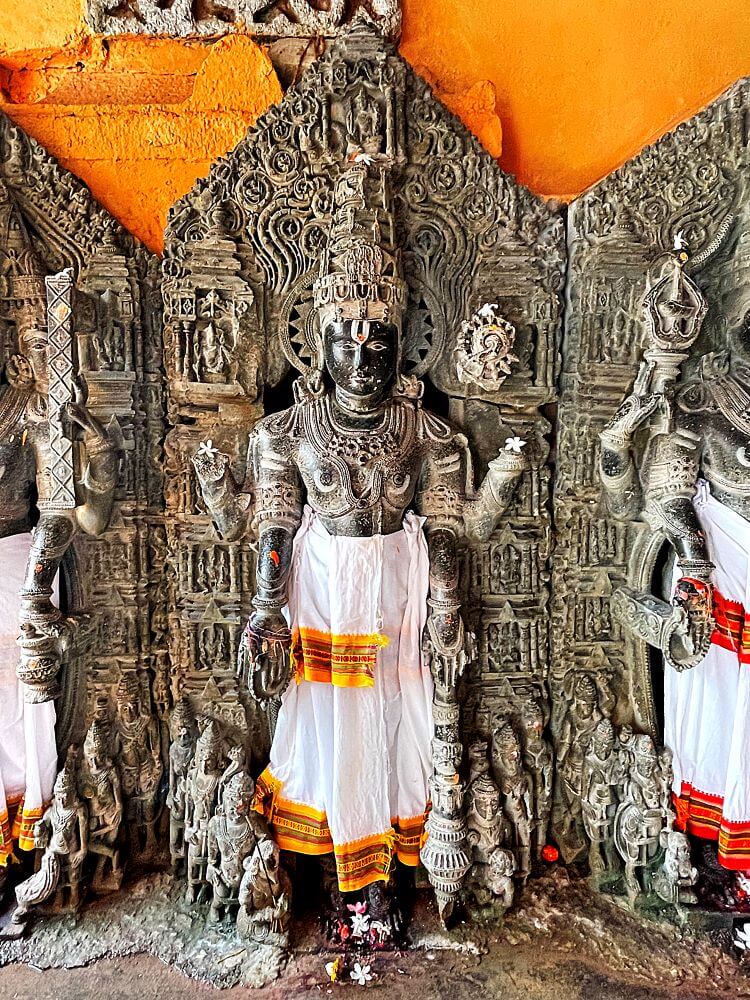
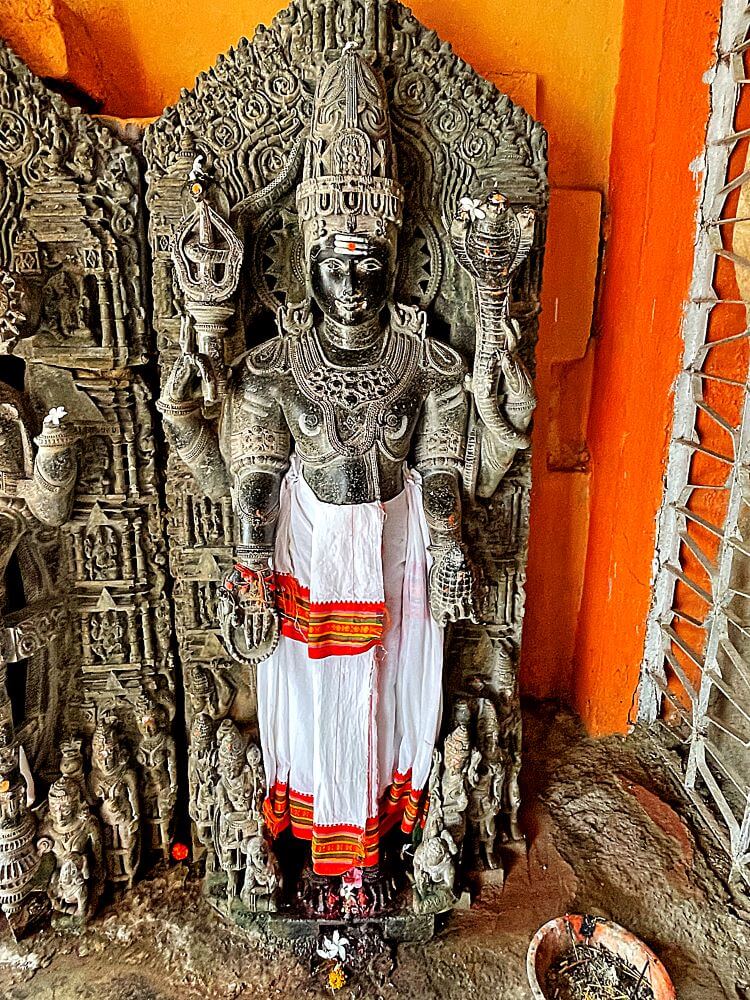
In the set of 3 idols, the idol of Lord Vishnu is in the center. This idol is 5 feet 8 inches tall and is four-armed. Due to the sequence of the four attributes—conch, discus, mace, and lotus—this form is called ‘Govinda’. The back-slab of the Lord Vishnu idol features the Dashavatara, with extremely detailed depictions of Matsya, Kurma, Varaha, Narasimha, Shriram, Shrikrishna, Parashurama, and others. Near the base of the idol are many small carved figures, including some of Vishnu’s Shaktis, female attendants holding fly-whisks, devotees, and seekers. The fullness of Lord Vishnu’s face, his gentle smile, and serene expression make this idol unique.
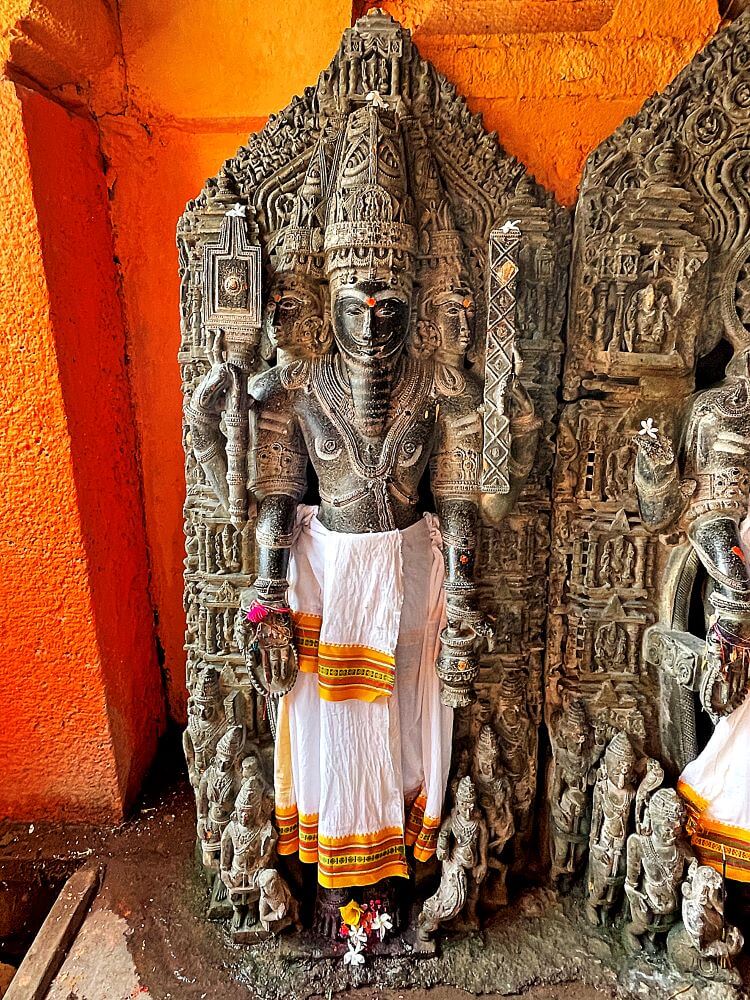
Next to the Vishnu idol is the idol of Lord Mahadeva. The stone grandeur of Mahadeva’s idol includes makara-shaped earrings, a Vaijayanti garland, Yajnopavita, crown, waist belt, abdominal band, armlets, anklets, and bangles. Mahadeva’s crown is adorned with serpent motifs, and his face bears a somewhat fierce expression. The third eye on his forehead appears covered by a sandalwood mark. This idol of Mahadeva is 5 feet 11 inches tall. Due to the serpent jewel on his head, this idol is taller than the other two. The four-armed idol of Mahadeva holds an Akshamala, a serpent noose, a three-faced serpent, and a Damaru. The body is adorned with carvings of Rudraksha beads and matching ornaments. Near Mahadeva’s feet are 8 sculptures, including Shiva’s attendants, female attendants with fly-whisks, and some holding water vessels. Other attendants are carved in dancing poses.
The sculptor has not left even an inch of space blank on these idols. These idols, literally covered in carvings from head to toe, are considered the pride of Kharwad village. It is said that in 1974, a woman from Italy offered to purchase these idols for 1,00,00,000 (one crore) rupees, but the villagers decided not to sell them. Consequently, these magnificent idols are still available for viewing today. The temple premises house a separate Shiva temple, with two Nandi statues in front of it. Additionally, a saint named Guna Mata lived in this area, and her Samadhi is also located in the village.
A festival is celebrated annually at the Trimurti Temple from Chaitra Krishna Tritiya to Chaitra Krishna Shashthi. It is said that this festival has a long-standing tradition, and saints like Kaikadi Maharaj, Rashtrasant Tukdoji Maharaj, and Namdev Maharaj of Pandharpur have performed Kirtans here.
This sacred temple stands as a testament to deep spiritual devotion, ancient architectural grandeur, and rich local cultural traditions.
The sanctum sanctorum houses the divine idol consecrated according to ancient Vedic traditions, surrounded by serene courtyards and traditional temple architecture.
Navratri, Maha Shivratri, Annual Temple Jatra & Deepotsav
Compare and book flights, secure top-rated local hotels near the temple, hire reliable guides, and rent cars instantly.
Extend your pilgrimage by visiting other highly sacred temples located nearby.


Add ₹999 more to unlock FREE SHIPPING!
Your sacred cart is currently empty.
Shop Photo FramesFill in your delivery details below to place your order.
Add comment