
Add ₹999 more to unlock FREE SHIPPING!
Your sacred cart is currently empty.
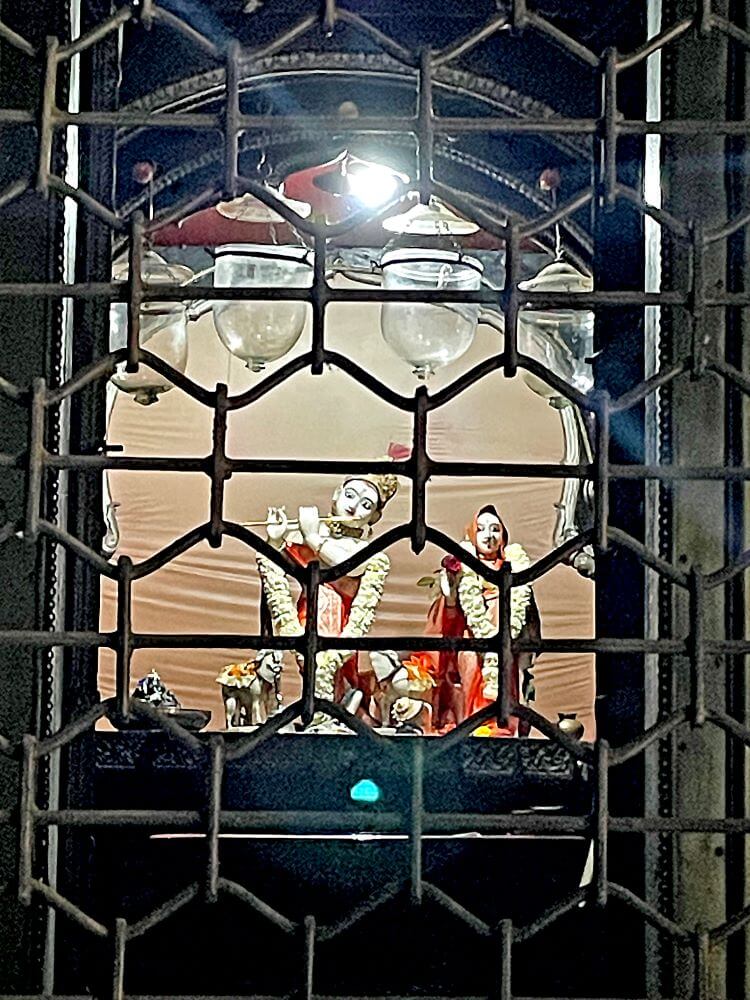
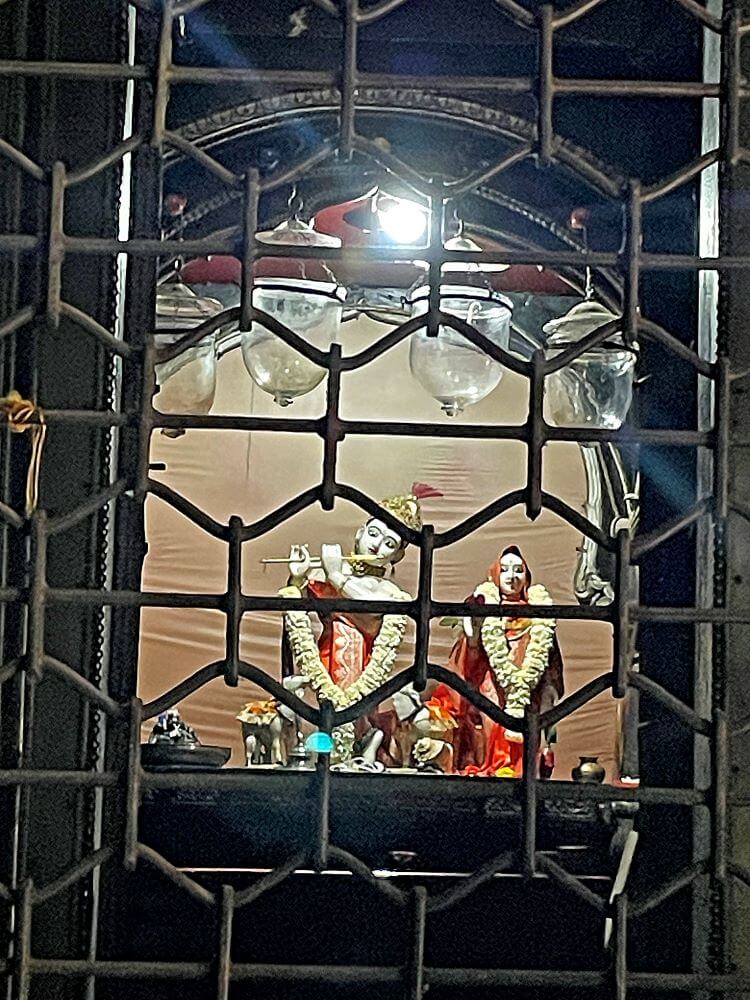
Shop Photo FramesThe Khunya Muralidhar Temple, located in the Sadashiv Peth area of Pune city, is considered a significant center of historical events. This temple was built in 1797 by Sadashiv Raghunath, also known as Dada Gadre, a financier to the Peshwas. The sanctum sanctorum of the temple houses white marble idols of Lord Krishna and Radha, crafted by the experienced sculptor Bakhatram from Jaipur. The unique name of this temple stems from an armed conflict that occurred during the Peshwa era. Due to a direct battle between soldiers during the consecration ceremony of the idols, this structure came to be known as ‘Khunya Muralidhar’ (The Bloody Muralidhar). Beyond being a place of worship, this temple served as a secret meeting place for revolutionaries such as Vasudev Balwant Phadke and the Chapekar brothers.
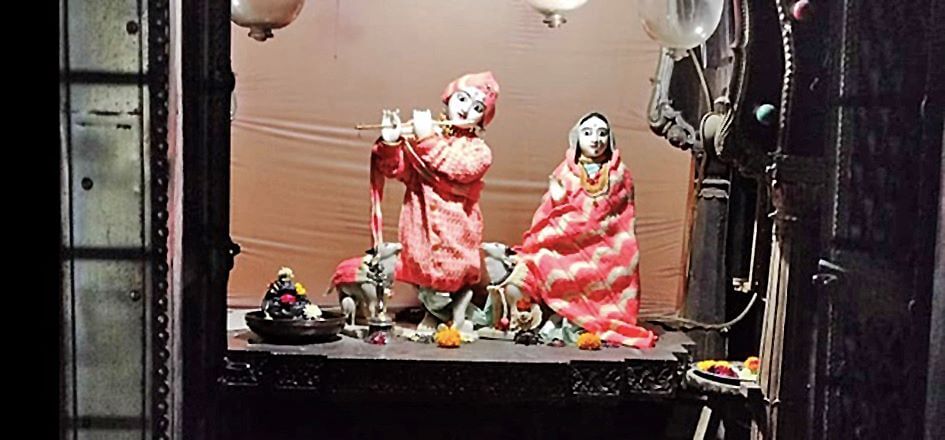
According to historical records, the temple was built by Dada Gadre in the late 18th century during the Peshwa reign. The site where the Ahilyadevi High School stands today was once the location of the large mansion (wada) of the Gadre financiers. Following a divine vision of Lord Muralidhar, Dada Gadre decided to build the temple in the expansive garden in front of his mansion. This Peshwa-era structure has been preserved in its original form to this day. Dada Gadre had invited the famous Jaipur sculptor Bakhatram to Pune to craft the idols. Bakhatram created the idols of Lord Krishna and Radha from white marble. Along with these main idols, two cows with calves and an image of Garuda were also created at the Gadre mansion. The idol of Lord Krishna is one foot and eleven inches tall, while the idol of Radha is one foot and eight-and-a-half inches tall. Gadre paid the sculptor ten thousand rupees as remuneration for this work.
When the fame of these idols spread far and wide, the second Bajirao Peshwa developed a desire to possess them. Dada Gadre humbly declined this proposal and immediately began preparations for the consecration ceremony. The installation rituals commenced on the morning of April 13, 1797. Upon learning that Gadre had moved the idols from the mansion to the garden, the Peshwa sent an English officer named Mr. Boyd along with his troops. The Arab soldiers in Gadre’s service put up a fierce resistance against this force. Approximately one hundred and fifty soldiers lost their lives in this armed skirmish. The consecration ceremony was completed on this battlefield, which was soaked in blood.
It is because of this bloody history that the temple earned the name ‘Khunya Muralidhar’. Due to the refusal to hand over the idols, the second Bajirao Peshwa became deeply enraged with Dada Gadre. The Peshwa confiscated all of Gadre’s property and kept him imprisoned in the Ahmednagar jail for 23 years. In Gadre’s absence, Vedamurti Narayanbhatt Khare managed the temple. Despite having no source of income, Khare continued all religious rituals without interruption. After his release from prison in 1820, Gadre returned to Pune. Seeing the selfless devotion of Narayanbhatt Khare, he donated the temple and the adjacent property to him and took Sannyasa (renunciation) himself.
Since Dada Gadre took Sannyasa, the Khare family has been managing the temple. During the freedom struggle, this temple became a major hub for secret meetings of revolutionaries. The pioneer revolutionary Vasudev Balwant Phadke had a close association with this structure. It was within the premises of this temple that he appealed to the youth to rise against the British. In the presence of Lord Muralidhar, he would offer ‘Dahi-Pohe’ (curd and flattened rice) to revolutionaries and administer oaths of service to the nation. Vishnushastri Khare, a friend of the Chapekar brothers, cooperated in this movement. After the assassination of Rand, the British government kept a close watch on this temple. The British officer Bruin would often come in disguise to monitor the activities at the temple. Due to the presence of many great revolutionaries, this land is considered a source of inspiration for independence.
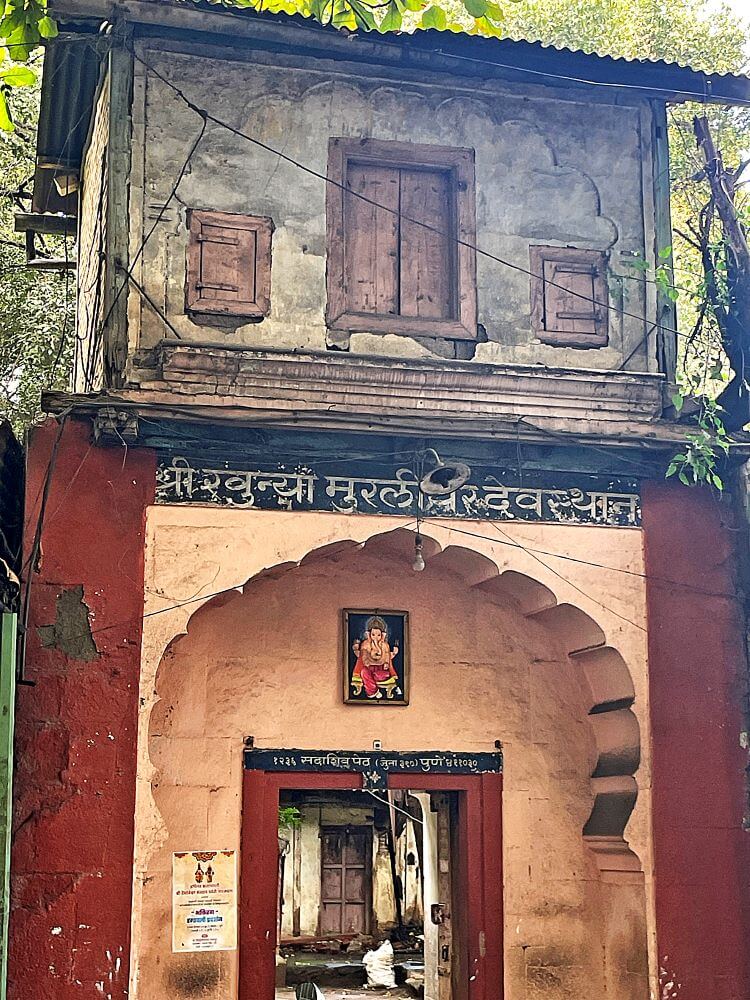
The temple is surrounded by a sturdy stone fortification featuring a two-story entrance gate. This gate, equipped with wooden shutters, has stone seats on both sides for guards. The historical Nagarkhana (drum house) on the upper floor contains an image of Lord Ganesha. Through this entrance, one enters the paved courtyard of the temple. The courtyard houses a Tulsi Vrindavan and several ancient structures. The temple is structured with a Sabha Mandap (assembly hall), Antaral (vestibule), and Garbhagriha (sanctum sanctorum). The Sabha Mandap is entirely wooden in nature, featuring four rows of pillars. The arches on the carved pillars add to the architectural beauty of the structure. The four corners of the ceiling of the Sabha Mandap are adorned with floral and leaf carvings. Mythological paintings by Raja Ravi Varma can still be seen here today. In 1855, Balaji Naik Kelkar completed the construction of this Sabha Mandap and the Nagarkhana in front of the original temple. This Sabha Mandap houses a hundred-year-old clock and a chandelier.
Beyond the Sabha Mandap lies the stone-built Antaral and Garbhagriha. This section of the Antaral is slightly elevated from the Sabha Mandap and is accessed by three steps. The circular pillars in the Antaral feature vertical fluted carvings. The main entrance to the Garbhagriha also features intricate carvings. In the center of the Garbhagriha stands a large throne made of black stone. On this throne are the idols of Muralidhar and Radha, crafted from pristine white marble. The throne here is designed with sixteen angles on the inside and twenty on the outside. This specific design resembles a Siddha Yantra. A unique feature of the Muralidhar idol is that it stands on the toe of only one foot. The idol has no support or halo behind it. Beside the idols are two cows with calves, looking up at Muralidhar. In front, a well-defined brass idol of Garuda stands with folded hands.
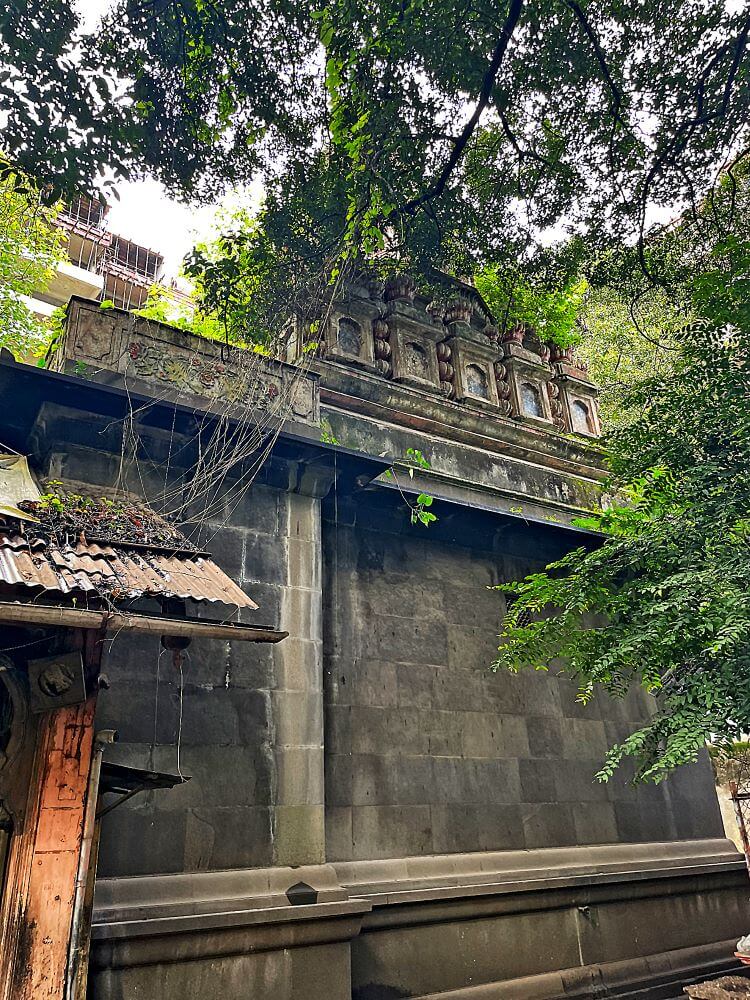
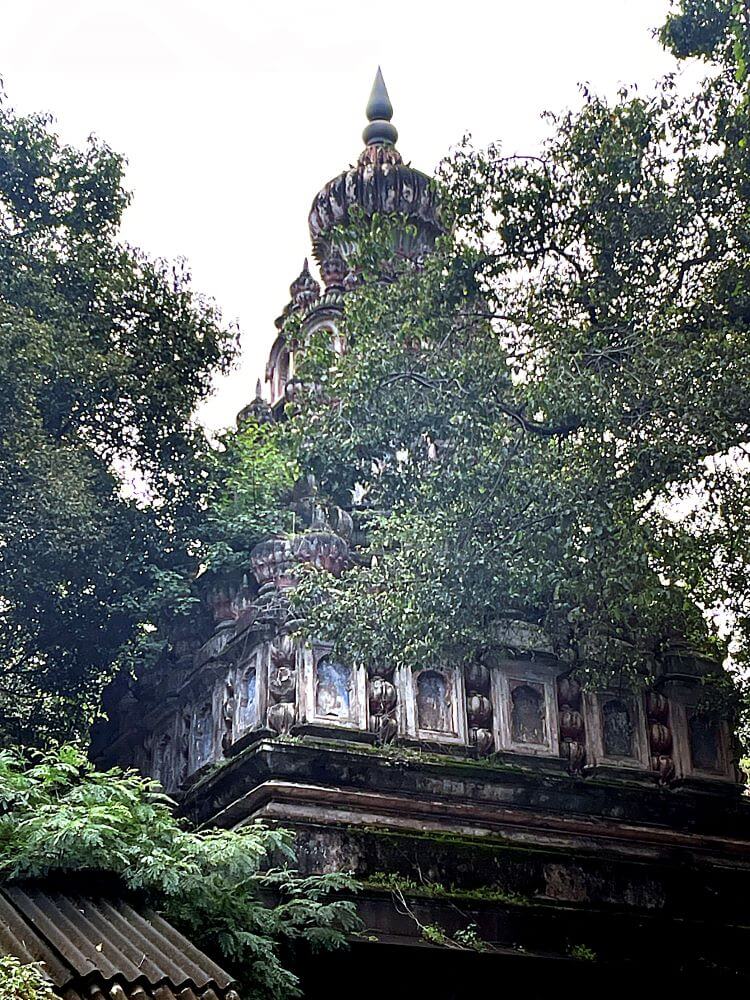
The roof of the Garbhagriha features a large, three-tiered Shikhara (spire). The lower layer of this Shikhara is square, while the upper two layers are circular. Various niches on the Shikhara contain carved idols of different deities. At the apex of the Shikhara is an Amalaka, topped by a Kalash. In 1921, Gopalrao Apte renovated this Shikhara. Various religious programs are organized in the temple throughout the year. Every morning, Vishnu Sahasranama and Gita chanting take place here. From Kojagiri Purnima to Tripurari Purnima, Kakad Aarti is performed at dawn. During the month of Shravan, the Gokulashtami festival is celebrated for ten days. At the time of Krishna’s birth, the idol of Muralidhar is brought to the Sabha Mandap for the cradle ceremony. During this time, many eminent Kirtankars perform Kirtans and discourses here. Devotees can have Darshan of Lord Muralidhar here daily from 6:30 AM to 12:00 PM and from 4:00 PM to 8:00 PM.
This sacred temple stands as a testament to deep spiritual devotion, ancient architectural grandeur, and rich local cultural traditions.
The sanctum sanctorum houses the divine idol consecrated according to ancient Vedic traditions, surrounded by serene courtyards and traditional temple architecture.
Navratri, Maha Shivratri, Annual Temple Jatra & Deepotsav
Compare and book flights, secure top-rated local hotels near the temple, hire reliable guides, and rent cars instantly.
Extend your pilgrimage by visiting other highly sacred temples located nearby.


Add ₹999 more to unlock FREE SHIPPING!
Your sacred cart is currently empty.
Shop Photo FramesFill in your delivery details below to place your order.
Add comment