
Add ₹999 more to unlock FREE SHIPPING!
Your sacred cart is currently empty.
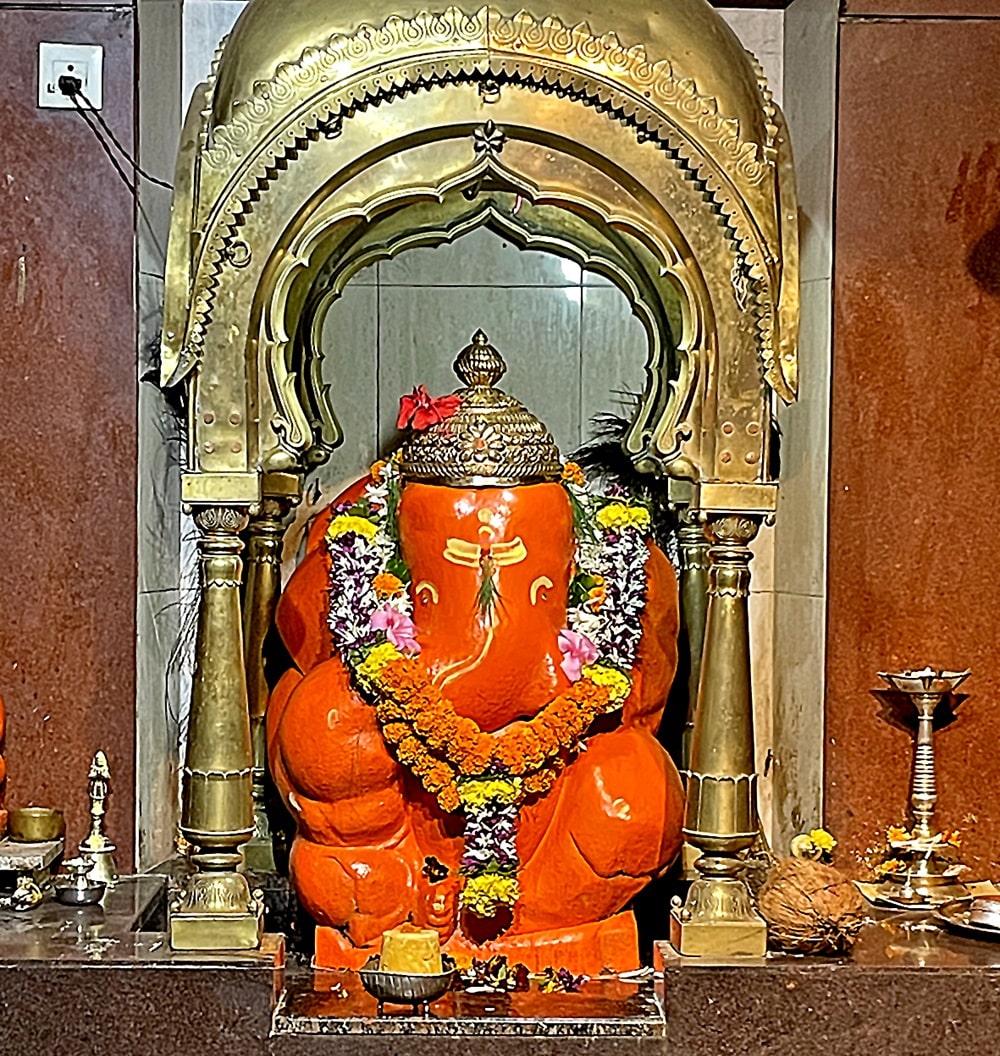
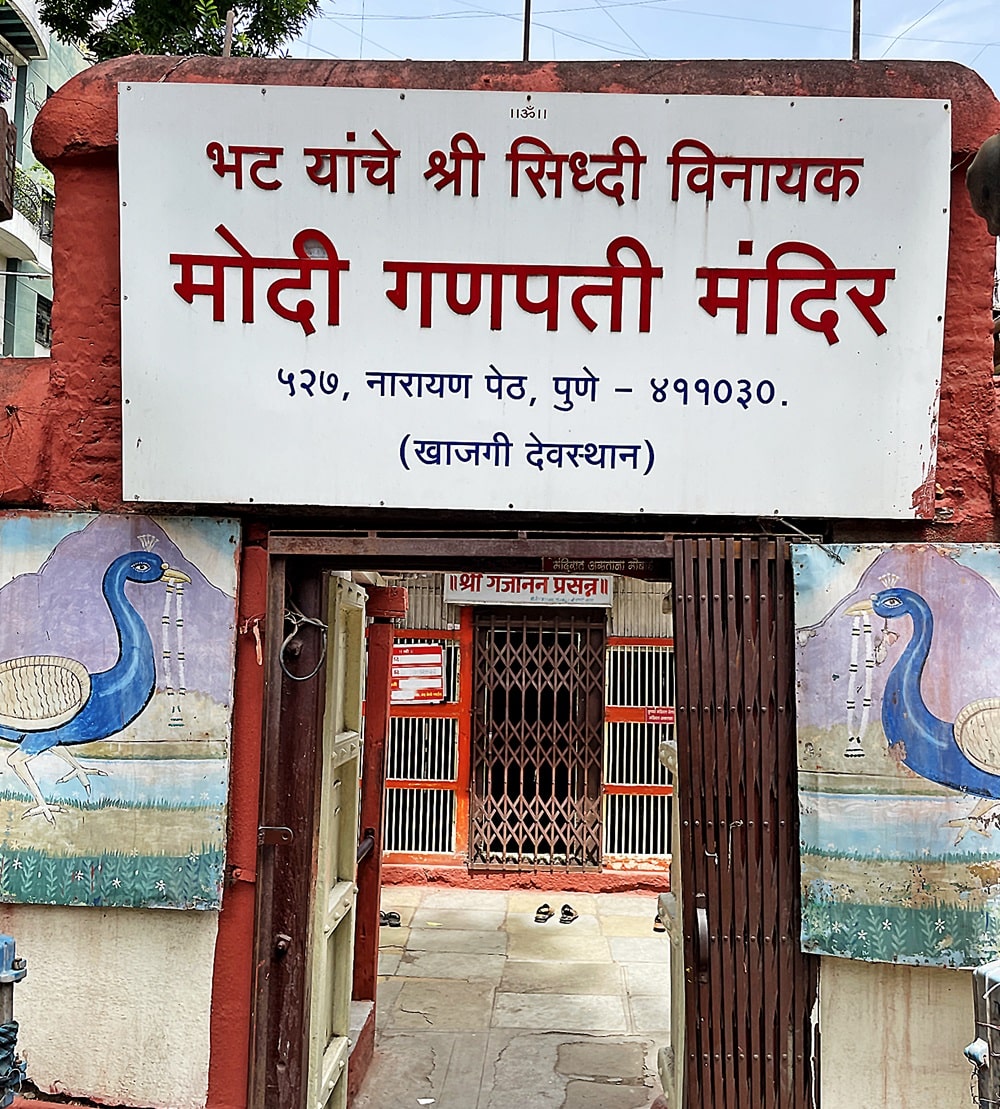
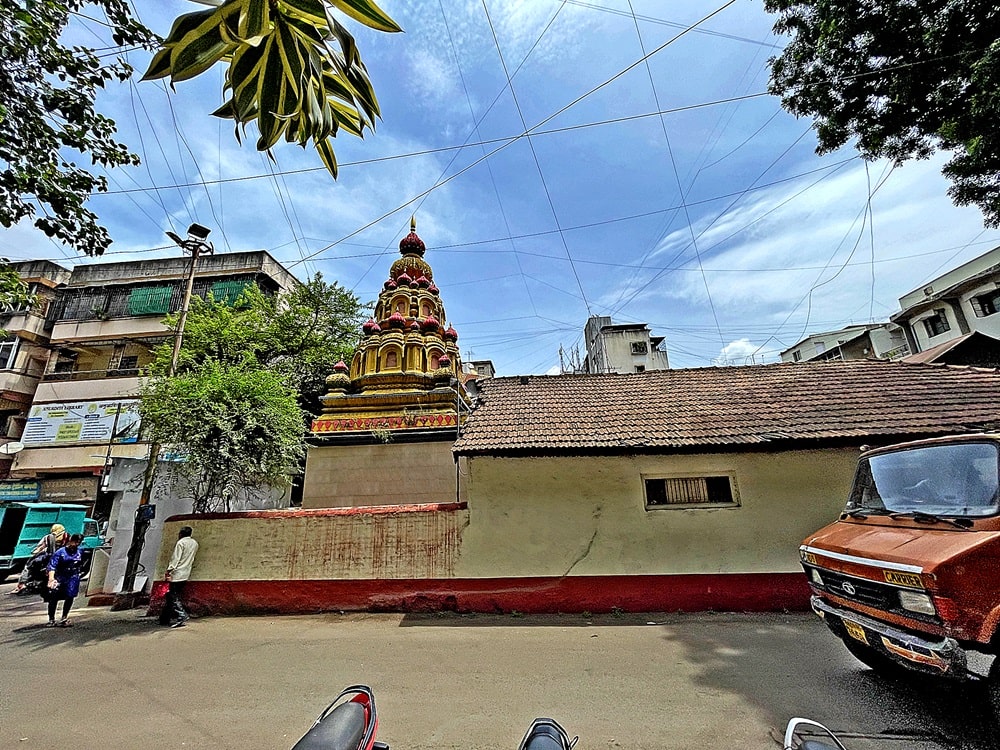
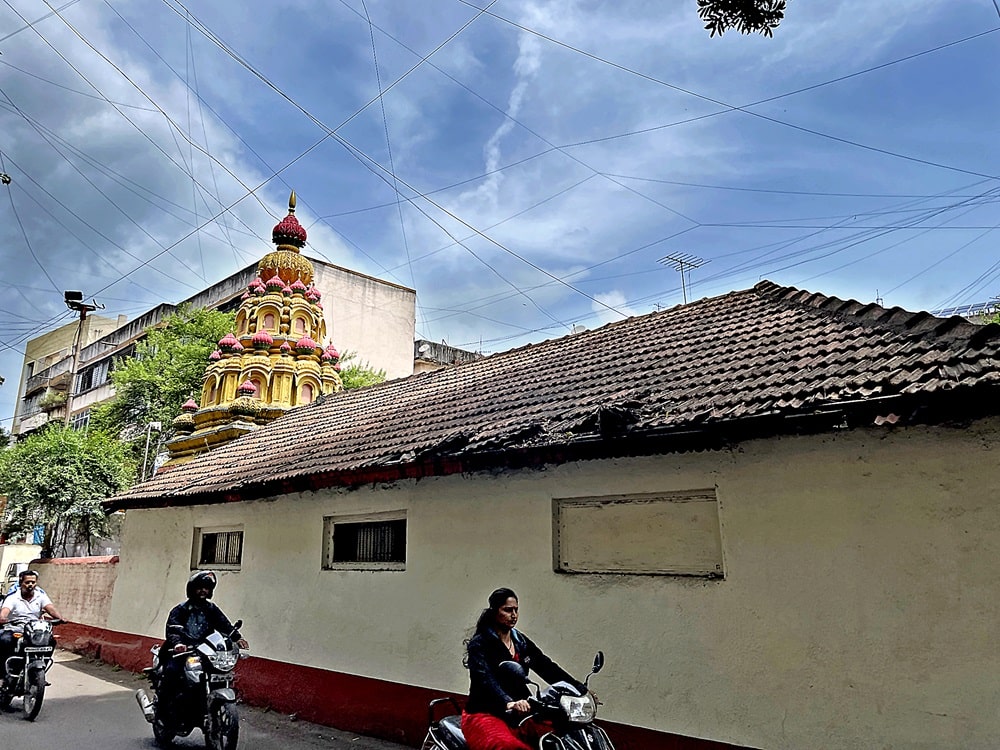
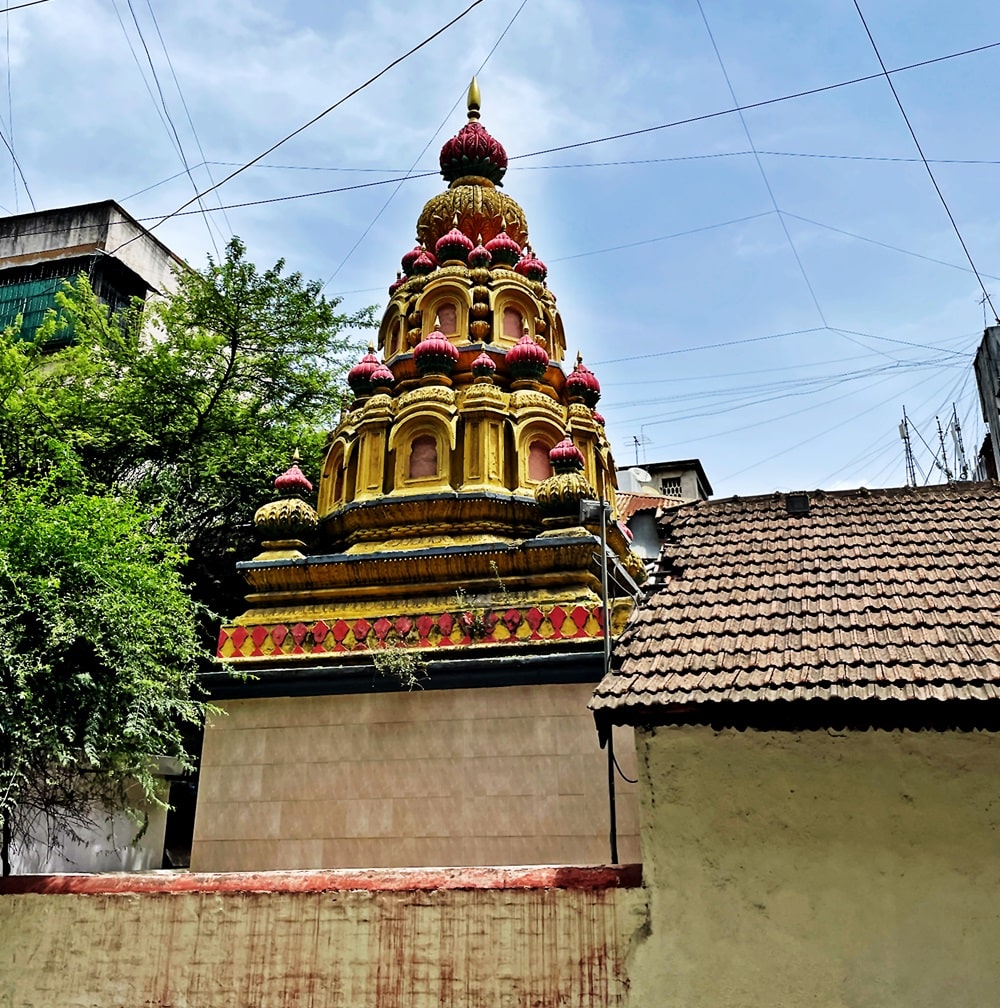
Shop Photo FramesLocated in the Narayan Peth area of Pune, the Modi Ganpati Temple is over two hundred years old. This shrine became famous as ‘Modi Ganpati’ because the idol was discovered in the garden of Khushrusheth Modi, an interpreter during the Peshwa era. The Bhat family from Shirgaon in Ratnagiri district installed this Swayambhu (self-manifested) Ganesha and constructed this tiled-roof temple. Clear references to this shrine are found in official documents from the Peshwa Daftar dating back to 1811. Built in the style of a traditional Puneri Wada, this temple is renowned for its Siddhivinayak idol with a right-turning trunk. Due to its historical heritage and unique architecture, the Pune Municipal Corporation has included this temple in the list of Grade ‘A’ heritage sites. A historical map of Pune from the period of 1869 to 1872 is preserved within this ancient structure.
The temple is situated on the road leading from the main street of Narayan Peth towards the riverbed. The history of the temple is linked to important records of the Peshwa period. While this temple is not mentioned in the official list of 1774 during the reign of Sawai Madhavrao Peshwa, it was included among the select temples in Pune that received invitations, Akshata (sacred rice), and Dakshina when Peshwa Bajirao II was blessed with a son in 1811. A Parsi gentleman named Khushrusheth Modi served as an interpreter in the Peshwa court. He was the primary medium of communication between the British Resident and the Peshwas. The Peshwas had gifted him several villages.
Khushrusheth Modi’s residence and garden were located in this central part of Narayan Peth. The idol of Ganpati was discovered in this garden during the early period. Around that time, a Brahmin family named Bhat had come to Pune from Shirgaon in Ratnagiri district in search of a livelihood. They formally installed this Ganpati and built a small temple. Considering this deity as their family deity (Kuldaivat), they began worshipping Him. Since then, the management of this temple has been passed down through generations of the Bhat family.
During the Peshwai era, a large fish market used to be held in the vicinity of this temple. Because a large number of fishermen selling Bombay Duck (Bombil) would sit there, the local people began calling this Ganpati by the nickname ‘Bomblya Ganpati’. Khushrusheth Modi died mysteriously in 1815, after which his garden was handed over to Sardar Natu. During the British rule, this temple received an annual grant of thirty-nine rupees.
This structure, designed in the style of a traditional Puneri Wada, is very simple and has a tiled roof. There is a small temple of Maruti near the main entrance. One enters the temple hall through the entrance. There is an ancient tree here. Devotees consider it a Shami tree and worship it. According to the study of botanists, this is a rare tree of two-colored acacia.
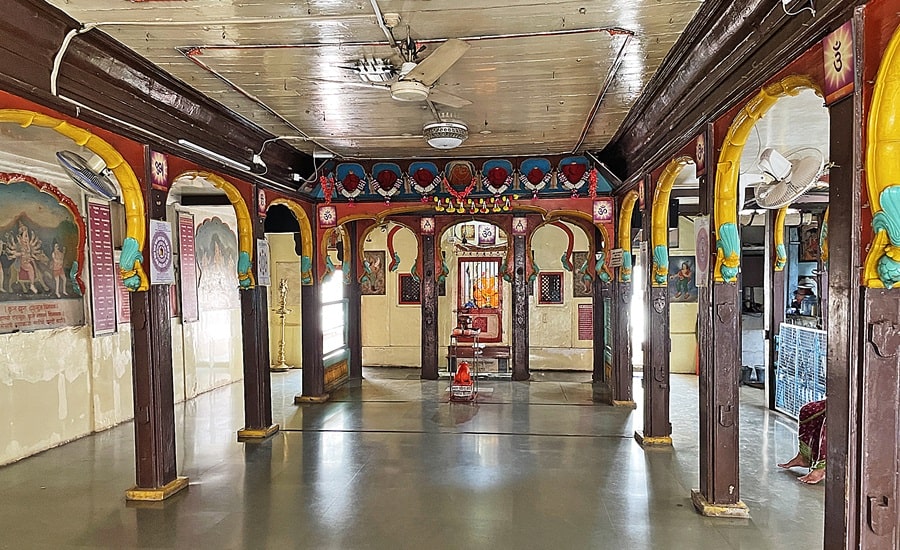
The wooden assembly hall (Sabhamandap) of the temple was constructed in 1868. The syllable ‘Om’ is carved in various scripts on the wooden pillars of this hall. Pictures of Ganpati from the four Yugas and detailed information about them are displayed on the walls. A rare map of Pune city from the period of 1869 to 1872 is preserved in this assembly hall. The layout of the old Peths of Pune is clearly visible in it. The main sanctum sanctorum (Garbhagriha) of the temple is made of brickwork. A four-armed Ganesha idol with a right-turning trunk is seated here in a brass arch (Makhar). This vermilion-smeared idol is about three and a half feet tall. One hand of the idol rests on the lap, while the other holds a trident. This idol is believed to be Swayambhu. The wooden roof of the temple is covered with Mangalore tiles. Above it stands a tall spire (Shikhar) in the Peshwa architectural style. There are four smaller spires on the roof on all four sides of this main spire. There are niches (Devkosthak) on both levels of the main spire. There are finials (Kalash) above these niches. At the top of the spire, there are two Amalakas with a finial above them.
A unique tradition of Puranic recitation has been continuously practiced at the Modi Ganpati Temple since 1869. Religious texts and Puranas are recited here every evening from five to six o’clock. This tradition has been faithfully preserved for four generations. Even today, many senior citizens and devotees regularly attend the temple’s assembly hall to listen to these Puranas. Various religious and cultural programs are organized in the temple throughout the year. The Ganesha Janmotsav in the month of Magh is celebrated with great enthusiasm for five days. During this period, Sahasravartana (thousand-fold chanting), Kirtans, and special worship rituals are organized. After the great famine of 1887, a unique tradition of pouring a continuous stream of water over the Ganpati was started on Ashadh Shuddha Pratipada. This tradition is still followed with the same devotion today. On every Vinayaki Chaturthi, classical music concerts are organized here, and many famous artists offer their services.
The temple also has a special historical connection with India’s freedom struggle. The conclusion of the one crore Atharvashirsha chanting ritual organized in Pune in 1948 took place in the courtyard of this very temple. This temple still stands as a witness to this historic ceremony, which was conducted by Pandit Patwardhan. The Pune Municipal Corporation has included this temple among Grade ‘A’ historical and cultural structures. Although this temple is privately owned, it is open for general devotees from seven in the morning to twelve in the afternoon and from four in the evening to eight at night. This Ganpati is also known as ‘Vivah Vinayak’. Many newlyweds come here to seek blessings.
This sacred temple stands as a testament to deep spiritual devotion, ancient architectural grandeur, and rich local cultural traditions.
The sanctum sanctorum houses the divine idol consecrated according to ancient Vedic traditions, surrounded by serene courtyards and traditional temple architecture.
Navratri, Maha Shivratri, Annual Temple Jatra & Deepotsav
Compare and book flights, secure top-rated local hotels near the temple, hire reliable guides, and rent cars instantly.
Extend your pilgrimage by visiting other highly sacred temples located nearby.


Add ₹999 more to unlock FREE SHIPPING!
Your sacred cart is currently empty.
Shop Photo FramesFill in your delivery details below to place your order.
Add comment