
Add ₹999 more to unlock FREE SHIPPING!
Your sacred cart is currently empty.
Shop Photo FramesLocated in the basins of the Nira and Karha rivers in the Baramati taluka of Pune district, the village of Karanje is famous for its ancient Someshwar Temple. It is believed that Lord Shiva, in the form of Sorati Somnath Mahadev, resides here, and every year during the holy month of Shravan, the Lord grants darshan in the form of a living serpent. This appearance, known as ‘Swari Yene’ (the arrival of the deity), is used to predict weather patterns based on the color and size of the serpent that appears. The significance of this temple reached every household in Maharashtra through the film ‘Satiche Vaan’, released in 1969. The state government has honored this awakened shrine by granting it the ‘B’ grade status of a pilgrimage site.
The history of the Karanje region appears to be as old as the dawn of human civilization. Archaeological excavations conducted in 1965 at Songaon, near the temple, provided evidence of a Chalcolithic human settlement existing in this area 3,500 years ago. The pottery found during these excavations relates to the Jorwe and Malwa cultures, proving the antiquity of this land. The current Someshwar Temple primarily dates back to the thirteenth and fourteenth centuries. It was constructed during the era of the Yadava kings of Devagiri. During the medieval period, the temple remained under the protection of various regimes, and records indicate that Rajmata Jijabai took a special interest in the maintenance of this temple in the seventeenth century.
According to the legend in the ‘Someshwar Mahatmya’ text, a man named Mahadu Gavali lived in Karanje village with his family. His wife, Malu, was childless and suffered harassment from her mother-in-law and sister-in-law. Despite this, Malu spent her spare time in devotion. One day, a sage who arrived at her doorstep advised her to worship Lord Shiva. Following this, after twelve years of intense worship, Lord Mahadev appeared to her in a dream and said, ‘Come to Sorati Somnath in Saurashtra and worship me.’ For this, Mahadev would send a divine chariot from Saurashtra to Karanje village every midnight to fetch her. She would travel in that chariot every midnight to worship Sorati Somnath and return by dawn.
While this routine continued, one day her husband, Mahadu Gavali, decided to follow her. He secretly boarded the chariot that had come to fetch her and traveled to Saurashtra. Upon seeing the doors of the Sorati Somnath temple open automatically for her at midnight, he realized the depth of his wife’s devotion. However, unable to board the return chariot, he remained there. Back in Karanje, rumors spread that Mahadu had disappeared, and Malu was accused of making him vanish. Then, Mahadev appeared to her in a dream and said, ‘You no longer need to come to Saurashtra; I will appear in your village in the form of a serpent drinking milk from a cow’s udder, and you shall have my darshan then.’ A shepherd from the village, surnamed Khomane, saw a snake on a cow and tried to strike it with an axe. When Malu realized this, she apologized to Mahadev. Subsequently, Mahadev gave her a vision in a dream, saying, ‘I will manifest in your village in the form of a Linga.’
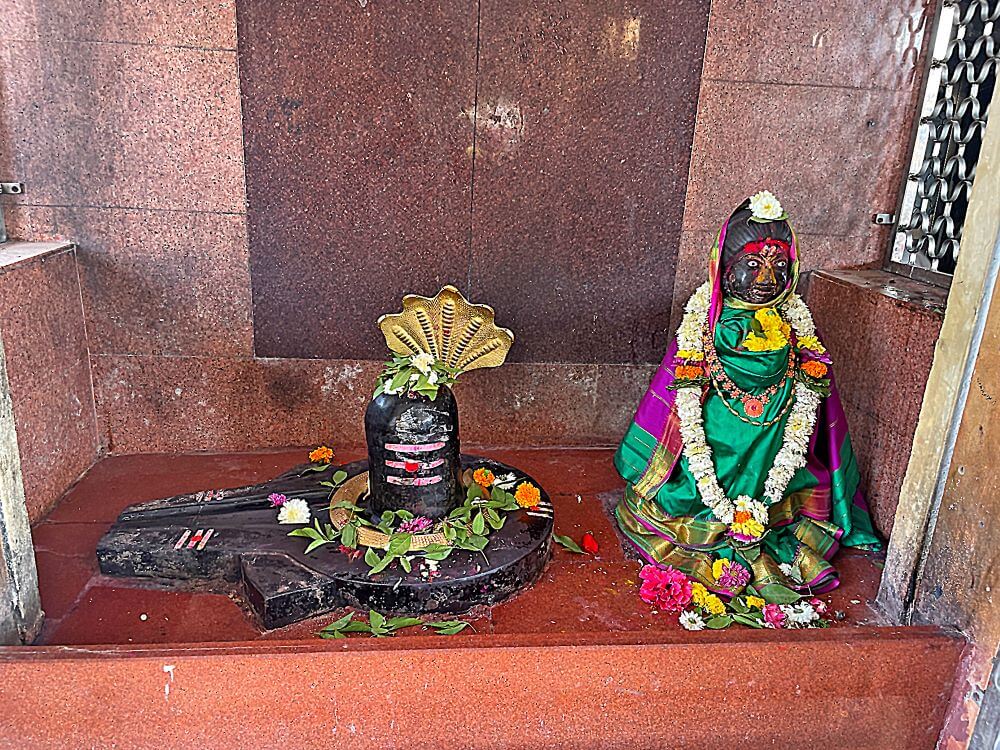
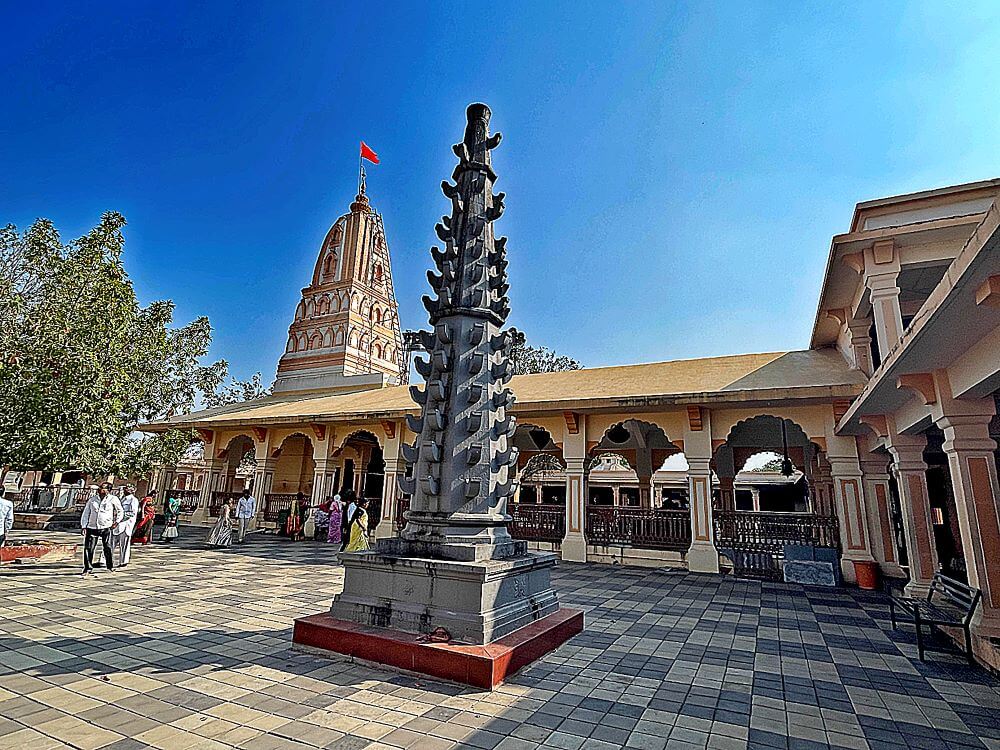
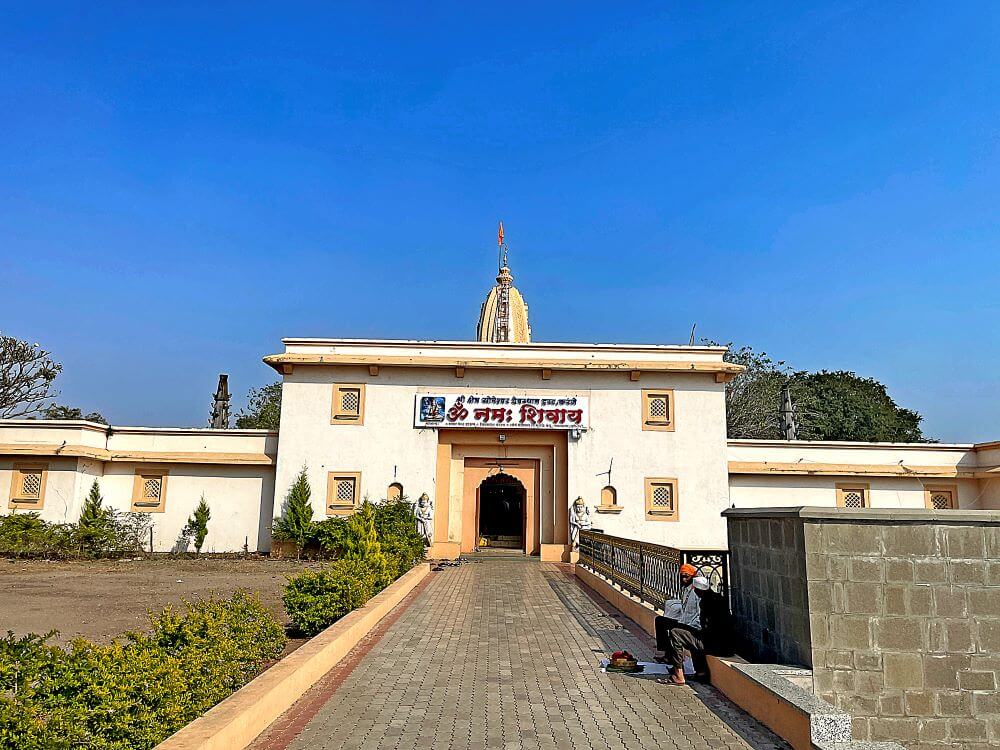
As Mahadu Gavali did not return, the villagers decided to burn Malu to death as punishment. However, she pleaded with the villagers to honor her final wish, based on the dream vision granted by Mahadev. As per her instructions, the villagers dug the ground, and a fountain of water gushed out, from which a Shiva Linga manifested. Meanwhile, Mahadu Gavali returned to the village and recounted to the villagers the divine chariot that came for Malu, the description of Sorati Somnath in Saurashtra, and the glory of his wife’s devotion. Hearing this, the villagers were filled with remorse. Due to this event, the village was named ‘Karanje’ and the deity ‘Someshwar’. Even today, there is a separate temple of Malubai at a short distance from the main temple. The spot where the divine chariot used to land is also marked. It is an ancient tradition to have darshan of Malubai before entering the main temple. The temple, situated near the banks of the Nira River, has a spacious campus. There is a large parking area in front of the temple, and several shops selling worship materials are located adjacent to it. A paver-block path leads from here to the temple, lined with many ancient tamarind trees. The surrounding stone fortifications give the temple the appearance of a ground fort. One enters the temple courtyard through a two-story main entrance gate in the fortification. There are sculptures of gatekeepers (Dwarpal) on both sides of the entrance. In the courtyard, in front of the temple, stands a stone lamp pillar (Deepmal) about 40 feet high. Along the inner side of the outer fortification, there is a structure of arched corridors (Ovya). There is a large stepwell (Barav) in the temple premises, famous as a holy well. It has steps to descend, and devotees drink its water as sacred Tirtha. This well is especially famous for verifying truth and falsehood. It is said that to settle a dispute, a person is lowered into this well, and questions are asked from above. If the person speaks a lie while in the well, the snakes residing there do not let the person out until they confess their crime. Even today, people come here to take an oath of truth.
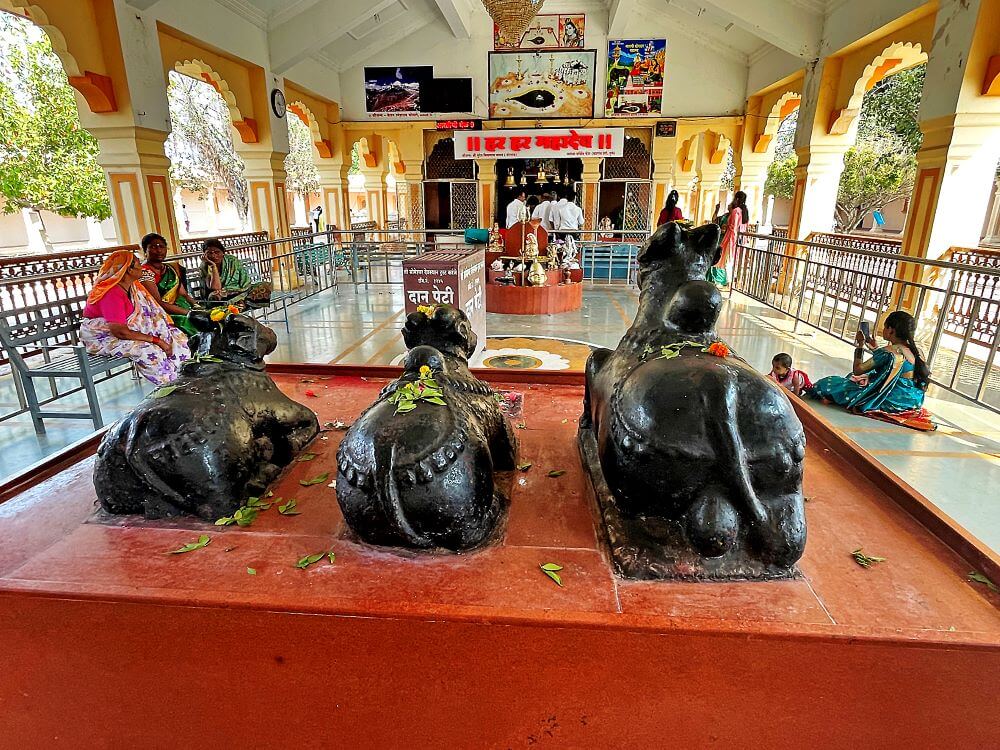
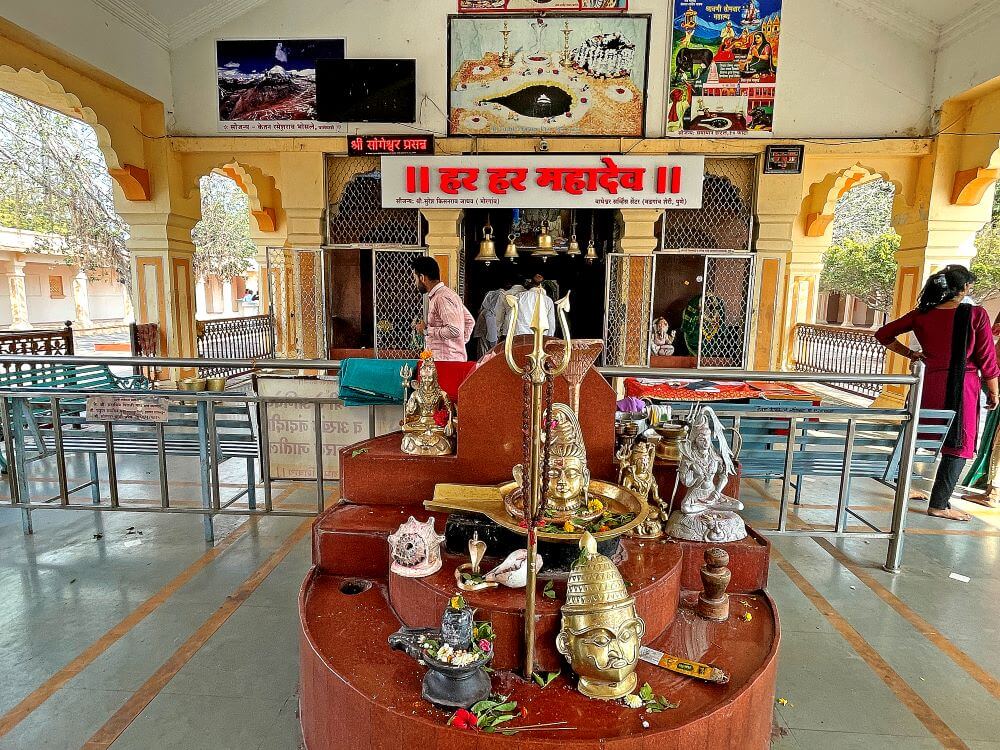
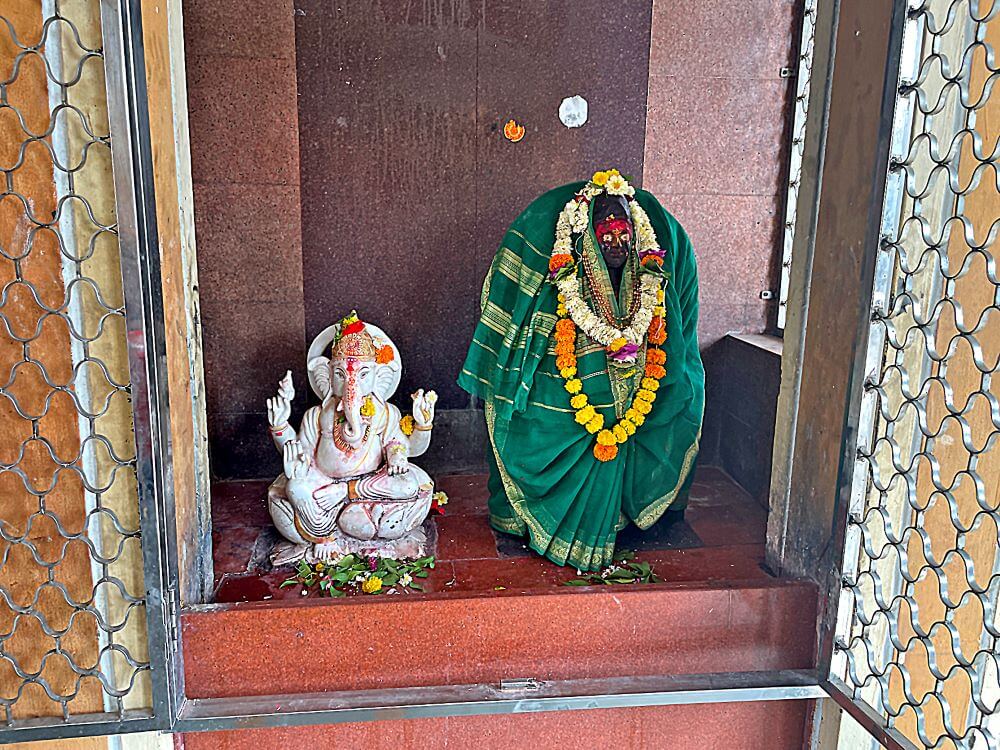
The courtyard contains many old trees and a large grove of tamarind trees. Within the fortification, there is a ‘Chafyachi Aali’ (a lane of Chafa trees). The serpent that arrives for darshan during Shravan is safely released into that area. The temple structure consists of a semi-open assembly hall (Sabhamandap), an intermediate chamber (Antaral), and the sanctum sanctorum (Garbhagriha). In the assembly hall, near the entrance, there are three Nandi statues on a platform. In front of these Nandis, on a circular stone platform, is a Shiva Linga and a brass mask of Shankar. All the outer pillars of the assembly hall are connected by arched gateways. Beyond this are the Antaral and Garbhagriha. To the left of the Antaral is a stone idol of Sati Malubai, with a Shiva Linga beside it, while on the right, on a platform, are idols of Parvati and Ganpati. The door frames of the Garbhagriha feature beautiful carvings. In the sanctum, which is slightly deep, there is a self-manifested (Swayambhu) Shiva Linga in the center on the ground. The base (Shalunka) of this Shiva Linga is covered with a silver sheet. The Linga itself appears to be divided into two parts. There is a circumambulation path (Pradakshina Marg) around the sanctum. The spire (Shikhara) above the sanctum is adorned with numerous niches for deities.
Various festivals are celebrated throughout the year at the Someshwar Temple. Every Monday during the holy month of Shravan, a live serpent is seen here, and the local people refer to this phenomenon as ‘Swari Yene’ (the arrival of the deity). It is the firm belief of the devotees that Lord Mahadev himself arrives in the form of a serpent from Sorati Somnath. This serpent rests upon the Shivling and accepts the worship of the devotees; based on its color and the time of its appearance, the knowledgeable elders of the village predict the upcoming weather and crop conditions. On the day of Mahashivratri, bhajan and kirtan are organized in the temple throughout the night. During this time, the Pindi is adorned with special decorations. In the palanquin procession held on the third Monday of Shravan, the first right of darshan is given to a herdsman with the surname Khomane, as it was his ancestor who first received the vision of Mahadev. A grand fair is held every year on the last Monday of Shravan. At this time, thousands of devotees come here for darshan.
This sacred temple stands as a testament to deep spiritual devotion, ancient architectural grandeur, and rich local cultural traditions.
The sanctum sanctorum houses the divine idol consecrated according to ancient Vedic traditions, surrounded by serene courtyards and traditional temple architecture.
Navratri, Maha Shivratri, Annual Temple Jatra & Deepotsav
Compare and book flights, secure top-rated local hotels near the temple, hire reliable guides, and rent cars instantly.
Extend your pilgrimage by visiting other highly sacred temples located nearby.

Add ₹999 more to unlock FREE SHIPPING!
Your sacred cart is currently empty.
Shop Photo FramesFill in your delivery details below to place your order.
Add comment