
Add ₹999 more to unlock FREE SHIPPING!
Your sacred cart is currently empty.
Shop Photo FramesThe ancient Mallikarjuna Temple in the village of Loni Bhapkar, situated on the banks of the Karha River in the Baramati taluka of Pune district, is considered a significant testament to medieval Maharashtrian architecture. The main attraction of this temple complex is the rare Yajna-Varaha sculpture, which symbolizes the Varaha avatar of Lord Vishnu. This rare stone sculpture, measuring three feet in length and two feet in height, is intricately carved with one hundred and forty-two small figures of Lord Vishnu. The unique sculpture depicts the deity holding the Earth, accompanied by his attributes: the conch (Shankha), discus (Chakra), mace (Gada), and lotus (Padma). Another distinctive feature of this temple, which showcases Yadava-era craftsmanship, is the presence of two Shiva Lingas.
In ancient historical documents, the village of Loni Bhapkar is referred to as ‘Loni Barkardiachi’. During the era of Chhatrapati Shivaji Maharaj, the surname ‘Bhapkar’ was not associated with this village. During the Peshwa period, Sonoji Gurkhoji Bhapkar emerged as a prominent chieftain, and due to his valor, the Peshwas granted him this village as an Inam (gift). In the third battle of Panipat in 1761, three heroes from Sonoji Bhapkar’s family sacrificed their lives for Swarajya.
Known as ‘Dhani Inamdar’ during the reign of Chhatrapati Shahu Maharaj, this family played a vital role in the preservation and conservation of the Mallikarjuna Temple. In 1751, Sonoji Bhapkar successfully thwarted the army of Damaji Gaikwad, who had marched in support of Tararani. During this military action, Sonoji was wounded, and his brother Dattaji attained martyrdom. The family also played a major role in the successful attack on the Nawab of Kadappa in 1757. After the commander-in-chief Vishwasrao fell on the battlefield of Panipat, Sonoji played a lion’s share in motivating the retreating army to return to battle. It is due to the sacrifice of brave warriors like Shivaji and Yesaji Bhapkar, who fell in the fierce battle of Panipat, that the village came to be known as ‘Loni Bhapkar’. Sonoji’s Samadhi still stands in this village today, serving as a witness to this important period in history.
The legend here is connected to the mythological story of the original Mallikarjuna Jyotirlinga on the Shrishailam mountain. It is said that Shiva and Parvati went south in search of an angry Kartikeya and appeared under an Arjuna tree surrounded by ‘Mallika’ (jasmine creepers). From this, the deity derived the name Mallikarjuna. It is said that in ancient times, the Navnath saints chose this peaceful area for their penance. About one hundred and twenty-five years ago, Dattanand Saraswati Maharaj arrived in this region, discovered these temples which were buried underground, and restored them. Various Vaishnava symbols found in the temple’s construction suggest that it may have originally been a temple dedicated to Lord Vishnu. Historians speculate that as the influence of the Shaiva sect grew in this region around the fourteenth century, a Shiva Linga may have replaced the original deity. Since the Bhapkar family’s patron deity (Kuldevata) was Shiva, they took over the responsibility of maintaining the temple after this transition. Spiritually, this place is still considered highly awakened today.
Nestled in the Karha river basin, this village is famous for its ancient stepwells (Barav) and mansions (Wadas). In front of the main entrance on the north side of the Mallikarjuna Temple lies a large stepped tank (Pushkarini). The twenty-eight niches surrounding this tank once housed idols of the twenty-four forms of Vishnu. On one side of this tank, which features stone steps, is the Varaha Mandapa. The plinth of this pavilion is carved with a row of elephants at the base and Dashavatara sculptures above. It is said that this Varaha Mandapa was the site of the Yajna-Varaha avatar of Lord Vishnu.
Behind this pavilion is the temple of the ten-armed Dattatreya. In this stone-built temple, Sadguru Dattanand Saraswati Swami installed the holy footprints (Padukas) of Shri Datta in the year 1904. As the temple was located on the outskirts of the village, it was not frequently visited in the past. The area had become overgrown with bushes. At such a time, Dattanand Swami came to the Mallikarjuna Temple and began residing there. No one knew the Swami’s native village. He attained Samadhi in the year 1916. Subsequently, in the year 1928, a two-and-a-half-foot-tall ten-armed idol of Lord Dattatreya was brought from Jaipur, Rajasthan, and consecrated here.
In the open ground to the west of the Mallikarjuna Temple, there is a rare Yajna-Varaha sculpture of Lord Vishnu. This stone sculpture, about three feet long and two feet high, features one hundred and forty-two miniature Vishnu figures carved on its back, representing a marvelous example of sculpture. Beneath the feet of this Varaha, the serpent deity (Naga) and Mother Earth (Prithvi Mata) are depicted. Near its four feet, the conch, discus, mace, and lotus are carved. Such Yajna-Varaha sculptures are extremely rare in Maharashtra, with similar ones found only in Balur in Parbhani district and Khajuraho in Madhya Pradesh. This sculpture has bestowed special importance upon this temple.
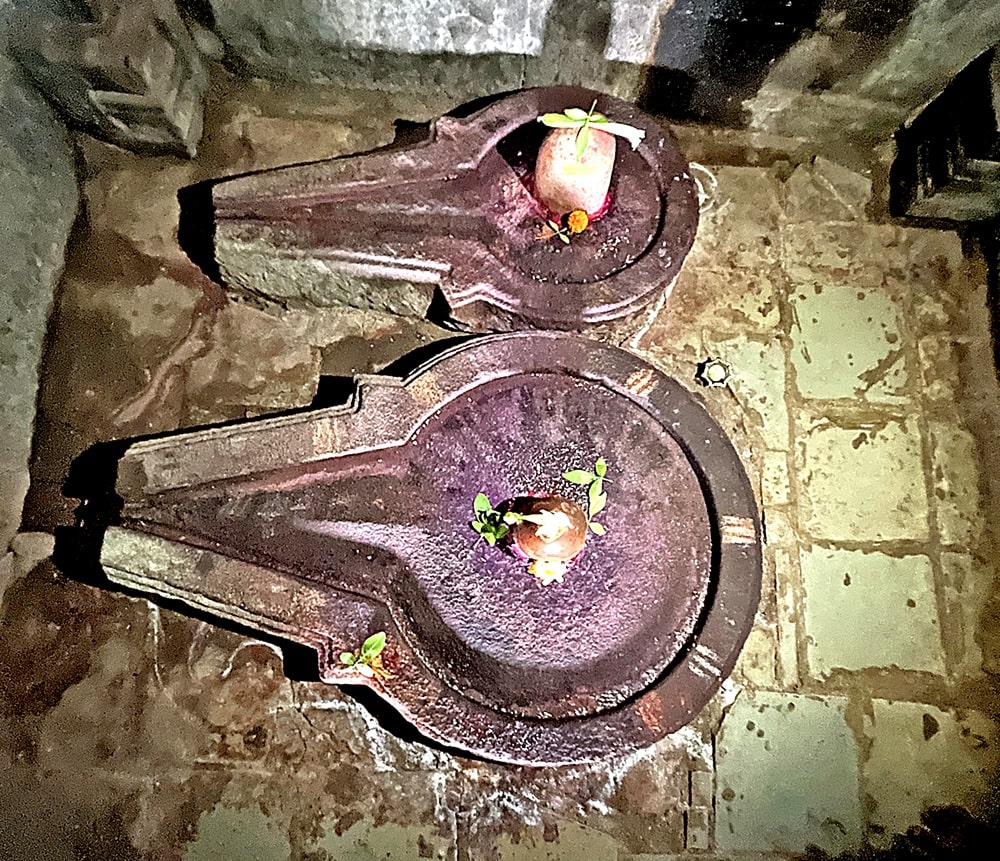
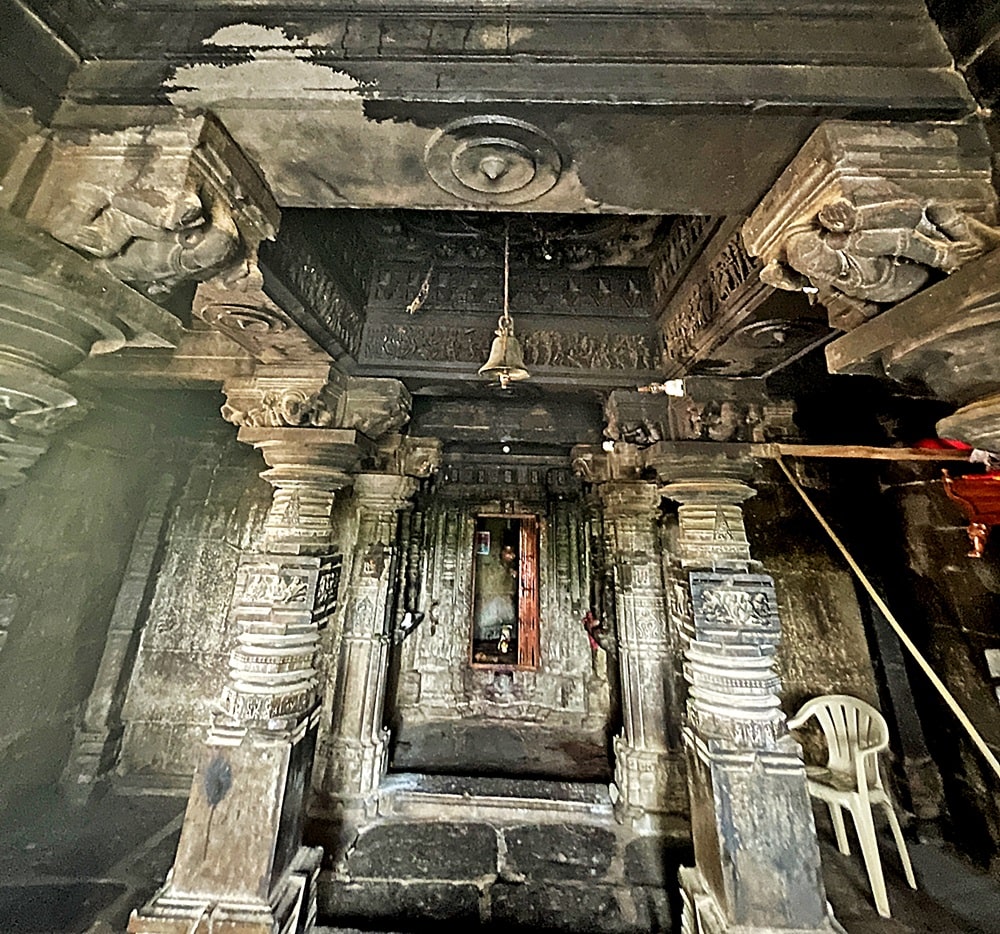
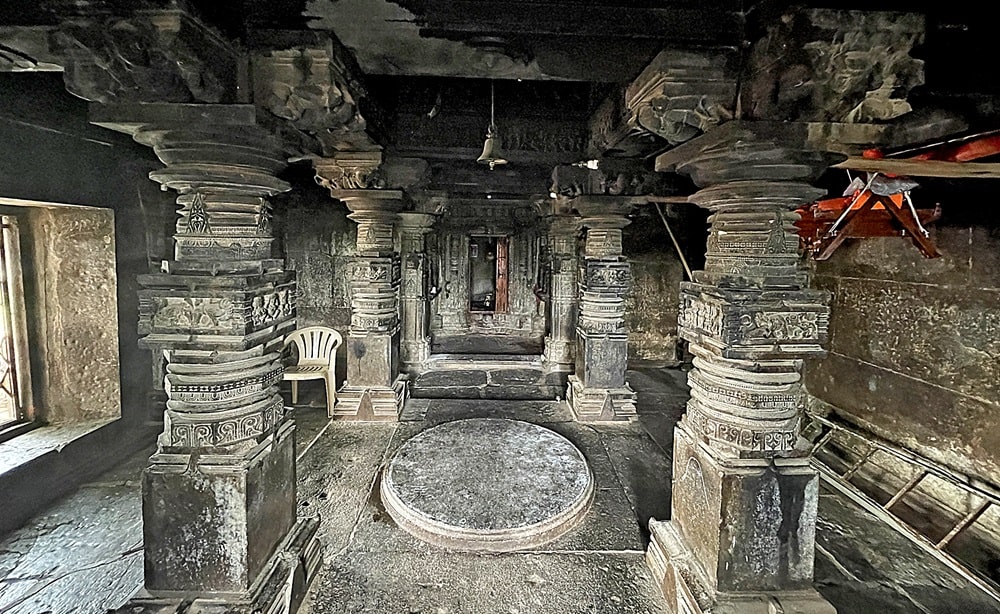
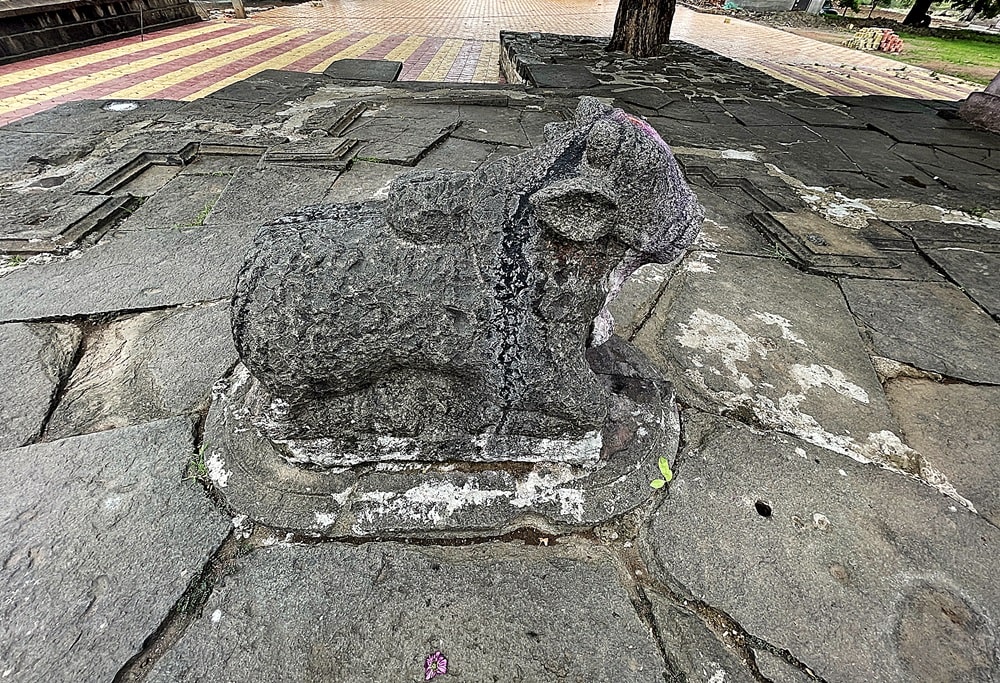
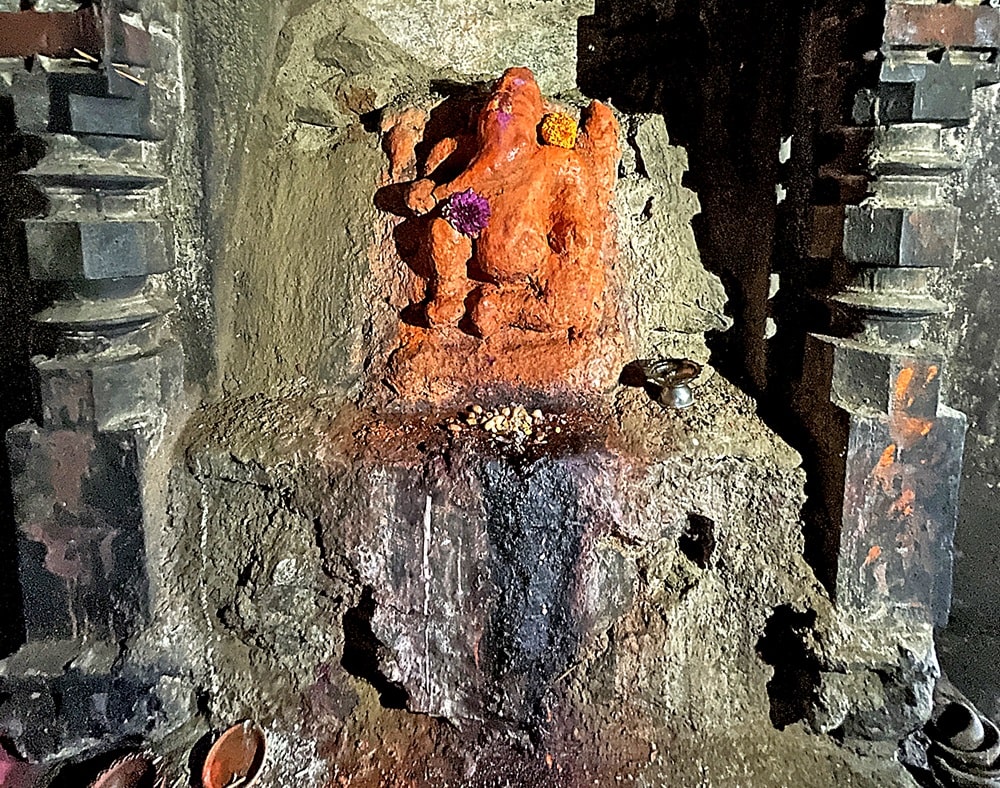
Built in the Bhumija architectural style, this temple is made entirely of black stone, though its spire (Shikhara) is made of brick and lime. After passing through the ornate north-facing main gate, one finds the Nandi Mandapa. The ceiling of this pavilion features distinctive carvings. Four pillars in the square assembly hall (Sabha Mandapa) are carved with load-bearing Yakshinis. One of these Yakshinis has her hand placed on her ear, a posture that creates the illusion that she is absorbed in listening to the music playing in the hall. The walls of the assembly hall are carved with scenes of the abduction of Sita, the battle between Vali and Sugriva, and the childhood pastimes of Lord Rama. Sculptures depicting social life, such as wrestling matches, dancers, and mother-figures, are also carved on the walls of this temple. There are gatekeeper (Dvarapala) statues on both sides of the sanctum entrance. The door frames are also intricately carved. Inside the sanctum, there are two Shiva Lingas on the floor, which are considered symbols of Shiva and Shakti. The main spire of this temple is carved with hundreds of small pinnacles and chariots.
The festival of Mahashivratri is celebrated here with great enthusiasm. During this time, thousands of devotees from the surrounding five-village radius (Panchkroshi) arrive here for darshan. Throughout the holy month of Shravan, daily rituals of Shivabhishek, bhajans, and religious discourses are conducted. Another unique feature of this place is the celebration of Dattatreya Jayanti in the month of Margashirsha and the worship of the famous Dashabhuja Dattatreya idol. Every Thursday evening, a combined Aarti of Lord Shiva, Lord Dattatreya, and the Goddess is performed. Hundreds of villagers attend this Aarti.
The sanctum sanctorum houses the divine idol consecrated according to ancient Vedic traditions, surrounded by serene courtyards and traditional temple architecture.
Navratri, Maha Shivratri, Annual Temple Jatra & Deepotsav
Compare and book flights, secure top-rated local hotels near the temple, hire reliable guides, and rent cars instantly.
Extend your pilgrimage by visiting other highly sacred temples located nearby.


Add ₹999 more to unlock FREE SHIPPING!
Your sacred cart is currently empty.
Shop Photo FramesFill in your delivery details below to place your order.
Add comment