
Add ₹999 more to unlock FREE SHIPPING!
Your sacred cart is currently empty.
Shop Photo FramesThere are many temples of Lord Mahadeva in Maharashtra, each famous for its unique characteristics. The Harihar Keshav Govind Devasthan, located in Belapur in Shrirampur taluka, is an ancient temple where Lord Mahadeva and Lord Vishnu are enshrined together in the form of wooden pillars. Situated in a Bilva forest on the banks of the nectar-flowing Pravara River, this awakened pilgrimage site is a place of faith for millions of devotees. It is said that the village was named ‘Belapur’ because of the many wood-apple (Bel) trees that once grew in this area.
According to the Puranic references, when Lord Shankar and Parvati once came to this region for a stroll, Parvati felt thirsty. At that time, Lord Shankar dropped a leaf of the Bael tree (Belpatra) on the ground, and a sacred pond (Kunda) was created there; this is the very Bilvakunda. After drinking the water from this pond, Parvati felt deeply pleased. Parvati uttered a divine blessing that whoever bathes in this pond will have all their heartfelt wishes fulfilled. Since then, this place has been known as Bilvatirtha (present-day Belapur). Devotees visiting the temple make it a point to bathe in this sacred pond.
According to a legend, after the demon Tripurasura obtained a boon from Lord Brahma, he began to destroy the gods, Brahmins, and sages. He started creating obstacles in the performance of yajnas. To deal with Tripurasura, all the gods went to Lord Vishnu. While they were deliberating on this problem, a divine voice (Akashvani) proclaimed, “O gods, if you bathe in the Bilvatirtha at Bilvapuri on Earth and worship Lord Shiva, the obstacles you face will be removed.” Accordingly, all the gods, along with Lord Vishnu, bathed in the lake at Bilvatirtha and installed a Shiva Linga. Among them, the Shiva Linga installed by Lord Vishnu was named Keshava, while the one installed by Indra… The Shiva Linga that was created was named Govinda. Thereafter, Lord Mahadeva destroyed Tripurasura and granted the blessing that anyone who has the darshan of Harihara Keshava Govinda shall be liberated from all sins.
During the churning of the ocean (Samudra Manthan), the form of Mohini taken by Shri Vishnu constantly appeared before the eyes of Shri Shankara. Yearning to behold that form once again, Shri Shankara began penance in a cave located at Bilvatirtha. As Mahadeva remained in deep meditation (Samadhi) for many days, an atmosphere of anxiety spread across Mount Kailasa. Subsequently, Parvati sent two Shiva-ganas to search for Mahadeva. The Shiva-ganas found Mahadeva in a state of Samadhi in the cave near Bilvatirtha. Upon arriving there, both Shiva-ganas, Veera Raksha and Veera Daksha, also became absorbed in meditation. Eventually, Mother Parvati, accompanied by Brahmadeva and Shri Vishnu, went to the cave at Bilvatirtha and awakened Mahadeva from his Samadhi. Upon emerging from his meditation, Shri Vishnu granted Mahadeva another vision of the Mohini form. In this After the darshan of the beautiful form, Mahadeva returned to Kailasa; however, the Ganas Raksha and Daksha, who were in a state of divine trance (bhava-samadhi), remained in this very place in samadhi. These two warriors later became famous as ‘Veersaheb’. It is said that these Veersahebs still protect this Harihar Keshav Govind forest to this day. The masks of these Veersahebs are worshipped in the temple every day. The appearance day (Prakat Din) of the Veersahebs is on Magh Shuddha Ashtami. They are honored by offering naivedya of godi shev and mugad (bottle gourd).
Nagu and Dangu, two brothers from Bilvapur, had been undertaking the Pandhari Wari, carrying a saffron flag on their shoulders, since they were eight or nine years old. As the brothers grew older and their bodies became frail, they were no longer able to make the pilgrimage, so they fervently prayed to Lord Vitthal to come and reside with them. At that time, they had a divine vision that two sandalwood pillars would be seen floating down the river. True to the vision, they found such pillars floating in the river, which they retrieved, worshipped, and duly consecrated. Even today, Rudrabhishek is performed daily on these pillars in this temple. goes. Masks of Hari (Vishnu) and Hara (Shankar) are placed upon it and worshipped according to ritual. This place later became famous as ‘Harihar Keshav Govind Van’. Even today, devotees seek the blessings of these sandalwood pillars. Saints Nagu and Dangu renounced their bodies and departed from the world in this very area. Their samadhis are located beside the temple.
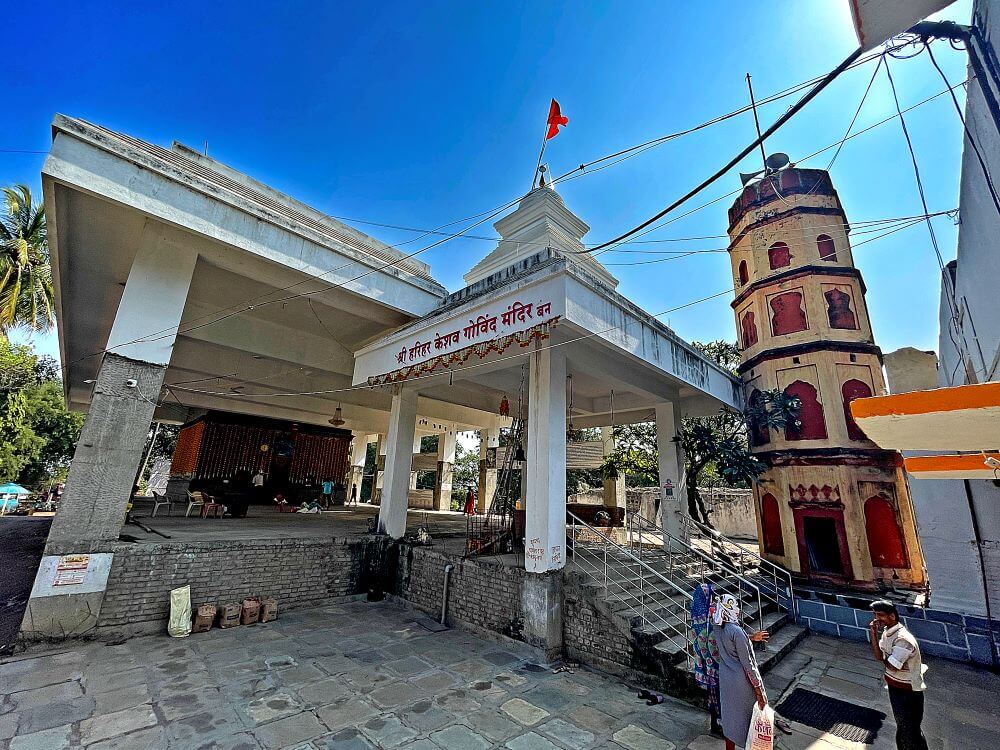
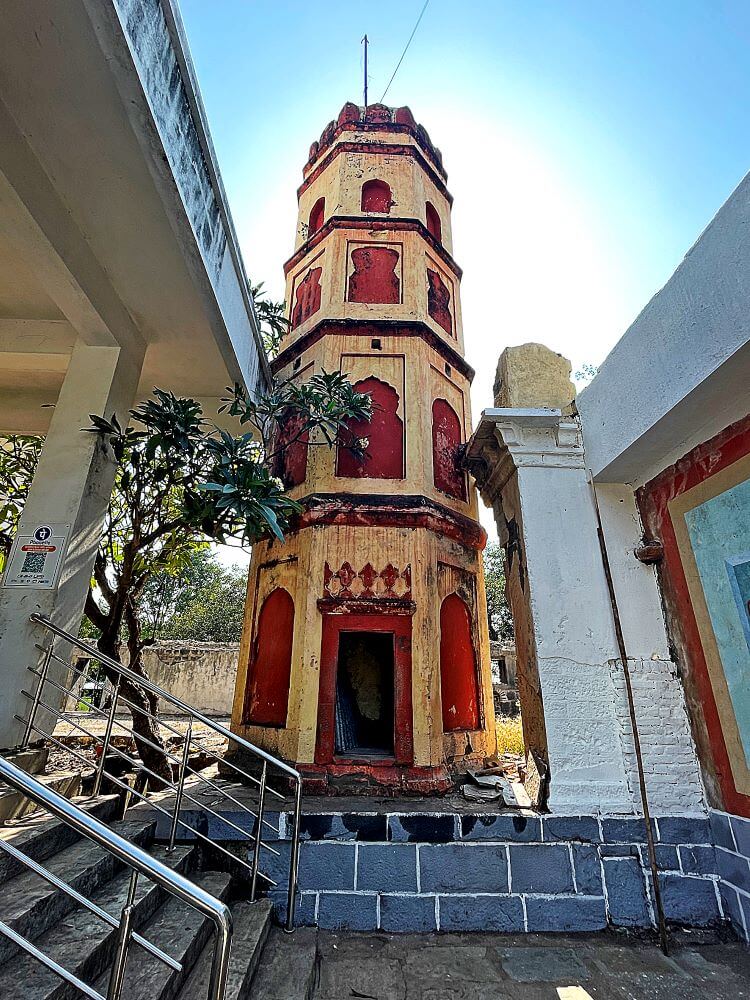
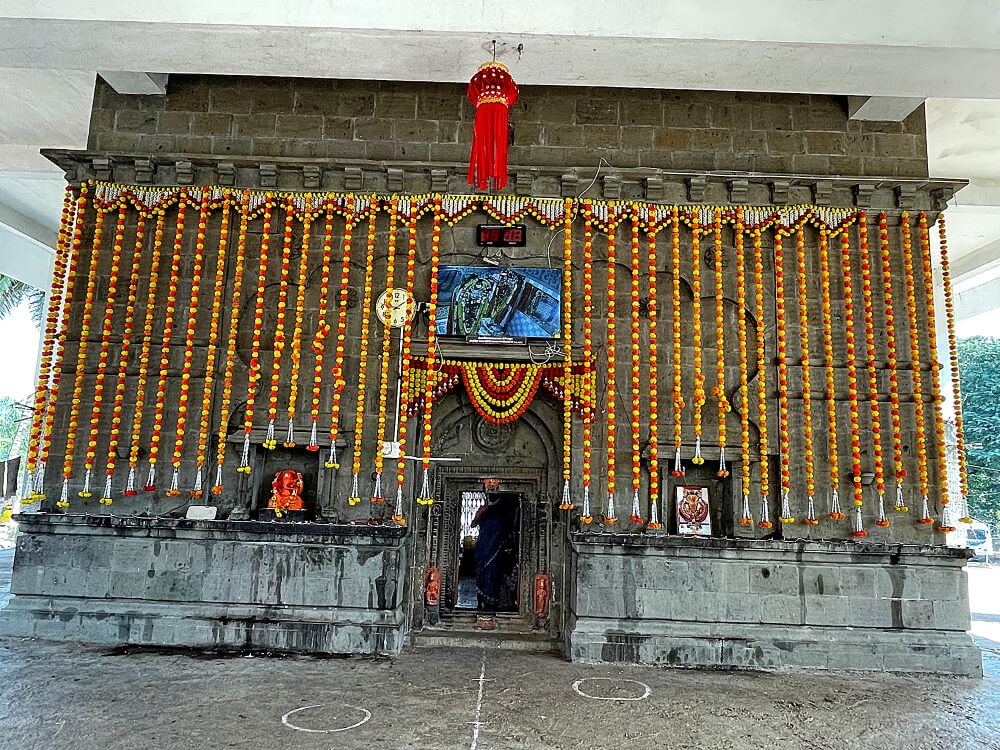
The Harihar Keshav Govind Van is situated in a spacious area in the village of Belapur, Shrirampur. Due to the presence of many ancient trees within the temple premises, the atmosphere here feels serene and close to nature. The temple is built in the Hemadpanti style, with a newly constructed Sabha Mandap (assembly hall) in front of the original structure. The temple’s layout consists of a Mukha Mandap (entrance hall), a Sabha Mandap, and a Garbhagriha (sanctum sanctorum). Situated at a height of approximately seven to eight feet from the ground, one must climb 10 to 12 steps to reach the Sabha Mandap. Directly in front of the Sabha Mandap stands an ancient Deepmal (lamp tower), which features a narrow staircase inside leading to its top. Devotees often climb to the top of this Deepmal to take in the view of the Keshav Govind Van and the surrounding area.
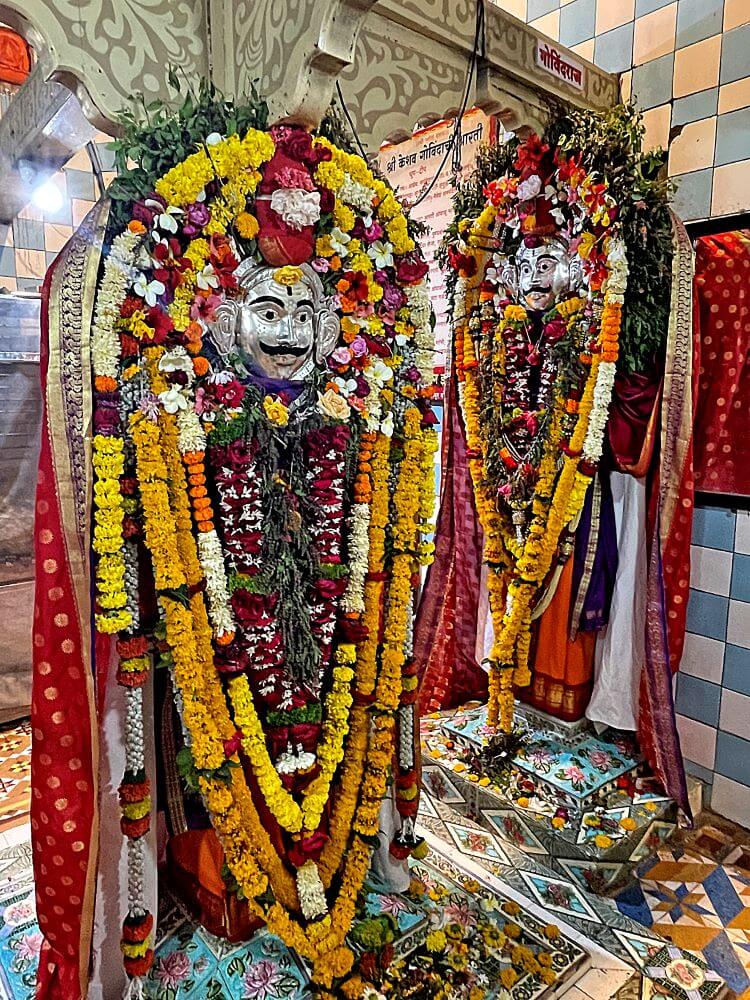
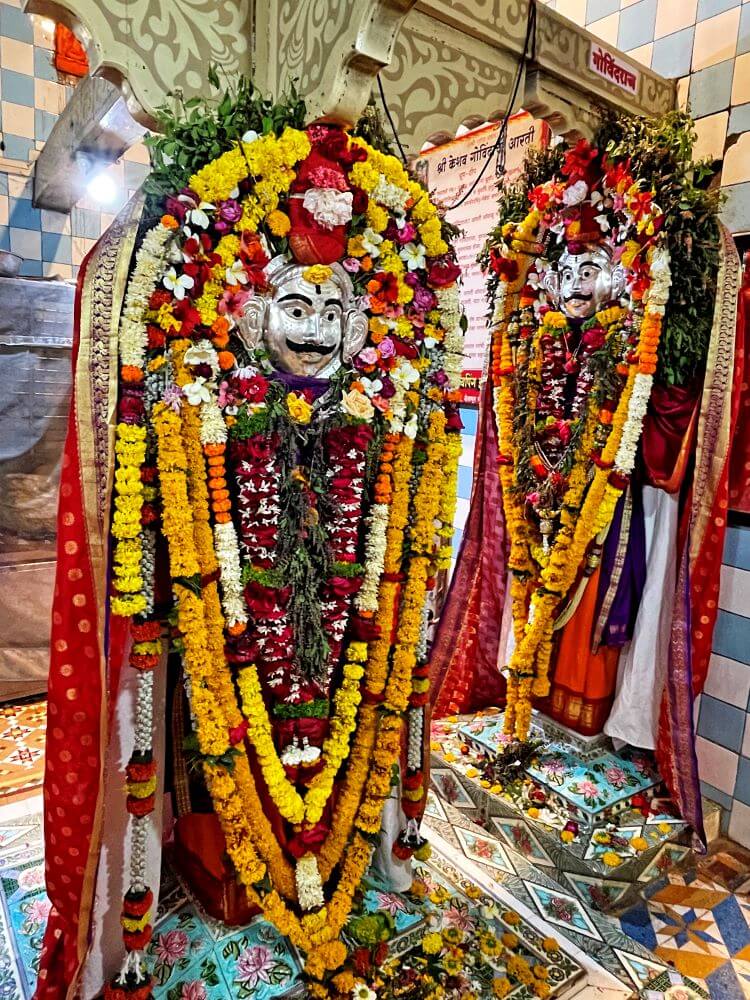
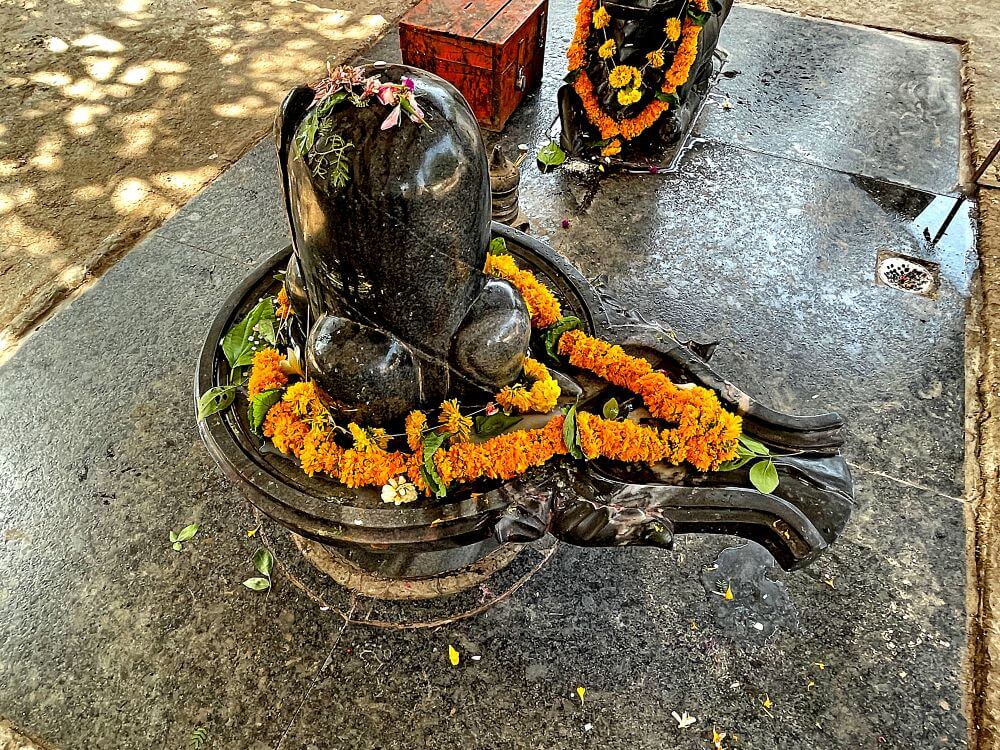
In the main entrance hall (Mukhamandapa) of the temple, there is a small Shiva Linga and Nandi. Beyond this lies the main assembly hall (Sabhamandapa), in the center of which stands the original ancient Hemadpanti-style temple constructed entirely of stone. In the sanctum sanctorum (Garbhagriha), silver masks of Keshavraj and Govindraj are mounted on two sandalwood pillars, and devotees offer worship to these masks. Within the temple premises, there is a stepwell (Barav) which is famous as the Bilvakunda. Additionally, near the temple are the Samadhi shrines of Paramhansa Vidyanand Swami, Keshavdas Swami, Bhaktaraj Nagu, and Bhaktaraj Dangu.
A pilgrimage fair is held at this temple every Monday during the holy month of Shravan. The Kakad Aarti takes place at dawn, and the Shej Aarti is performed in the evening. There are Harihara Shivlings at three locations: Belapur Ban, Belapur Budruk, and Ukkalgaon. Devotees believe that undertaking a pilgrimage on foot to these three places bestows the same merit as a pilgrimage to Kashi Vishweshwar. Festivals are celebrated here on Mahashivratri, Ashadhi Ekadashi, and Dhulivandan. The deity’s manifestation day (Prakat Din) is celebrated on Chaitra Shuddha Shashthi. On that day, Mahaprasad is served to the visiting devotees. Facilities for a Prasadalaya (dining hall) and Bhakta Niwas (pilgrim accommodation) are available here. The state government has granted this temple the ‘C’ grade pilgrimage site status.
This sacred temple stands as a testament to deep spiritual devotion, ancient architectural grandeur, and rich local cultural traditions.
The sanctum sanctorum houses the divine idol consecrated according to ancient Vedic traditions, surrounded by serene courtyards and traditional temple architecture.
Navratri, Maha Shivratri, Annual Temple Jatra & Deepotsav
Compare and book flights, secure top-rated local hotels near the temple, hire reliable guides, and rent cars instantly.
Extend your pilgrimage by visiting other highly sacred temples located nearby.
Add ₹999 more to unlock FREE SHIPPING!
Your sacred cart is currently empty.
Shop Photo FramesFill in your delivery details below to place your order.
Add comment