
Add ₹999 more to unlock FREE SHIPPING!
Your sacred cart is currently empty.
Shop Photo FramesThe sacred confluence of the three-and-a-half *Shakti Pīṭhas*—namely, Tuljā Bhavānī of Tuljāpur, Reṇukā Mātā of Māhur, Saptashṛṅgī Mātā of Vaṇī, and Bhagavatī (Mahālakṣmī) of Kolhār—is a rare and unified site located in Kolhār Bhagavatīpur, in the Rāhāṭā Taluka of Ahilyānagar District. This holy pilgrimage site is situated on the banks of the life-giving Pravarā River, along the Ahilyānagar-Manmāḍ road. The village itself was named Bhagavatīpur after Devī Bhagavatī. This temple, dedicated to the Goddess who fulfills the wishes of Her devotees and answers their prayers, is the *Grāmadevatā* (village deity) here and a revered place of faith for millions of devotees. Every year, a month-long *Yātrotsav* (pilgrimage festival) is celebrated here, commencing from Paush Shuddha Pourṇimā and concluding on Māgh Shuddha Pourṇimā. It is said to be the only temple in Mahārāṣṭra where a festival lasts for an entire month.
The legend of Kolhār Bhagavatīpur village states that the *Amṛta* (nectar of immortality) obtained from the *Samudramanthan* (churning of the cosmic ocean) was distributed to the *Devas* (deities) at Nevāse, a place close by. It was in this very region that a great clamour (*kolāhal*) arose between the *Devas* and *Dānavas* (demons) over the distribution of this *Amṛta*. From this *kolāhal*, the name ‘Kolhāḷ-Kolhār’ was derived. To quell this clamour, Lord Shaṅkara manifested and established Shrī Bhagavatī Devī. After vanquishing all the *Rākṣasas* (demons), Devī Bhagavatī paused to rest at the very spot where the temple stands today. At that time, Bhavānī Mātā, Reṇukā Mātā, and Saptashṛṅgī Mātā, Her sisters, came to inquire about the well-being of the weary Goddess, and they too took up residence here alongside Devī Bhagavatī.
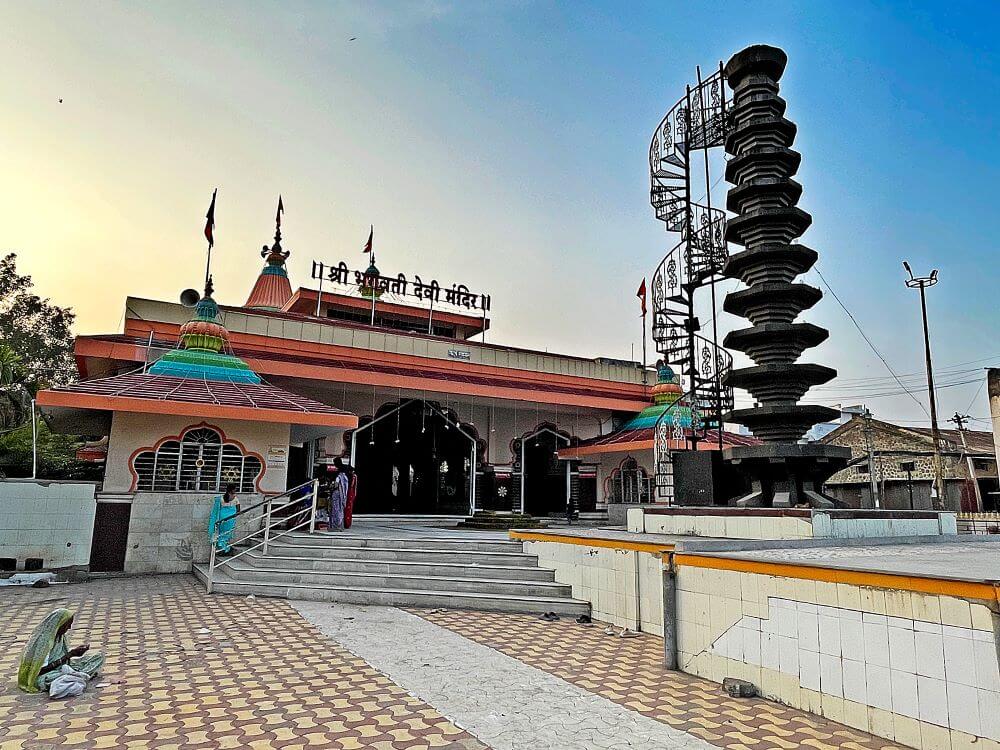
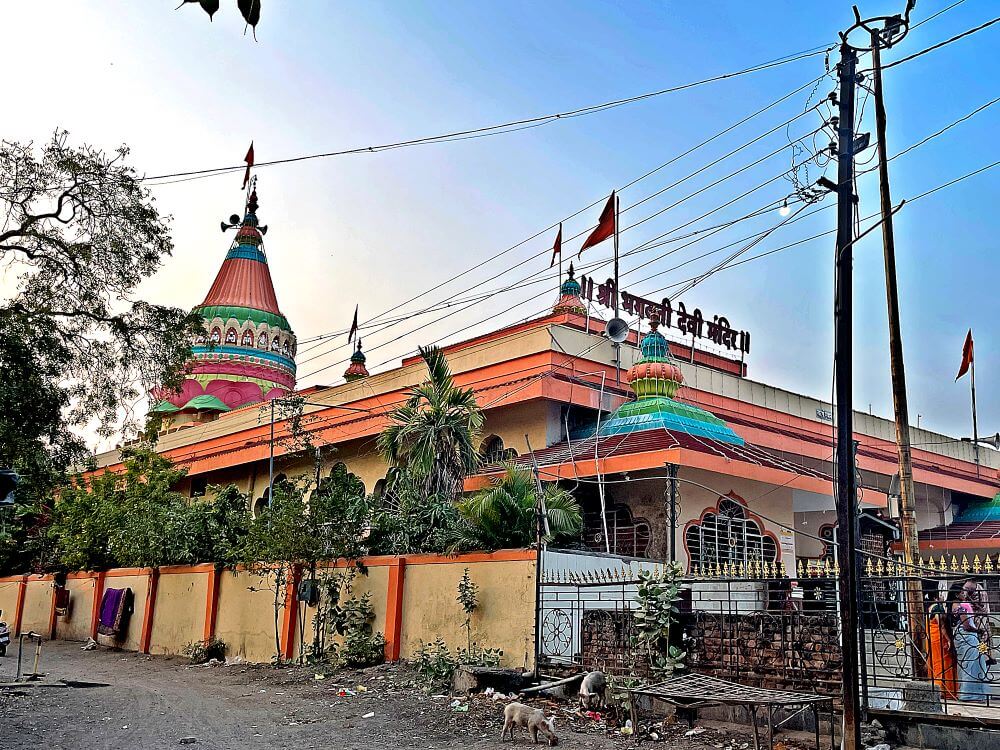
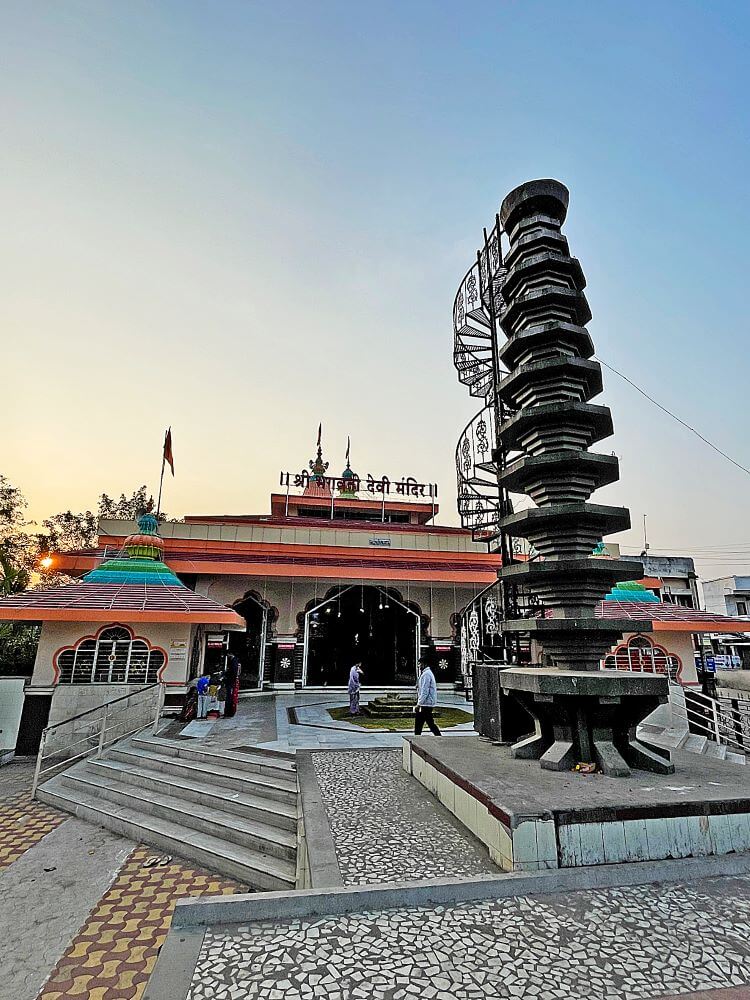
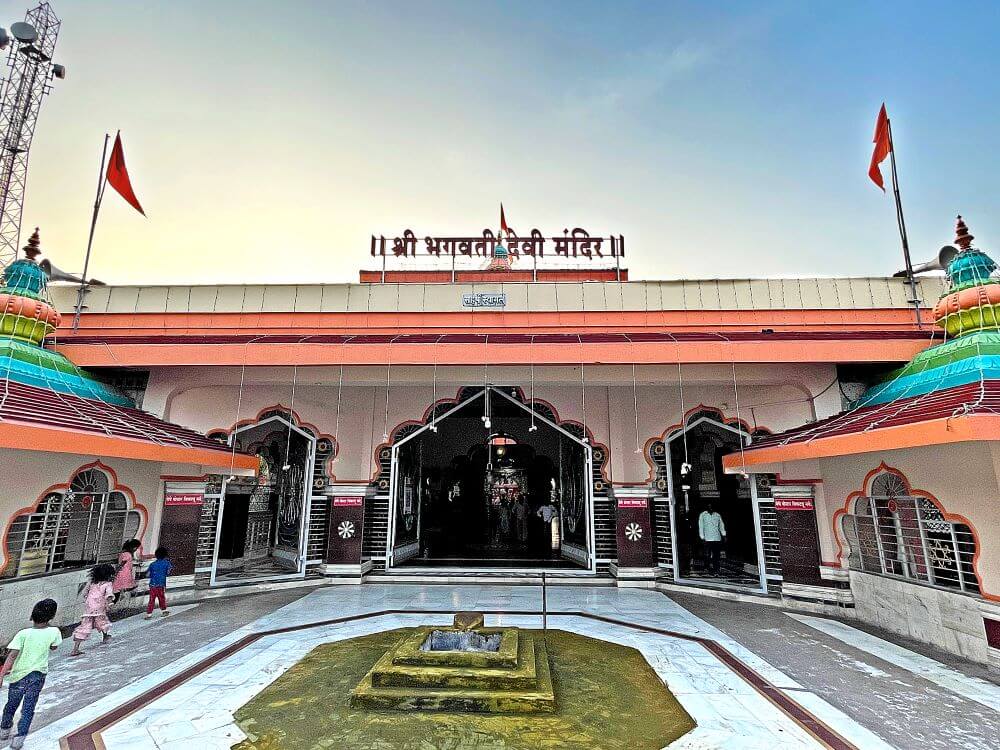
The Bhagavatī Mātā Mandir faces east. The temple complex is spacious and entirely paved. Within the temple premises, there are numerous shops selling *pūjā* (worship) materials. In front of the temple, on a large platform, stands a distinctive stone *Dīpamāḷā* (lamp tower). A spiral staircase on its side allows access to this *Dīpamāḷā*. Between the *Dīpamāḷā* and the temple entrance, there is a *Homakuṇḍa* (sacred fire pit). The temple structure comprises a *Sabhāmaṇḍap* (assembly hall), an *Antarāḷ* (antechamber), and a *Garbhagṛha* (sanctum sanctorum). The *Garbhagṛha* here is the old temple, and it appears that the *Antarāḷ* and *Sabhāmaṇḍap* were newly constructed in front of it. The original temple is said to date back to the thirteenth century. The old temple’s architecture is of the Hemāḍpantī style. The pillars in the spacious *Sabhāmaṇḍap* are adorned with beautiful arched *mahiraps* (decorative arches) at the top. In the *Sabhāmaṇḍap*, there is a brass idol of the lion, the vehicle of the Goddess. Devotees are not permitted to enter the *Garbhagṛha*, so they must take *darshan* (sacred sight) of the Goddesses from the *Antarāḷ*. On the platform within the *Garbhagṛha*, there are four Goddesses. From the right, the first is Bhavānī Mātā of Tuljāpur, the second is Reṇukā Mātā of Māhur, the third is Bhagavatī Mātā, who is a form of Mahālakṣmī Mātā of Kolhāpur, and the fourth is Saptashṛṅgī Devī.
A legend about the temple recounts that many years ago, a gentleman lived in Kolhār village. Every year, he would perform *loṭāṅgaṇ* (prostration) to visit Saptashṛṅgī at the fort in Vaṇī. He became known as Loṭāṅgaṇ Bābā. As he aged, it became impossible for him to perform *loṭāṅgaṇ* and visit Saptashṛṅgī. At that time, the Goddess appeared to him in a dream and told him that She Herself would come to Kolhār and reside there every year during the period from Paush Pourṇimā to Māgh Pourṇimā. Since then, a month-long *Yātrotsav* has been celebrated here every year, from Paush Shuddha Pourṇimā to Māgh Shuddha Pourṇimā. During this period and the Navarātrotsav, devotees believe that the three-and-a-half *Shakti Pīṭhas*—Bhavānī Mātā of Tuljāpur, Reṇukā Mātā of Māhur, Ambā Mātā of Kolhāpur, and Saptashṛṅgī Mātā of Vaṇī—reside here.
The *Yātrotsav* commences after the *Mahā-Āratī* (grand ritual of lights) in the early morning of Paush Shuddha Pourṇimā. In the evening, a procession of Shrī Bhagavatī Mātā’s *Chhabinā Pālakhi* (palanquin) is carried through the village. Devotees and villagers become engrossed in the rhythms of *ḍhol-tāshe* (drums), *sanaī* (shehnai), and *chaughaḍā* (percussion ensemble). After the procession reaches the Devī Mandir, a fireworks display is held at night. On the following day, a wrestling arena for renowned wrestlers is set up. For the *Yātrā* (pilgrimage), the temple and its surroundings are adorned with decorations and illuminations. Rituals such as *oṭī bharaṇe* (offering a sacred bundle), adorning the Goddess with a *choḷī-pātaḷ* (blouse and sari) or *limb* (a type of sari), performing *loṭāṅgaṇ*, fulfilling vows, and other ceremonies are performed here with great enthusiasm.
The Navarātrotsav is celebrated here from Āshvin Shuddha Pratipadā to Dashamī, that is, from *Ghaṭasthāpanā* to Vijayadashamī. Daily recitations of *Durgā Saptashatī Pāṭh*, *Jogvā* (devotional songs), *Devīchī Dṛṣṭ Kāḍhaṇe* (removing evil eye from the Goddess), women’s *pher* (folk dance), and other programmes are celebrated in the temple’s *Sabhāmaṇḍap*. During Navarātra, devotees come for *darshan* of the Goddess in musical processions to fulfill their vows. Local devotees as well as those from outside the village, both men and women who observe a nine-day fast (*ghaṭī basaṇāre*), reside within the temple premises. On the fifth and seventh *māḷā* (day of the festival), the Pāṭīl family of Kolhār-Bhagavatīpur village has the honour of offering a *choḷī-pātaḷ* and performing *taḷī bharaṇe* (a ritual offering) to the Goddess. At this time, *pānsupārī* (betel leaf and areca nut) is distributed to the assembled devotees and villagers. On Aṣṭamī, the *Navachaṇḍī Hom-Havan* (fire ritual) is performed. On Navamī, the *Ghaṭavisarjan* (immersion of the sacred pot) takes place, followed by a *Mahāpūjā* (grand worship) on Dashamī. During Navarātra, the Goddess is beautifully adorned.
Every day, at five-thirty in the morning, the idols are given an *abhishek* (ritual bathing). The *Āratī* of the Goddesses takes place at seven-fifteen in the morning and evening. Devotees can have *darshan* of the three-and-a-half *Shakti Pīṭhas* in this temple from five-thirty in the morning until ten at night. For the convenience of devotees, the temple committee has also provided *bhakta nivās* (devotee accommodation) facilities here.
This sacred temple stands as a testament to deep spiritual devotion, ancient architectural grandeur, and rich local cultural traditions.
The sanctum sanctorum houses the divine idol consecrated according to ancient Vedic traditions, surrounded by serene courtyards and traditional temple architecture.
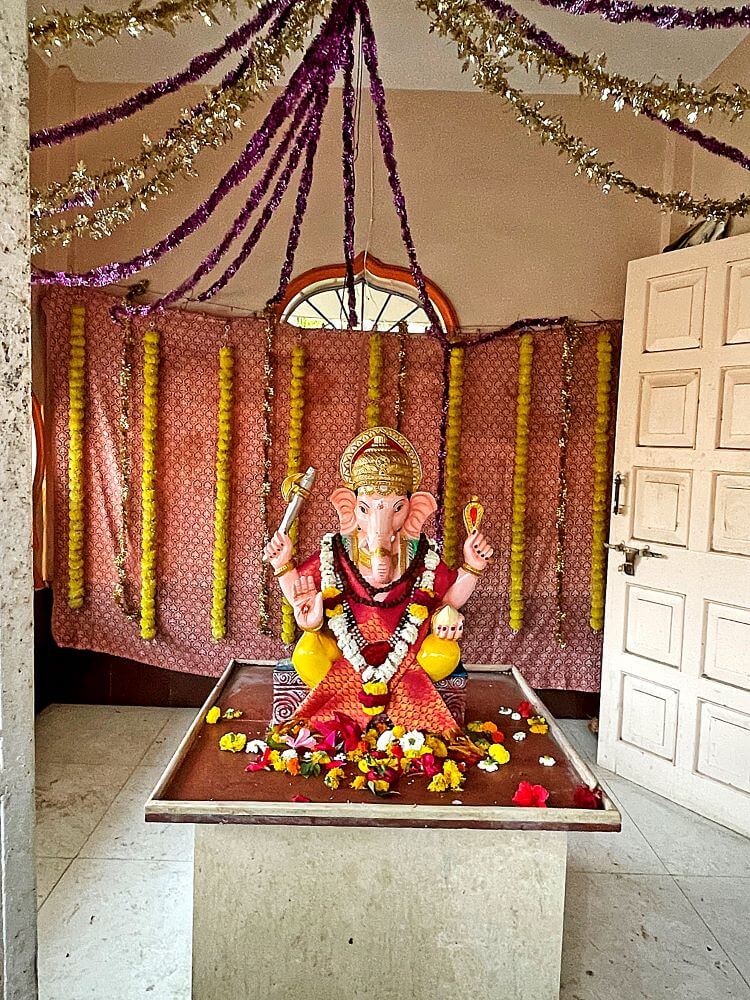
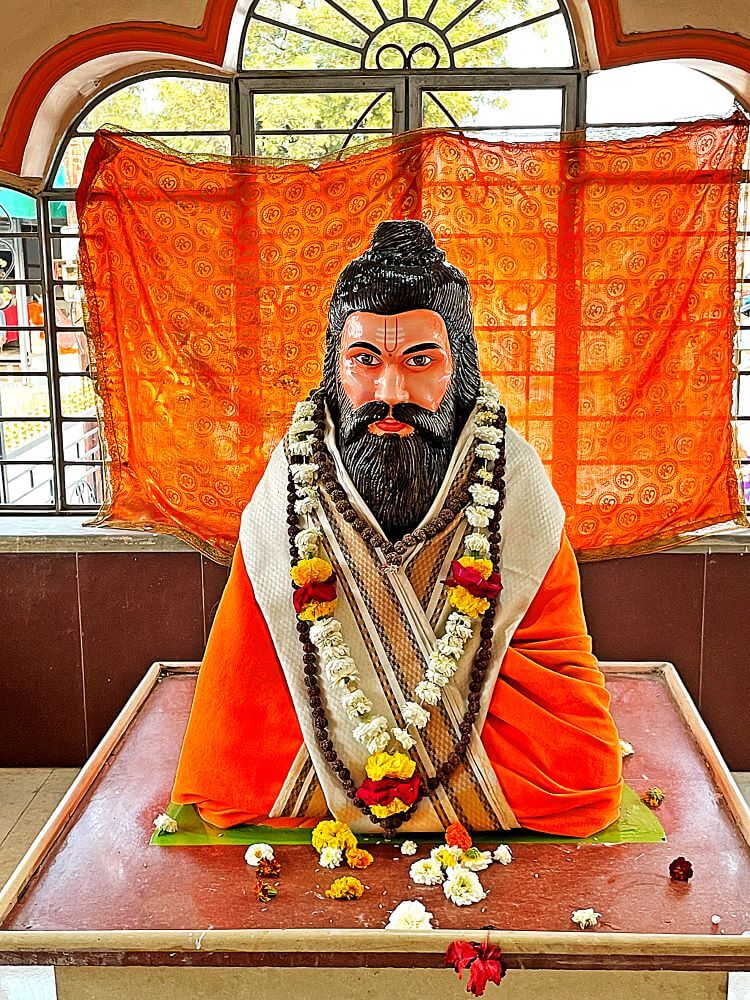
Navratri, Maha Shivratri, Annual Temple Jatra & Deepotsav
Compare and book flights, secure top-rated local hotels near the temple, hire reliable guides, and rent cars instantly.
Extend your pilgrimage by visiting other highly sacred temples located nearby.

Add ₹999 more to unlock FREE SHIPPING!
Your sacred cart is currently empty.
Shop Photo FramesFill in your delivery details below to place your order.
Add comment