
Add ₹999 more to unlock FREE SHIPPING!
Your sacred cart is currently empty.
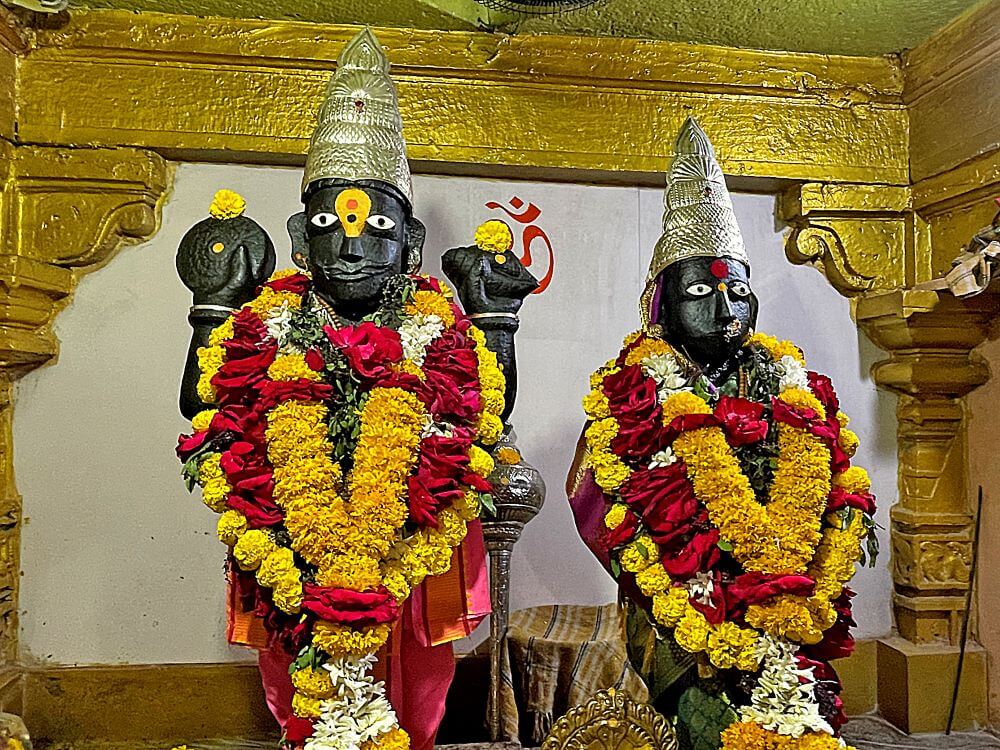
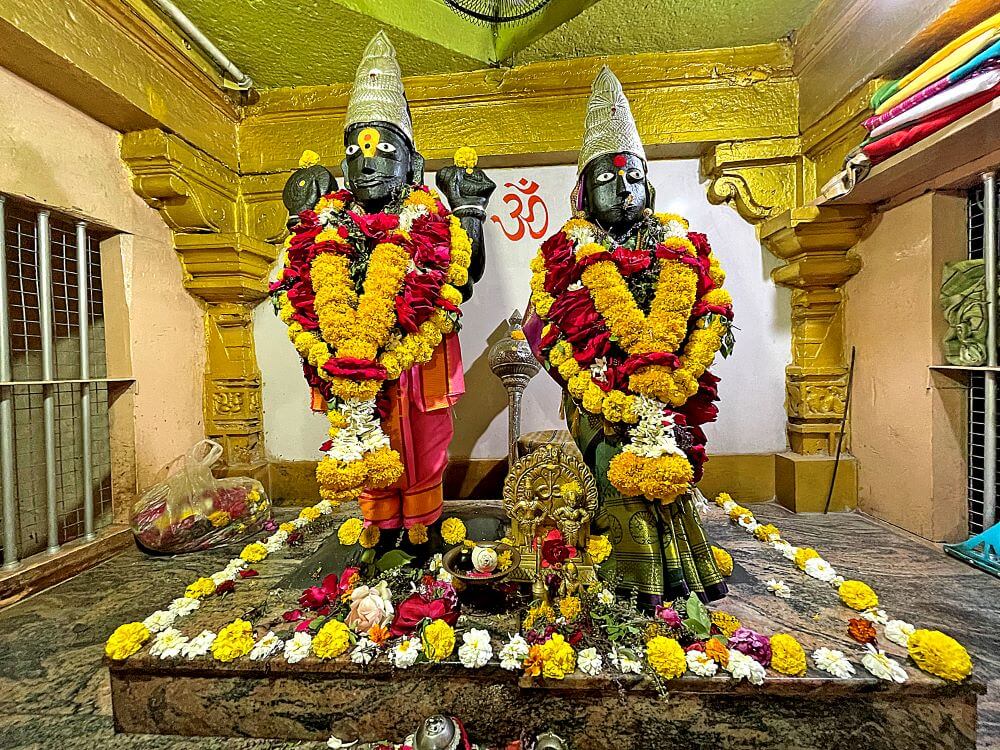
Shop Photo FramesLord Vitthal is the principal deity of the Varkari tradition of Maharashtra and the Haridasa tradition of Karnataka. An incarnation of Lord Vishnu and a form of Lord Krishna, Vitthal is famous by many names such as Vithoba, Pandurang, and Pandharinath. When one thinks of Vitthal or Pandurang, the image that immediately comes to mind is that of a dark-complexioned, beautiful, and charming idol standing on a brick with hands placed on the hips. However, the Vitthal idol in the temple at Takalibhan in Ahilyanagar district is unique, as this idol possesses a mustache and four arms. Of these, two hands are placed on the hips, while one hand holds a conch and the other a discus. This idol is said to be approximately १६०० years old and is considered the only one of its kind in Maharashtra.
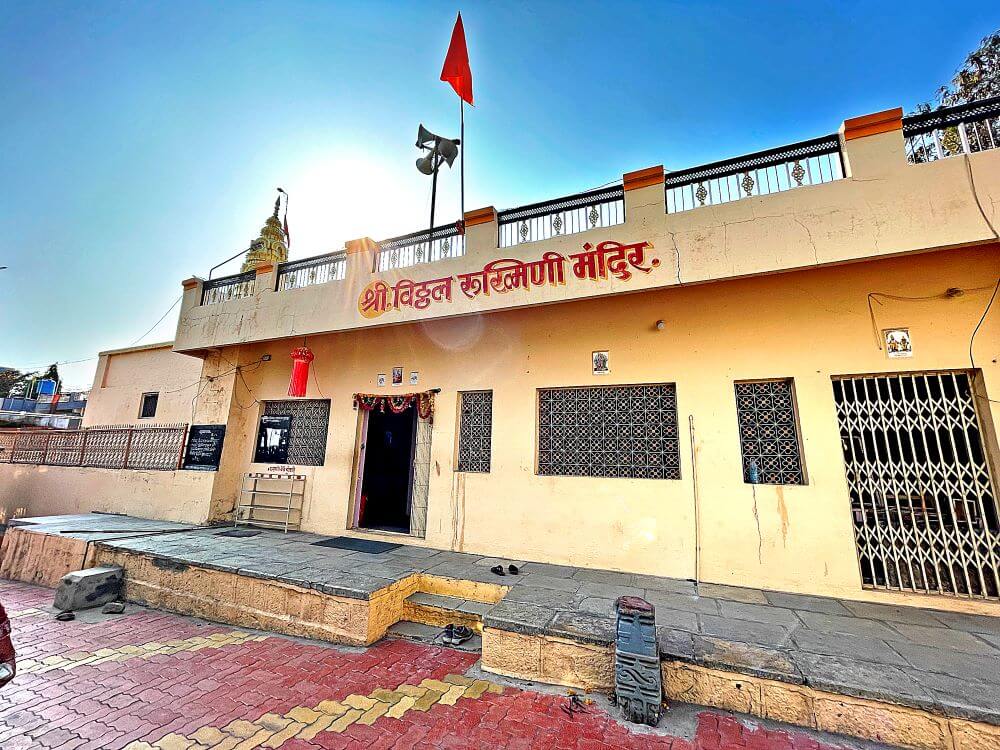
The village of Takalibhan, located on the Nevasa to Shrirampur road, is known as ‘Prati-Pandharpur’ (a second Pandharpur) due to this ancient Vitthal-Rukmini temple. This temple, dating back to the Yadava era, is famous for its unique idol of Vitthal. It is said that during the Yadava period, a king named Bhan (Bhanu) was a devotee of Pandurang. The village was likely called Takali at that time. After the residence of King Bhan, it came to be known as ‘Takalibhan’. At that time, there was a four-armed (Chaturbhuj) idol of Vitthal here. This idol had a Shiva Linga on its head and a mustache on its lips. According to historians, this idol has been here since before the Yadava era. Information regarding this is found in an inscription discovered in Pandharpur. There is an inscribed stone in the building of the police station located on the left side while going from the Vitthal temple towards the Chandrabhaga river on the Mahadwar road. The inscription belongs to the reign of Mahadevrao Yadav of the Devgiri Yadava dynasty, and the date of the inscription is Jyeshtha Shukla ११, Shaka ११९२ (१२७० CE). This inscription records that Bhanu, son of Keshav and belonging to the Kashyap Gotra of the Sitvahak lineage, performed the Aptoryam sacrifice on the banks of the Bhima river in Pandharpur. It is said that this Brahmin-born Bhanu was a feudatory of the Yadavas.
Many researchers have provided evidence that the construction period of this idol is १६०० years ago. Research findings have also proven that Takali was the capital of the Yadava-era King Bhanu. Like Pandharpur, the Ashadhi festival here is celebrated between Ashadh Pratipada and Purnima. It is also estimated that the Vitthal idol in Pandharpur and this idol might have been crafted during the same period. Historian Ra. Chi. Dhere has also conducted research on the Vitthal idol here and elucidated its significance. The Mahanubhav literature, specifically the Sthanapothi and Leelacharitra, links this temple to the Yadava era of the १३th century.
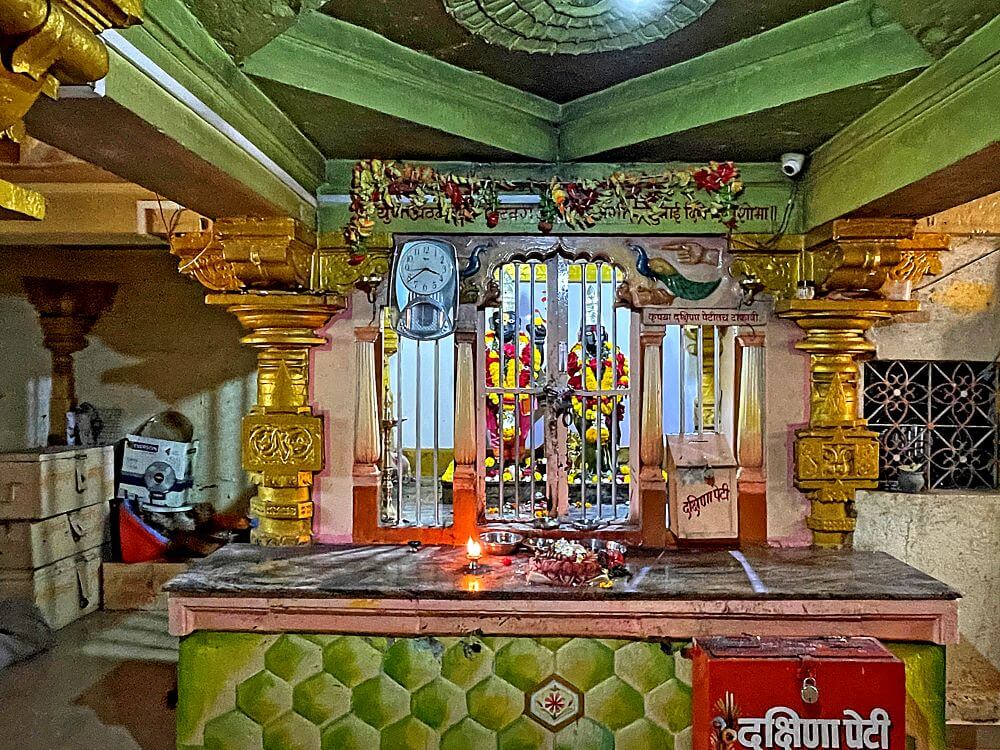
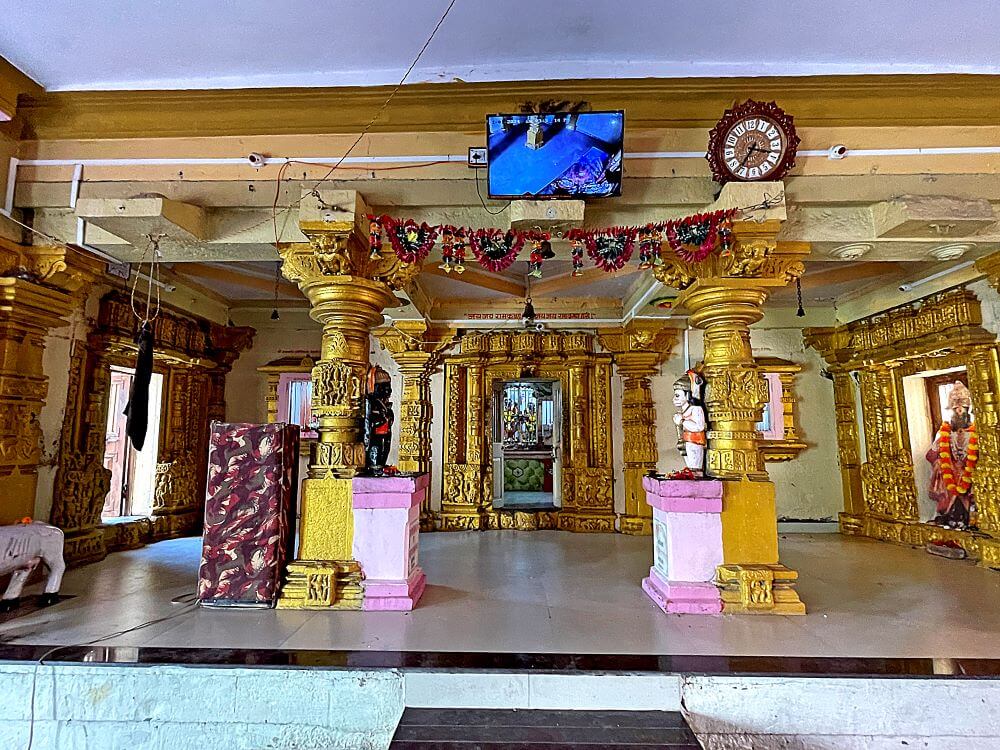
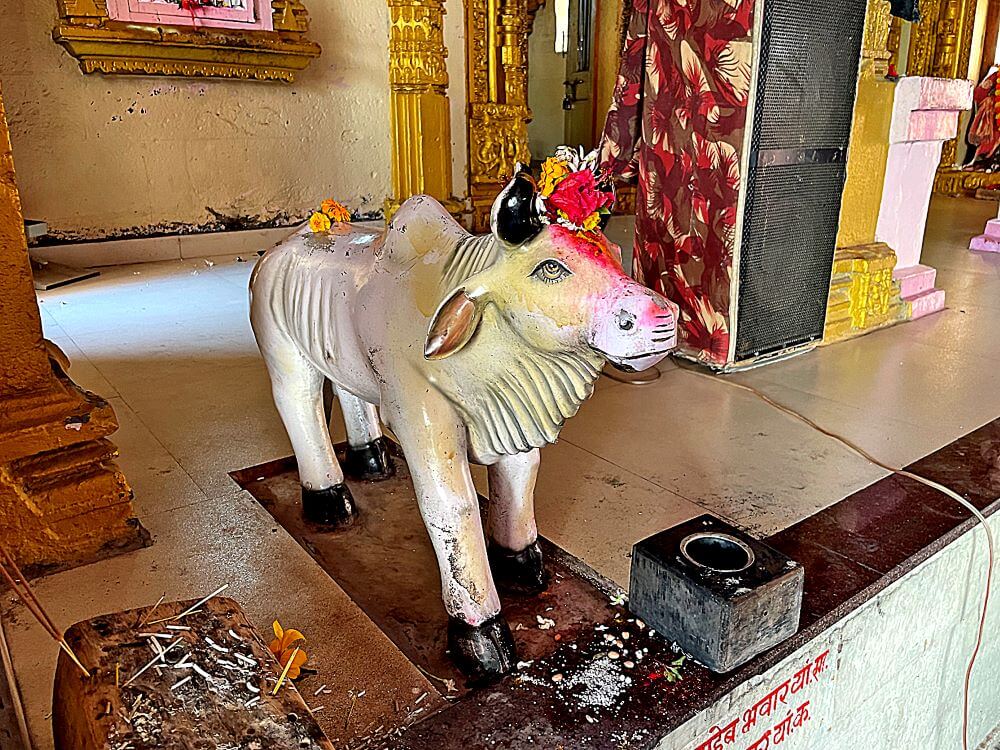
The temple is situated on a small hillock in the center of the village. The temple attained its current form after a renovation in १९७७. The temple is of Hemadpanti architecture, featuring complete stone construction with intricate carvings. The temple consists of a Sabha Mandap (assembly hall), Antaral (vestibule), and Garbhagriha (sanctum sanctorum). In the niches on the walls of the Sabha Mandap, there are marble idols of deities and great saints including Shri Ganesh, Sant Namdev Maharaj, Sant Janabai, Pandurang, Sant Goroba Kaka, Sant Chokhamela, Sant Narhari Sonar, Sant Savata Mali, Sant Kaikadi Maharaj, Gangagiri Maharaj, Samarth Sadguru Kisangiri Baba, Sant Sena Maharaj, Sant Rohidas, Mahamuni Matangrishi, and Sant Jagnade Maharaj.
Adjacent to the two carved pillars in the Antaral are idols of Hanuman and Garuda Dev. The entrance to the sanctum sanctorum features unique carvings. On the pedestal in the sanctum are the idols of Vitthal and Rukmini. The Vitthal idol is four-armed, has a mustache on its lips, a Shiva Pindi on its head, and the Kaustubha gem on its chest, with the idol of Mother Rukmini beside it.
The four-armed idol is beautiful and charming; seeing it brings great joy to the soul. ||१||
The Vaijayanti garland, crown, and earrings; the ornaments shaped like sea monsters (Makara) look splendid. ||२||
The yellow silk garment (Pitambar) is tied at the waist; the musk mark (Tilak) adorns the forehead. ||३||
The conch and discus are in the hands, and the lotus looks beautiful; Bhanudas bows at the lotus feet. ||४||
This Abhang by Saint Bhanudas applies perfectly to the Vitthal idol at Takalibhan.
The Ashadhi festival is celebrated here between Ashadh Shukla Pratipada and Purnima. On the occasion of this festival, attractive lighting is arranged in the temple premises. During this time, food is donated by the villagers every day. Every evening at ५ o’clock, a Dindi (procession) of Vitthal-Rukmini is taken out. After circumambulating the village, the Dindi returns to the temple, followed by Aarti and the distribution of Mahaprasad. On the day of Chaturdashi, there is a Bhandara (community feast). On this day, Bhajan groups from Takalibhan and the surrounding areas arrive at the court of Vitthal with cymbals, Mridang, and Veena. The festival concludes on the day of Purnima with the Dahi Handi program.
This sacred temple stands as a testament to deep spiritual devotion, ancient architectural grandeur, and rich local cultural traditions.
The sanctum sanctorum houses the divine idol consecrated according to ancient Vedic traditions, surrounded by serene courtyards and traditional temple architecture.
Navratri, Maha Shivratri, Annual Temple Jatra & Deepotsav
Compare and book flights, secure top-rated local hotels near the temple, hire reliable guides, and rent cars instantly.
Extend your pilgrimage by visiting other highly sacred temples located nearby.
Add ₹999 more to unlock FREE SHIPPING!
Your sacred cart is currently empty.
Shop Photo FramesFill in your delivery details below to place your order.
Add comment