
Add ₹999 more to unlock FREE SHIPPING!
Your sacred cart is currently empty.
Shop Photo FramesThe ancient Amrutheshwar Temple, situated at the source of the Pravara River and at the foothills of Ratangad, is a rock-cut marvel adorned from top to bottom! It is regarded as an excellent example of carved sculpture. In Maharashtra, there are only a handful of sculptural temples like Grishneshwar of Verul, Ambarnath’s Shivalaya, Gondeshwar near Nashik, Shambhu Mahadev Temple of Shikhar Shingnapur, and Trimbakeshwar Temple. Among these, the Amrutheshwar Temple at Ratanwadi is included. Shilahara King Zanj built 12 Shivalayas between the Godavari and Bhima rivers, and this is considered one of the prominent temples among them.
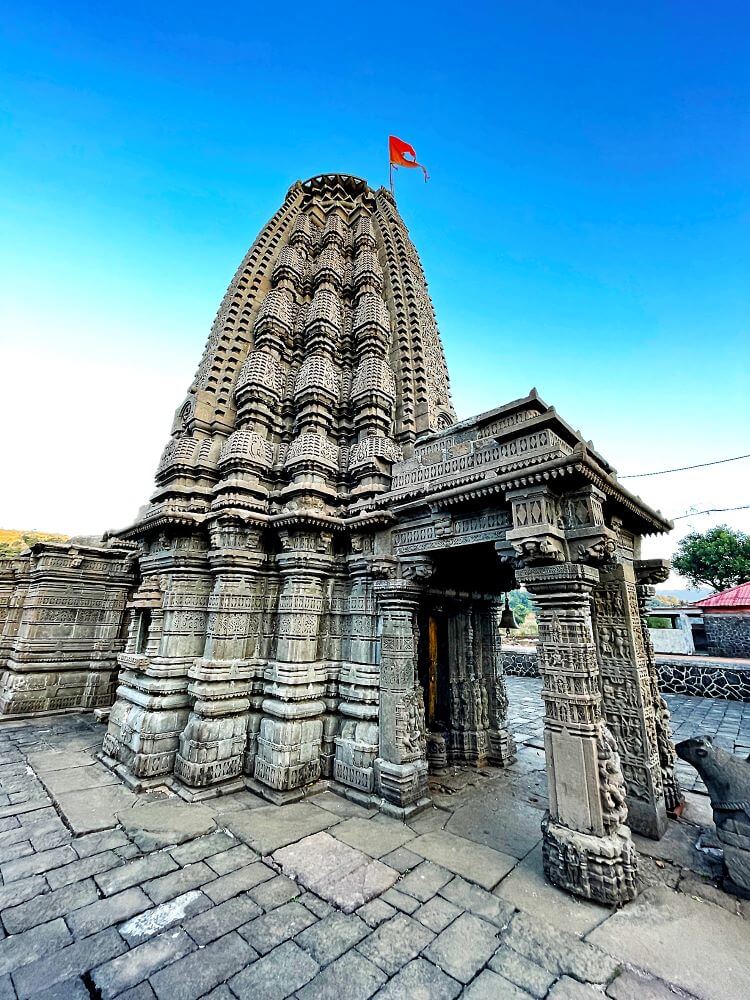
According to the records of the Archaeological Survey of India, the Amrutheshwar Temple dates back to the 12th or 13th century. This temple is located at the foothills of Ratangad, very close to the famous tourist destination Bhandardara. The architecture of this sculptural temple, situated in a nature-rich environment, is somewhat different from other Shivalayas. Although the temple faces west, the Nandi Mandapa is towards the east. This temple has entrances from both the east and west sides. From the east, one first encounters the Nandi Mandapa, then directly the Garbhagriha (sanctum sanctorum), the Antarala (antechamber), and finally the Sabhamandapa (assembly hall). There are paths from both directions to enter and exit the Garbhagriha. Such a unique architectural design is rarely seen in other Shivalayas. Another distinctive feature here is that the Garbhagriha is somewhat deep, and living springs of water flow from it. This is considered the source of the Pravara River. Because it originates from the Amrutheshwar Temple, it is also called Amritvahini Pravara. During the monsoon season, the Garbhagriha of the Amrutheshwar Temple is filled with water. Generally, from June to December, the Shivlinga here remains submerged in water.
When entering the temple from the west, the distinctive carvings on the entrance doorway capture attention. The pillars on both sides of the entrance feature intricate artistry, with numerous deities as well as Mithuna sculptures carved upon them. On the lalatabimba (lintel) of the entrance is an idol of Ganesha, while below, many Surasundaris are carved alongside various deities. The stone pillars in the Sabhamandapa are adorned with hundreds of small sculptures. Above the pillars are load-bearing Yakshas. To allow light, stone latticework (jali) has been designed at various places on the walls of the Sabhamandapa.
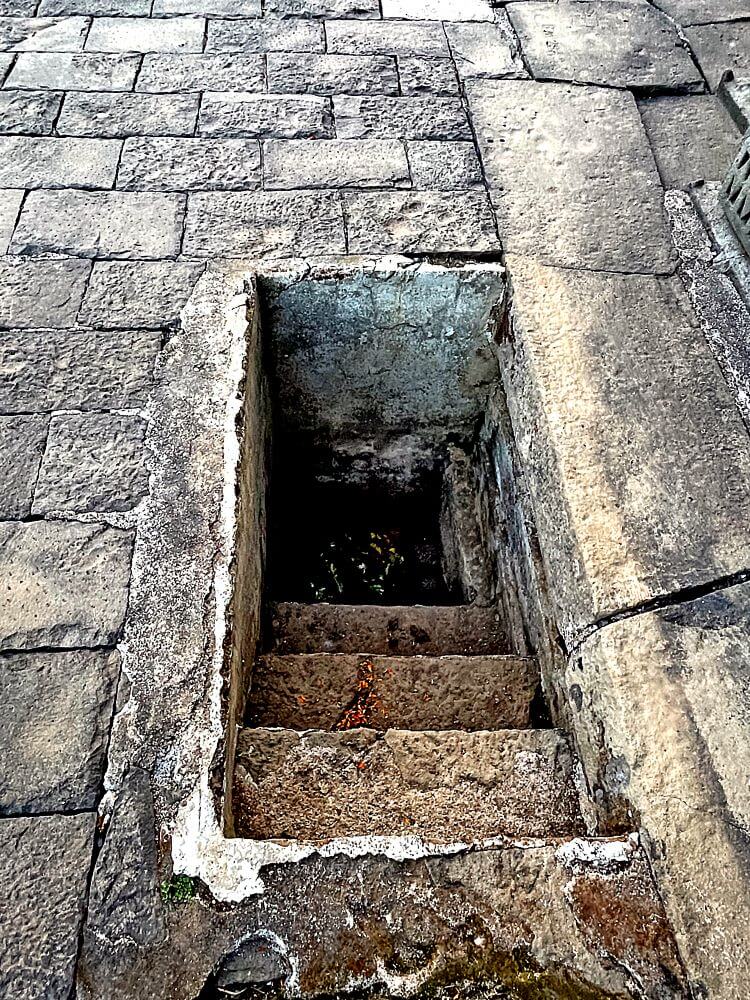
While proceeding from the Antarala towards the Garbhagriha, the doorframe of the entrance features sculptures on all sides. At the bottom is a Kirtimukha, and on the left and right sides, creepers are carved. The Garbhagriha is about six to seven feet deep from the Antarala. One has to descend six to seven steps from there to enter the Garbhagriha. The Shivlinga in the Garbhagriha is also distinctive, with the Lingam above the Shalunka being in three layers. Its shape tapers from the bottom upwards. (It appears as if three stones are placed one upon another.) Such a Shivlinga is rarely seen. Upon exiting the Garbhagriha towards the east, the Nandi Mandapa is in front. In this mandapa, Nandi is installed, and beside it are two eroded (fragmented) Nandi statues.
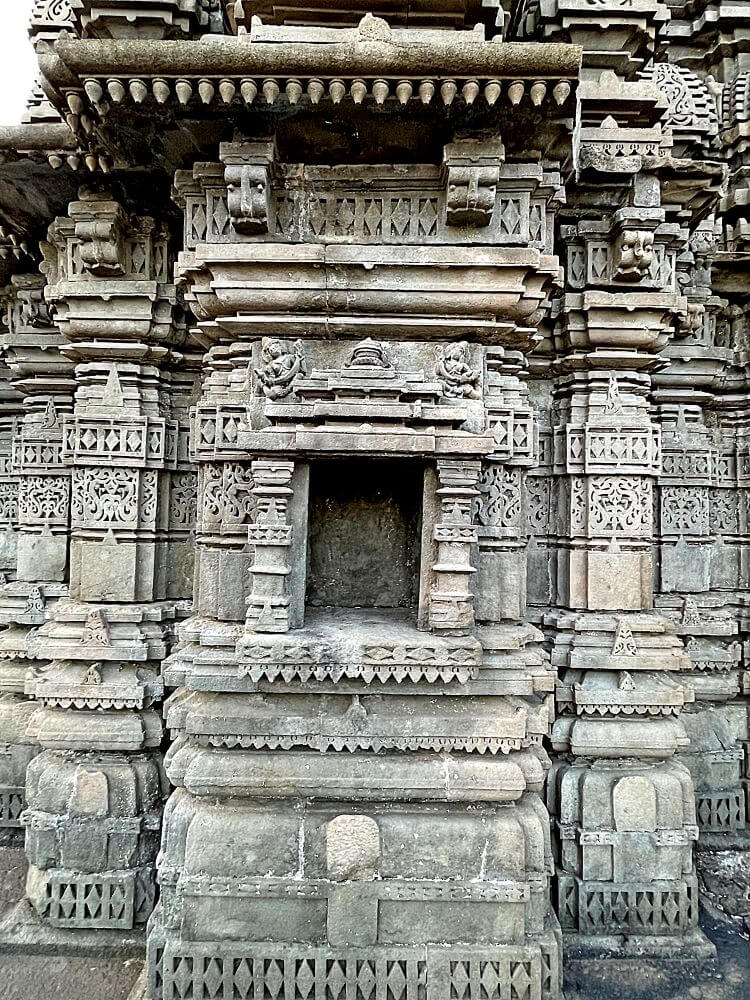
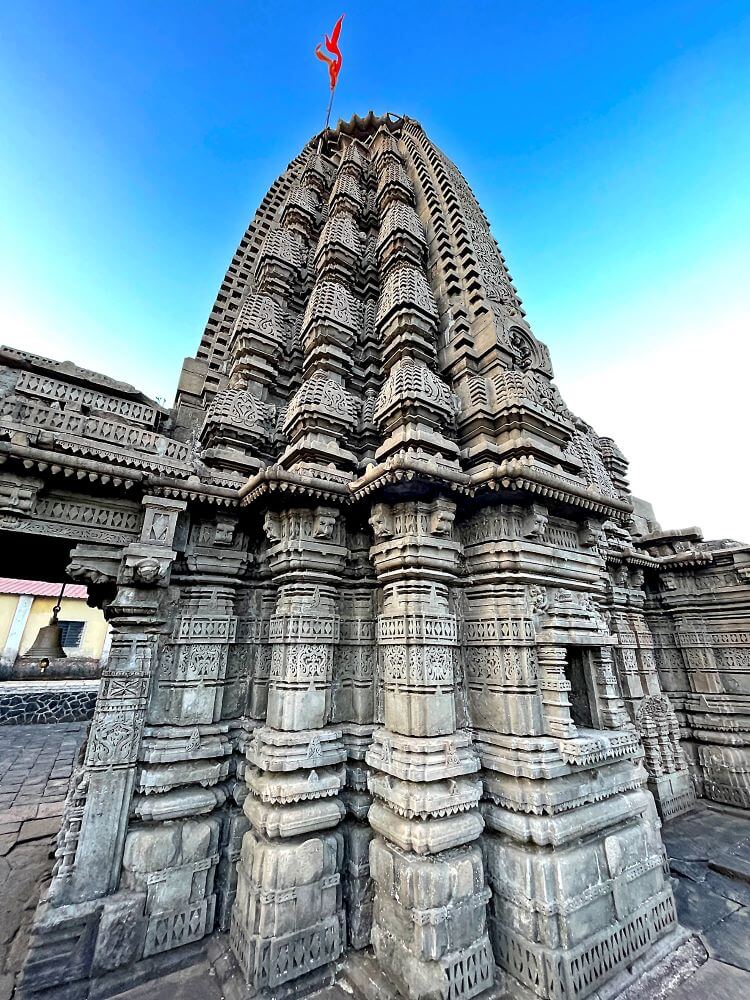
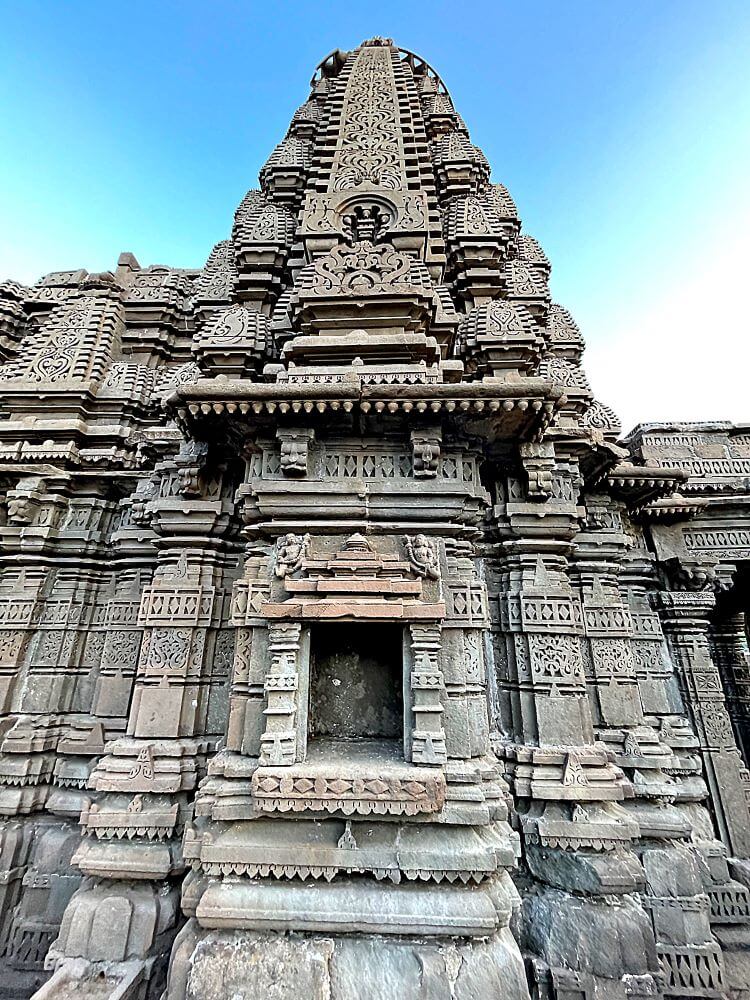
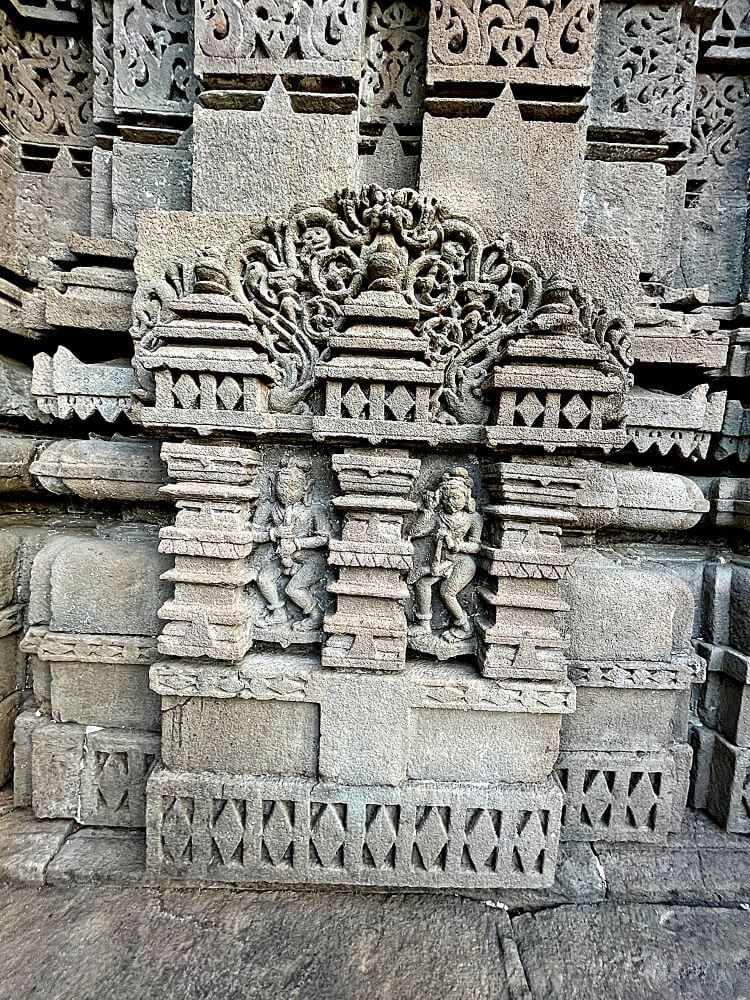
The outer walls of the temple feature various geometric patterns. Among them are many carved sculptures of Devas, Danavas, Yakshas, Apsaras, and Gandharvas. In addition, Mithuna sculptures are also found at various places. The temple’s shikhara (spire) is distinctive, reflecting the richness of its sculptural art. It features vertical layers of latticework patterns and small replicas of shikharas arranged upon them. This temple is said to be in the Bhumija style. According to ancient architectural science, temple styles are broadly classified into two types: ‘Nagara’, meaning North Indian, and ‘Dravida’, meaning South Indian. There is also another sub-style called ‘Vesara’, which is a confluence of these two. The Bhumija style is a sub-style of Nagara style temples. Temples in the Bhumija style are found in large numbers in the vicinity of the Narmada River and in Maharashtra. Within the temple premises, there are many ancient idols and Viragals (hero stones), as well as some broken idols.
Near the temple is a square Pushkarani (temple tank) with steps for descending into it. On the walls on all four sides of the Pushkarani are small temples. These contain images of Ganesha and various forms of Vishnu. Local people call this Pushkarani ‘Vishnutirtha’ and narrate a legend that this temple and the sacred tank emerged from the 14 jewels (ratnas) of the Samudra Manthan (churning of the ocean). Currently, this temple is under the jurisdiction of the Archaeological Survey of India.
A large yatra (pilgrimage fair) is held here during Mahashivaratri. Thousands of devotees also come for darshan on Shravani Mondays. This temple, an excellent example of architecture, is a revered place of worship for the tribal community in the surrounding area. Along with devotees and tourists, history enthusiasts and scholars of sculpture also make it a point to visit this temple.
This sacred temple stands as a testament to deep spiritual devotion, ancient architectural grandeur, and rich local cultural traditions.
The sanctum sanctorum houses the divine idol consecrated according to ancient Vedic traditions, surrounded by serene courtyards and traditional temple architecture.
Navratri, Maha Shivratri, Annual Temple Jatra & Deepotsav
Compare and book flights, secure top-rated local hotels near the temple, hire reliable guides, and rent cars instantly.
Extend your pilgrimage by visiting other highly sacred temples located nearby.


Add ₹999 more to unlock FREE SHIPPING!
Your sacred cart is currently empty.
Shop Photo FramesFill in your delivery details below to place your order.
Add comment