
Add ₹999 more to unlock FREE SHIPPING!
Your sacred cart is currently empty.
Shop Photo FramesVadgaon Darya, situated near the Kanhur Plateau in Parner Taluka, is renowned for the two temples dedicated to Goddess Daryabai and Goddess Velhabai. These temples, dating back over 1,000 years, stand side by side. A unique feature of this sacred site is that the monkeys residing here are revered as the divine army of the Goddess. In any wedding ceremony in the village, there is a tradition of tying a turban (*pheta*) and headband (*mundase*) on the chief of this monkey army. Furthermore, during village religious rituals and wedding feasts, these monkeys sit alongside the villagers in the dining lines (*pangat*). This tradition has been followed in the village for many years.
Goddess Daryabai and Goddess Velhabai are believed to be sisters; Goddess Daryabai is revered as the *Ardha Peetha* (half Shakti Peetha) of Saptashrungi Gad in Vani, while Goddess Velhabai is considered the *Purna Peetha* (full Shakti Peetha) of Goddess Renuka Mata of Mahurgad. According to local legend, both Goddesses travelled from Padali Darya in Parner Taluka to Vadgaon Darya and made their divine abode in a mountain cave amidst this nature-blessed environment. Subsequently, the Goddesses brought Lord Mahadev and Lord Bhairavnath to reside here with them. In the temple premises, there are two *deepamalas* (lamp towers) and a sacred water tank (*kund*). This holy tank is famous as *Shakti Tirth*. It is said that upon her arrival, Goddess Daryabai pleased Mother Ganga and requested her to manifest here. Ever since, this sacred tank overflows throughout all twelve months of the year. Devotees take a holy dip in this tank with great devotion, believing it cures skin diseases and bestows divine virtue (*punya*).
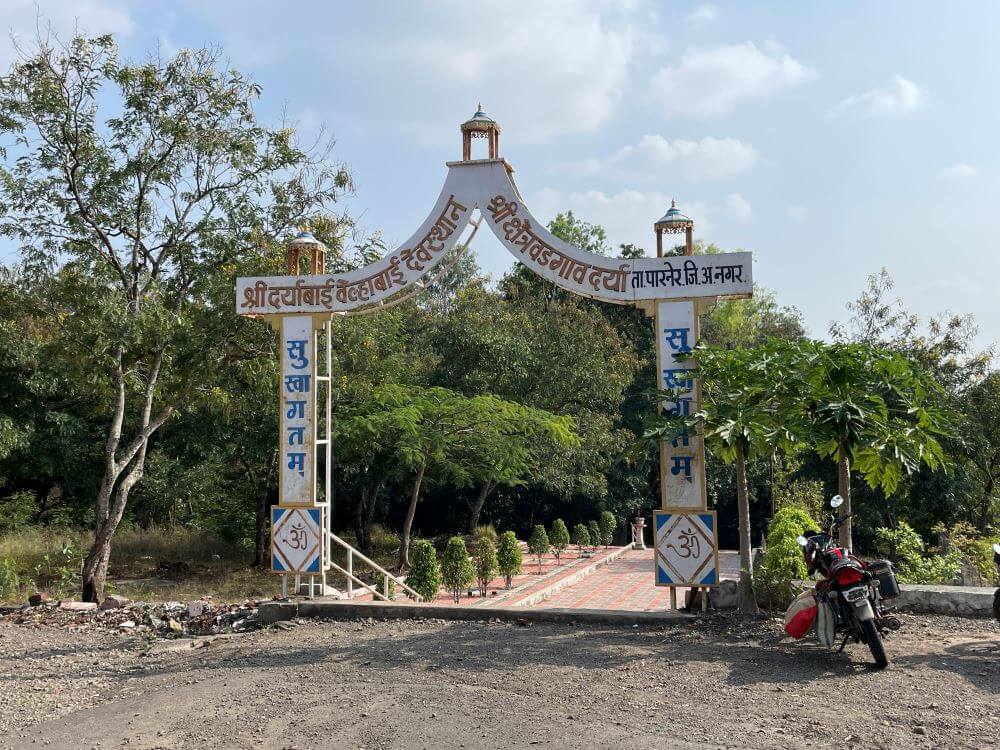
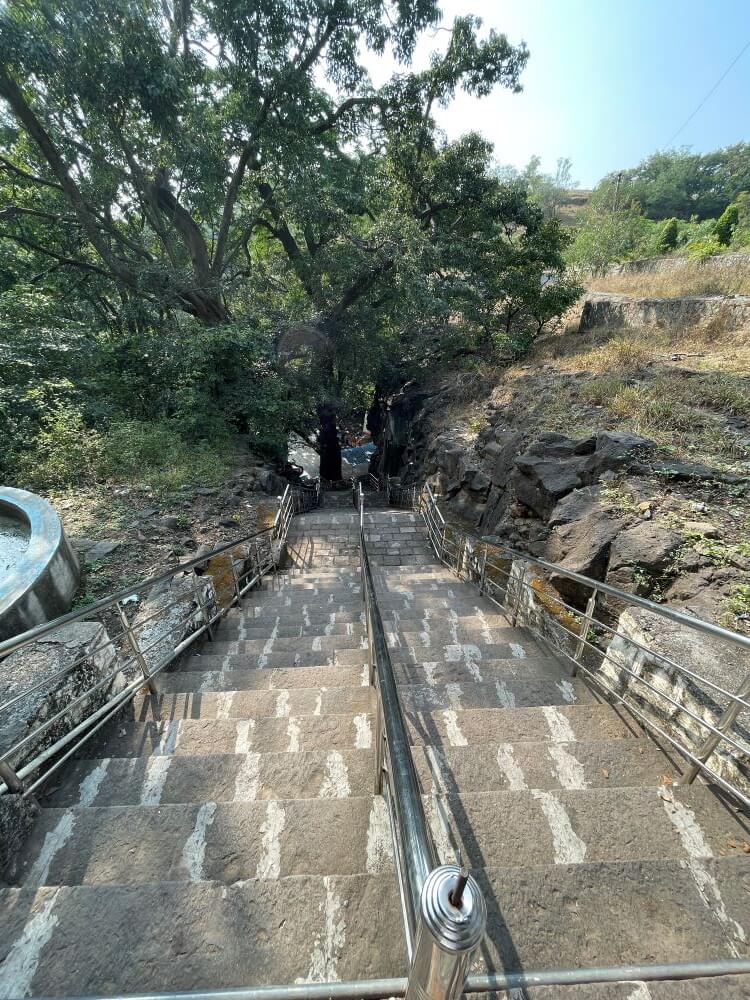
Vadgaon Darya village is nestled in a valley surrounded by lush flora. Large trees such as custard apple, tamarind, jamun, mango, babool, banyan, and peepal adorn the temple complex. Upon entering through the archway, a flight of steps leads down to the temples. Descending 125 steps brings devotees into the temple courtyard. Beside this pathway lies a waterfall, and adjacent to it is a cave said to be about 1 kilometre long. Although it has been partially filled with stones and soil over the years, one can still venture 125 to 150 feet inside.
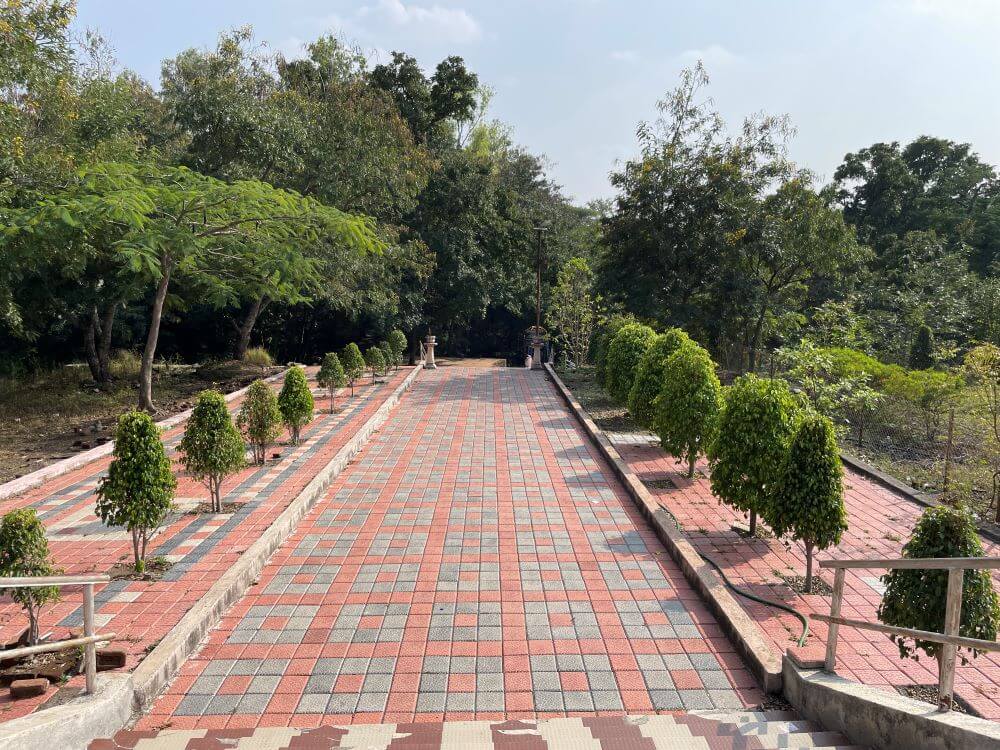
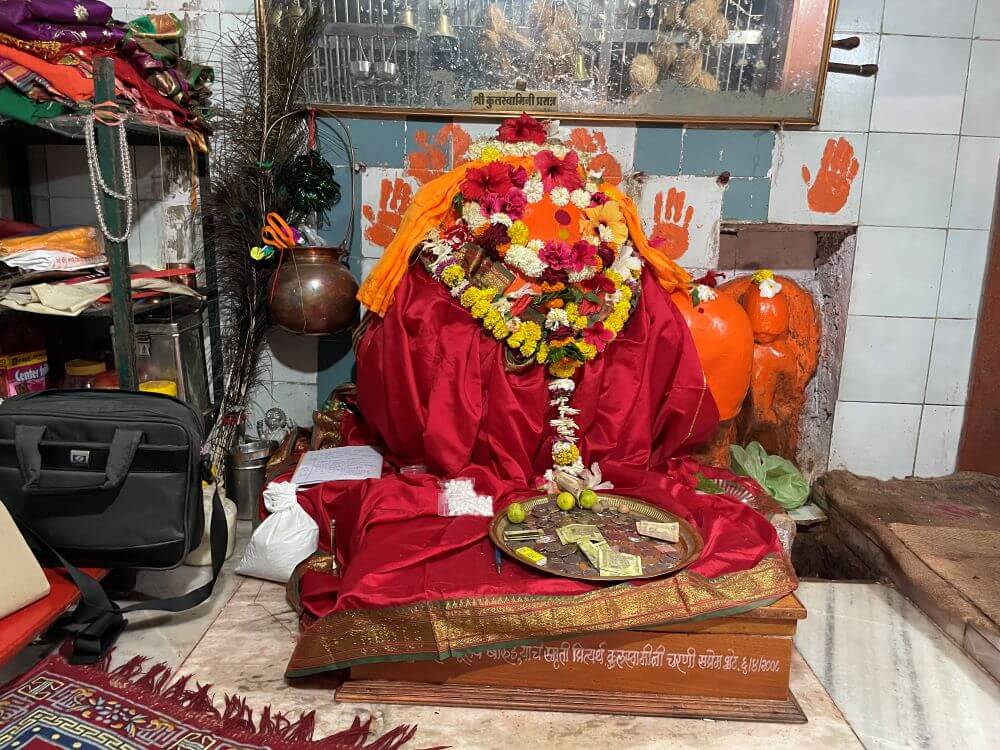
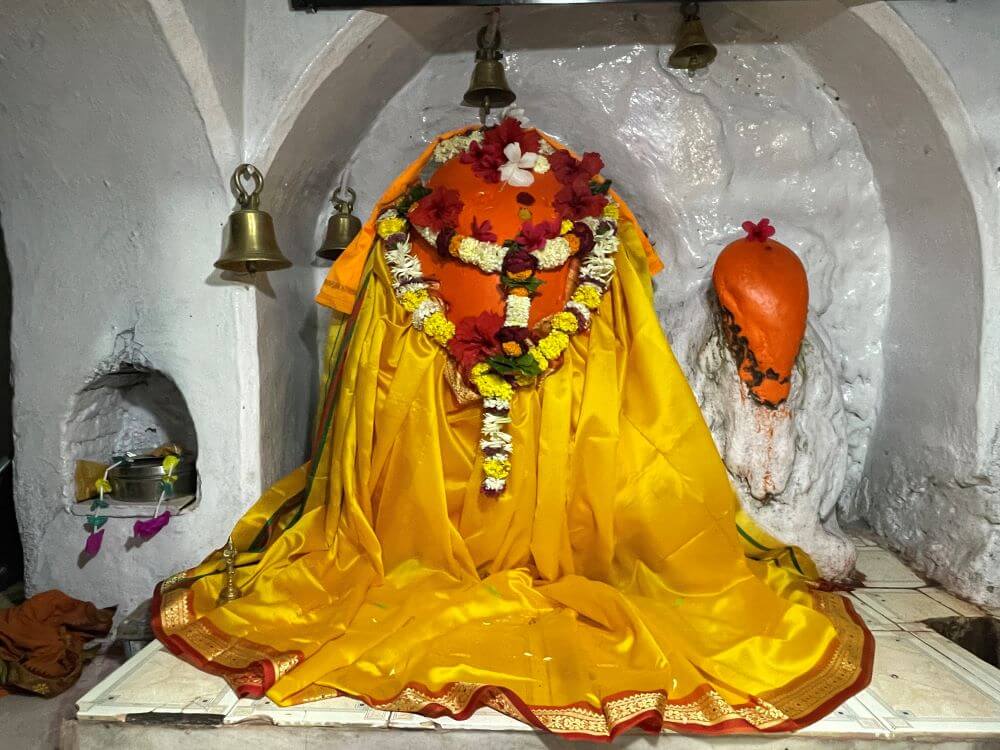
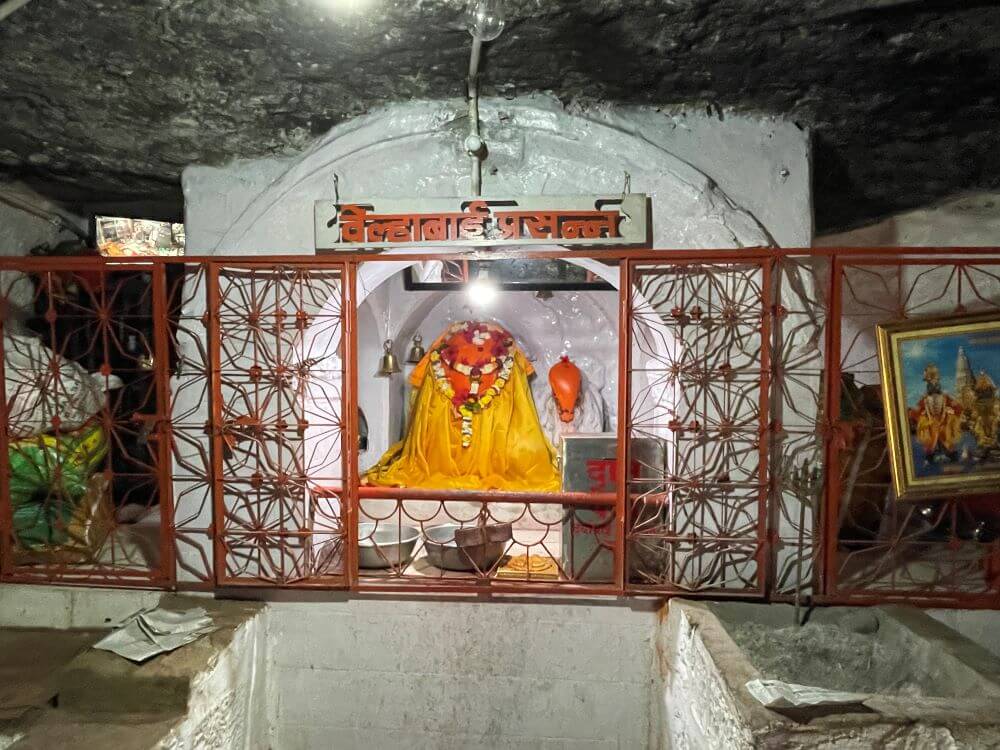
The entire temple complex is paved, appearing clean, serene, and tranquil. The temples of Goddess Daryabai and Goddess Velhabai are nestled within the mountain cliff. Upon entering through the main doorway of the Daryabai Temple, one beholds the self-manifested (*swayambhu*) idol of the Goddess in *tandala* (unshaped stone) form. Beside this idol rests a Shivling (*Shivpindi*). From here, a small doorway leads to the Velhabai Temple. Legend has it that as the two Goddesses were sisters, the elder sister used her elbow to carve out this doorway to reach Daryabai. In the Velhabai Temple as well, there is a *swayambhu tandala* idol along with an idol of Lord Ganesha. Due to this unique architecture, devotees enter through the Daryabai Temple, proceed internally into the Velhabai Temple, and exit from there.
A short distance from the temple lies land belonging to the shrine trust (*Devasthan*). The villagers farm this land collectively, and the proceeds are utilized for the Goddess’s festivals and religious ceremonies, as well as for providing food for the monkey army. The villagers say that if anyone slackens in this duty, the monkey army visits that person’s field and damages the crops. All the villagers regard this monkey army as the beloved children and divine soldiers of the Goddess. These monkeys are tamed and enthusiastically participate in every wedding and religious event. On such occasions, the villagers treat the monkeys with great honor and respect. A traditional turban (*pheta*) is tied on the chief monkey, and remarkably, the monkey sits still while the turban is tied onto its head. After the function concludes, the monkeys tear the turban into several pieces and distribute a piece among themselves. Moreover, during these events, many monkeys sit together with the villagers in the dining lines (*pangat*) to share the meal.
On Chaitra Shuddha Ashtami, there is a tradition of applying turmeric to the Goddesses. That evening, following tradition, a grand procession of the Goddess’s palanquin (*chabina*) and the revered sacred pole (*manachi kathi*) is taken out. The procession moves from the village to the temple amidst the resonant sounds of traditional musical instruments. A 10-day grand festival is celebrated here during Navratri. A large fair (*yatra*) takes place on Magh Shuddha Purnima. Devotees firmly believe that this sacred shrine is a divine, living presence (*Jagrut Devasthan*).
This sacred temple stands as a testament to deep spiritual devotion, ancient architectural grandeur, and rich local cultural traditions.
The sanctum sanctorum houses the divine idol consecrated according to ancient Vedic traditions, surrounded by serene courtyards and traditional temple architecture.
Navratri, Maha Shivratri, Annual Temple Jatra & Deepotsav
Compare and book flights, secure top-rated local hotels near the temple, hire reliable guides, and rent cars instantly.
Extend your pilgrimage by visiting other highly sacred temples located nearby.


Add ₹999 more to unlock FREE SHIPPING!
Your sacred cart is currently empty.
Shop Photo FramesFill in your delivery details below to place your order.
Add comment