
Add ₹999 more to unlock FREE SHIPPING!
Your sacred cart is currently empty.
Shop Photo FramesThe history of Maharashtra has been written upon the shoulders of numerous forts. True to the saying, “Forts are the essence of Swarajya,” Chhatrapati Shivaji Maharaj repaired many existing forts and constructed new ones. These forts facilitated the expansion of Swarajya, and their walls witnessed the planning of numerous campaigns, battles, and regimes. Some of these forts are remembered for specific historical events. The mention of Tanaji Malusare’s supreme sacrifice brings Sinhagad to mind; Pratapgad is associated with the slaying of Afzal Khan, and Purandar with Murarbaji’s valor. Similarly, one fort bore witness to a tragic and merciless ordeal, and that fort is Bahadurgad! It was on this fort that Aurangzeb inflicted unspeakable torture upon Chhatrapati Chhatrapati Sambhaji Maharaj.
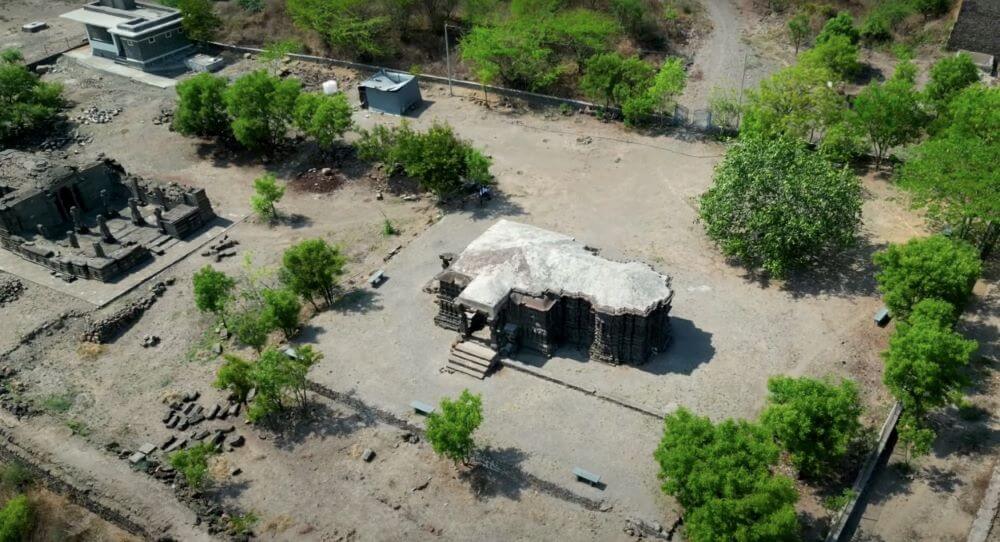
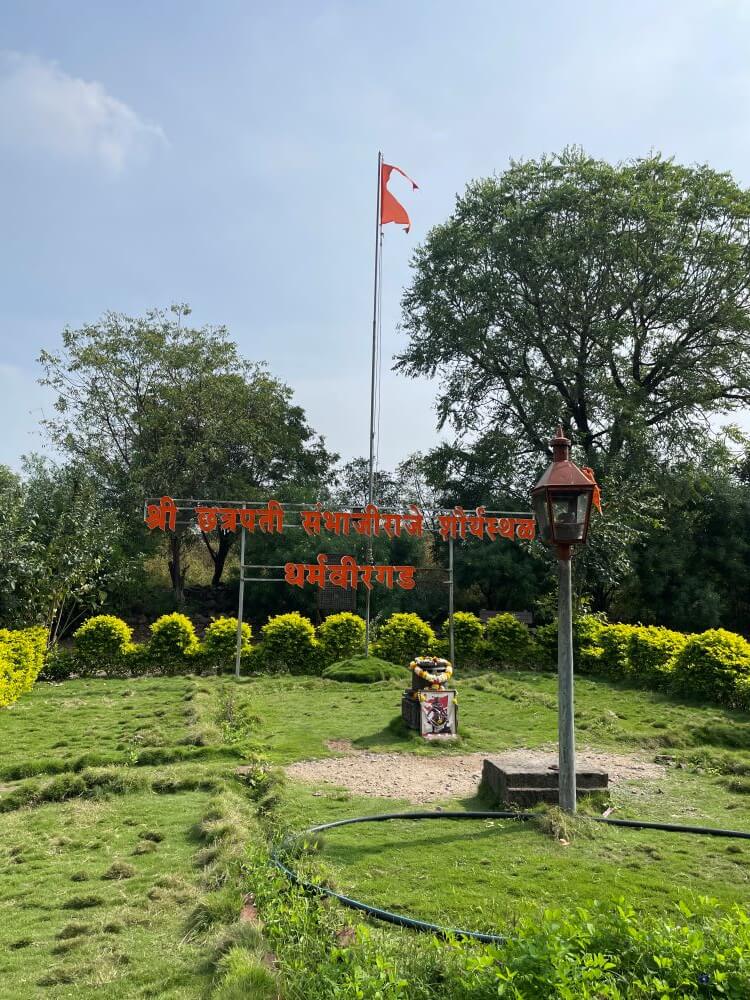
The Bahadurgad Fort is situated on the banks of the Bhima River at Pedgaon in Shrigonda Taluka of Ahilyanagar District. Owing to the village’s name, it is also referred to as the ‘Pedgaon Fort’. After capturing Chhatrapati Sambhaji Maharaj at Sangameshwar, Aurangzeb brought him to this fort. Here, he subjected the King to immense torment, gouging out his eyes and severing his tongue. Yet, the King did not relinquish his self-respect. Bahadurgad has borne witness to this supreme contribution of the King towards preserving the integrity of Swarajya. To honor and keep the memory of the King alive, many devotees of Sambhaji Maharaj address this fort as ‘Dharmveeragad’.
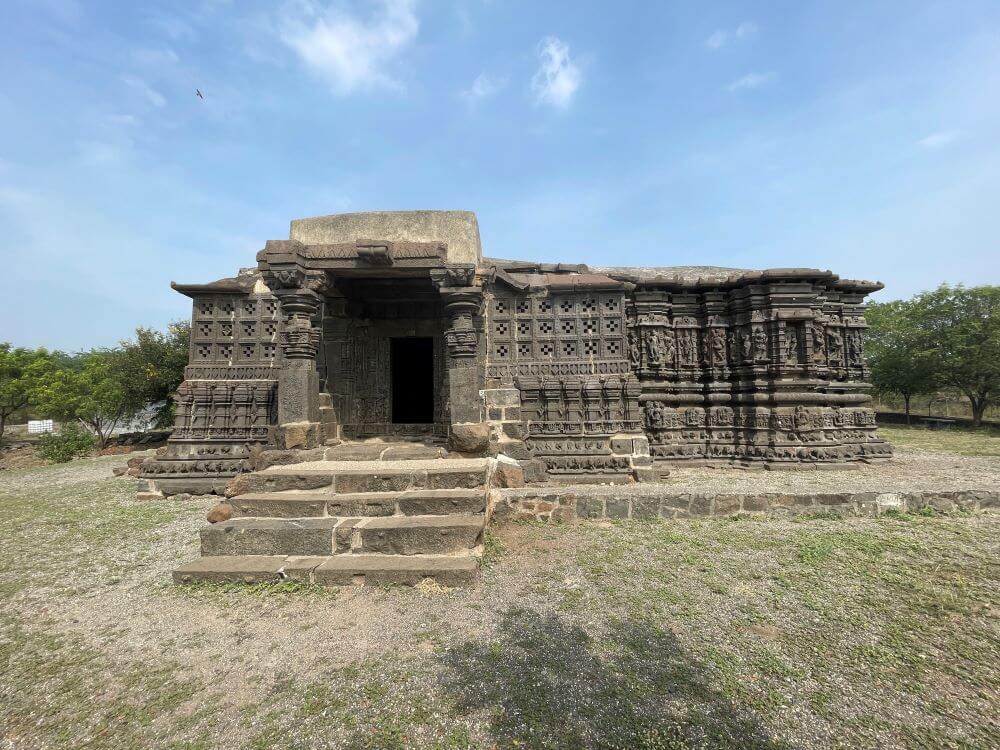
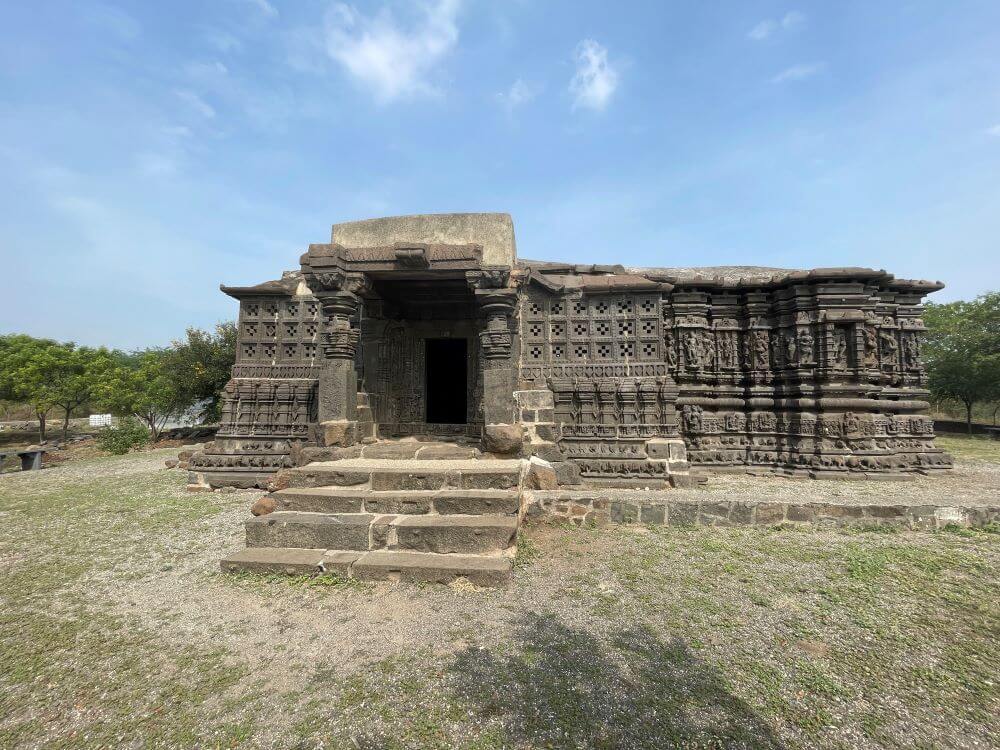
The fortification of Bahadurgad runs parallel to the Bhima River. Although it has collapsed in several places today, the defining feature of this fort is its exquisite temples of supreme architectural design. There are four ancient temples on this fort: Lakshminarayan, Baleshwar, Rameshwar, and Mallikarjun. According to historians and researchers, these temples belong to the Chalukya style of the fifth century, reflecting the profound influence of this dynasty’s temple architecture. Among these, the Lakshminarayan and Baleshwar temples are under the control of the Archaeological Department, and governmental efforts are currently underway to preserve their beauty.
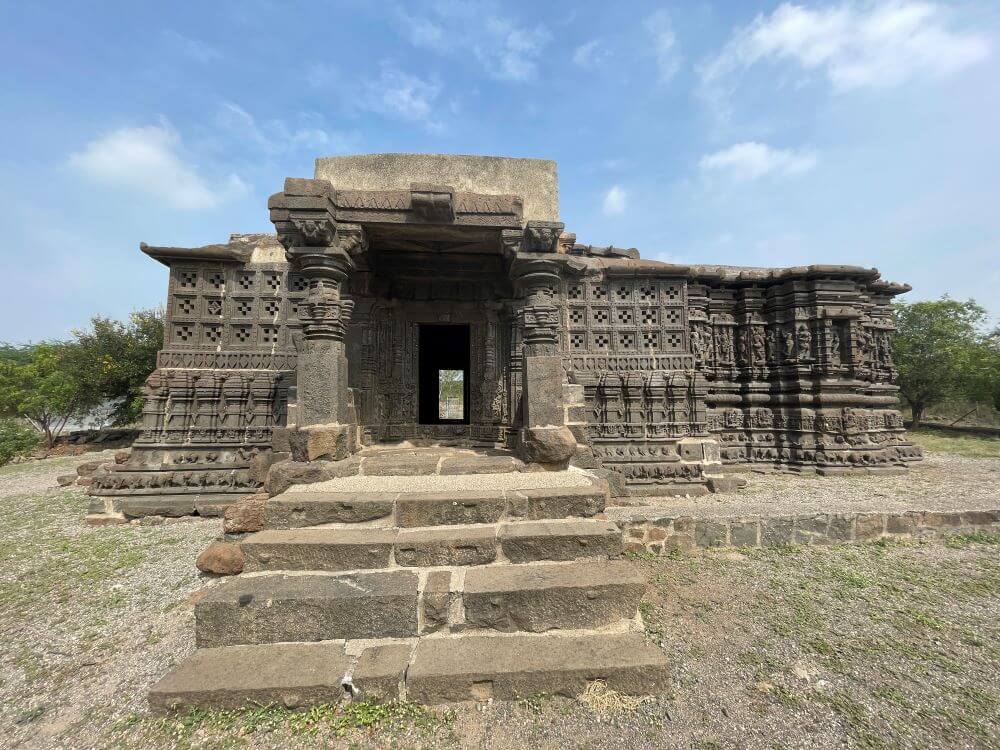
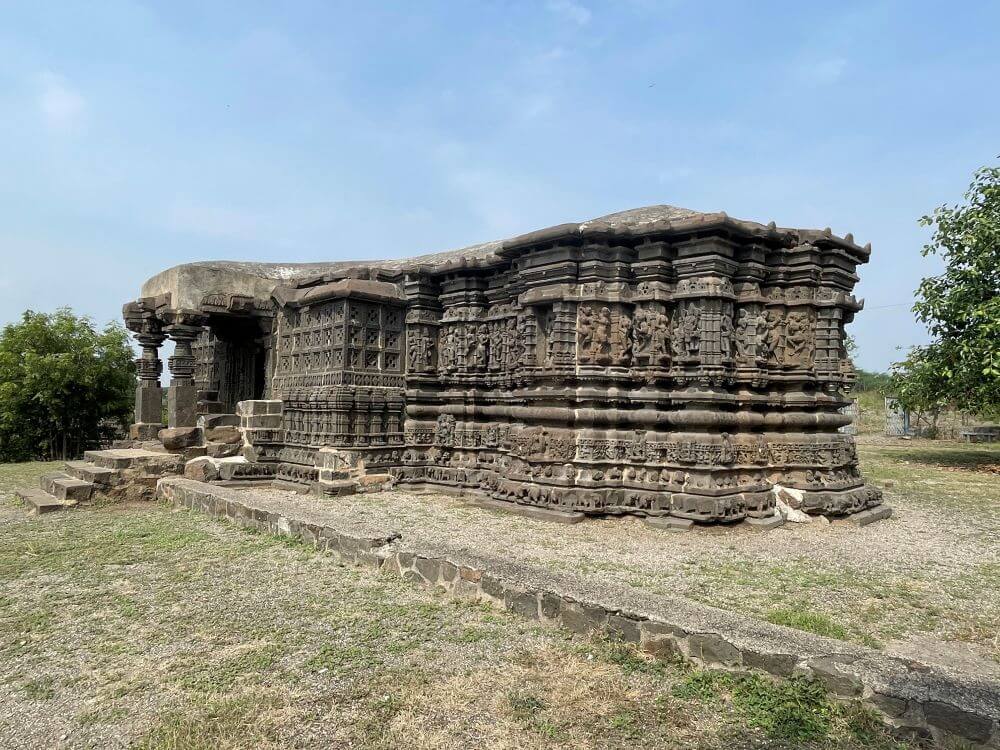
The Lakshminarayan Temple is particularly renowned for the hundreds of distinctive sculptures adorning it. This temple is often referred to as a ‘Chaitramandira’ (Temple of Sculptures). The uniqueness of the temple lies in the depiction of the deities of the eight cardinal and intercardinal directions carved upon their respective sides. Accordingly, the deities carved here are Indra in the east, Agni in the southeast, Yama in the south, Nirriti in the southwest, Varuna in the west, Vayu in the northwest, Kubera in the north, and Ishana in the northeast. In addition to these, the exterior walls feature sculptures of the Narsimha Avatar, Shri Vishnu, Jataधारी (matted-hair) Shankar, Lord Krishna playing the flute along with Radha, and the Sun God (Surya). An ancient Vitthal temple at Palshi in Parner Taluka also houses a similar sculpture of the Sun God. Such a sculpture of the Sun God is considered rare, yet these two temples in Ahilyanagar District offer a glimpse of them. On the southeast side of the Lakshminarayan Temple, there are sculptures of Lord Indra and the Varaha Avatar. Furthermore, *sursundaris* (celestial beauties) are carved at numerous places. Among them, sculptures of *sursundaris* playing musical instruments and adorning themselves are particularly distinctive. On the lowest tier of the temple, elephants (*gajastara*) are carved, while horses (*ashvastara*) are depicted on the tier just above them. Near this tier, a continuous circular frieze depicting the story of Vali and Sugriva runs in a single line around the entire temple.
Facing west, the Lakshminarayan Temple is structured with a *sabhamandapa* (assembly hall), an *antarala* (vestibule), and a *garbhagriha* (sanctum sanctorum). Entrances to the temple are located on the west, north, and south sides. To ensure proper ventilation and natural light inside the temple, the walls of the *sabhamandapa* feature intricately carved stone lattice screens crafted from single blocks of stone. Because of these screens, a pleasant coolness is felt inside the temple even during the peak of summer. Stone lattice screens of this kind are rarely seen anywhere else. Every single pillar in the *sabhamandapa* is adorned with intricate carvings from bottom to top, making each pillar a masterpiece of rare craftsmanship. At the top of these pillars, weight-bearing *Yakshas* are carved. A continuous chain of birds holding lotuses in their beaks is carved along the ceiling (*vitana*) of the temple, imparting a remarkably unique artistic charm.
While proceeding from the *sabhamandapa* towards the *garbhagriha*, through the *antarala*, the doorway of the sanctum features carvings of *shehnai* players, *dhol* players, *sursundaris*, flora, fauna, and scrolling vines. Above the doorway lies the *Ganeshapatti* (lintel bearing the image of Lord Ganesha). A truly remarkable feature here is the exquisitely carved stone *rangoli* on the floor right at the base of this entranceway. The sanctum sanctorum itself is spacious and completely empty, housing no idol.
Every year on June twenty-first, twenty-second, and twenty-third, the rays of the sun fall directly into the inner sanctum. Numerous devotees and tourists visit this ‘sculpted temple’ to witness this divine phenomenon of sun rays (*kiranotsava*). For the past few years, a grand festival of lights (*Deepotsava*) has been celebrated here on the occasion of Diwali. This celebration was initiated by Shivdurg Samvardhan and Team Dharmveeragad.
The second prominent temple on this fort is the Baleshwar Temple. Situated right opposite the Lakshminarayan Temple, the Baleshwar Temple is also a magnificent specimen of fine architecture. Featuring a *sabhamandapa*, *antarala*, and *garbhagriha*, the *sabhamandapa* of this temple has a circular stone positioned in the center, known as the *Nrityashila* (dancing slab). In ancient times, artists used this stone for dance performances. Much like the Lakshminarayan Temple, a stone *rangoli* is also carved in the *antarala* here. The doorway of the sanctum features sculptures of *sursundaris*, musicians, animals, and birds. The inner sanctum houses a large stone *Shivlinga*. Additionally, the architectural layout of the other ancient temples here, namely Rameshwar and Mallikarjun, is somewhat similar to these two temples.
This sacred temple stands as a testament to deep spiritual devotion, ancient architectural grandeur, and rich local cultural traditions.
The sanctum sanctorum houses the divine idol consecrated according to ancient Vedic traditions, surrounded by serene courtyards and traditional temple architecture.
Navratri, Maha Shivratri, Annual Temple Jatra & Deepotsav
Compare and book flights, secure top-rated local hotels near the temple, hire reliable guides, and rent cars instantly.
Extend your pilgrimage by visiting other highly sacred temples located nearby.


Add ₹999 more to unlock FREE SHIPPING!
Your sacred cart is currently empty.
Shop Photo FramesFill in your delivery details below to place your order.
Add comment