
Add ₹999 more to unlock FREE SHIPPING!
Your sacred cart is currently empty.
Shop Photo FramesShri Kshetra Vriddheshwar in Pathardi Taluka is famous as the primordial seat (Adipitha) of the Nath tradition. Nestled at the foothills of the Garbhagiri hills in a nature-rich environment, the 11th-century Vriddheshwar Mahadev Temple is surrounded by hills on three sides. It is said that Lord Mahadev took the form of an old man here to accept the Mahaprasad, and since then, this place has been known as ‘Vriddheshwar’ or ‘Mhatardev’. This temple is a place of faith for millions of devotees, and a large number of pilgrims visit here every Monday for darshan.
The legend of the temple states that Gorakshanath, the disciple of Machhindranath, used the Golden Siddha Mantra to turn the Garbhagiri hills into gold, thereby removing the attachment from Machhindranath’s mind. Machhindranath offered this golden hill to Kubera and served Mahaprasad to 33 crore gods and sages at this location. For this purpose, a long row of gods was seated up to Deorai (Deorai is a village in Pathardi Taluka, located eight kilometers from the Vriddheshwar temple). In this row, Lord Mahadev took the form of an old man and partook in the Mahaprasad. Then, all the gods requested Mahadev that since He had assumed this form, He should reside here in this very form for the welfare of the world. At the request of all the gods, Mahadev remained here in His elderly form, which is why this region became famous as Mhatardev (Vriddheshwar). The Dhuni (sacred fire) lit by Machhindranath during the Yajna still burns near the temple entrance today.
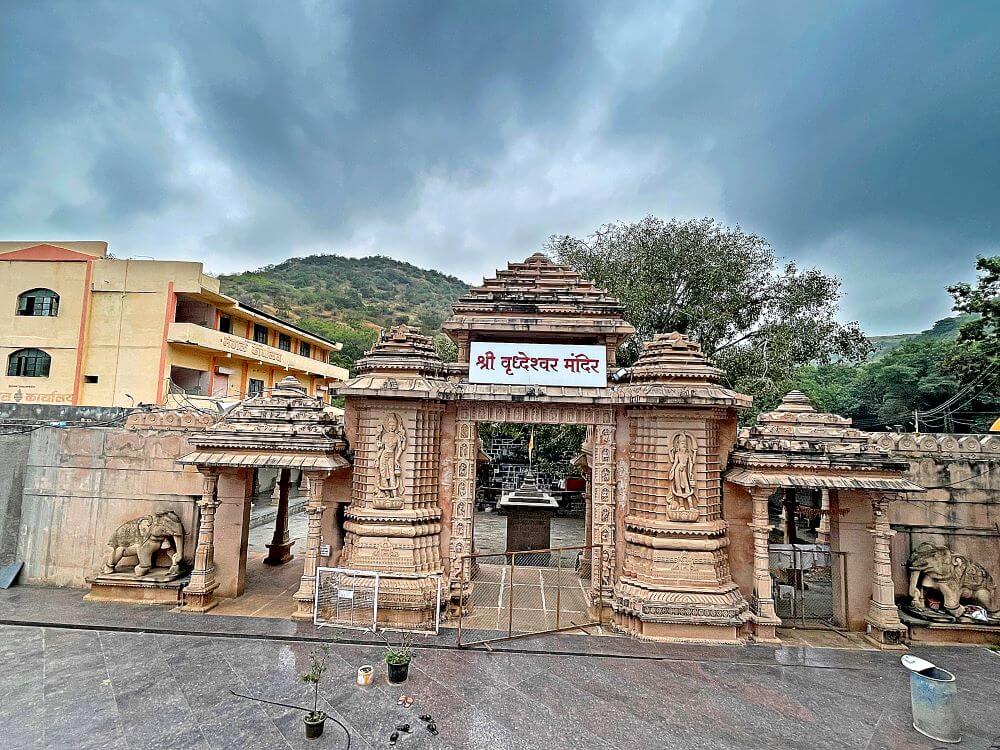
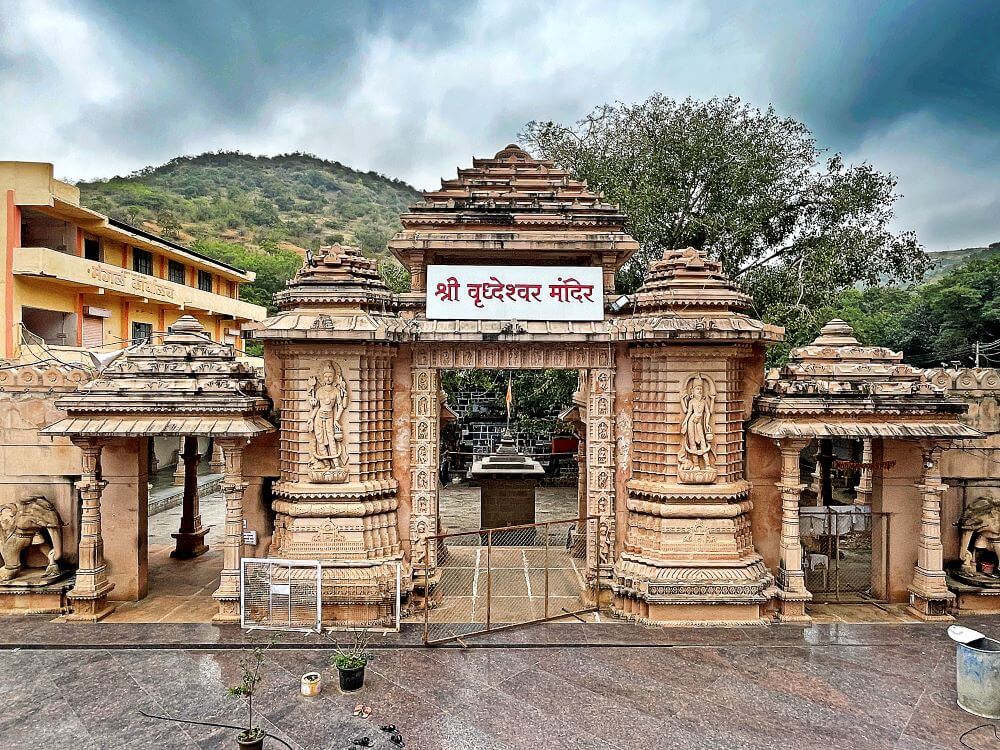
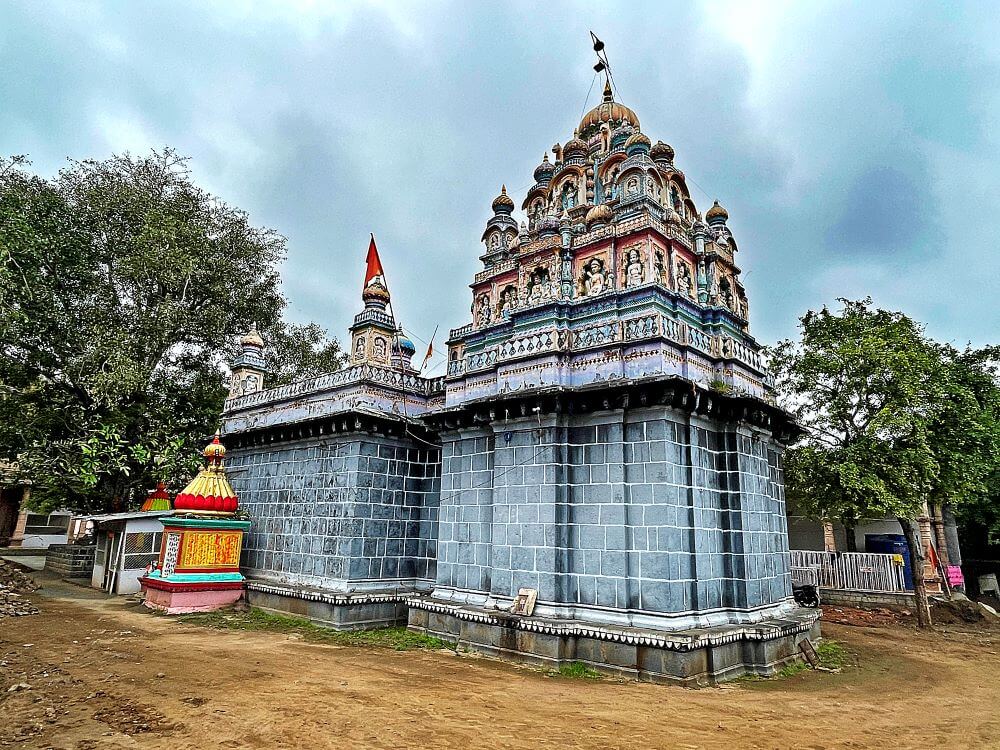
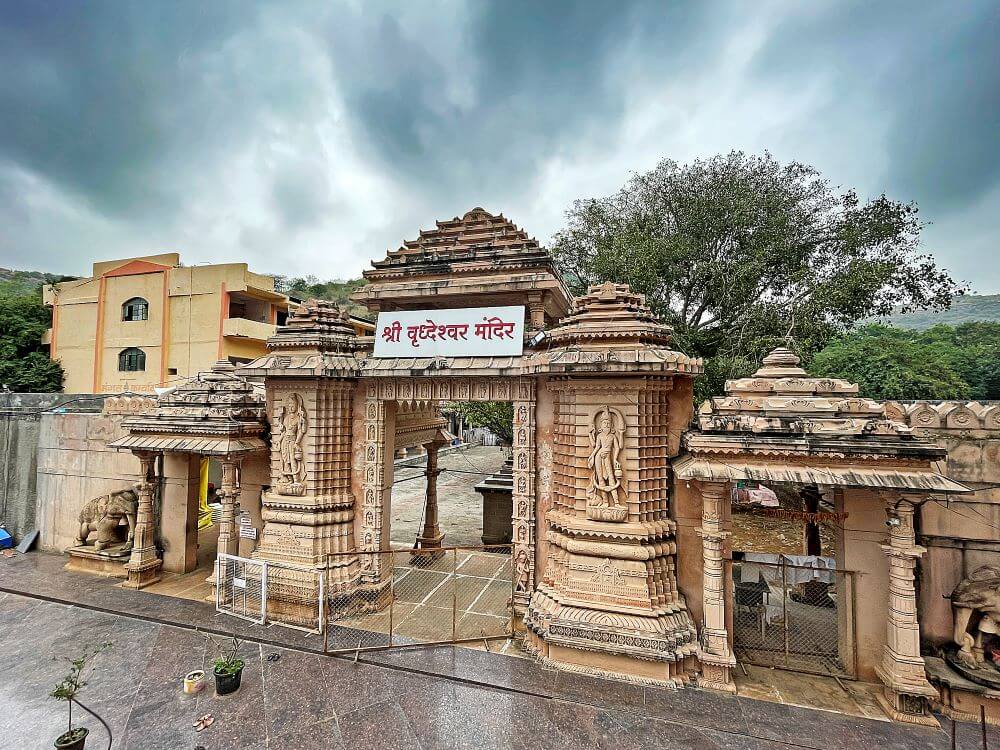
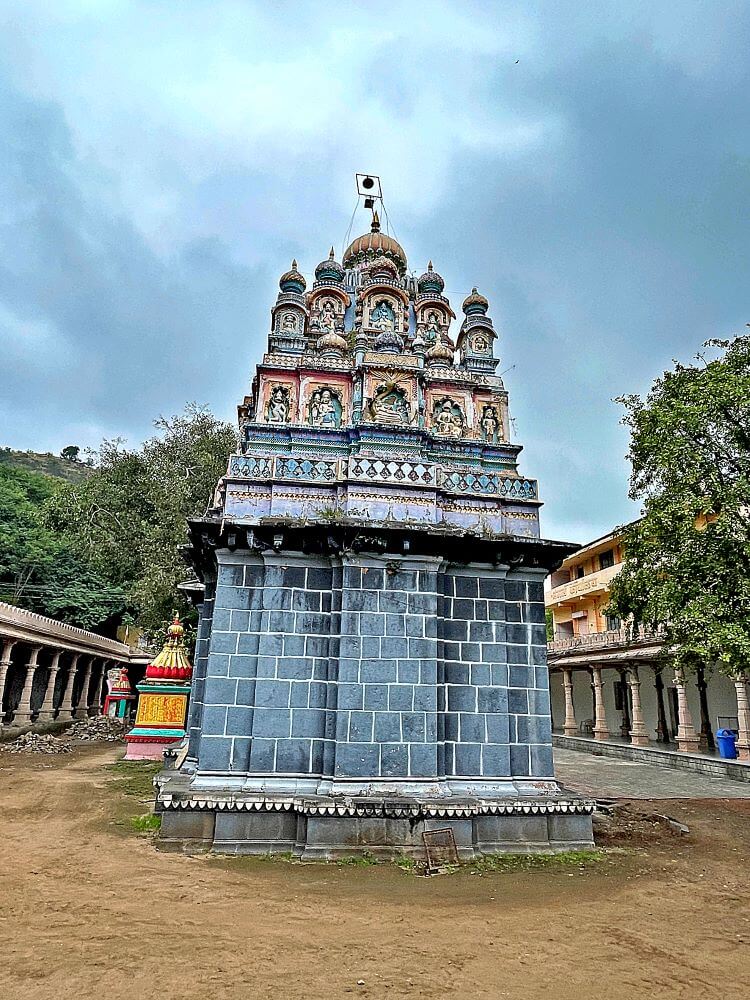
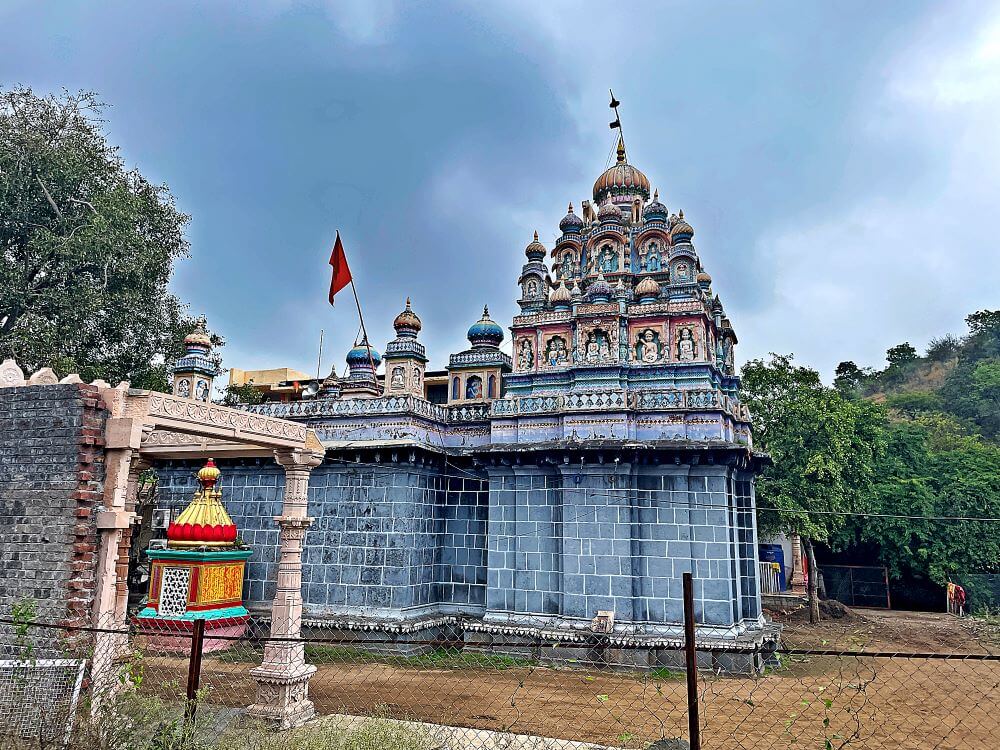
The Vriddheshwar shrine is considered the origin of the Nath sect. Therefore, Vriddheshwar is also called ‘Adinath’. There is a strong fortification around this temple. There is a spacious entrance to enter the temple through the fortification. Unique craftsmanship can be seen on the entrance gate. In the center of the spacious temple premises stands the temple of Vriddheshwar. The spire of this temple has beautiful carvings and features statues of various gods and goddesses. The temple is constructed of stone. Regarding the renovation of the temple, it is said that there were many old mansions (wadas) in the villages of Ghatshiras, Kanhobawadi, and Parewadi. Stones from these 100-year-old dilapidated mansions were used for the construction of the temple. Therefore, even though this is a newly built temple, its construction feels ancient due to these stones. Along with the Nathpanthi Dhuni, there are temples of Ganpati, Maruti, Kapil Muni, and Kashi Vishweshwar in the temple premises. The Dnyanavapi well located in the stream behind the temple is said to be from the time of the Naths.
The temple structure consists of a Sabhamandap (assembly hall), Antarala (vestibule), and Garbhagriha (sanctum sanctorum). There are carvings on the walls and ceiling (the part towards the spire) of the Sabhamandap. A huge bell is hung in the center. It is said that it was offered by King Shravandev in the 12th century. There is a Swayambhu (self-manifested) Shiva Linga in the sanctum sanctorum. The Shalunka (base) here is unique and naturally formed. The many circular stones on the Shiva Linga are themselves the Shiva Lingas here. Through the windows in the entrance of this west-facing temple, sun rays fall directly on the Vriddheshwar Linga for a few days of the year. It is a living (Jagrut) Linga, and devotees believe that it grows to the size of a grain of wheat every year on Mahashivratri, meaning it increases (Vriddhingat), which is also why it is known as ‘Vriddheshwar’. There is an idol of Mother Parvati in front of the Shiva Linga in the sanctum sanctorum.
A fair is held here on Mahashivratri. There is a festival on the third Monday of the month of Shravan. On both these days, Ganga water is brought to Vriddheshwar from Paithan by Kawad. During the month of Shravan, Bel-Aarti is performed here every night from 8 to 9. At this time, thousands of Bel leaves are offered to the Shiva Linga by the devotees. A large number of devotees are present for this ceremony. The temple trust provides Amti-Bhakri Prasad to the devotees every Sunday. Villagers say that Sadguru Shankar Maharaj of Dhankawadi, Pune, lived and practiced penance in the temple premises for 4 years from 1932 to 1936.
This sacred temple stands as a testament to deep spiritual devotion, ancient architectural grandeur, and rich local cultural traditions.
The sanctum sanctorum houses the divine idol consecrated according to ancient Vedic traditions, surrounded by serene courtyards and traditional temple architecture.
Navratri, Maha Shivratri, Annual Temple Jatra & Deepotsav
Compare and book flights, secure top-rated local hotels near the temple, hire reliable guides, and rent cars instantly.
Extend your pilgrimage by visiting other highly sacred temples located nearby.


Add ₹999 more to unlock FREE SHIPPING!
Your sacred cart is currently empty.
Shop Photo FramesFill in your delivery details below to place your order.
Add comment