
Add ₹999 more to unlock FREE SHIPPING!
Your sacred cart is currently empty.
Shop Photo FramesThe history of conflict and unity between the Shaiva and Vaishnava sects in Hinduism is extremely ancient. Once, in order to resolve the discord between the Shaiva and Vaishnava sects, the emperors of that time had to build temples dedicated to both Shiva and Vishnu together. Later, this tradition continued in various forms. While establishing the principle that all deities are one, the Warkari sect emerged in Maharashtra, teaching that the same Supreme Soul resides everywhere and condemning discrimination. Many religious sites that serve as the power centers of this sect have been active in Beed district for hundreds of years. Tarkeshwar Gad in Ashti taluka is considered one of the important places of faith among them. This fort is renowned as the ‘Little Pandhari’.
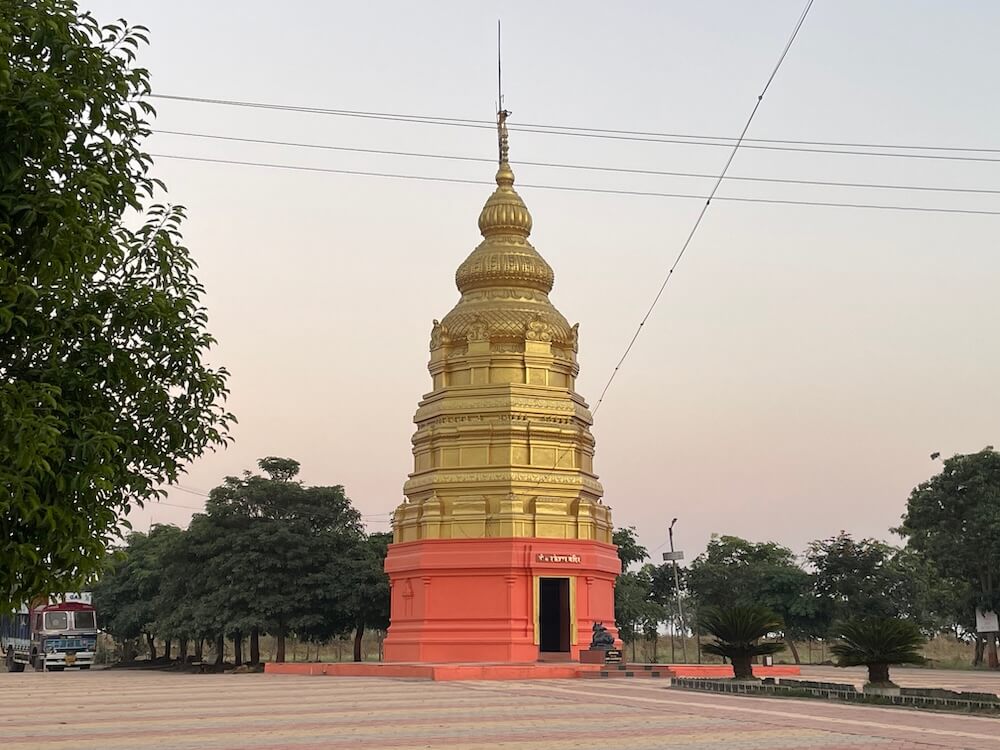
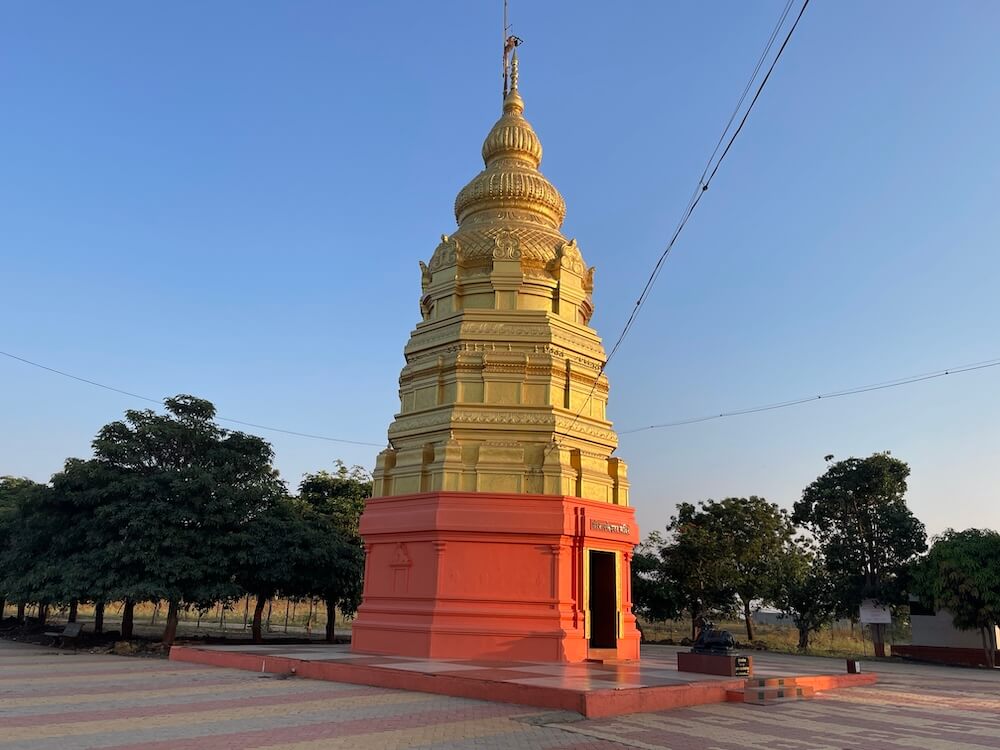
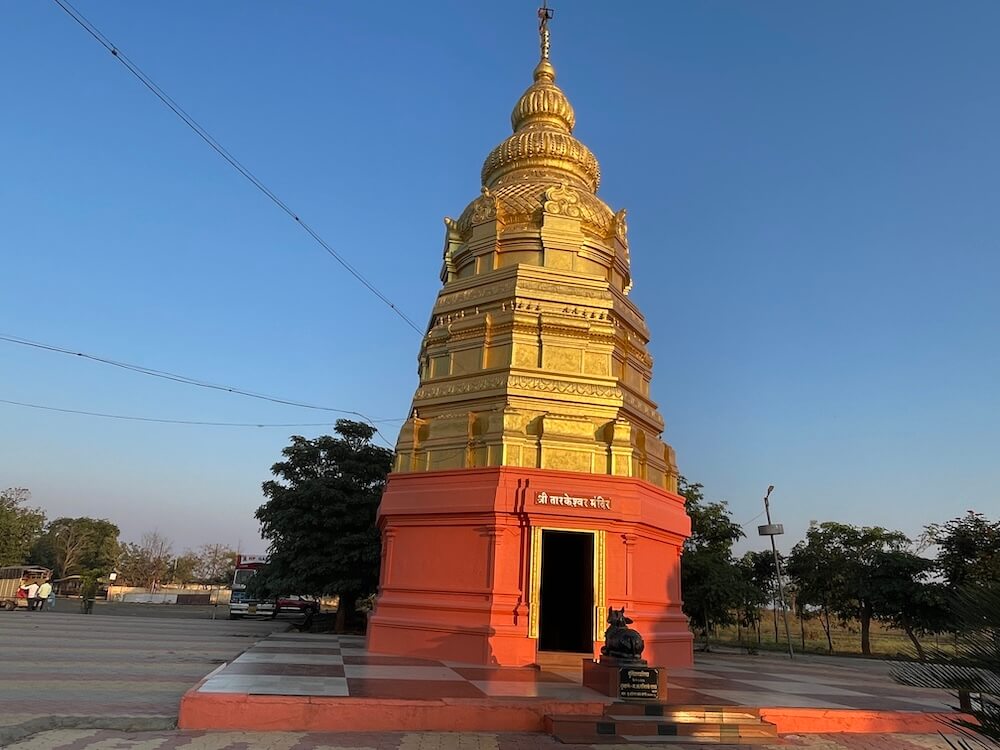
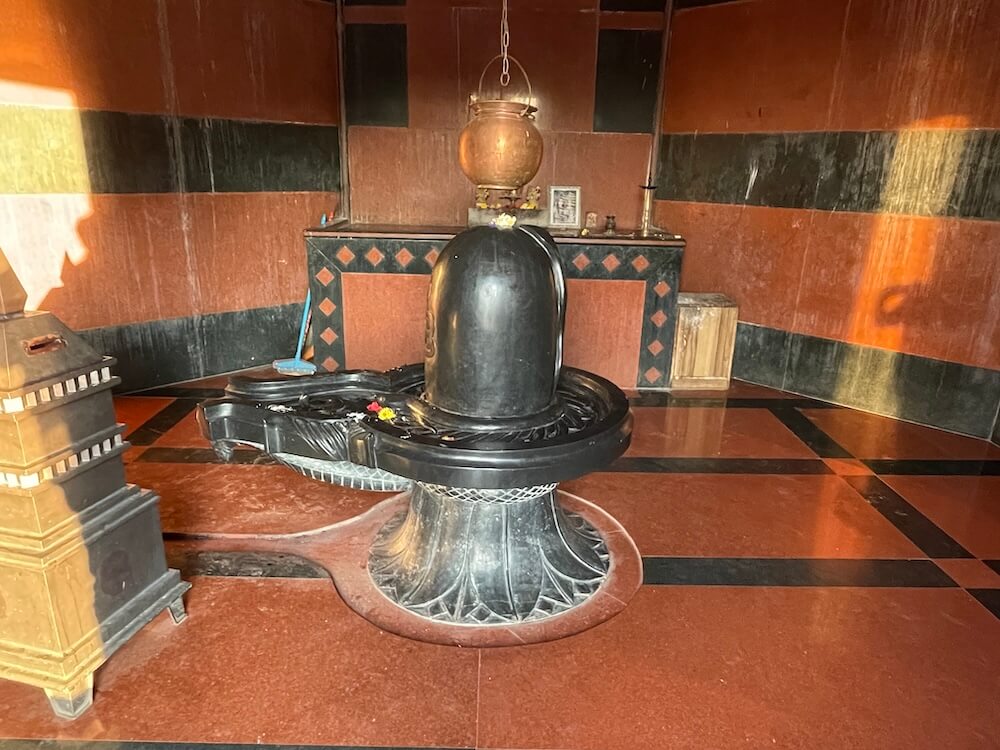
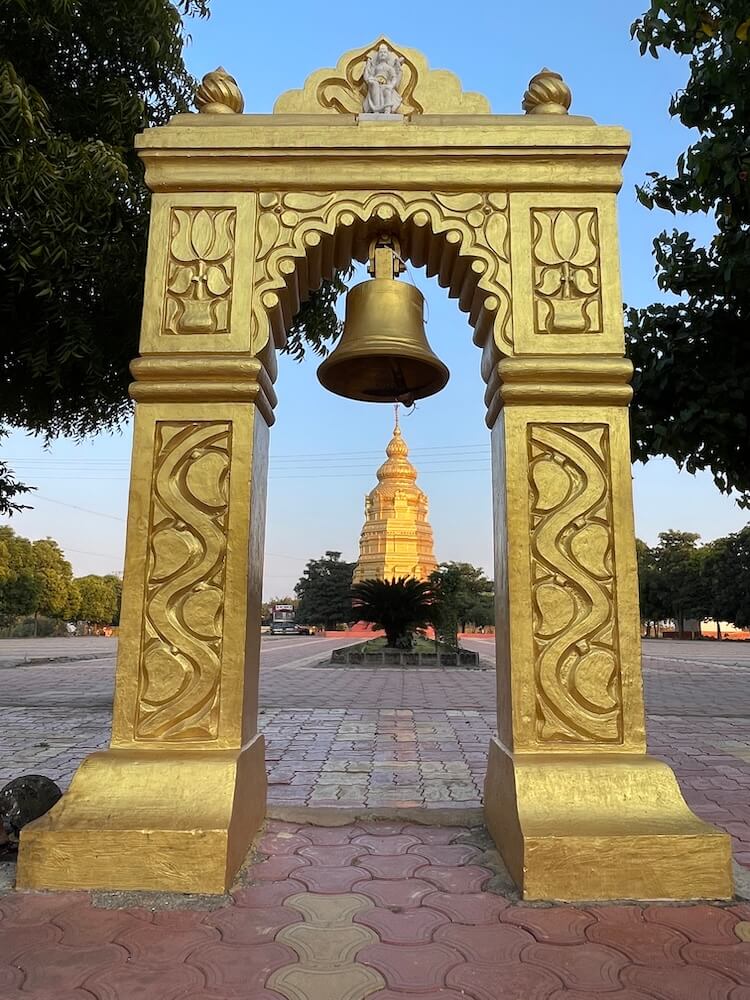
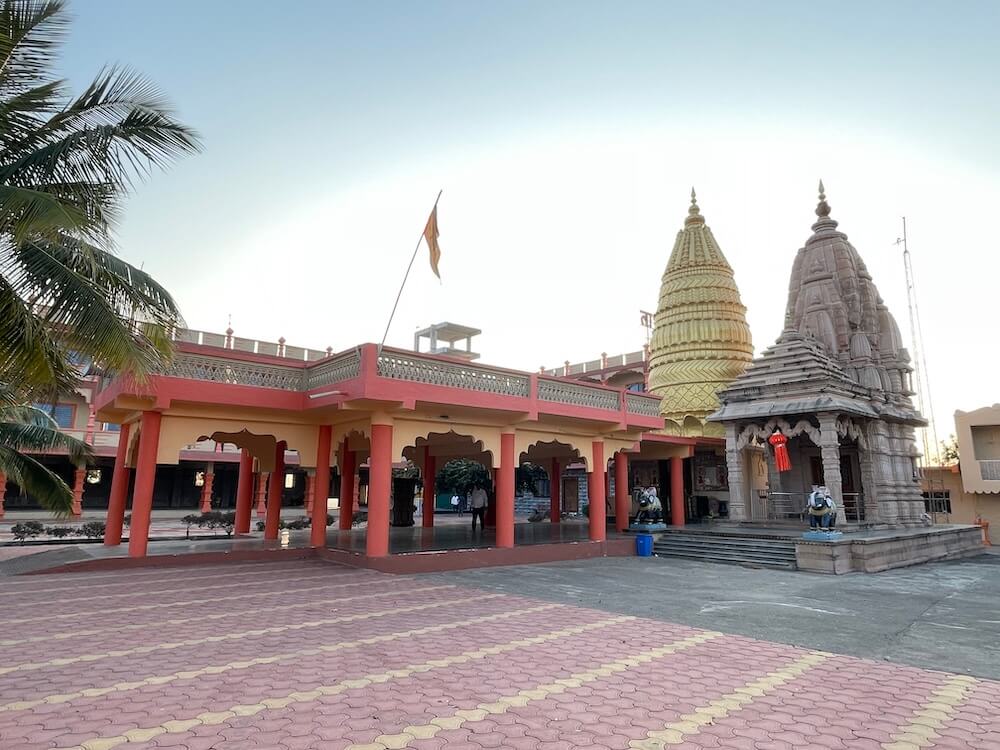
Shri Taraknath is the original identity of Tarkeshwar Gad. He was one of the eighty-four Siddhas of the Nath tradition. As his Samadhi is located on the fort, this holy site is said to date back to approximately the thirteenth to fourteenth century. Later, after receiving a divine vision, the supreme saint Narayan Maharaj renovated this Samadhi and established a Shaktipeeth of the Warkari tradition here. Narayan Baba possessed the power of Vachasiddhi. It is believed that the blessings bestowed by him bring welfare to the devotees, a faith held firmly by his followers. During his lifetime, he propagated and spread the Warkari tradition. By establishing a Warkari educational institution on the fort, he nurtured thousands of students. Following the Guru-Shishya tradition of the Nath Sampradaya, the unbroken work of the Warkari tradition continues on the fort to this day. This holy site is situated at some distance from the village. In the center of the temple’s paver-block-covered courtyard, a brass bell hangs from a crescent-shaped arch atop two ornate pillars. On one side of the bell is the Tarkeshwar temple, while on the other side are the Samadhi temples of Taraknath and Narayan Baba. The Tarkeshwar temple stands on a platform about two feet high. On the platform, in front of the temple, is an idol of Nandi on a Vajrapitha. This octagonal temple has a single step at its entrance. The door frames are adorned with intricate vine carvings, and an image of Lord Ganesha is sculpted on the lintel. Inside the temple, there is a large Shiva Linga on the floor, above which a copper Abhishek vessel, designed to drip water, is suspended from the ceiling. The ceiling features beautiful carvings. The roof of the temple is crowned by a four-tiered octagonal Shikhara in the Dravidian style. Each tier of this Shikhara features Kut and Shala architectural elements. The spire is adorned with floral and leaf motifs, and the apex is dome-shaped. Atop the dome sits a stupika, crowned by a kalasha.
At a short distance in front of this temple lies the samadhi shrine of Taraknath. The temple is structured with a mukhamandapa, a sabhamandapa, and a garbhagriha. The mukhamandapa features four circular pillars, followed by a semi-open sabhamandapa. In the sabhamandapa, there are five intricately carved pillars on both the left and right sides, flanked by elephant sculptures. All the pillars are interconnected by arched gateways. The garbhagriha is elevated above the sabhamandapa, accessible by three steps at its entrance. The facade of the garbhagriha is inscribed with a kalasha and other auspicious symbols. The wooden entrance of the garbhagriha is decorated with floral and leaf carvings on the door frames, with a sculpture of Lord Ganapati on the lalata-bimba. The entrance is fitted with ornate wooden shutters. Inside the garbhagriha, the idols of Vitthal-Rukhumai are placed on a vajrapitha, and in front of them is the platform of Taraknath Maharaj’s samadhi, which houses his idol. The walls of the garbhagriha are decorated with glass enamel work. The roof of the temple is surrounded by a safety railing on all four sides, and above the roof of the garbhagriha stands a tall The shikhara is spherical in shape. The lower half of the shikhara features lotus petal motifs, while the upper half is adorned with pillar carvings. At the pinnacle of the shikhara, there are two amalakas stacked one above the other, crowned by a kalasha.
Beside this temple is the Samadhi Mandir of Saint Narayan Maharaj. The temple structure consists of a Sabha Mandap (assembly hall) and a Garbhagriha (sanctum sanctorum). The wooden entrance of the Garbhagriha features intricate floral and leaf carvings on its door frames and panels. Inside the Garbhagriha, there is a platform for the Samadhi of Saint Narayan Maharaj on the floor, and behind it, a meditative idol of Narayan Maharaj is enshrined in a decorative arch upon a Vajrapitha. The roof of the temple’s Sabha Mandap features a pyramidal stepped Shikhara. Above the Garbhagriha, there is a square Urushringi-style Shikhara. The niches on all four sides of the Shikhara contain various divine idols. At the pinnacle of the Shikhara sits an Amalaka, topped with a Kalasha and a flag.
In the temple courtyard, there is an exhibition center displaying items used daily by Saint Narayan Maharaj. Glass walls have been installed so that devotees can view the items within the center. The courtyard features gardens with various types of trees and flowering plants. A three-story building has been constructed in the courtyard for purposes such as the Warkari educational institution, a student hostel, and a pilgrim residence. There are approximately 200 indigenous cows in the cowshed located within the temple premises. Festivals and celebrations such as Dattajayanti, Gurupurnima, Ashadhi and Kartiki Ekadashi, Chaitra Padwa, Ram Navami, Dussehra, and Diwali are celebrated on the hill. In this temple, known as ‘Dhakti Pandhari’, there is a large influx of devotees on days such as Ekadashi, Thursdays, Mondays, Purnima, and Amavasya. A regular food distribution service (Annachhatra) operates in the temple every day.
This sacred temple stands as a testament to deep spiritual devotion, ancient architectural grandeur, and rich local cultural traditions.
The sanctum sanctorum houses the divine idol consecrated according to ancient Vedic traditions, surrounded by serene courtyards and traditional temple architecture.
Navratri, Maha Shivratri, Annual Temple Jatra & Deepotsav
Compare and book flights, secure top-rated local hotels near the temple, hire reliable guides, and rent cars instantly.
Extend your pilgrimage by visiting other highly sacred temples located nearby.


Add ₹999 more to unlock FREE SHIPPING!
Your sacred cart is currently empty.
Shop Photo FramesFill in your delivery details below to place your order.
Add comment