
Add ₹999 more to unlock FREE SHIPPING!
Your sacred cart is currently empty.
Shop Photo FramesNagnath was a spiritually accomplished Natha yogi of the Natha tradition. In many texts, he is referred to as ‘Nagarjuna’. In the text ‘Navanath Bhaktisara’, he is described as an avatar of Narayana, specifically ‘Avirhotra’. His name is found in various texts from the eleventh to the eighteenth century, such as Sankhya Vihara, Varnaratnakara, Tattvasara, and the Shivadin Math Collection Index. Although he is called Nagarjuna in all these texts, ordinary devotees refer to him simply as Nagnath. The ancient and renowned temple of this Nagnath is located in the village of Manur in Shirur taluka. Devotees have a firm faith that this wish-fulfilling deity (jagrut daivat) here grants all prayers. The Nagnath Temple is more popularly known as the ‘Jahagirdar Math’. This temple is a major sacred site of the Veerashaiva Lingayat sect. It is believed that Manmathaswami resided here in the sixteenth century. A royal charter (sanad) issued by Chhatrapati Shahu Maharaj, the grandson of Chhatrapati Shivaji Maharaj, granting land to this math is still available in the math today. In the temple premises, an ancient thirteenth-century Siddheshwar Temple stands in a ruined state; additionally, two donkey-curse stones (gadhegal) and some remains of an ancient temple have been found here. The Mahant of the Jahagirdar Math states that the Nagnath Temple belongs to the Pandava era; however, according to historical references, no concrete evidence is available to support this claim.
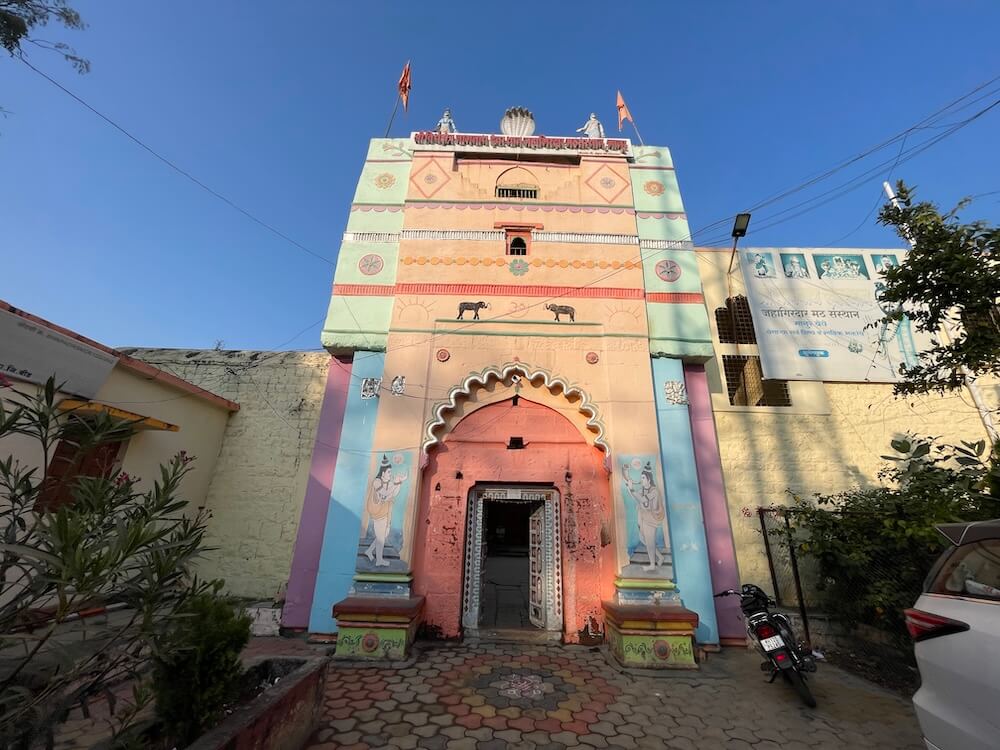
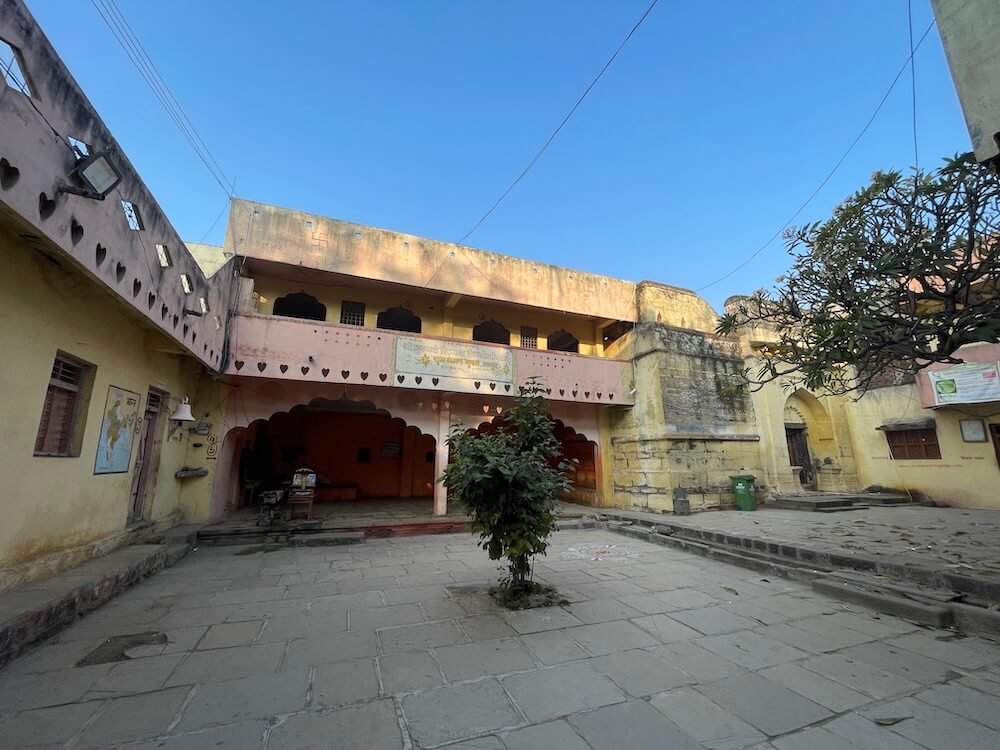
The temple has a double fortification. The outer fortification was built in later times and features a simple entrance gateway. Two pillars are visible on both sides of the entrance with a semi-circular arch above. Iron grilled shutters have been installed here. Upon entering through the gateway, the Devasthan Trust office is on the right side while a garden is on the left. A few steps further stands the second sturdy fortification of the temple, which is about twenty feet high. This fortification has a double-storied entrance gateway. Two square pillars on both sides of the gateway are connected to each other by a foliated arch (mahirapi torana). Sculptures of a chakra and royal elephants (gajaraja) are carved on the upper side of the arch. The upper floor of the entrance gateway houses the Nagarkhana (drum house). Floral patterns are carved on the doorjambs of the entrance, and a sculpture of Lord Ganesha is carved on the lintel block (lalatbimba). Inside the entrance, there are guard rooms on both sides, followed by a spacious courtyard. A two-storied building stands in the courtyard, abutting the fortification. It provides resting spaces and pilgrim accommodation (bhaktiniwas) for devotees. In the courtyard, in front of the temple, stands an ancient monkey tamarind (gorakhchincha) tree. Alongside the temple in the courtyard are the residences of the Mahant, priests, and attendants. Additionally, the courtyard houses an educational institution building.
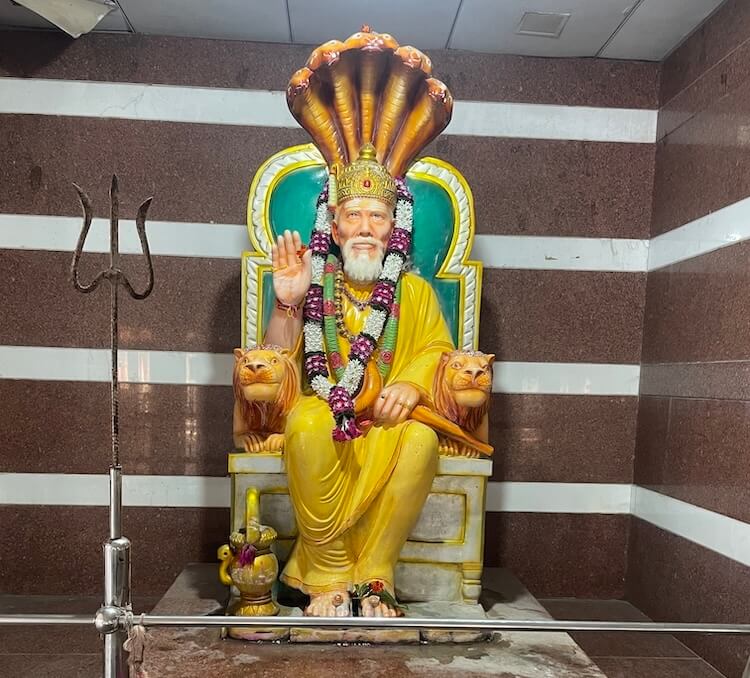
The original architectural layout of the temple consists of a sabhamandapa (assembly hall), antarala (vestibule), and garbhagriha (sanctum sanctorum). Since the construction of the sabhamandapa is of recent times, it is entirely made of cement concrete. The sabhamandapa houses the ancient samadhiseds of Natha sect saints. The Shiva lingas on all the samadhis are adorned with stone flower garlands and ornaments. In the assembly hall, within a room on the left side along the wall on a Vajrapitha, is the idol of Virupaksha Swami seated on a throne. A five-hooded serpent holds a protective canopy over the head of the idol. Further ahead is the entrance to the antarala. In the antarala, there are platforms about three feet high on both sides, and a four-feet-wide pathway runs between them up to the entrance of the sanctum sanctorum. There are four rows of four square pillars each in the antarala. All the pillars are connected to each other by semi-circular arches and stand on the platform. The ceiling here features beautiful carving. There are some samadhi platforms in the antarala.
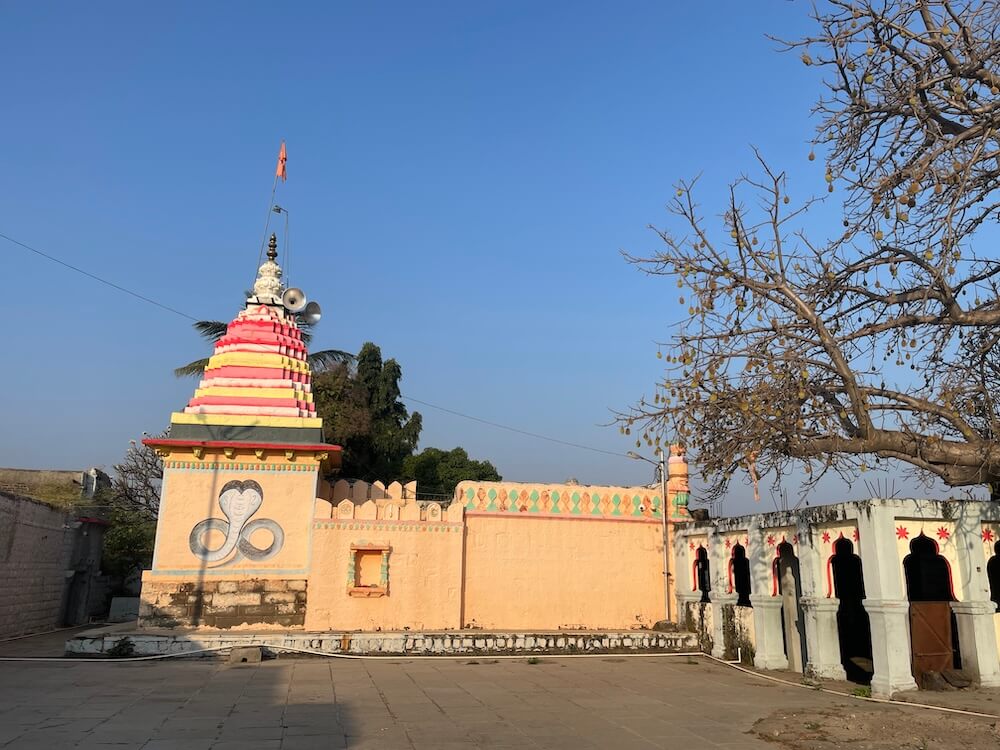
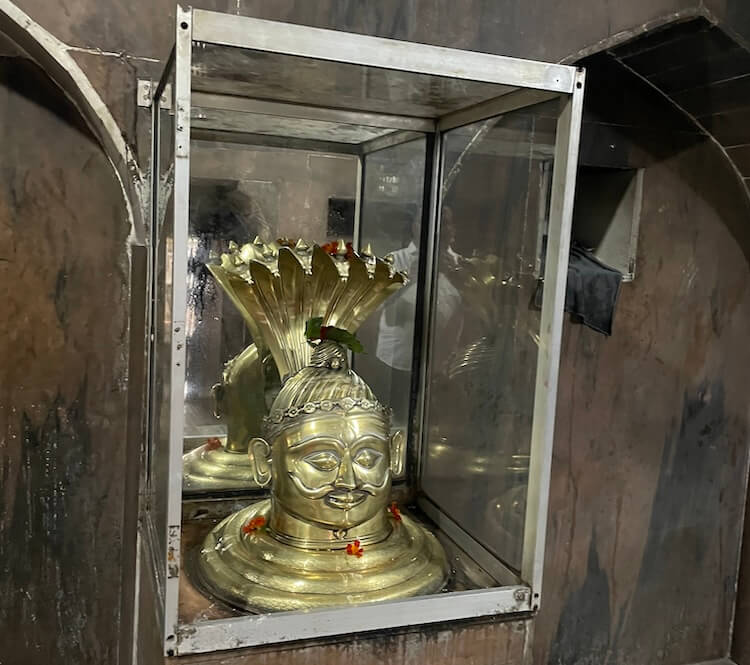
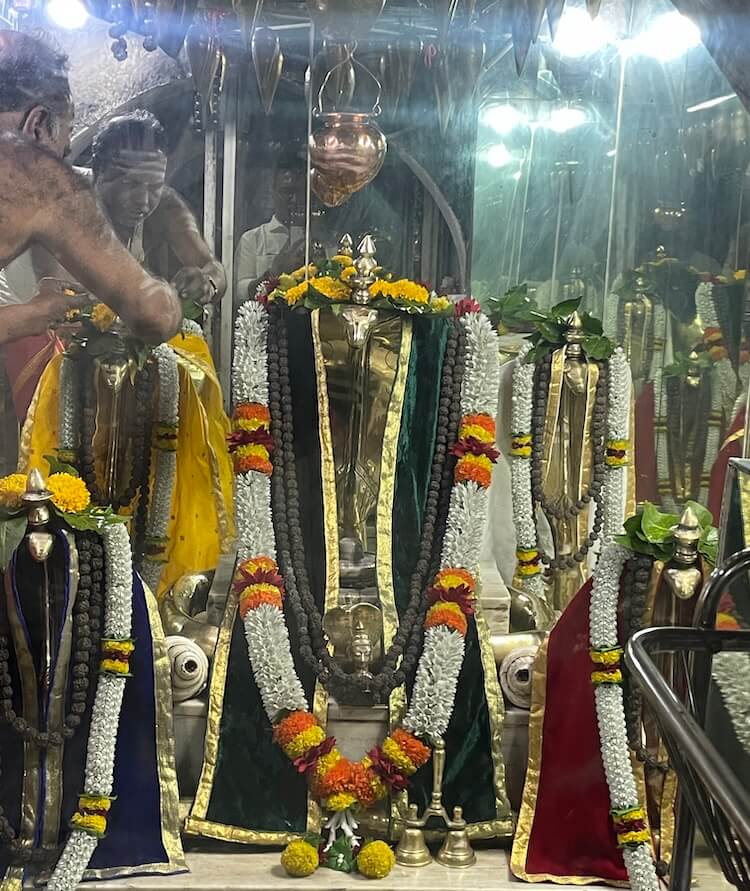
Ahead is the entrance to the garbhagriha. There are lamp niches (deepakoshthake) on both sides of the entrance. Floral and pillar carvings adorn the doorjambs, and guardian deity (দ্বারपाल) sculptures are carved at the base. The lintel block bears a sculpture of Lord Ganesha. Inside the garbhagriha, five Shiva lingas are installed on a Vajrapitha, adorned with brass face-masks (mukhvate). A serpent canopy rests above the masks. The roof of the temple has a safety parapet on all four sides, and over the garbhagriha roof rises a square shikhara that tapers towards the top. At the apex of the shikhara is a stupika. Upon this stupika rest the kalasha and flagstaff banner (dhvajapataka).
The annual chariot festival (jatrotsava) is celebrated at the temple on the third Monday of the month of Shravana. On this occasion, thousands of devotees arrive to have the darshan of the deity and to fulfill their vowed offerings (navas). Throughout the holy month of Shravana, programs such as bhajans, kirtans, pravachanas, music, and Mahaprasada are organized at the temple. On the day of Ashvin Shukla Trayodashi, an event called ‘Bhaknuk’ is organized at the math. Hundreds of devotees from the surrounding region attend to listen to the Bhaknuk prophecies. Festivals and celebrations such as Gudi Padwa, Sharadiya Navaratrotsava, Dasara, Diwali, Kojagiri Purnima, Makar Sankranti, Datta Jayanti, and Guru Purnima are celebrated at this temple. Various religious programs are organized in the temple during all festivals.
This sacred temple stands as a testament to deep spiritual devotion, ancient architectural grandeur, and rich local cultural traditions.
The sanctum sanctorum houses the divine idol consecrated according to ancient Vedic traditions, surrounded by serene courtyards and traditional temple architecture.
Navratri, Maha Shivratri, Annual Temple Jatra & Deepotsav
Compare and book flights, secure top-rated local hotels near the temple, hire reliable guides, and rent cars instantly.
Extend your pilgrimage by visiting other highly sacred temples located nearby.


Add ₹999 more to unlock FREE SHIPPING!
Your sacred cart is currently empty.
Shop Photo FramesFill in your delivery details below to place your order.
Add comment