
Add ₹999 more to unlock FREE SHIPPING!
Your sacred cart is currently empty.
Shop Photo FramesIt is said that when the gods were fleeing with the Amrit Kumbh (pot of nectar) obtained from the churning of the ocean (Samudra Manthan), it fell into the river from the hands of the demons. The place where the Amrit Kumbh fell is believed to be the bed of the Pravara River at Bahirwadi in Nevasa Taluka. There is a deep-seated belief that the nectar remains safe beneath this riverbed even today, and Kalbhairavnath protects the Amrit Kumbh here. Consequently, devotees have immense faith that Shri Kshetra Bahirwadi is a ‘Jagrut Devasthan’ (an awakened place of divinity) of Kalbhairavnath.
The legend of this place states that the powers of the gods had waned due to the curse of Sage Durvasa. The demon king Bali had defeated the gods and conquered the three worlds. To find a solution to regain their strength, all the gods approached Lord Vishnu. Vishnu advised the gods to form an alliance with the demons and suggested churning the ocean using the combined strength of both. By consuming the nectar obtained from the churning, the gods would regain their lost power. Fourteen gems emerged from the Samudra Manthan, including poison, Kamadhenu cow, Uchchaihshravas horse, Airavata elephant, Kaustubha gem, Kalpavriksha, Rambha-Apsara, Lakshmi, Varuni (a type of liquor), the Moon, Parijata tree, Shankha (conch), Dhanvantari, and the Amrit. Of the first thirteen gems, the Uchchaihshravas horse and Varuni were taken by the demons, the Kamadhenu cow by the sages, and the remaining ten were distributed among the gods.
A dispute arose between the gods and demons over the distribution of the fourteenth gem, the Amrit. Since the gods’ strength was already depleted, the demons snatched the Amrit Kumbh. However, discord broke out among the demons over who should consume the nectar and how much. Seizing this opportunity, Lord Vishnu assumed the form of a beautiful woman (Mohini) and approached the demons. This beautiful woman enchanted the demons, who forgot about the nectar and became captivated by her. She suggested, “Give the pot of nectar to me; I will distribute it equally between the demons and the gods.” None of the demons doubted her, and they handed over the Amrit Kumbh to her.
Vishnu, in the form of Mohini, then asked the gods and demons to sit in separate rows. Accordingly, the gods were served the nectar, while the demons were given liquor. The demons were so mesmerized by Mohini’s beauty that they did not realize what was happening. However, Rahu, one of the demons, understood Vishnu’s ploy and sat in the row of the gods disguised as one of them. He immediately consumed the nectar given by Vishnu. When Vishnu realized this, he reverted to his original form and severed Rahu’s head with his Sudarshan Chakra.
After this incident, the demons became alert and realized they had been deceived. They tried to snatch the Amrit Kumbh, but the gods had already regained their lost strength by consuming the nectar. A battle ensued between the gods and the demons. During this conflict, the Amrit Kumbh fell into the river water. To ensure the remaining nectar in the pot would not wash away, Lord Mahadeva summoned Kalbhairavnath, who is an aspect of himself, and commanded him to secure the nectar in the riverbed. Following this, Kalbhairavnath used Mahadeva’s trident to create a pit in the riverbed and stored all the nectar there. It is said that the site where this occurred is the present-day Kalbhairavnath Temple in the Pravara River at Bahirwadi. Devotees believe that even today, Kalbhairavnath protects the nectar at the bottom of this river.
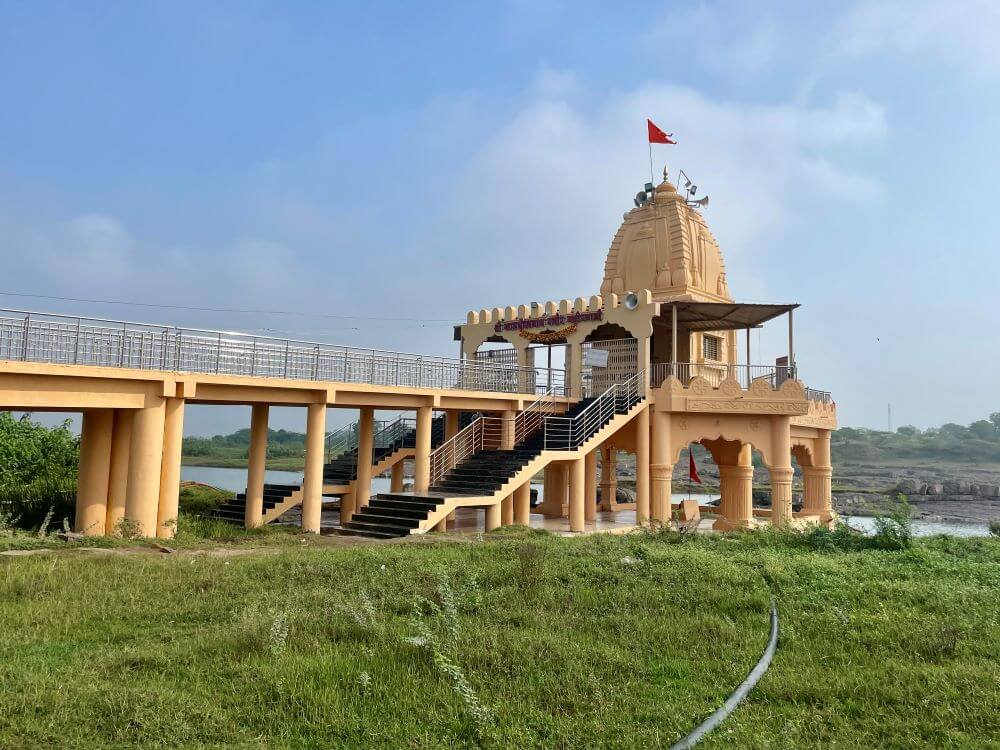
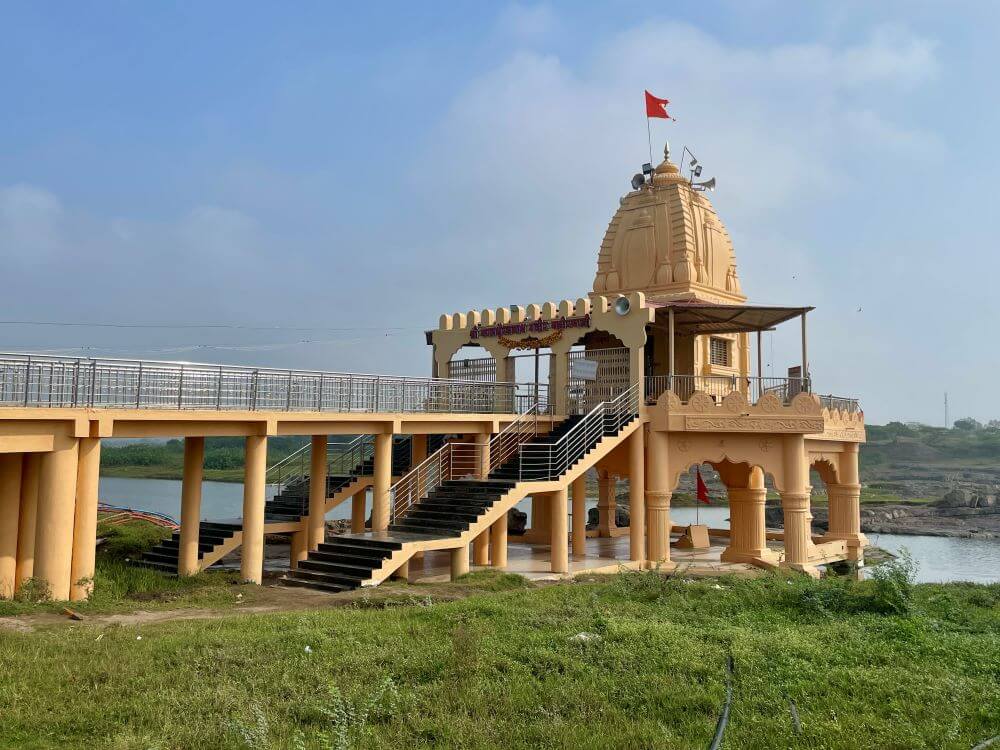
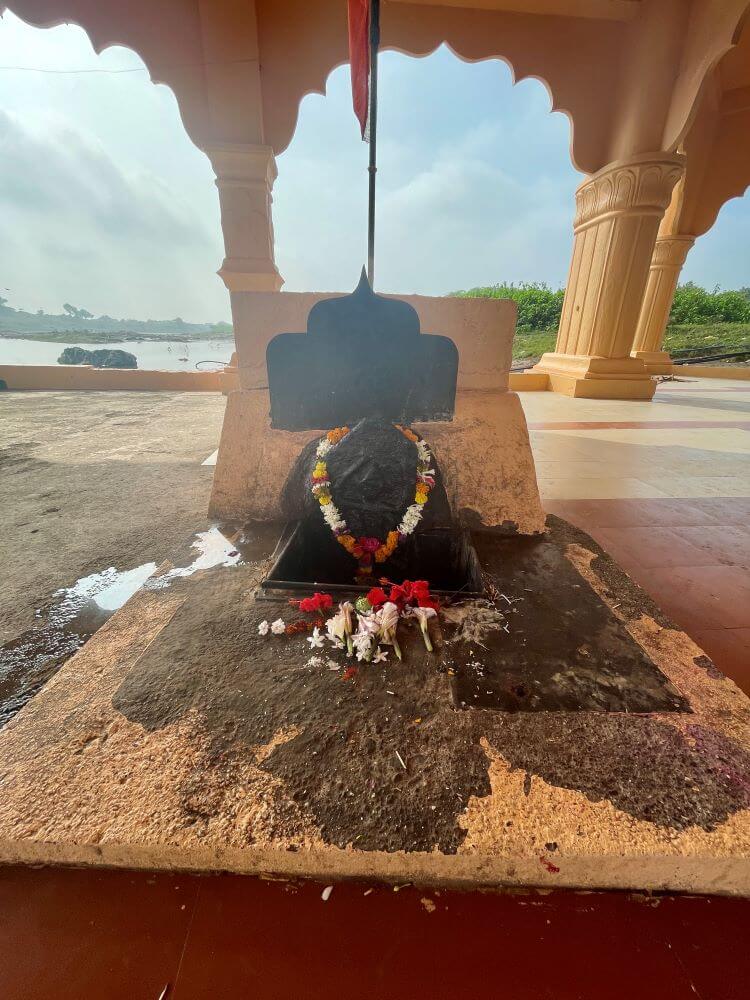
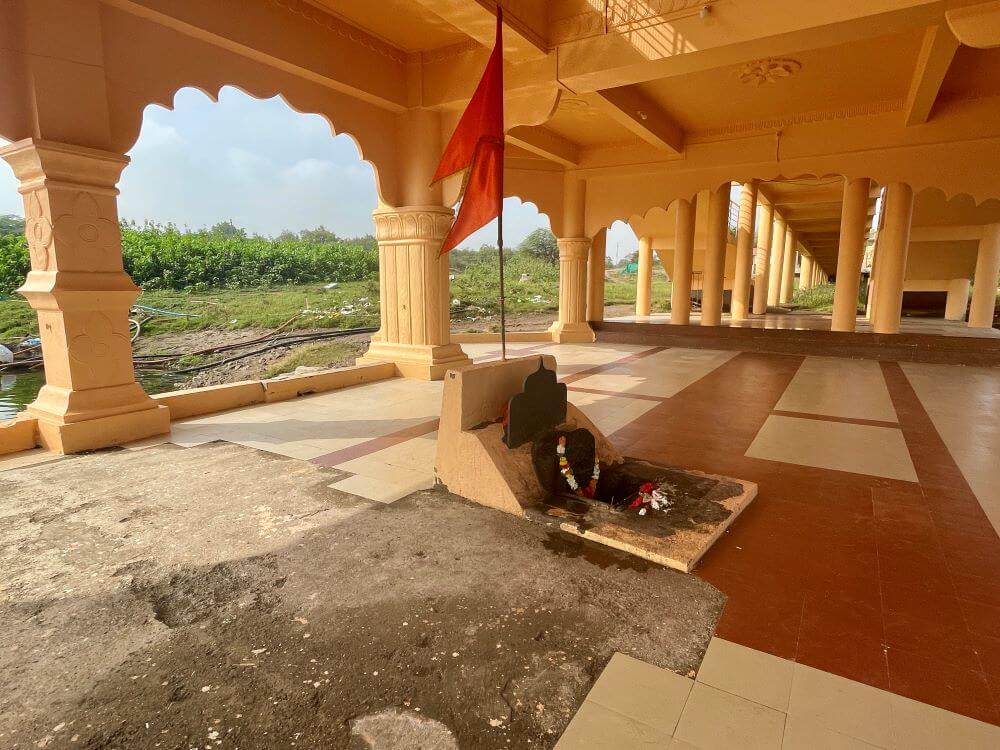
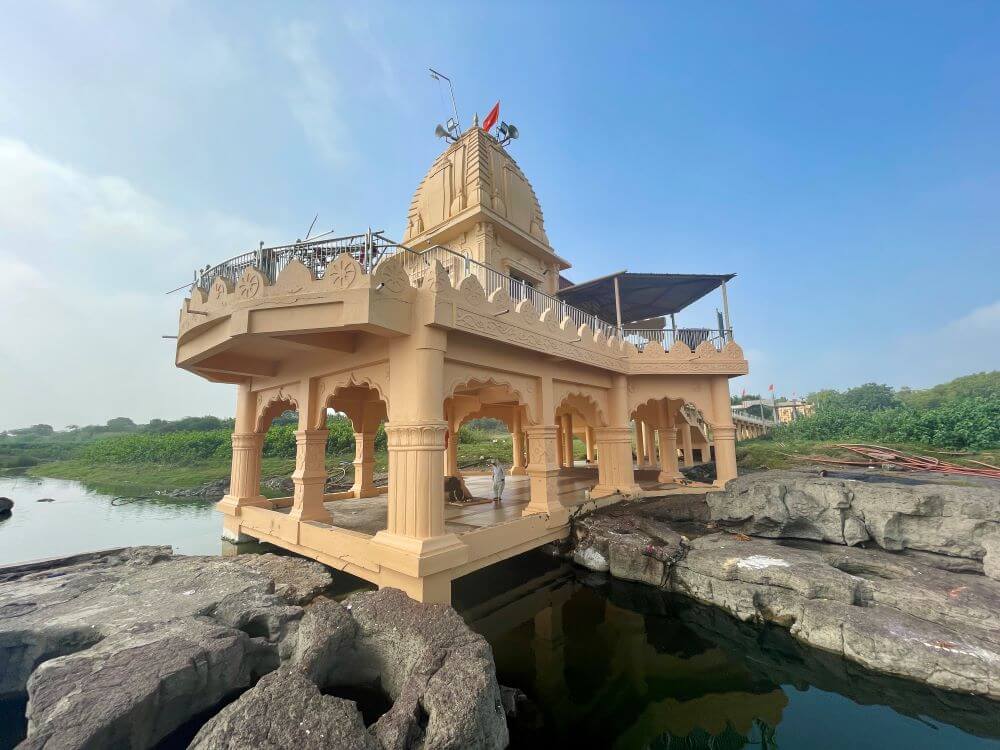
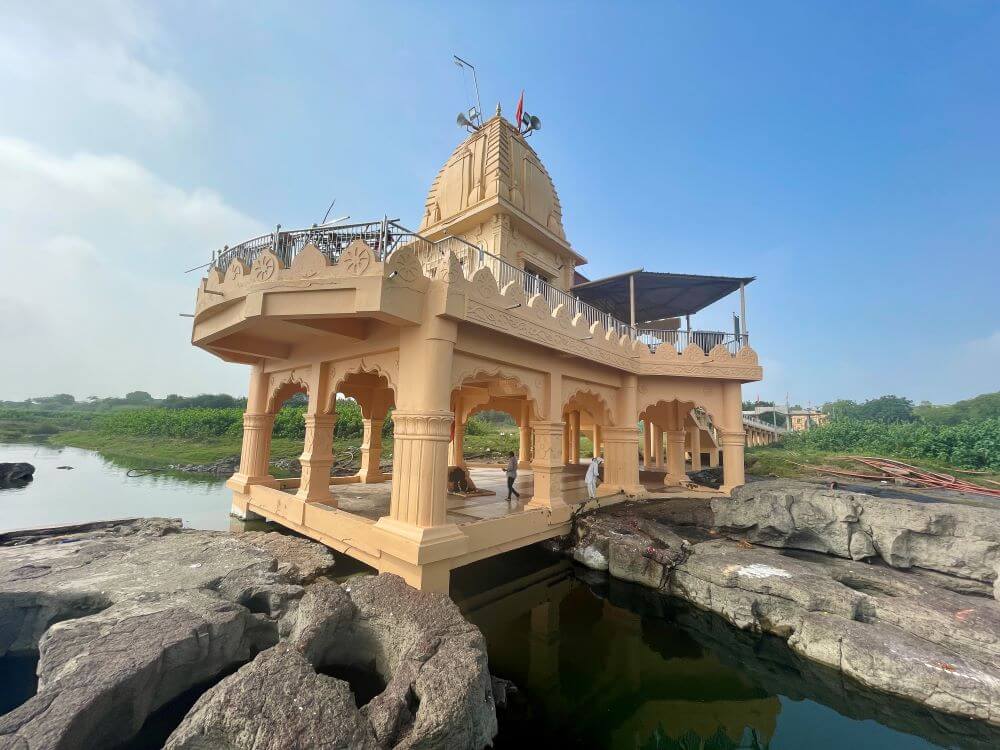
The original seat of Kalbhairavnath is located about 20 feet below the temple that stands in the middle of the Pravara River in Bahirwadi village. A two-story temple was built there some years ago, supported by pillars. Because of this, even when the river has high water levels during the monsoon, devotees can have darshan of Kalbhairavnath on the first floor. A bridge about 50 meters long has been constructed in the riverbed to reach the new temple. The temple of Kalbhairavnath is attached to this bridge. From this temple, one can go down to have darshan of the original idol of Kalbhairavnath. The structure consists of a Sabha Mandap (assembly hall) and a Garbhagriha (sanctum sanctorum). The Garbhagriha is in the center of the open Sabha Mandap. Inside the Garbhagriha is the idol of Kalbhairavnath carved from black stone. Above this, on the first floor, is the sanctum of the upper temple, which also houses a new idol of Kalbhairavnath. Additionally, there is a shrine for the Ashta Bhairavas here.
A fair is held here every Sunday of the Paush month. During this time, devotees prepare the prasad of ‘Dal-Rodga’ on three-stone hearths in the temple premises and offer it to the deity. On the fourth Sunday, an Abhishekam is performed on Kalbhairavnath with water brought from the Ganga in a ‘Kavad’. During the festival period, devotees are served the prasad of ‘Aamti-Bhat’. Devotees can have darshan of Kalbhairavnath from 6:00 AM to 9:00 PM.
This sacred temple stands as a testament to deep spiritual devotion, ancient architectural grandeur, and rich local cultural traditions.
The sanctum sanctorum houses the divine idol consecrated according to ancient Vedic traditions, surrounded by serene courtyards and traditional temple architecture.
Navratri, Maha Shivratri, Annual Temple Jatra & Deepotsav
Compare and book flights, secure top-rated local hotels near the temple, hire reliable guides, and rent cars instantly.
Extend your pilgrimage by visiting other highly sacred temples located nearby.


Add ₹999 more to unlock FREE SHIPPING!
Your sacred cart is currently empty.
Shop Photo FramesFill in your delivery details below to place your order.
Add comment