
Add ₹999 more to unlock FREE SHIPPING!
Your sacred cart is currently empty.
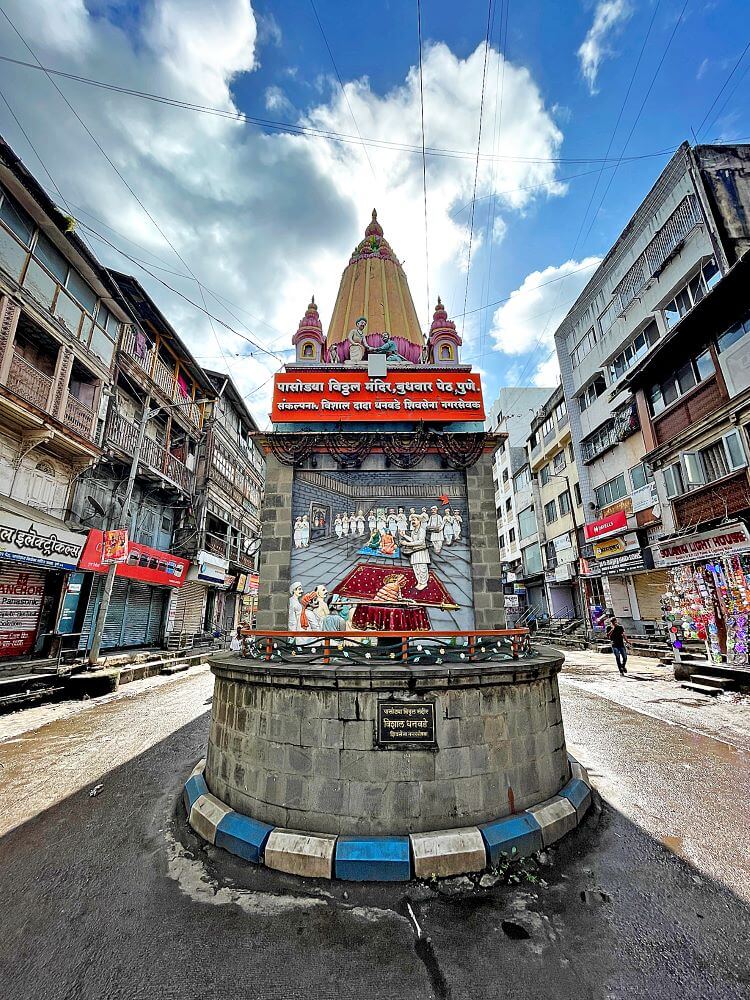
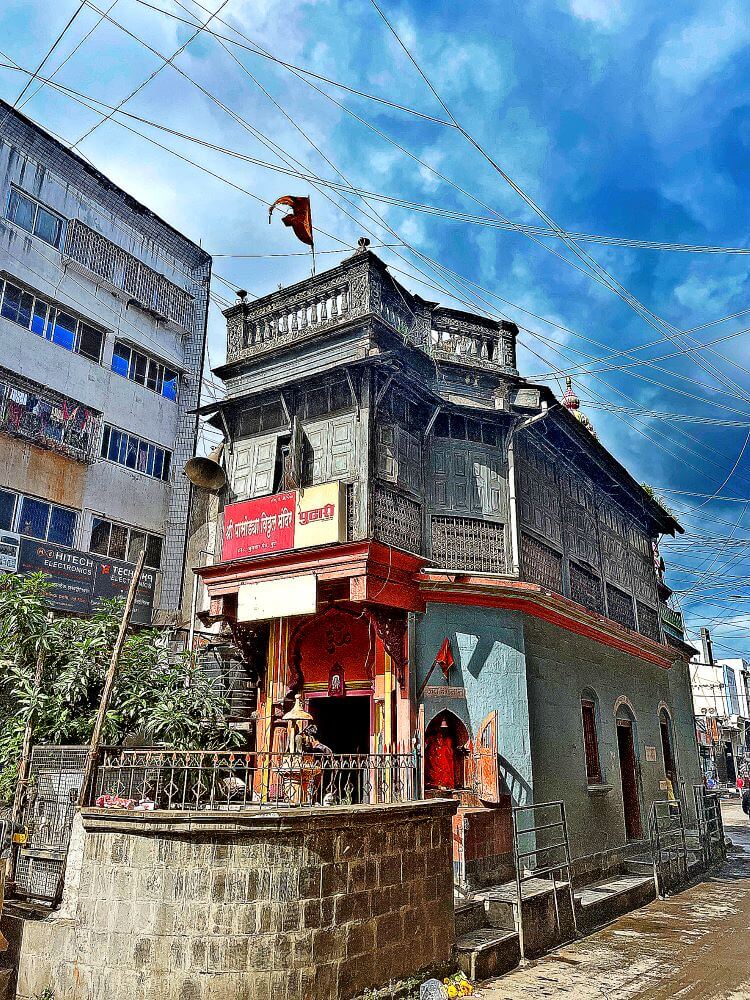
Shop Photo FramesThe Pasodya Vitthal Mandir stands on a busy street in Budhwar Peth, in the heart of Pune city. This temple, dating back to approximately the fourteenth century, was renovated during the Peshwa era using stone and wood. The temple acquired its unique name, ‘Pasodya Vithoba’, due to the cloth market that used to be held in this area in the past. The presence of a Shivling alongside the idols of Vitthal-Rukmini in the sanctum sanctorum makes this ancient structure unique. Based on available historical evidence, historians suggest that this site may have originally been a Shiva temple.
During the medieval period, the development of this area took place under Mughal rule. In the year १७०३, Mughal Emperor Aurangzeb named this Peth ‘Muhiyabad’ after his grandson. This name is found in historical documents. However, after Aurangzeb’s death and due to the growing influence of the Marathas, this name did not last long. After the expansion of Swarajya, the Peths of Pune were reorganized. Pune was transformed during the Peshwa era. This Peth, located near Shaniwar Wada, gained commercial importance. Thorle Bajirao Peshwa renamed this area ‘Budhwar Peth’ in १७४०. During this period, Pune emerged as a major center for the cloth trade. This part of Budhwar Peth became particularly famous for cloth merchants from Narayangaon.
The word ‘Pasodya’ attached to the temple’s name is a symbol of the merchant culture of that time. A ‘Pasodi’ or ‘Pasunda’ is a thick garment made by stitching together many old pieces of cloth. In ancient times, Buddhist monks used such garments for protection against the cold. A large market for Pasodis used to be held in the vicinity of this temple. Due to this marketplace, the Maruti temple here was named ‘Pasodya Maruti’ and the Vitthal temple was named ‘Pasodya Vitthal’.
A legend regarding the meeting of Chhatrapati Shivaji Maharaj and Sant Tukaram Maharaj is associated with this temple. In the sixteenth century, Sant Tukaram Maharaj used to come here to perform Kirtan. Swarajya founder Chhatrapati Shivaji Maharaj would eagerly attend these Kirtans. Once, while the Kirtan was in progress, the Mughal army surrounded the temple to arrest the Maharaj. At that time, every Warkari present there appeared to the Mughal soldiers as Shivaji Maharaj himself. Due to this confusion, the Mughal army could not identify the Maharaj and had to return empty-handed.
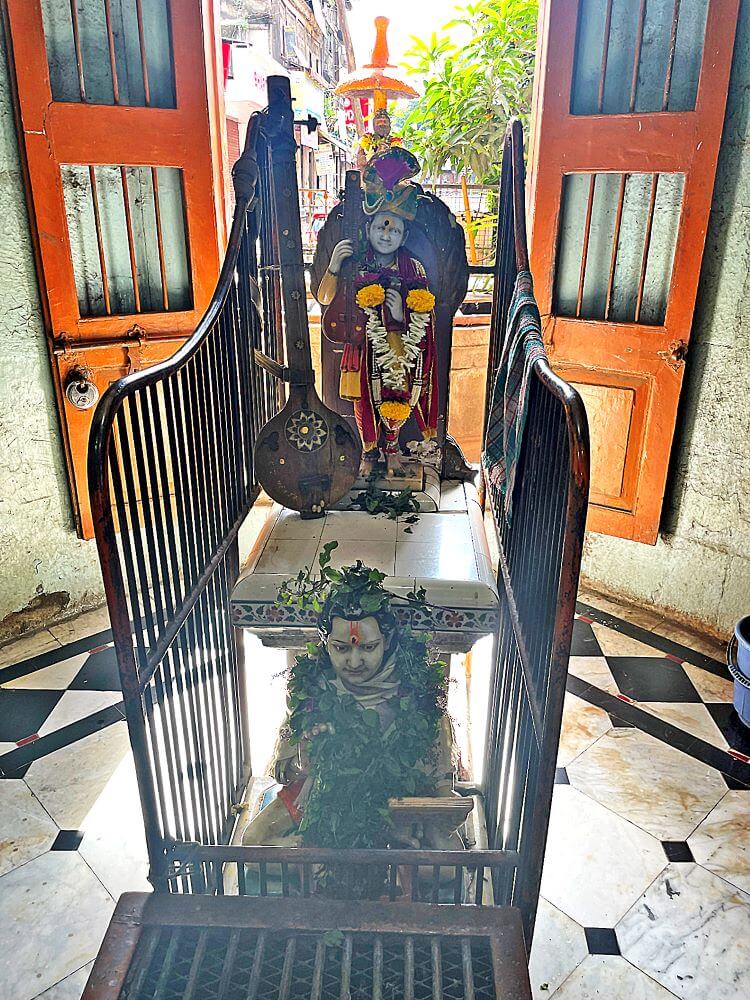
The location of this temple is unique because it stands right in the middle of a busy road. Beautiful relief sculptures of Chhatrapati Shivaji Maharaj and Sant Tukaram Maharaj are carved on the outer wall of the temple. The scene depicts Tukoba immersed in Kirtan and the Maharaj sitting in front with devotion. This two-story temple is constructed of stone. There is an ancient water tank in front of the temple. There is a Garuda Stambh (Garuda pillar) near the entrance of the temple. The Garuda Stambh holds immense significance in the Warkari tradition. Devotees offer their respects to this pillar before entering the temple. The temple consists of a Sabha Mandap (assembly hall) and a Garbhagriha (sanctum sanctorum). The two-story Sabha Mandap has a balcony on the second floor. There are wooden stairs on both sides of the Sabha Mandap to go to the upper floor. In the past, there was seating arrangement for women during programs held in the temple.
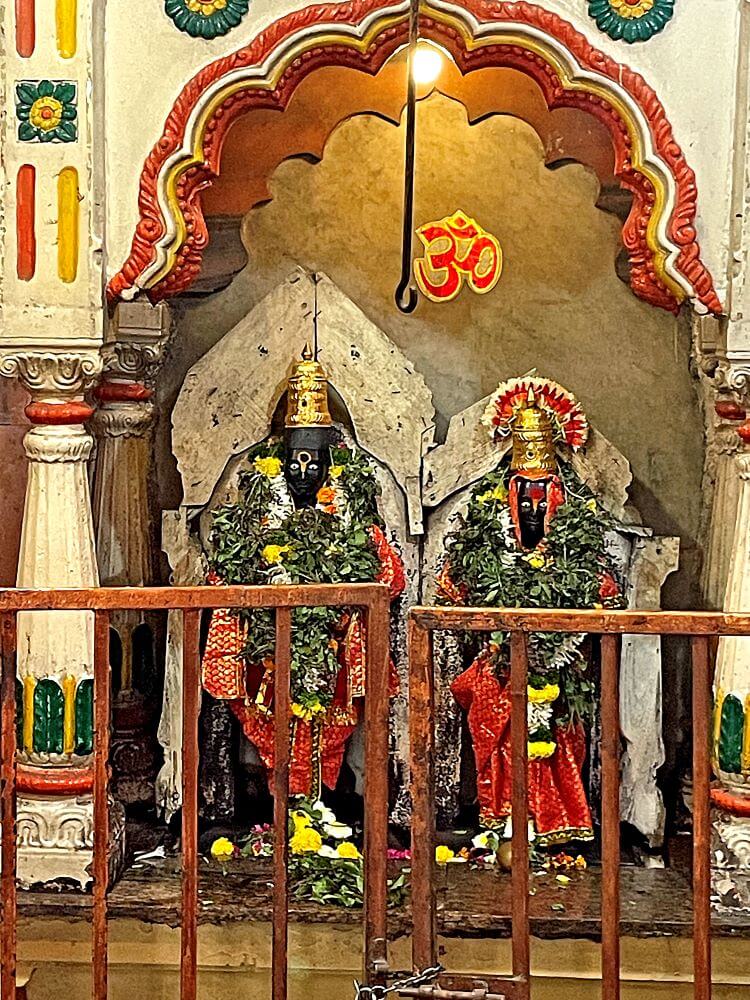
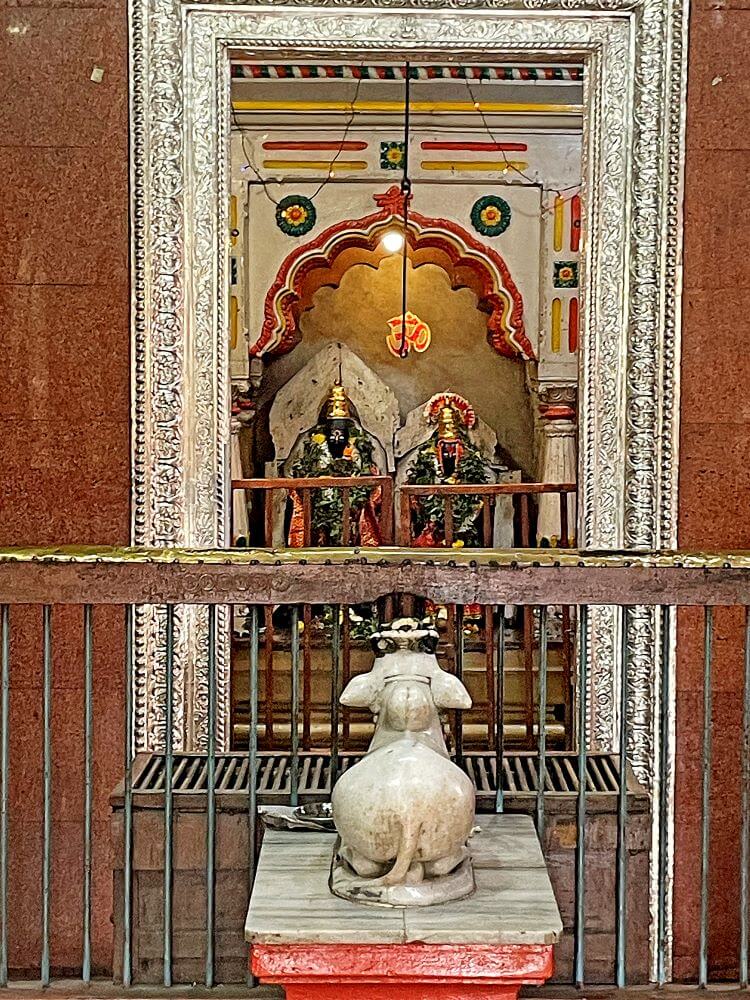
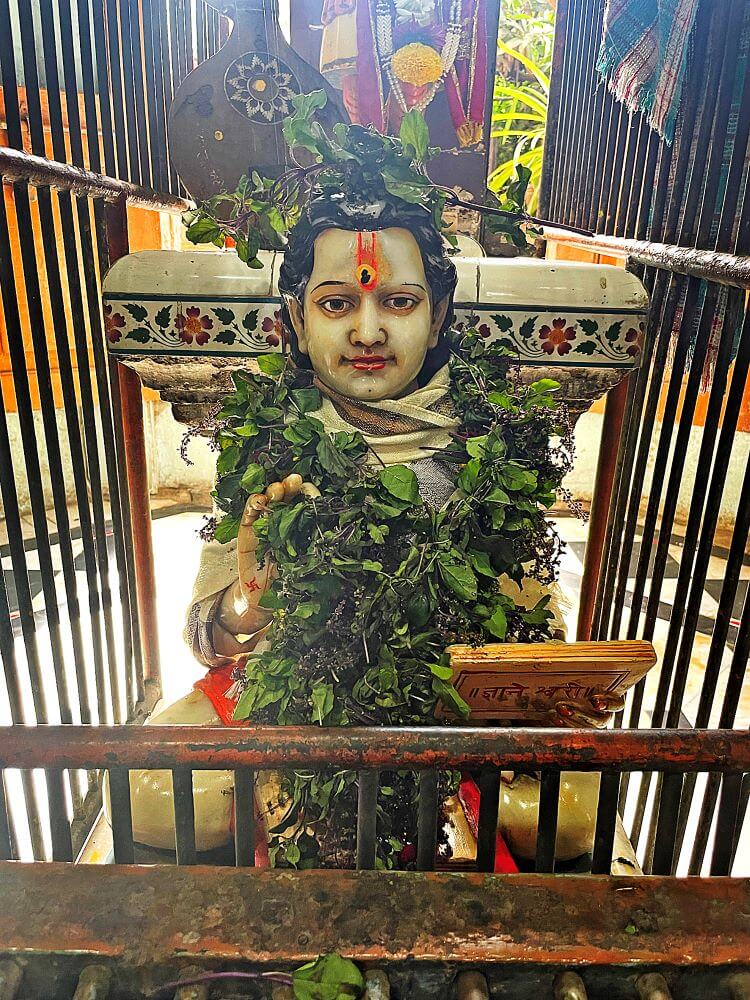
In the Sabha Mandap, near the entrance of the sanctum, there is a white marble idol of Nandi on a pedestal. The door frame of the sanctum has unique carvings and is covered with metal sheets. Near the entrance inside the sanctum, there is a hollow space about one to one and a half feet deep in the shape of a Shivpindi. Inside it lies the ancient Shivling. In front of it, in a stone arch, are the idols of Vitthal-Rukmini made of black stone. Both these idols wear golden crowns. The presence of Vitthal in the form of Vishnu and the Shivling, which is a symbol of Shiva, in the same place is considered a great sign of ‘Hari-Har’ unity.
On the ceiling of the sanctum, there are four Meghdambaris (canopies) on all four sides. Between every two Meghdambaris, there are separate sculptures of Chhatrapati Shivaji and Sant Tukaram. Each Meghdambari has two Amalakas, topped with Shikharas (spires). At the top of the Shikhara, around the Amalaka, there is a structure of smaller Amalakas and Shikharas. Above this is the main Shikhara Kalash.
This temple holds a place of honor in the Pandharpur Palkhi procession. The Palkhis of Mauli and Tukoba coming from Alandi and Dehu arrive in Pune. There is an old tradition of performing the Aarti of the Palkhis in this temple at that time.
Only after this Aarti do the Palkhis proceed to their next halt. During the Palkhi festival, thousands of Warkaris crowd this temple for Darshan. At this time, the entire area resonates with the chants of Vitthal and Bhajans.
Various religious festivals and cultural programs are organized in the temple throughout the year. Ashadhi and Kartiki Ekadashi are celebrated here with great enthusiasm. On the occasion of Tukaram Beej, Gatha Parayan is organized here for ten consecutive days. During this time, the Abhangas of Sant Tukaram Maharaj are recited and explained.
Special worship rituals are performed in the temple on Mahashivratri, Dussehra, and Diwali. The temple is illuminated during the festival season. Devotees can visit this temple daily from six in the morning to twelve-thirty in the afternoon and from four-thirty in the evening to nine at night.
Near the Pasodya Vitthal Mandir, by the Faraskhana police station, is the Pasodya Hanuman Mandir. This small temple, facing south, is built on a high plinth. The orange-colored idol of Hanuman here is a place of faith for many devotees.
This sacred temple stands as a testament to deep spiritual devotion, ancient architectural grandeur, and rich local cultural traditions.
The sanctum sanctorum houses the divine idol consecrated according to ancient Vedic traditions, surrounded by serene courtyards and traditional temple architecture.
Navratri, Maha Shivratri, Annual Temple Jatra & Deepotsav
Compare and book flights, secure top-rated local hotels near the temple, hire reliable guides, and rent cars instantly.
Extend your pilgrimage by visiting other highly sacred temples located nearby.


Add ₹999 more to unlock FREE SHIPPING!
Your sacred cart is currently empty.
Shop Photo FramesFill in your delivery details below to place your order.
Add comment