
Add ₹999 more to unlock FREE SHIPPING!
Your sacred cart is currently empty.
Shop Photo FramesThe village of Valhe in Purandar Taluka is the sacred place where Valya Koli transformed into Sage Valmiki through the chanting of the name ‘Ram’. This village, which holds immense historical and mythological significance, houses the Sanjeevan Samadhi of Maharshi Valmiki. Within the village vicinity lies the Saat Ranjan mountain, where the bandit Valya Koli used to rob travelers.
Located thirteen kilometers from Jejuri in Purandar Taluka, the village of Valhe is said to have existed since before the time of the Ramayana. This village has been sanctified by the presence of Maharshi Valmiki, the composer of the Ramayana, the primordial scripture of Hinduism. Records indicate that since this was the village of the Pawar clan, who were trusted commanders of Chhatrapati Shivaji Maharaj, the Maharaj himself stayed in this village for some time. Situated on the Alandi-Pandharpur route, this village is also famous among the Warkaris as the Palkhi of Saint Dnyaneshwar Maharaj halts here every year.
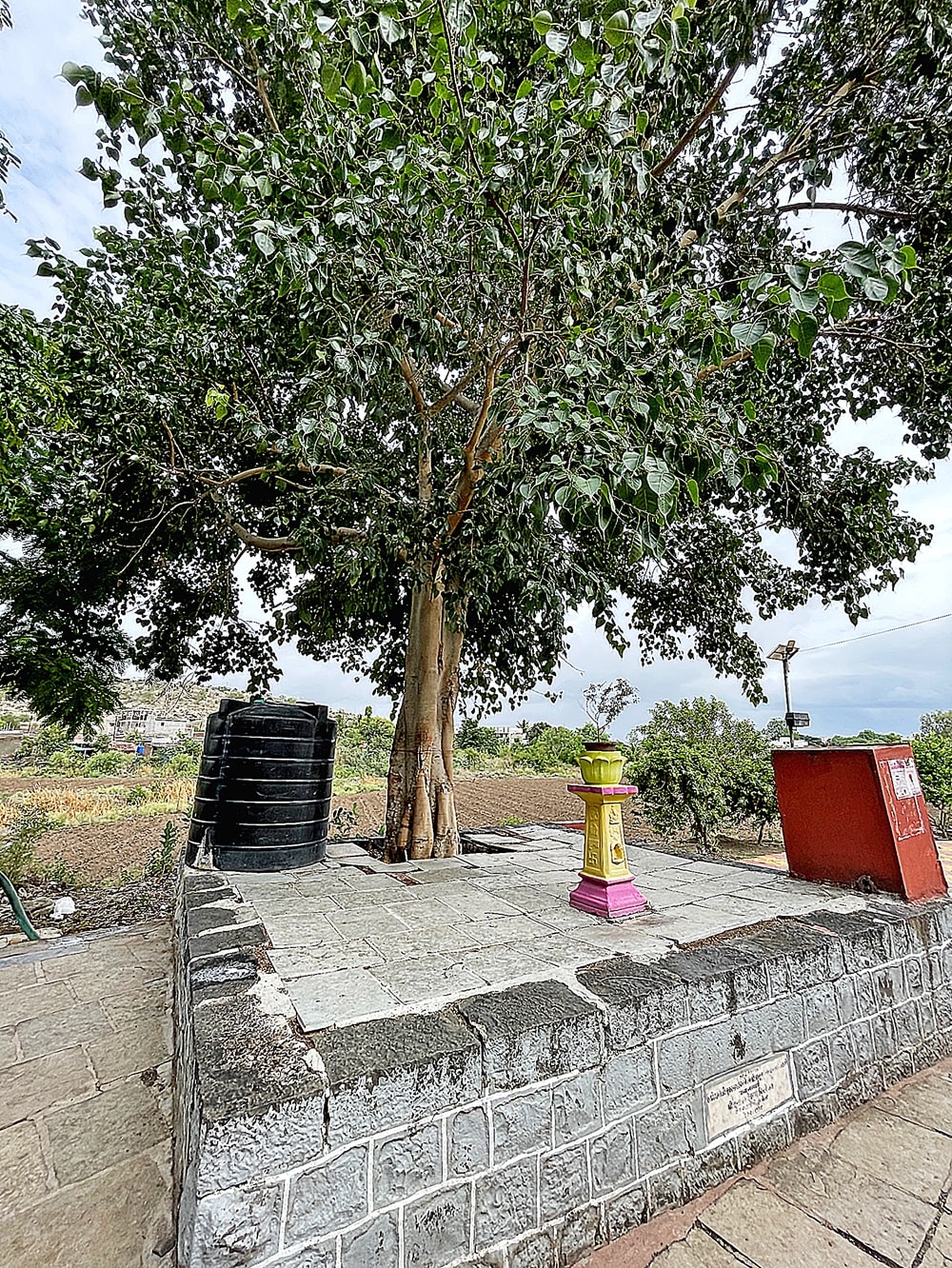
Regarding the temple, the legend goes that while Narad Muni was passing through this area, Valya Koli ran towards him with the intention of robbing and killing him. At that time, Narad Muni asked him, “You are committing this sin; are your family members ready to share the burden of it?” After this question from Narad, Valya Koli tied Narad to a Peepal tree here and went to ask his wife and son if they would share in his sins. Upon receiving a refusal from his family, he felt remorse for his actions and surrendered to Narad Muni. Narad instructed him to chant the name of ‘Ram’. For many years thereafter, Valya Koli continued his chanting here. Years later, while passing through the same path, Narad heard the chanting of the name ‘Ram’ coming from an anthill. At that moment, he brought Valya Koli out from the anthill. Granting him a boon, Narad told him that through the chanting of the name of Ram, all his sins had been absolved and he would become a knower of the three times (past, present, and future), and then instructed him to write the Ramayana. This very scripture became famous as the Valmiki Ramayana.
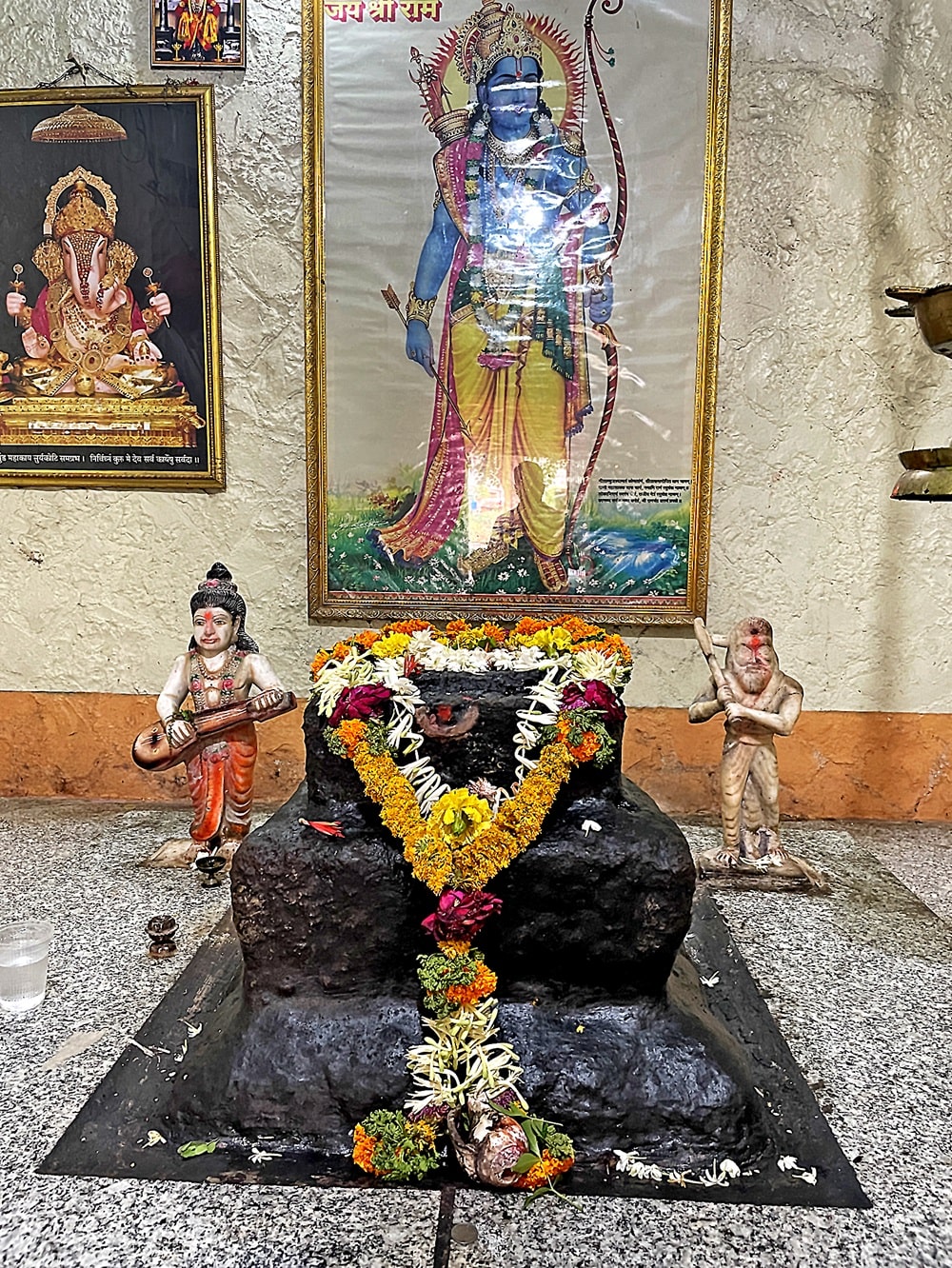
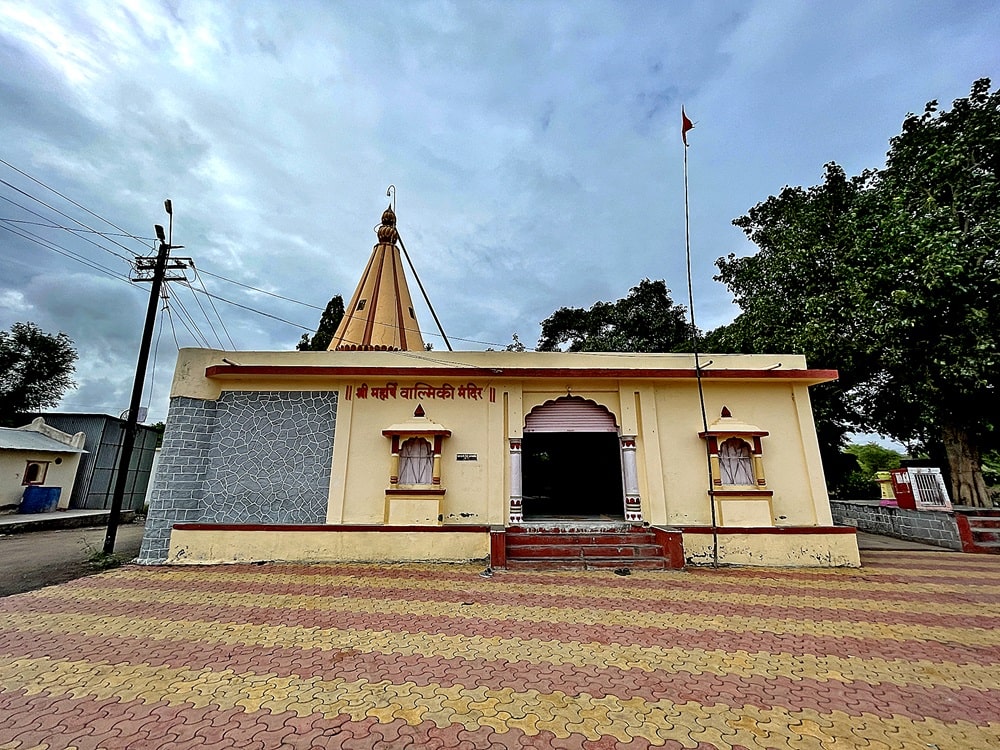
The Peepal tree outside the Valmiki temple is where Valya Koli had tied Narad Muni. Therefore, that tree is considered sacred and is worshipped. This stone-constructed temple in the area is known to be very ancient. The temple architecture consists of a Sabha Mandap (assembly hall) and a Garbhagriha (sanctum sanctorum). It appears that the Sabha Mandap was renovated in later times. In this Sabha Mandap, many episodes from the life of Sage Valmiki are depicted through paintings. In the Garbhagriha, there is the stone Samadhi of Sage Valmiki. Adjacent to the Samadhi is an idol of Narad Muni, and on the opposite side is an image of Lord Ram holding a bow.
The Ramayana written by Sage Valmiki is considered the first epic in the Sanskrit language. Therefore, Sage Valmiki is also called the Adi Kavi (the primordial poet). Due to his meeting with Narad Muni, Valya Koli rose to fame as Sage Valmiki. It is said that Lord Ram was born exactly one Tapa (twelve years) after the Ramayana was written.
Devotees can have Darshan at this temple throughout the day. A grand fair is held here on Bhadrapad Shuddha Panchami, which is Rishi Panchami. Thousands of devotees participate in it.
This sacred temple stands as a testament to deep spiritual devotion, ancient architectural grandeur, and rich local cultural traditions.
The sanctum sanctorum houses the divine idol consecrated according to ancient Vedic traditions, surrounded by serene courtyards and traditional temple architecture.


Navratri, Maha Shivratri, Annual Temple Jatra & Deepotsav
Compare and book flights, secure top-rated local hotels near the temple, hire reliable guides, and rent cars instantly.
Extend your pilgrimage by visiting other highly sacred temples located nearby.


Add ₹999 more to unlock FREE SHIPPING!
Your sacred cart is currently empty.
Shop Photo FramesFill in your delivery details below to place your order.
Add comment