
Add ₹999 more to unlock FREE SHIPPING!
Your sacred cart is currently empty.
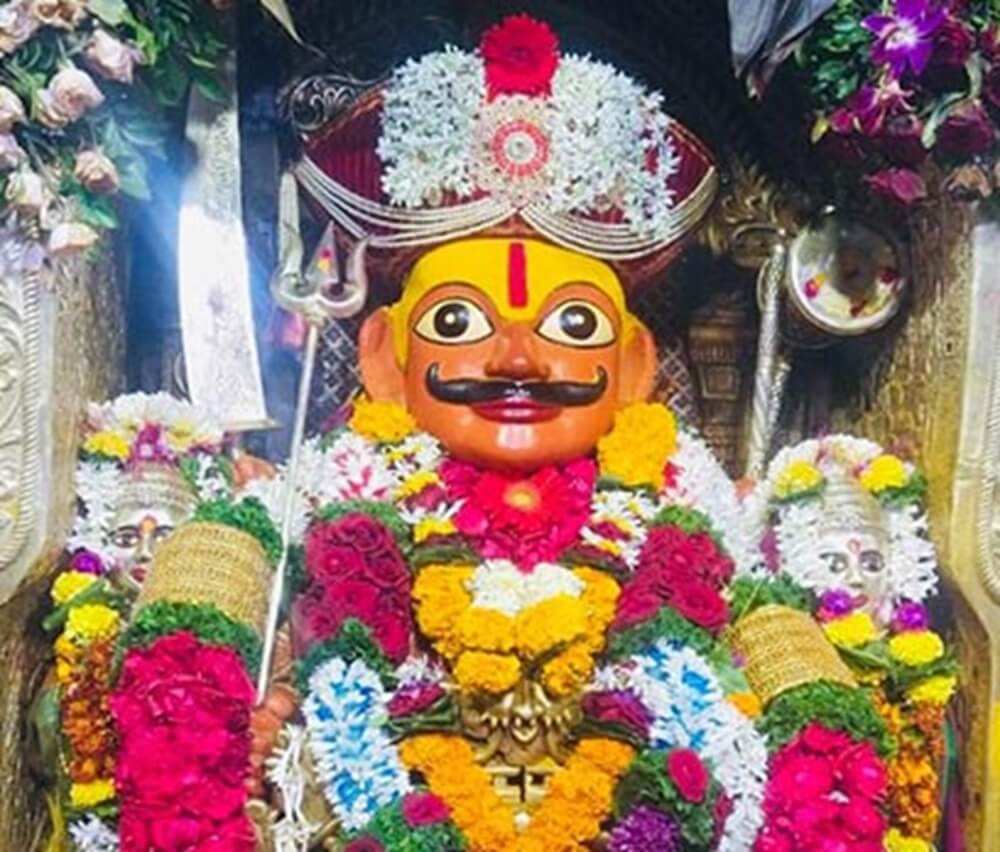
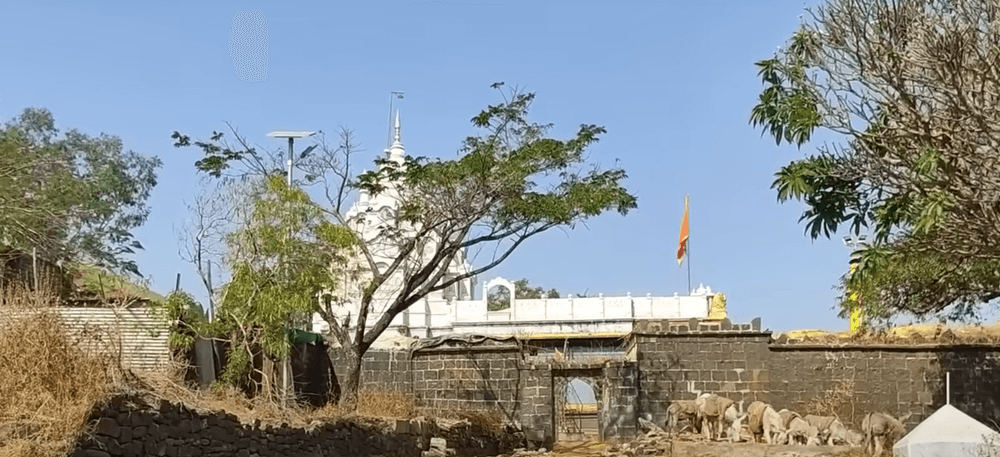
Shop Photo FramesThe town of Jejuri is situated in the Purandar taluka of Pune district. Near this town, on the summit of a hill, lies the historic site known as Kadepathar. This place is recognized as the original abode (Moolsthan) of Khandoba, the presiding deity (Kuladaivat) of Maharashtra. Devotees arrive here with deep reverence, chanting the sacred call, “Yelkot Yelkot Jai Malhar.” This temple on Kadepathar is located on the hill behind the main Jejuri fort. Until the seventeenth century, this was the primary seat of Lord Khandoba. Due to the devotion of a follower, Khandoba manifested on the new fort. Following this event, a grand temple was erected on the Jejuri fort. However, the significance of this original site has remained intact since ancient times to this day.
According to historical and mythological references, Kadepathar is the most ancient site in the tradition of Khandoba worship. This hill is mentioned in ancient scriptures. Until the seventeenth century, this place held immense religious importance. The story of a devotee named Khaire from the Supe Pargana is associated with this site. Due to the unwavering devotion of this humble follower, Khandoba left the old site and went to reside on the new Jejuri fort. This decision led to the expansion of the new Jejuri fort. Nevertheless, the religious importance of the old temple on Kadepathar remains preserved today. Many historians consider this place to be the origin of the Khandoba culture.
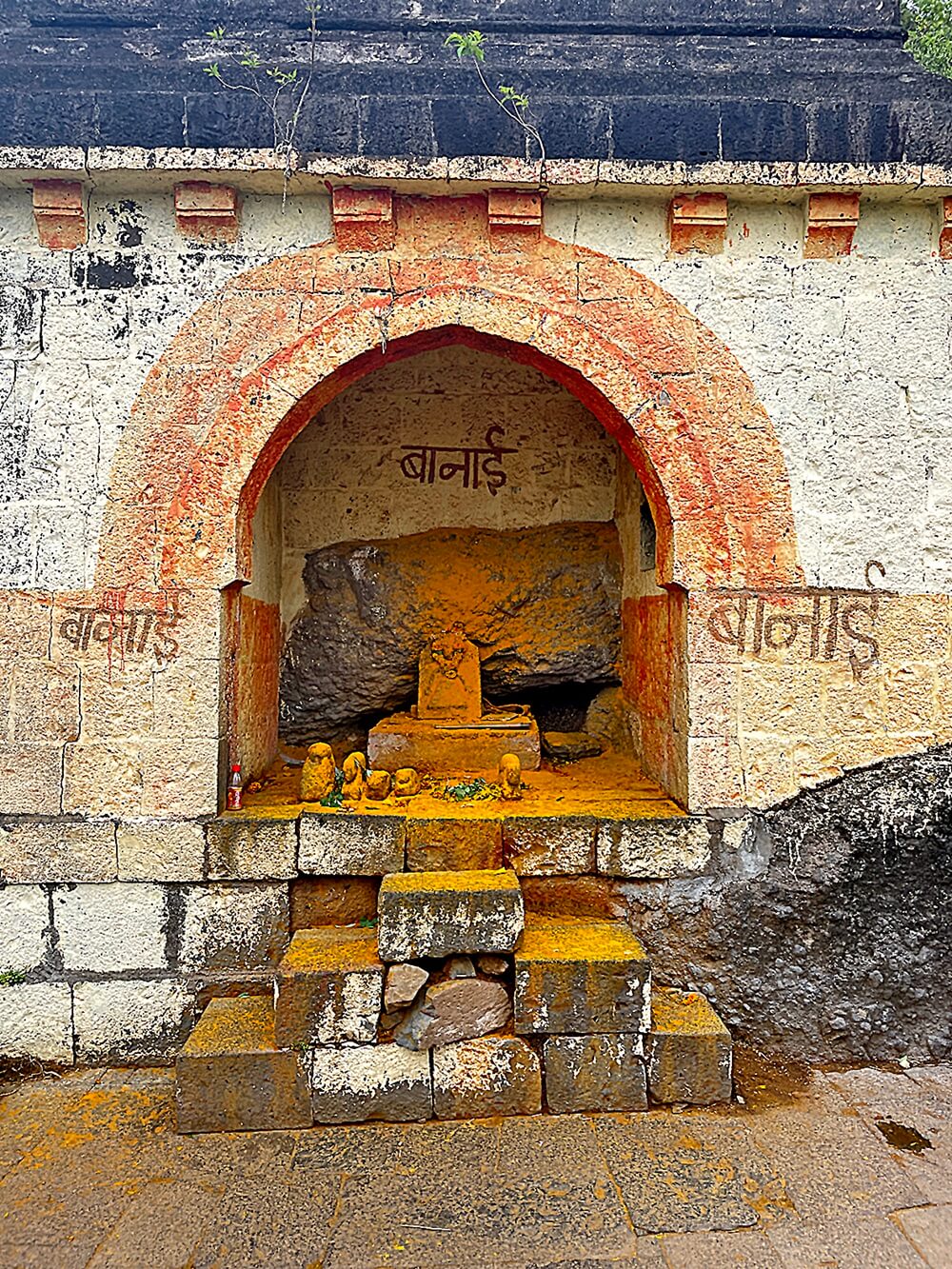
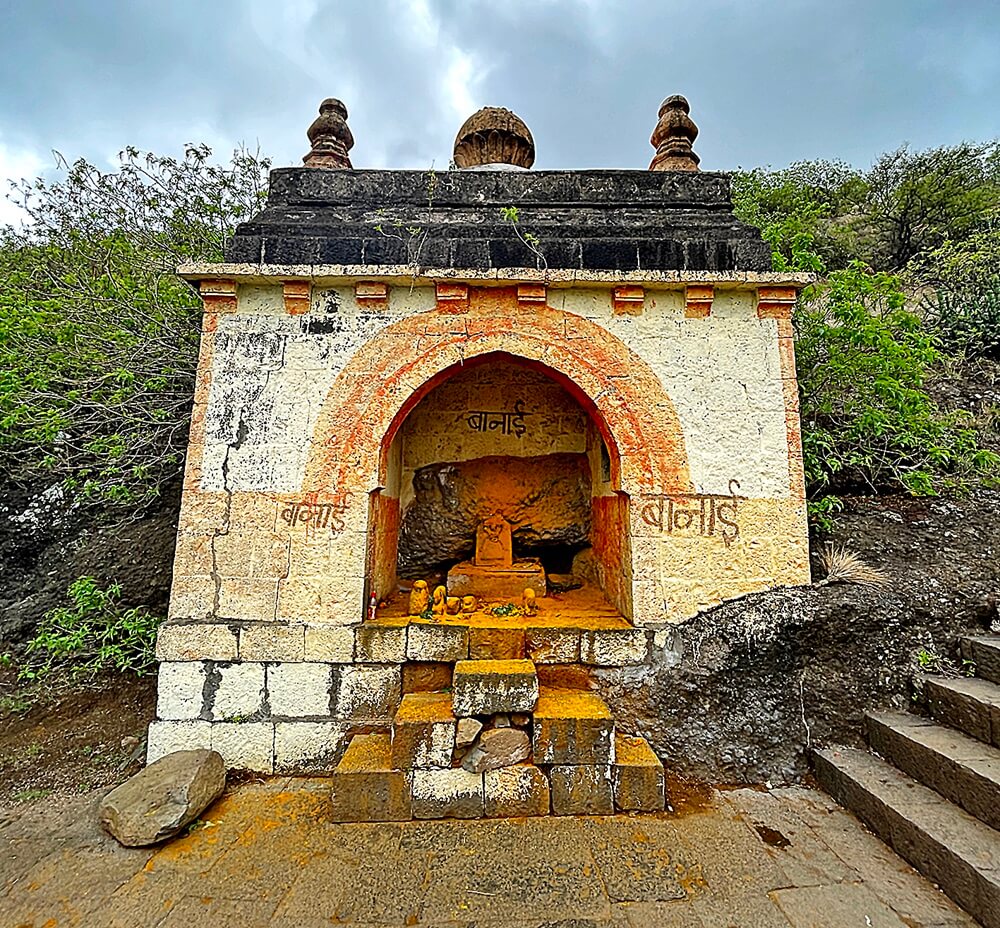
According to information from various scriptures, Lord Shiva took the avatar of Martand Bhairav to destroy the demons Mani and Malla. Kadepathar is the primary site of this avatar. Khandoba’s second wife, Banai, was the daughter of Banasur from the Dhangar community. Out of his love for Banai, Khandoba left Jejuri and lived in the guise of a Dhangar. He accepted the work of herding sheep for Banai’s father. One day, he took the lives of all the sheep and set a condition for her father to bring them back to life. According to this condition, Banai was married to Khandoba. After this marriage, Khandoba revealed his true form and brought Banai to Kadepathar. Khandoba’s first wife, Mhalasa Devi, did not approve of this. For this reason, frequent disputes occurred between Khandoba and Mhalasa. To resolve this, Khandoba gave Banai a separate place halfway up the hill. Even today, there is a temple of Banai on the path to Kadepathar. The place of Mhalasa Devi remained on the main fort and the peak of Kadepathar.
Kadepathar is located on a hilltop approximately 259 meters above the Jejuri village. To reach this temple, devotees must complete a climb of 750 steps. It takes about an hour and a half to reach the main temple from the base. There are two main routes to reach this temple from Jejuri village. The first path goes through the tamarind orchard (Chinchechi Baug), and the second path starts from behind the new Jejuri fort. Among these, the route through the tamarind orchard is used extensively. A large stone archway stands at the base of the Kadepathar temple path. This area is locally known as ‘Vizhala’. In ancient times, a lightning strike here created a natural water spring, which gave the place its name. Since there is a paved road up to ‘Vizhala’, private vehicles can reach that point. From there, the stairway to Kadepathar begins.
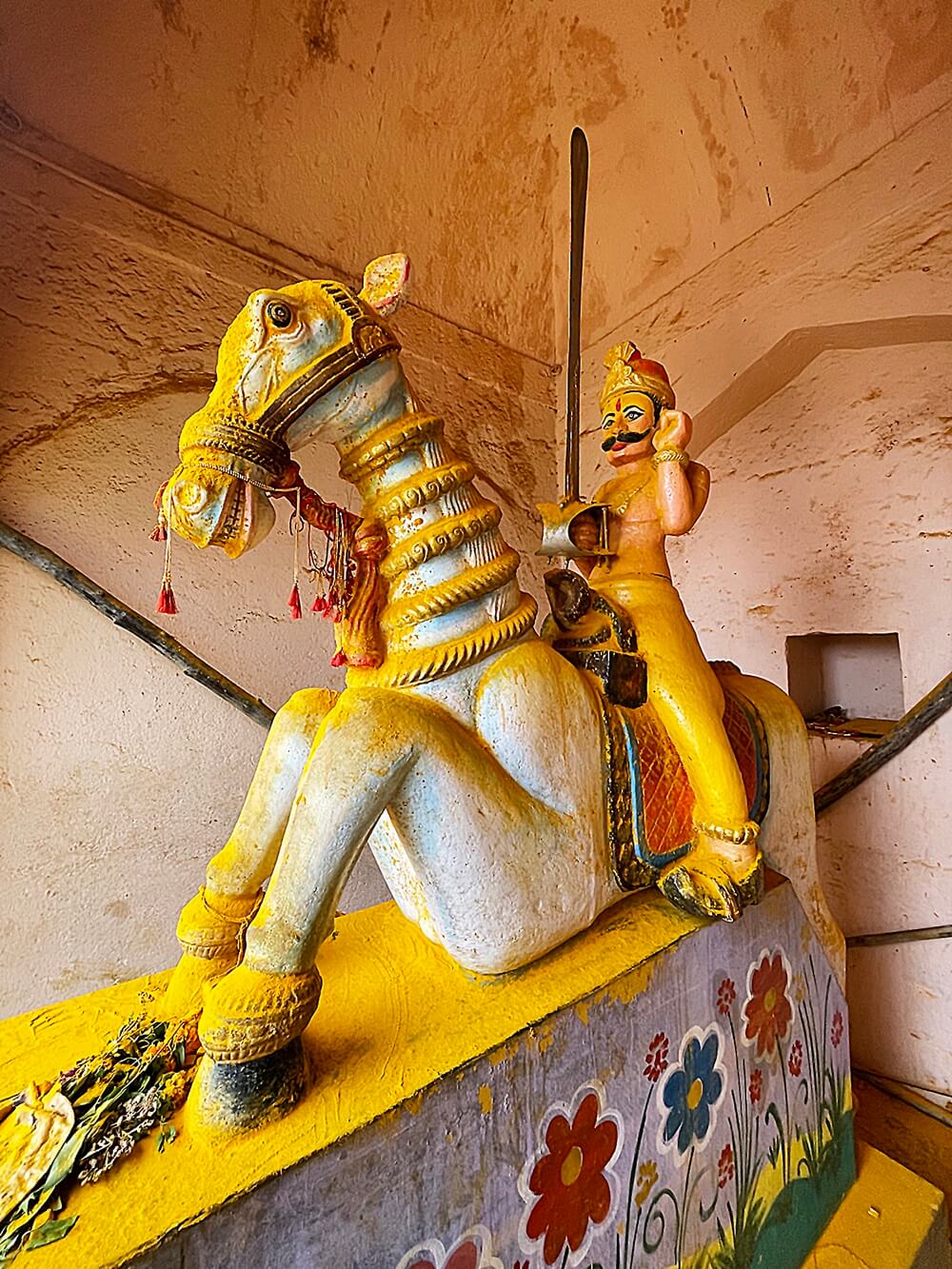
At the beginning of the steps is an important site representing the leap of Khandoba’s horse, known as ‘Ghode Uddan’. A short distance from here, in a mountain crevice, is the temple of Banai Devi. Further along this path, the remains of three old gateways are visible. There are some small temples in this area, and the shrine of Hegadi Pradhan is the first one encountered. Lord Vishnu became Khandoba’s assistant in the form of Hegadi Pradhan. Further ahead is the east-facing temple of Sakshi Vinayak. It is said that after the marriage of Khandoba and Banai, Lord Ganesha stood as a witness to the wedding. Therefore, it is a belief among devotees that the pilgrimage to Khandoba is incomplete without the darshan of Sakshi Vinayak.
In front of the main temple, there is a large idol of Nandi housed in a west-facing pavilion (Meghadambari). Between the main entrance of the temple and the Nandi, a large stone tortoise with a diameter of about 20 feet is carved. Devotees offer Bhandara (turmeric powder) on this tortoise with great devotion. The temple is structured with a Sabha Mandap (assembly hall) and a Garbhagriha (sanctum sanctorum). There are beautiful images of gatekeepers (Dwarapalas) at the entrance of the Sabha Mandap. The temple walls are built of black stone and are extremely sturdy. There is no written evidence available regarding the construction period of this temple. Judging by the style of the temple, it is clearly ancient. In the sanctum sanctorum, there is a joint dual-linga of Khandoba and Mhalasa Devi. Along with these lingas are metal images of a serpent and a dog. Behind the lingas, processional idols of Khandoba and Mhalasa are installed.
In the rearmost part of the sanctum, there is a three-foot-tall and two-foot-wide four-armed (Chaturbhuj) idol of Martand Bhairav. On both sides of this idol are images of Mhalasa and Banai. Near the eastern door, there is an ancient well and a large water tank. In front of the eastern door of the temple, there is a massive stone platform. A 30-foot-tall wooden pillar stands on this platform, famous as the ‘Bagadacha Khamb’. In the past, devotees would pierce their backs and hang from this pillar to fulfill their vows. The British government banned the practice of the Bagad in 1856. Today, this wooden pillar stands here only as a memory of that old tradition. In the western cloister (Ovari) of the temple, there is a large storehouse. In the adjacent cloister, there is a beautiful idol of Khandoba riding a horse. Behind this cloister is the temple of Panchalinga, where five lingas and a Ganesha idol are installed.
Various festivals are organized throughout the year on the Kadepathar plateau. A grand fair is held during the months of Chaitra, Paush, and Magh, starting from the Shuddha Dwadashi and continuing until the Vadya Pratipada. In the month of Margashirsha, the grand festival of Champashasthi is celebrated from Shuddha Pratipada to Shashthi. During this period, special worship of Khandoba is performed for six days. In the month of Ashwin, the Navratri festival and the Dussehra fair are celebrated with great enthusiasm. On every Somvati Amavasya of the year, thousands of devotees come here for darshan. During these festival periods, the entire hill turns yellow with the showering of bhandara (turmeric powder) and dried coconut. Near the eastern gate, there is an old Nagarkhana (drum house) where musical instruments are played during festivals. Outside the southern gate, there are some small temples, and on the edge of the hill is the second ‘Ghodeuddhan’ (horse-leaping) site of Khandoba. It is said that Martand Bhairav departed from here for battle. In this same area, there are temples dedicated to Satwai Devi, Kalbhairav, Bhavani Mata, and Bhuleshwar.
This sacred temple stands as a testament to deep spiritual devotion, ancient architectural grandeur, and rich local cultural traditions.
The sanctum sanctorum houses the divine idol consecrated according to ancient Vedic traditions, surrounded by serene courtyards and traditional temple architecture.

Navratri, Maha Shivratri, Annual Temple Jatra & Deepotsav
Compare and book flights, secure top-rated local hotels near the temple, hire reliable guides, and rent cars instantly.
Extend your pilgrimage by visiting other highly sacred temples located nearby.


Add ₹999 more to unlock FREE SHIPPING!
Your sacred cart is currently empty.
Shop Photo FramesFill in your delivery details below to place your order.
Add comment