
Add ₹999 more to unlock FREE SHIPPING!
Your sacred cart is currently empty.
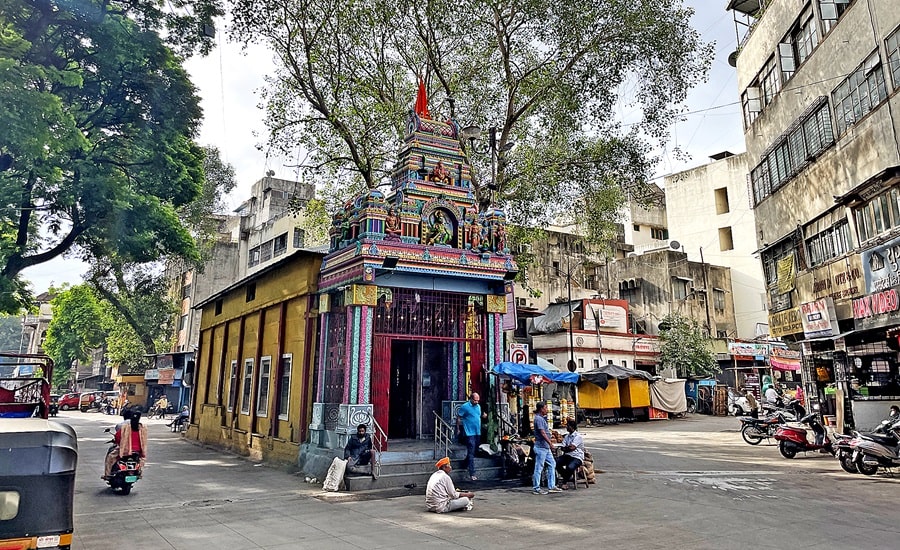
Shop Photo FramesPune city is a hub of historical quarters and ancient temples. Situated in Rasta Peth, established by the Peshwa Sardar Raste, opposite KEM Hospital, stands the Untadya Maruti Temple, which holds a history of 350 years. The official name of this shrine is Vyadhihar Maruti, but it is universally known as Untadya Maruti. This distinctive name was derived from the military movements during the Peshwa era and the encampments of merchant camels. The elegant pillars with wooden carvings and the unique idol of Maruti are the hallmarks of this temple. Additionally, this temple is also known as Madrasi Maruti and Vyadhihar Maruti.
Regarding the name Untadya Maruti, it is said that during the Peshwa period, merchants from Rajasthan used to visit Pune for trade. These merchants used large caravans of camels to transport their goods. Before entering the city, these merchants would tie their camels in the open space where this Maruti temple was located. From this camel base, the local people began to refer to this shrine as Untadya Maruti. According to another story, there was a special camel corps in the army of the Maratha Sardar Raste. This space was reserved for tying and maintaining these camels.
There is a social history behind the temple acquiring another distinctive name, Madrasi Maruti. After the fall of the Peshwa rule, the ownership of this area passed to Sardar Shrinivas Mudaliar. Mudaliar was originally a Tamil speaker and a resident of the then Madras province. The Mudaliar family took excellent care of this temple and managed it through a trust. In 1908, Sardar Mudaliar donated his land for the construction of the hospital. Along with the construction of the hospital, he renovated this ancient shrine. In 1953, the temple was renovated once again by the Mudaliar family. That is why the people of this area still refer to it with reverence as Madrasi Maruti.
At the entrance of the temple’s sanctum sanctorum, there is a mention of Vyadhihar Maruti. The word Vyadhihar means one who removes physical pain and mental suffering. Since KEM Hospital is located right in front of the temple, patients undergoing treatment at the hospital and their relatives make it a point to visit this Maruti for darshan. This temple is in the Maratha architectural style. It features wooden carvings as well as stone masonry. According to historical references, the Peshwas and their commanders used to visit this temple to seek blessings before embarking on campaigns.
Located along the main road in Rasta Peth, one enters the assembly hall through the temple’s wooden carved entrance. This assembly hall features wooden pillars shaped like cypress trees, a characteristic of Peshwa-era architecture. There are carvings on these pillars and beams. The ceiling of the assembly hall is entirely made of wood. The craftsmanship on the wood from the olden days can still be seen preserved here. Images of various deities are placed on the walls of this assembly hall.
In the assembly hall, near the entrance of the sanctum sanctorum, there is a white idol of Nandi on a pedestal. At the lintel of this entrance, the Om symbol can be seen carved in a silver halo. In the niches on both sides of the entrance, there is the place of Vyadhihar Ganapati on the left. This is a two-armed idol of Ganapati from the Peshwa period. Sardar Raste was a devotee of Ganesha and had given this Ganapati a special place in this temple complex. Even today, hundreds of devotees come here every Tuesday for the darshan of this Ganapati. Above this niche, there is a unique circular symbol. This symbol is primarily considered a representation of the Sudarshan Chakra or the Surya Chakra. Since Ganapati is the lord of knowledge and intellect, such a circular symbol is placed above him. This symbol is a sign of positive energy and divine protection. In the niche on the right are the idols of Vitthal-Rukmini. Above this niche, there is also a special symbol. This symbol represents a miniature form of the temple’s gopuram or the deity’s crown. Vitthal is considered the supreme deity in the Warkari tradition. This crown symbol is recognized as a sign of his sovereignty.
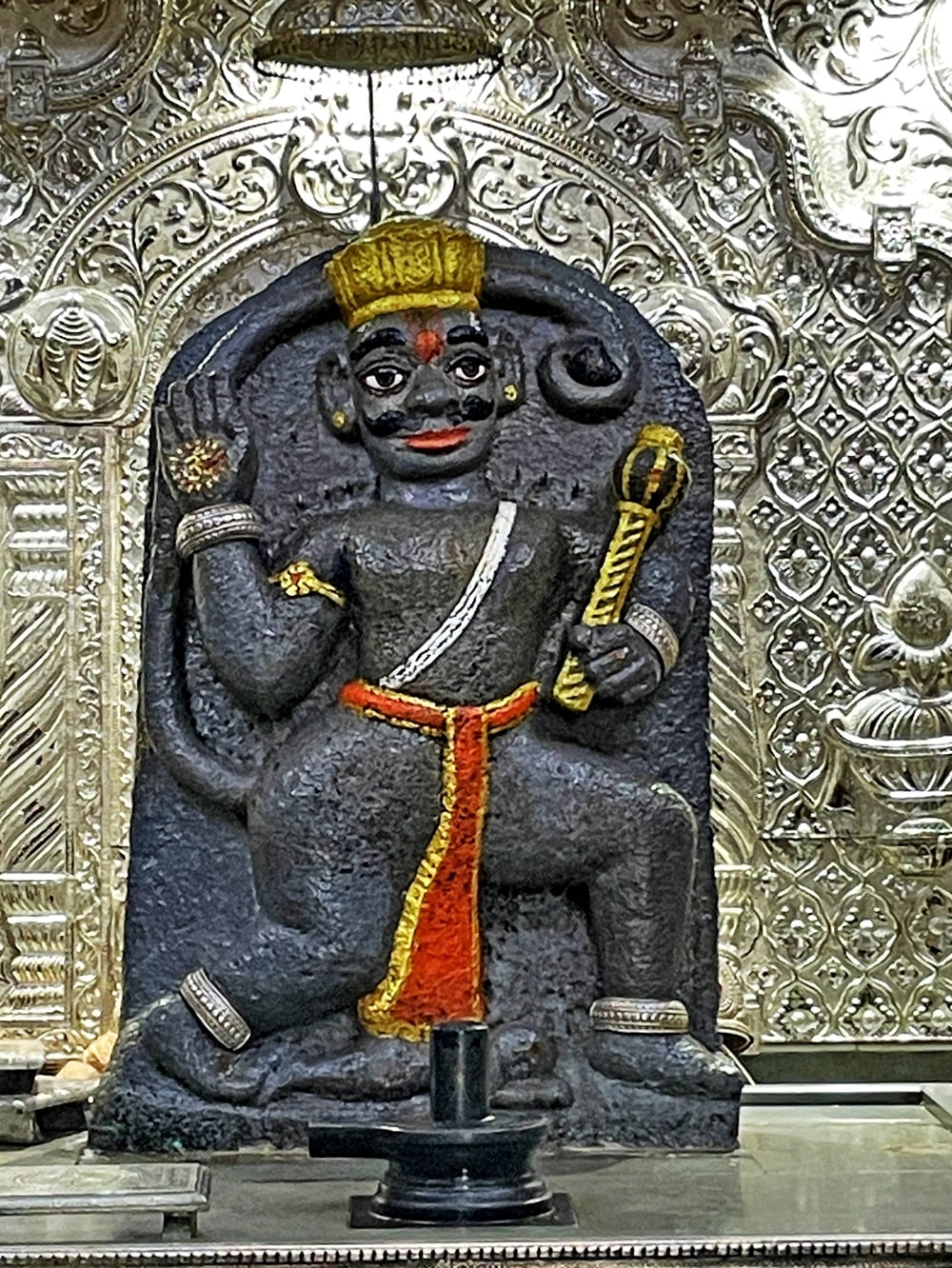
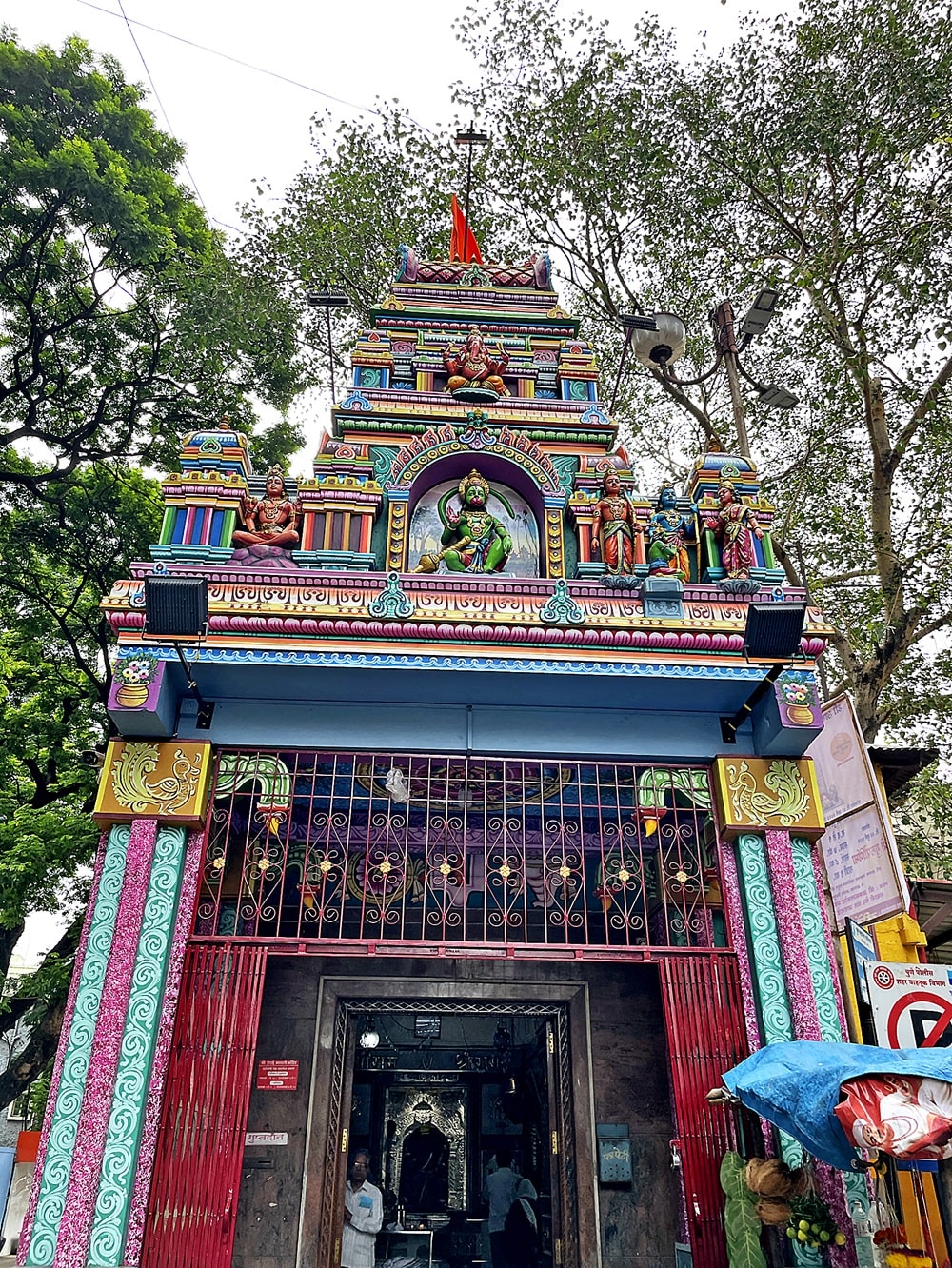
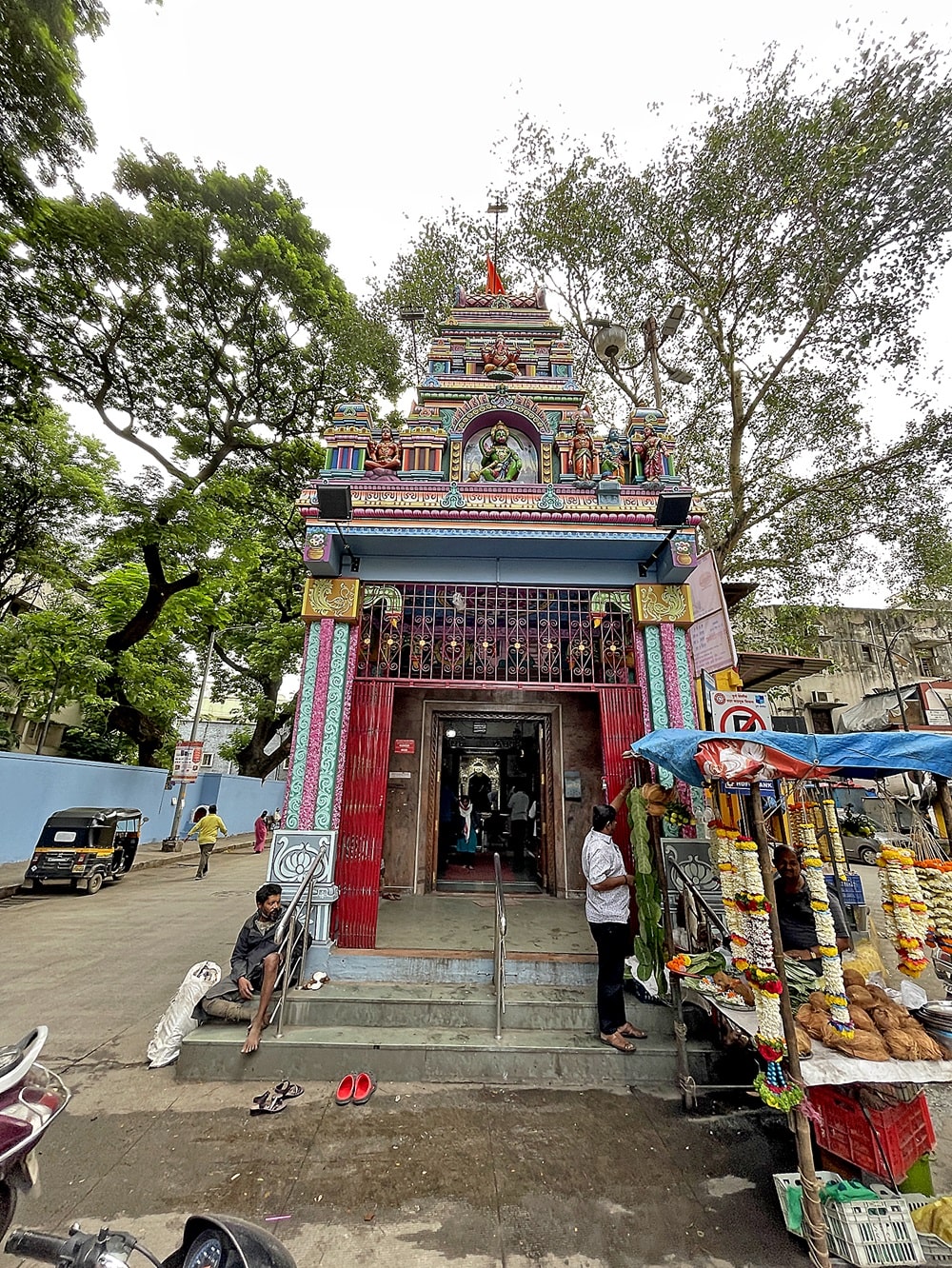
In the sanctum sanctorum, there is a large five-foot three-inch tall idol of Maruti made of black stone. The eyes of this idol in the Veer Maruti form are radiant and large. The idol holds a mace in the left hand, and the right hand is in the Abhaya Mudra. Maruti’s long tail is seen curving upwards from behind the head. There is delicate craftsmanship on the head of the idol, including a crown. Behind this idol is a decorative silver halo. Previously, this Maruti idol was covered in vermilion. However, in 2022, the layers of vermilion accumulated over 350 years were removed from this idol, and a Vajralepan (strengthening coating) was applied. As a result, one can now see the original idol. Many idols of deities are carved on the shikhara of the temple, which is in the Southern style. At the very top of this shikhara is a kalash, and below it, the idol of Hanuman is visible.
The Hanuman Jayanti festival is celebrated here with great enthusiasm on Chaitra Purnima. On this day, the birth ceremony of Hanuman takes place at dawn, and an abhishek is performed. During the month of Shravan, special worship and aartis of Maruti are organized here every Saturday. During this time, there are queues of devotees to offer oil and vermilion to Maruti. Also, during the Ganeshotsav period, the Vyadhihar Ganapati is adorned with special ornaments and worshipped.
This sacred temple stands as a testament to deep spiritual devotion, ancient architectural grandeur, and rich local cultural traditions.
The sanctum sanctorum houses the divine idol consecrated according to ancient Vedic traditions, surrounded by serene courtyards and traditional temple architecture.
Navratri, Maha Shivratri, Annual Temple Jatra & Deepotsav
Compare and book flights, secure top-rated local hotels near the temple, hire reliable guides, and rent cars instantly.
Extend your pilgrimage by visiting other highly sacred temples located nearby.


Add ₹999 more to unlock FREE SHIPPING!
Your sacred cart is currently empty.
Shop Photo FramesFill in your delivery details below to place your order.
Add comment